
1. The Foundation: Why Scientists Create Hybrids
In the field of agricultural genetics, our primary objective is to harness Heterosis, or hybrid vigor. First described by Shull (1908), heterosis is the superior performance observed in the F1 generation—the first offspring resulting from the cross-breeding of two distinct, homozygous inbred lines.

To the genetics student, it is vital to understand that this process represents a fundamental biological transition from a homozygous state (where alleles are identical) to a heterozygous state (where alleles differ). This shift unlocks “unusual vigor” that neither parent possesses alone. In crops like sorghum, we target three primary goals:
- Higher Yields: Maximizing the number and weight of grains per panicle to ensure food security.
- Earlier Flowering: Reducing the time to maturity to escape late-season environmental stressors like drought.
- Improved Plant Height: While we often seek shorter stalks to prevent lodging, in regions like India, the “stover” (stalk and leaves) is essential for animal feed. Breeders often use 3-gene dwarf females crossed with 2-gene dwarf males to precisely manipulate this height for dual-purpose use.
Once we understand the goal of hybrid vigor, we must look at how scientists actually create and measure these combinations in the field.

2. General Combining Ability (GCA): The Reliable Predictor
General Combining Ability (GCA) is defined as the “average performance of a line in hybrid combinations” (Sprague and Tatum, 1942). It is the primary tool for identifying parents that are “consistently good” regardless of their partner.
- Biological Driver: GCA is driven by Additive Gene Action, where the effects of genes are cumulative and predictable.
- Breeder’s Insight: GCA is the most critical metric when evaluating unselected inbred lines. It governs “component traits” that are simpler to manage.
- Key Traits Influenced by GCA: Plant height, panicle length, days to 50% flowering, and 1000 grain weight.
While GCA tells us what a parent does on average, it doesn’t account for the surprising “perfect matches” that occur in specific pairings.
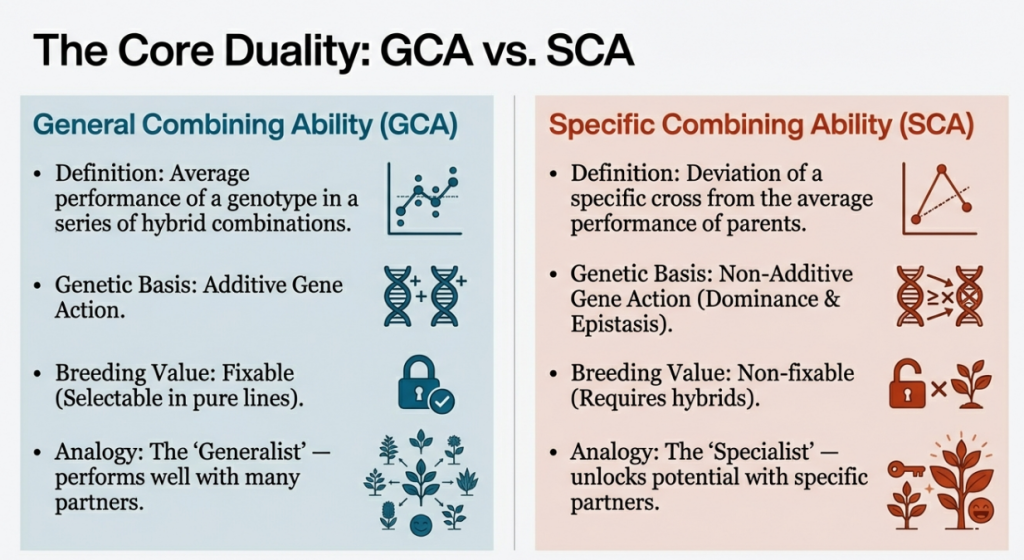
3. Specific Combining Ability (SCA): The “Hidden Magic” of Pairing
Specific Combining Ability (SCA) represents cases where a hybrid performs significantly better (or worse) than expected based on the average performance of its parents.
- Biological Driver: SCA is driven by Non-Additive Gene Action, specifically dominance and epistasis (gene-to-gene interactions).
- Breeder’s Insight: SCA becomes the primary focus for previously selected lines. It is the engine behind “complex traits” like total yield, where the specific interaction of two genomes creates a unique “spark.”
- Key Traits Influenced by SCA: Grain yield per panicle and number of grains per panicle.
General Combining Ability (GCA) and Specific Combining Ability (SCA) represent the two pillars of progeny performance prediction. As established by Sprague and Tatum (1942), these concepts allow breeders to partition the performance of hybrids into additive and non-additive components.
| Feature | General Combining Ability (GCA) | Specific Combining Ability (SCA) |
|---|---|---|
| Definition | The average performance of a line in a series of hybrid combinations. | Cases where certain hybrid combinations perform better or worse than expected based on the GCA of parents. |
| Originator | Sprague and Tatum (1942). | Sprague and Tatum (1942). |
| Type of Gene Action | Primarily Additive gene action. | Dominance and Epistatic (non-additive) gene action. |
| Statistical Representation | Average effect reflecting resemblance among half-sibs (CovHS). | Deviation from expectation; reflects resemblance among full-sibs (CovFS). |
The GCA/SCA ratio is a critical diagnostic tool for determining breeding strategies. A high ratio indicates that additive gene action predominates, suggesting that selection based on parental performance will be highly effective. Conversely, a low ratio highlights the influence of dominance and epistasis, necessitating the exploitation of heterosis through specific crossing blocks.To calculate these values accurately, we utilize the Line x Tester mating system.
4. The “Line x Tester” System: Setting the Stage for Measurement
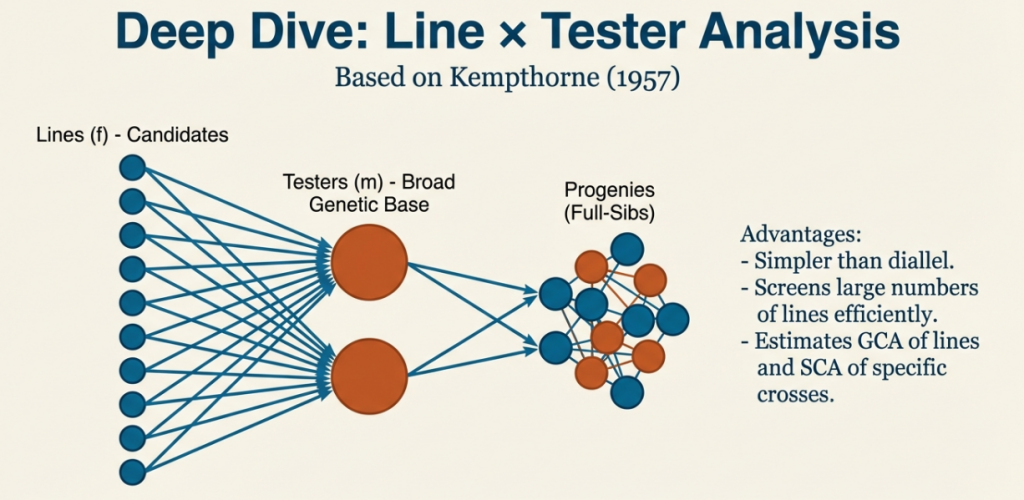
To determine the genetic value of potential parents, we use the Line x Tester mating system (Kempthorne, 1957). This is a high-throughput efficiency choice for breeders; it allows us to screen a significantly higher number of inbred lines against a few common “testers” compared to a full diallel cross, which would be logistically impossible on a large scale.
| Role | Biological Term | Description |
|---|---|---|
| Female Parents | Male Sterile Lines | Often called “Lines.” These do not produce functional pollen and receive genetic material from the males. |
| Male Parents | Restorers | Often called “Testers.” These provide pollen and restore fertility to the resulting F1 hybrid. |
| The Offspring | F1 Hybrids | The resulting progeny created by the intersection of these two genetic pools. |
The Line x Tester system is the preferred architecture for screening a large volume of inbred lines against a set of testers to estimate combining ability effects efficiently.
5. How Genetic Concepts Shape Physical Traits
Understanding Dominance Direction allows us to predict how a hybrid will look compared to its parents. Our research shows the genetic “scale” tips in these directions:
- Maturity: Hybrids lean toward earliness, flowering faster than the average of their parents.
- Height: Hybrids lean toward increased height.
- Grain Weight (Negative Heterosis): Hybrids often show decreased individual grain weight. This is not a failure, but a biological trade-off; the plant produces a much higher total number of grains, which slightly reduces the weight of each seed.
- Grain Density: Hybrids produce harder, denser grains. In the lab, we measure this via % Floaters. A lower percentage of floaters indicates higher grain density—the desired trait for quality.
6. Summary Checklist for Aspiring Breeders
To master the application of GCA and SCA, follow this protocol used by senior geneticists:
- Identify the Base: Use GCA to find “superstar” parents like 623A, which consistently produces high-yielding offspring across both Kharif and Rabi seasons.
- Find the Spark: Use SCA to identify specific “hero” combinations that provide massive yield jumps for complex traits.
- Validate the Environment: Never rely on a single season’s data. Note how the GCA/SCA ratio shifts (e.g., 1.81 to 1.47) to ensure your hybrid is stable in both rainy and post-rainy conditions.
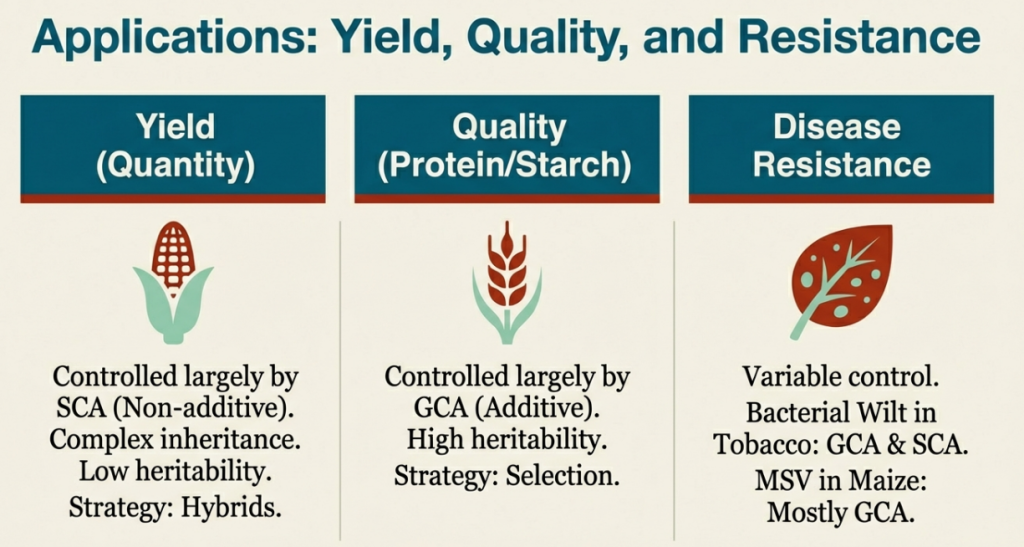
Final Insight: While SCA provides the “magic” for record-breaking yields, breeding methods that exploit additive gene action (GCA) are generally more rewarding. Because most agronomic and quality characters are highly influenced by additive gene action, standard selection programs remain the most reliable path to steady crop improvement.
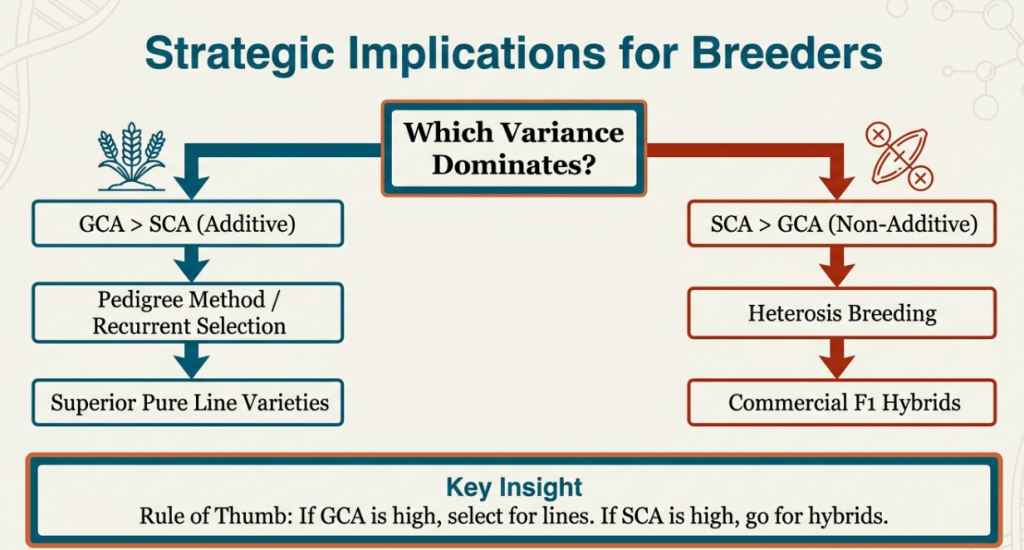
Image Summary

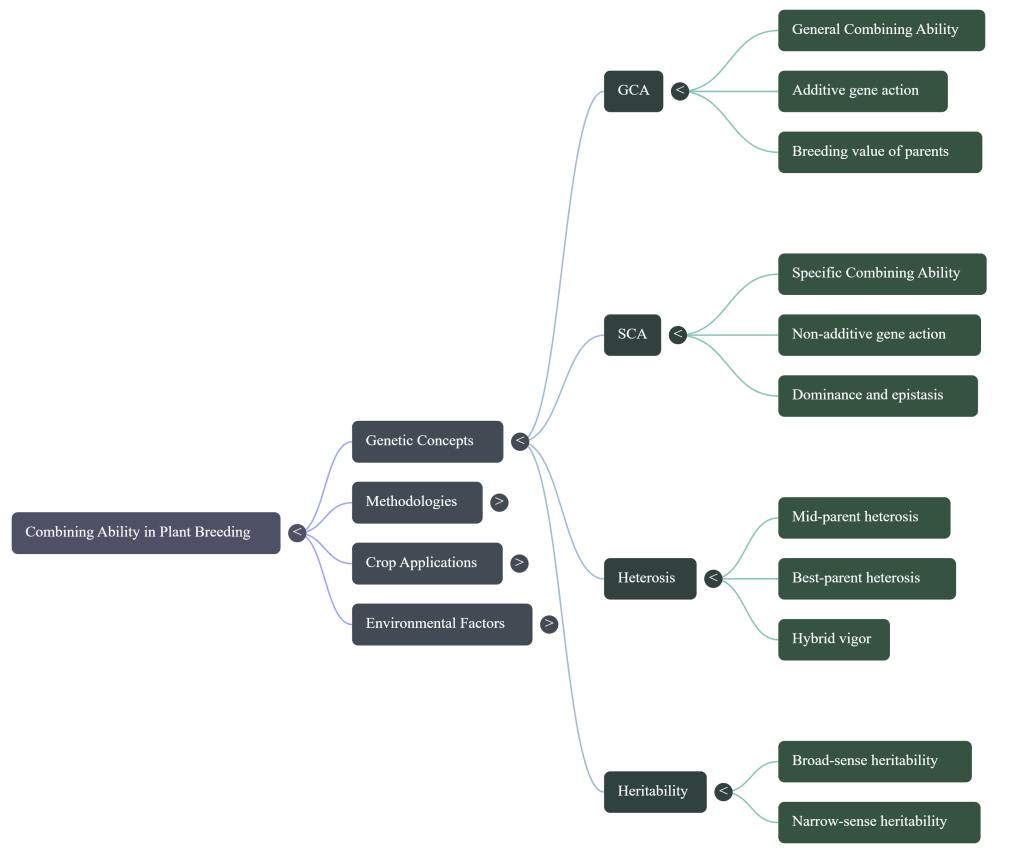


Questions/Answers
1. How does environmental stress influence the performance of crop genotypes?
Environmental stress significantly impacts the performance of crop genotypes by altering their phenotypic expression, reducing growth and yield, delaying reproductive stages, and influencing the stability of their genetic traits. The effects vary depending on the type of stress, the crop species, and the specific genotype.
Reductions in Yield and Growth
Environmental stressors typically lead to substantial losses in productivity and stunted physical development:
- Water Deficit: In maize, water stress during the reproductive (mid-growth) stage causes the highest recorded grain losses. Drought reduces leaf area index, plant height, kernel weight, and overall grain yield.
- Nitrogen (N) Stress: Low nitrogen levels can cause significant reductions in maize grain yield (observed at 33.25%), plant height (10.54%), and ear height (14.09%). This is associated with decreased photosynthesis rates and lower biomass production.
- Plant Density Stress: Increasing planting density in maize enhances competition for light, nutrients, and water, leading to a decrease in grain yield per plant, leaf angle, and chlorophyll content.
- Temperature Stress: Okra productivity is severely limited by low night temperatures, which can make late-season cultivation problematic and less economic. Conversely, lower temperatures in waxy corn can delay silking dates.
- Soil Toxicity: In acidic soils, aluminium (Al) toxicity significantly hinders maize productivity. Resistance to this stress is controlled by both additive and non-additive genetic components.
Alterations in Phenology and Reproductive Traits
Stress often disrupts the timing of a crop’s life cycle, particularly around flowering and seed setting:
- Anthesis-Silking Interval (ASI): This is one of the most sensitive traits to water deficit in maize. Increased ASI is a symptom of intense competition for growth resources and is associated with increased kernel abortion and reduced grain fill.
- Flowering Delays: Drought and nitrogen deficiency both increase the number of days to anthesis and silking.
- Drought Indicators: In sweetpotato, canopy temperature (CT) and canopy wilting (CW) are valuable indicators of performance under drought stress; genotypes that maintain lower canopy temperatures under water-limited conditions are considered more tolerant.
Impact on Combining Ability and Gene Action
The environment directly influences how genotypes transmit traits to their offspring:
- GCA and SCA Interaction: Environmental factors, such as irrigation rates, significantly alter General Combining Ability (GCA) and Specific Combining Ability (SCA). In durum wheat, genotype-environment interactions can even cause a “redetermination of the genetic formula,” where the type of gene action (additive vs. non-additive) controlling a trait like kernel weight changes across different years.
- Stability of Traits: Some parents exhibit stable GCA across environments, while others vary, making multi-environmental testing essential for identifying reliable parents for breeding. High-GCA parents are often preferred because they tend to have greater adaptability and are less affected by environmental fluctuations.
- Stress-Specific Performance: In maize, variances for GCA effects can become more important than SCA when genotypes are subjected to low nitrogen or drought conditions. In tobacco, the resistance to bacterial wilt is highly sensitive to environmental factors, which can result in low heritability for the trait.
2. Which mating designs are used to identify superior plant hybrids?
Researchers and plant breeders utilize several systematic mating designs to produce progenies, evaluate the genetic potential of parental lines, and identify superior hybrid combinations. These designs allow for the partitioning of genetic variance into General Combining Ability (GCA), which measures additive gene action, and Specific Combining Ability (SCA), which indicates non-additive gene action (dominance and epistasis).
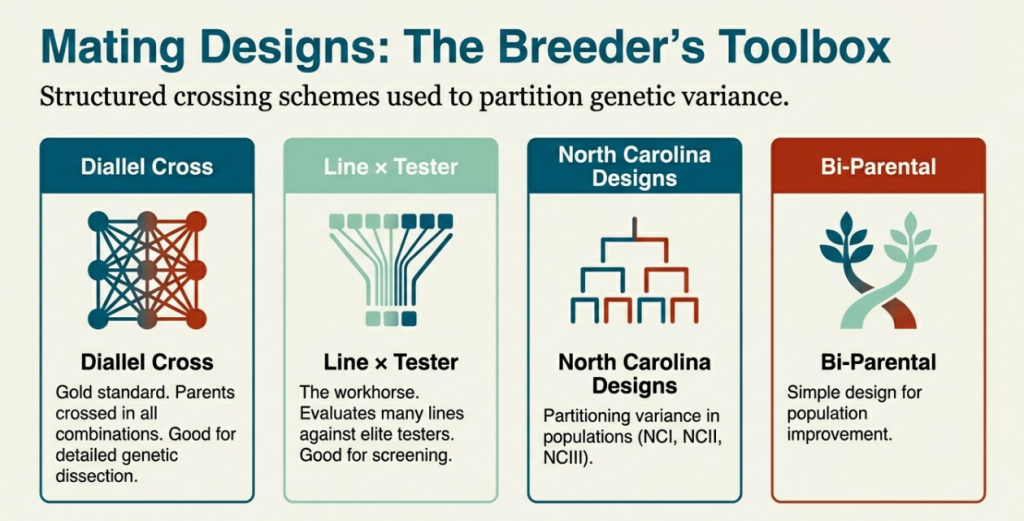
The major mating designs used for these purposes include:
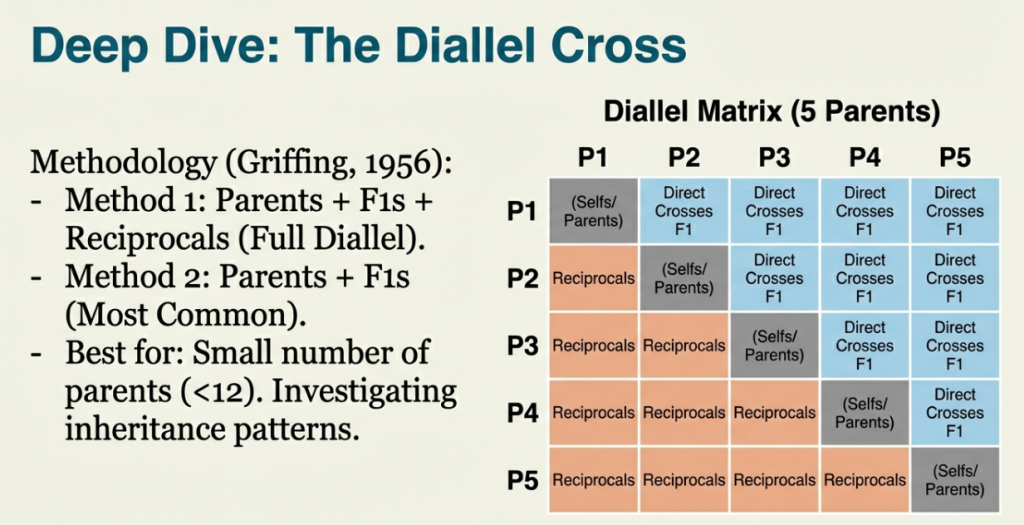
1. Diallel Designs
The diallel is one of the most widely used designs for obtaining comprehensive genetic information.
- Full/Complete Diallel: Parents are mated in all possible combinations, including self-pollinations and reciprocals. This allows for the estimation of GCA, SCA, and maternal effects.
- Half-Diallel: A variation that excludes reciprocal crosses, making it more manageable for breeders while still identifying superior parents and cross combinations.
- Partial Diallel: Only a random or specific subset of all possible crosses is made, which is useful when dealing with a large number of parents.
2. Line × Tester Design
This design involves crossing a set of female lines (‘l’) with a genetically different set of male “testers” (‘t’).
- Efficiency: It is highly popular because it allows for the screening of a large number of inbred lines simultaneously.
- Identification: It is used to identify superior parents based on GCA and superior hybrids based on SCA. It is often considered the best way to test the value of new germplasm.
3. North Carolina (NC) Designs
These factorial mating schemes provide varying levels of genetic information:
- Design I (NC I): A hierarchical design where female parents are nested within specific male parents; it is commonly used in animal and tree breeding and for recurrent selection in maize.
- Design II (NC II): A factorial design where every member of a group of males is mated to every member of a group of females. It provides two independent estimates of GCA (one for each parent) and is useful for identifying dominance levels.
- Design III (NC III): Individuals from an F2 population are backcrossed to their original parents. It is considered the most powerful for estimating additive and dominance variances and can also detect epistasis (triple test cross).
4. Topcross and Polycross
- Topcross: Selected lines are crossed with a single common tester parent of known performance. It is primarily used for rapid screening for GCA before entering lines into more complex yield trials.
- Polycross: A group of cultivars are intermated by natural crossing in an isolated block. This design is ideal for identifying mother plants with superior GCA in obligate cross-pollinated species like forage grasses, sugarcane, and sweetpotato.
5. Bi-Parental Mating (BIP)
Also known as the paired crossing design, it is the simplest method where plants are selected at random and crossed in pairs. While simple, it is limited because it does not provide enough information to estimate all genetic parameters unless extra statistics are available.
Factors Influencing the Choice of Design
The selection of a mating design depends on several factors, including:
- Crop Biology: Whether the plant is self- or cross-pollinated and the presence of male-sterility systems.
- Study Objectives: Whether the goal is general genetic study or specific hybrid development.
- Logistical Constraints: The available time, space, and labor for making crosses.
- Environmental Stability: Since combining ability can interact with the environment (GCA × E and SCA × E), designs are often evaluated across multi-environmental trials to identify stable, superior hybrids.
3. What is the difference between General and Specific Combining Ability?
The concepts of General Combining Ability (GCA) and Specific Combining Ability (SCA), first introduced by Sprague and Tatum in 1942, allow researchers to partition progeny performance into two distinct genetic components.
General Combining Ability (GCA)
- Definition: GCA is defined as the average performance of a parent genotype in a series of hybrid combinations.
- Genetic Basis: It is primarily recognized as a measure of additive gene action. This represents the fixable and heritable fraction of genetic variation, which has a direct link with narrow-sense heritability.
- Purpose: Breeders use GCA to identify superior donor parents for hybridization programs and the development of synthetic varieties.
- Statistical Context: Statistically, GCA is considered the main effect of a parent in a mating design.
Specific Combining Ability (SCA)
- Definition: SCA describes cases where a specific hybrid combination performs relatively better or worse than expected based on the average performance (GCA) of its parental lines.
- Genetic Basis: It is regarded as an estimate of non-additive gene action, predominantly involving dominance and epistasis. It represents the non-fixable and non-heritable component of genetic variation.
- Purpose: SCA analysis helps detect specific superior hybrid combinations for the commercial exploitation of heterosis (hybrid vigor).
- Statistical Context: SCA is considered an interaction effect resulting from the joint action of genes from both parents.
Summary of Differences and Breeding Strategy
The relative importance of GCA and SCA, often measured by the GCA to SCA ratio (predictability ratio), determines the most effective breeding strategy.
| Feature | General Combining Ability (GCA) | Specific Combining Ability (SCA) |
|---|---|---|
| Parent Performance | Average across many crosses. | Performance in one specific cross. |
| Gene Action | Additive. | Non-additive (dominance/epistasis). |
| Inheritance | Fixable and heritable. | Non-fixable and non-heritable. |
| Statistical Role | Main effect. | Interaction effect. |
| Selection Goal | Superior donor parents. | Outstanding commercial hybrids. |
| Breeding Strategy | Pedigree selection / Standard selection. | Heterosis breeding / Recurrent selection. |
When the variance ratio is close to unity (1.0), progeny performance is highly predictable based on GCA alone. A ratio less than unity indicates that non-additive gene action predominates, favoring heterosis breeding.
4. How do breeders use GCA and SCA to select a strategy?
Plant breeders use General Combining Ability (GCA) and Specific Combining Ability (SCA) as primary tools to determine the most effective breeding strategy for a particular crop or trait. These metrics reveal the underlying nature of gene action (additive vs. non-additive), which dictates whether a breeder should focus on selecting superior individual lines or exploiting hybrid vigor.
Determining Strategy based on the GCA: SCA Ratio
The relative importance of GCA and SCA is often measured by the predictability ratio (or Baker’s ratio).
- Ratio Close to Unity (>1): When GCA variance is significantly larger than SCA variance, additive gene action predominates. In this scenario, the trait is fixable and highly heritable, leading breeders to favor standard selection procedures such as pedigree selection or single seed descent.
- Ratio Less than Unity (<1): When SCA variance is greater, non-additive gene action (dominance and epistasis) is more important. This indicates that the traits are non-fixable and non-heritable, prompting breeders to adopt heterosis breeding for commercial hybrid development.
Breeding Strategies for Predominant GCA
When GCA effects are the main source of variation, breeders focus on identifying superior “donor” parents that consistently transmit desirable traits to their offspring.
- Early Generation Selection: Since additive effects are fixable, selection for these traits can effectively begin in early segregating generations (e.g., F2 or F3).
- Population Improvement: High GCA parents are used to develop synthetic or composite varieties.
- Recombination Breeding: Breeders may use recombination breeding to aggregate favorable fixable genes into advanced lines.
Breeding Strategies for Predominant SCA
When SCA effects are prominent, breeders focus on identifying unique pairs of parents that “nick” well together to produce superior performance not predictable from their average.
- Deferred Selection: Because non-additive effects are non-fixable and often masked by dominance in early generations, selection is often postponed to later generations (e.g., F4 or F5) when these effects dissipate, allowing for better identification of transgressive segregants.
- Recurrent Selection: Breeders use methods like simple recurrent selection that focus on inbreeding for SCA to produce useful results.
- Hybridization: Outstanding specific cross combinations are selected for direct commercial use as F1 hybrids to capture maximum hybrid vigor.
Integrated and Advanced Strategies
In many complex traits like grain yield, both GCA and SCA are significant, requiring more sophisticated integrated approaches:
- Reciprocal Recurrent Selection (RRS): This method is highly effective for traits controlled by both gene actions. It involves simultaneously improving two populations (heterotic groups) to maximize the SCA of the crosses between them.
- Diallel Selective Mating: Breeders may use this to exploit both additive and non-additive components simultaneously in early generations.
- Strategic Parent Matching: Breeders categorize parents based on their GCA to choose the best strategy for a specific cross:
- High × High GCA: Favors selection in segregating generations to isolate superior pure lines.
- High × Low GCA: Often managed through mass selection with random mating in early generations.
- Low × Low GCA: Exclusively utilized for heterosis breeding when high SCA is observed, as the performance is purely due to non-fixable non-additive interactions.
5. What is the role of dominance in combining ability?
Dominance plays a critical role in determining Specific Combining Ability (SCA) and is the primary genetic driver behind non-additive gene action and heterosis (hybrid vigor). While General Combining Ability (GCA) is the result of fixable additive gene effects, dominance accounts for the deviations from these expected values in specific hybrid combinations.
The role of dominance in combining ability can be understood through the following key concepts:
1. The Basis of Specific Combining Ability (SCA)
- Non-Additive Action: Dominance is a major component of non-additive gene action, which represents the non-fixable portion of genetic variation. It arises from allelic interactions at specific loci where one allele masks or influences the expression of another.
- Interaction Effect: In statistical terms, GCA is considered a “main effect,” whereas SCA (and thus dominance) is considered an interaction effect resulting from the joint action of genes from both parents.
- Heterozygosity: SCA effects are unique to the F1 generation and only exist in heterozygotes; they are typically lost during subsequent inbreeding as loci become homozygous.
2. Levels and Types of Dominance
Researchers use mating designs to measure the “degree of dominance” to determine how traits are inherited:
- Partial Dominance: Occurs when the degree of dominance is less than unity (< 1).
- Complete Dominance: Occurs when the degree of dominance is close to unity (1.0).
- Over-dominance: Occurs when the degree of dominance exceeds unity (> 1), meaning the heterozygote performs better than either homozygote parent. This is often identified in “low × low” GCA crosses that produce high-performing hybrids unexpectedly.
3. Role in Hybrid Breeding and Heterosis
- Exploiting Heterosis: The presence of significant dominance variance offers scope for the commercial exploitation of heterosis. The dominance hypothesis suggests that heterosis occurs because dominant alleles from one parent mask the deleterious recessive alleles from the other.
- Breeding Strategy: If dominance (SCA) variance is greater than additive (GCA) variance, breeders prioritize heterosis breeding or recurrent selection. This is because the superior performance is due to non-fixable gene interactions that must be recreated in each hybrid generation.
- Parental Selection: Superior hybrids often result from crosses where at least one parent has high GCA (additive effects) and the specific combination exhibits high SCA (dominance effects). However, “high × low” GCA crosses are also common, where positive alleles from a good combiner interact with negative alleles from a poor combiner through additive × dominance interactions.
4. Environmental Sensitivity
Dominance effects are generally less stable than additive effects and are more easily influenced by environmental factors. For example, studies in maize have shown that the dominance effect of genes can become more active than additive action under specific stress conditions, such as low water or nitrogen deficiency.
6. How does GCA compare to per se performance in parents?
The relationship between a parent’s per se performance (its individual phenotypic merit) and its General Combining Ability (GCA) is a critical consideration in plant breeding, as it determines how reliably a breeder can predict a parent’s value based on its appearance alone.
General Correspondence and Correlation
In many instances, researchers have observed a significant positive correlation or high degree of correspondence between a parent’s per se performance and its GCA effects.
- Maize: Studies have shown that GCA effects for yield-related traits are often significantly correlated with the per se performance of the inbred lines.
- Cucumber: In most cases, parents showing the highest GCA effects for a trait were also found to be the best individual performers for that specific character.
- Brinjal: Results have revealed a high degree of correspondence, which is often ascribed to the predominant role of additive gene action.
- Disease Resistance: In maize, resistance to brown stripe downy mildew, the magnitude and sign of GCA effects typically aligned with the parents’ individual disease reactions.
Limitations of Per Se Performance
Despite these correlations, per se performance alone is frequently considered an unreliable predictor of a parent’s potential to produce superior hybrids.
- Transmission of Traits: Parents with high mean values or superior phenotypes do not necessarily transmit these desirable traits to their progenies.
- Genetic Basis: While per se performance is a phenotypic observation, GCA is a measure of heritable breeding value and additive gene action.
- Masking Effects: High individual performance may be due to non-fixable genetic effects or specific environmental interactions that are not passed on. Consequently, evaluating combining ability is considered more trustworthy than evaluating line performance in general.
Trait-Specific Variation
The strength of the relationship between these two metrics varies depending on the specific trait being studied:
- High Correlation Traits: In sorghum, maturity characters (days to flowering) and panicle length typically show the highest correlation between parental means and GCA effects.
- Low Correlation Traits: More complex traits, such as grain yield, often show a weaker or inconsistent relationship. Several productive hybrids cannot be predicted solely on the basis of parental yield performance.
Implications for Breeding Strategy
Researchers emphasize that while per se performance can serve as a useful initial selection criterion—especially when additive gene effects are predominant—it must be supplemented with GCA analysis to identify elite parents.
- Selection Accuracy: Selection based on both metrics helps identify lines that not only look good but also possess favorable alleles that can be “fixed” in future generations.
- Parental Suitability: Parents that exhibit both high per se performance and high GCA effects are considered the most desirable donor parents for hybridization programs.
- Environmental Sensitivity: Because the relationship between per se performance and GCA can be unstable across different environments or seasons, multi-environmental testing is necessary to obtain reliable data.
7. How can GCA and SCA ratios identify non-additive gene action?
The ratio of General Combining Ability (GCA) to Specific Combining Ability (SCA) serves as a primary statistical diagnostic tool for plant breeders to determine whether a trait is governed by additive or non-additive gene action (dominance and epistasis). Because GCA is primarily associated with additive genetic effects and SCA is a measure of non-additive effects, their relative magnitude indicates which genetic component is more influential in trait inheritance.
The Variance Ratio and Gene Action
Researchers use the following principles to identify the prevailing gene action:
- Ratios Less than Unity (< 1.0): When the ratio of GCA variance to SCA variance (or a derived predictability ratio) is less than 1.0, it reveals that non-additive gene action is predominant. This signifies that traits are primarily controlled by dominance and epistatic interactions, which are non-fixable and non-heritable components of genetic variation.
- Greater Magnitude of SCA Variance: If the magnitude of SCA variance is simply higher than GCA variance for a trait, it indicates that non-additive effects are more important than additive ones.
- Baker’s Predictability Ratio: This specific ratio (2σGCA2/(2σGCA2+σSCA2)) is used to predict progeny performance. The closer this ratio is to unity (1.0), the more predictable the performance is based on GCA alone (additive action). A ratio significantly further from unity indicates a major role for non-additive components.
Identifying Specific Genetic Interactions
Ratios can also suggest the degree of complex genetic interactions:
- Over-dominance: A low GCA/SCA ratio, often accompanied by a degree of dominance greater than unity (> 1.0), points to the role of over-dominance in trait expression.
- Epistasis: If both GCA and SCA values are found to be non-significant, it may indicate that epistatic gene effects (interactions between different genes) are playing a more substantial role in the inheritance of the character.
Strategic Implications for Breeding
Once the GCA/SCA ratio identifies non-additive gene action as the primary driver, breeders shift their strategy accordingly:
- Heterosis Breeding: Because non-additive effects only exist in heterozygotes and cannot be “fixed” through simple selection, a low ratio indicates that heterosis breeding is the best approach to capture hybrid vigor.
- Deferred Selection: When non-additive action is identified, researchers often postpone selection to later segregating generations (such as F4 or F5). This allows non-fixable dominance effects to dissipate, enabling the better identification of desirable recombinants.
- Recurrent Selection: Ratios indicating non-additive action suggest that improvement of the population should be performed through recurrent selection methods that focus on maximizing SCA.
8. Can GCA predict a parent’s disease or stress resistance?
General Combining Ability (GCA) is a strong predictor of a parent’s value for disease and stress resistance in many crops, although its predictive power depends on the specific trait’s inheritance and environmental factors.
Predicting Disease Resistance
In several studied crops, a parent’s GCA effects for disease resistance align closely with its own individual performance (per se performance):
- Maize (Brown Stripe Downy Mildew): The magnitude and sign of GCA effects typically follow the parents’ individual disease reactions, meaning the reaction of the lines themselves can be used as an initial selection criterion.
- Maize (Fusarium Ear Rot – FER): Significant GCA effects are observed for FER resistance, and parental lines serve as good indicators of a hybrid’s performance. High heritability for this trait suggests that resistance levels in hybrids closely resemble those of their parent inbred lines.
- Tobacco (Bacterial Wilt): Negative GCA effects are used to identify superior donor parents for resistance. In these cases, a negative GCA indicates that the parent transmits lower disease severity to its offspring.
- Other Diseases: GCA effects have been identified as more important than Specific Combining Ability (SCA) effects for controlling inheritance in Northern leaf blight, Gray leaf spot, and Striga plants in maize.
Predicting Stress Tolerance
GCA is also a reliable metric for identifying parents capable of transmitting tolerance to abiotic stressors:
- Aluminium (Al) Toxicity: In maize, positive and significant GCA effects for relative net root length identify parents suitable for Al-resistance breeding. This is because additive gene action is important in conferring resistance to this soil toxicity.
- Drought Tolerance: In sweetpotato, genotypes with the highest negative GCA for canopy temperature (CT) and canopy wilting (CW) are identified as the best general combiners for drought tolerance.
- Nitrogen Stress: Maize research suggests that while nitrogen stress reduces grain yield, the rankings for GCA in terms of plant stature and growth cycle remain stable, allowing breeders to select parents for these traits across different nitrogen environments.
Limitations and Considerations
While GCA is a powerful predictive tool, there are important exceptions:
- Qualitative vs. Quantitative Inheritance: For traits like Maize Streak Virus (MSV), GCA and SCA mean squares are sometimes non-significant because the resistance may be governed by qualitative inheritance (e.g., a single major gene) rather than the additive quantitative effects measured by GCA.
- Trait Complexity: For extremely complex traits like grain yield under stress, per se performance may fail to indicate a parent’s suitability as a combiner.
- Environmental Interaction: Significant GCA × Environment interactions often occur, meaning a line’s ability to transfer resistance may not be consistent across all environments. This makes multi-environmental testing essential for selecting stable donor parents.
9. How do researchers evaluate environmental impacts on combining ability?
Researchers evaluate the environmental impacts on combining ability by conducting multi-environmental trials (METs) and using statistical models to partition genetic variance into components that interact with the environment. Because combining ability is not a fixed value but is relative to the specific set of genotypes and environmental conditions in which it is tested, these evaluations are critical for identifying stable and widely adapted parents and hybrids.
1. Multi-Environmental Testing Strategies
Researchers evaluate genotypes across various dimensions of environmental change to ensure the stability of genetic estimates:
- Locations and Years: Testing across multiple geographic sites and consecutive years/seasons (e.g., Kharif vs. Rabi or cool vs. rainy seasons) helps distinguish heritable genetic effects from seasonal fluctuations.
- Controlled Stress Regimes: Environmental impact is often assessed by creating specific stress gradients, such as regulated irrigation rates for water deficit, contrasting nitrogen (N) inputs, or varying plant densities.
- Biotic Stress Environments: Evaluation may also occur under specific disease or pest pressures, such as Striga-infested vs. Striga-free environments.
2. Statistical Evaluation of Interactions
Researchers use Analysis of Variance (ANOVA) or mixed-model analysis (using restricted maximum likelihood, REML, and best linear unbiased predictors, BLUP) to isolate environmental effects. Key metrics include:
- GCA × Environment Interaction: Significant interaction indicates that a parent’s general breeding value varies across environments. This suggests that the additive gene action is influenced by the environment, making it necessary to use multiple test locations to identify stable donor parents.
- SCA × Environment Interaction: This measures the inconsistency of specific hybrid performance across environments. It indicates whether non-additive gene action (dominance and epistasis) is stable or if a hybrid is specifically adapted to a particular environment.
- Stability Ratios: Researchers use the ratio of the GCA variance to the sum of the GCA and its interaction with location (GCA / [GCA + GCA × L]) to express the stability of the general combining ability over different sites.
3. Changes in Gene Action and “Redetermination.”
Environmental evaluation reveals how the underlying genetic control of a trait can shift:
- Predictability Ratios: Researchers calculate the GCA: SCA ratio (Baker’s ratio) across environments. If the ratio remains near unity (1.0), performance is stable and predictable based on GCA; if it fluctuates, the relative importance of additive vs. non-additive gene action is shifting.
- Redetermination of the Genetic Formula: In some cases, environmental shifts can cause a “redetermination of the genetic formula.” For example, a trait like thousand kernel weight in wheat may be controlled predominantly by additive genes in one year but shift to non-additive control in another, making selection difficult.
- Stress-Triggered Dominance: Studies in maize have shown that dominance effects (SCA) can become more active than additive action under specific stress conditions, such as low water or nitrogen deficiency.
4. Correlation and Rank Analysis
Researchers also use Spearman’s rank correlation coefficients and Pearson’s correlations between environments to determine if the relative rankings of parents (GCA) and hybrids (SCA) are preserved. If correlations are low or non-significant, it indicates a cross-over type interaction, meaning the best combiners in one environment are likely not the best in another.
10. How do researchers use ANN for hybrid prediction?
Researchers use Artificial Neural Networks (ANN) as a sophisticated computational tool to verify and validate experimental results regarding combining ability, gene action, and heterosis in crops like aromatic rice. Because quantitative traits are governed by many genes and are highly influenced by environmental factors, ANN provides a quick and accurate method for addressing the complexities of trait expression.
ANN Architecture and Process
Researchers structure these networks to learn the relationships between field data and phenotypic outcomes through three primary layers:
- Input Layer: This layer receives data/information from the outside world, such as plant height, panicle length, and other yield-related parameters.
- Hidden Layers: These consist of a network of neurons that process the input data. Researchers test different numbers of neurons to optimize performance; for instance, one study found that 30 neurons in the hidden layer provided the highest accuracy.
- Output Layer: The computations from previous layers are used to derive the model’s output or final conclusions, such as predicted hybrid yield.
Training and Validation
To ensure the reliability of the model, researchers use specific percentages of their experimental data for different phases:
- Training (e.g., 75%): Used to teach the network the relationships between genetic and environmental variables.
- Validation (e.g., 15%): Used to fine-tune the model’s performance.
- Testing (e.g., 10%): Used to evaluate the final accuracy of the model.
Performance and Utility
- High Accuracy: In aromatic rice studies, ANN models have achieved an overall efficiency of approximately 99% in validating experimental data.
- Predictive Value: ANN is capable of learning the inextricable connections involved in the development of diverse traits, helping researchers forecast performance based on transplanting field parameters.
- Broader Management: Beyond trait prediction, these AI techniques support agricultural decision-making systems by optimizing storage and transportation processes and estimating expenditures based on management direction.
Ultimately, ANN addresses the need for a simple and quick validation tool in hybrid breeding, helping to identify superior combinations that might have been overlooked using only empirical breeding approaches.
11. What is the importance of maternal effects in diallels?
In a diallel mating design, maternal effects (often identified through reciprocal crosses) are crucial for ensuring the accuracy of genetic estimates and determining the optimal direction for hybridization.
The importance of accounting for maternal effects includes:
- Preventing Statistical Bias: If maternal effects are present but not accounted for, they can lead to an upward bias in additive variance estimates. This gives a false impression of the magnitude of General Combining Ability (GCA) and heritability, potentially leading breeders to make incorrect selection decisions.
- Influencing Cross Compatibility: Maternal effects can significantly impact the success rate and compatibility of specific parent combinations. For example, in sweetpotato research, certain direct crosses were found to be incompatible, whereas their corresponding reciprocal crosses were successful.
- Modifying Key Traits: Maternal and cytoplasmic genetic materials can modify the expression of various agronomic and quality traits.
- In maize, cytoplasmic effects have been shown to modify resistance to ear rot disease.
- In sweetpotato, maternal effects were significant for traits such as canopy temperature, flesh color, dry matter content, vine yields, and total biomass.
- In sugarcane, significant differences in female variance relative to male variance often suggest maternal effects, indicating that the female parent may contribute more to the genetic makeup of the progeny for certain traits.
- Determining Breeding Direction: Identifying maternal effects allows breeders to decide the optimal direction of a cross—specifically, which parent should serve as the female to maximize the transmission of desirable characters.
- Maintenance in Vegetative Crops: While maternal effects are often difficult to maintain across generations in sexually reproducing crops, they can be effectively maintained and utilized in vegetatively propagated crops like sweetpotato due to their inherently identical propagation.
In a diallel analysis, these effects are typically validated by including reciprocal crosses (as seen in Griffing’s Method 1 and Method 3), which measure the differences in performance when the sexual roles of the parents are reversed.
12. How does over-dominance impact hybrid selection?
Over-dominance significantly impacts hybrid selection by serving as a primary genetic driver for non-additive gene action, which dictates that breeders should prioritize heterosis breeding over standard selection methods. It occurs when the performance of a heterozygote (hybrid) is superior to both of its homozygous parents.
Shift in Breeding Strategy
When over-dominance is identified as the prevailing mode of gene action, it changes the fundamental approach to crop improvement:
- Favoring Heterosis Breeding: Because over-dominance represents non-fixable and non-heritable genetic variation, it cannot be captured in homozygous (pure) lines through traditional pedigree selection. Instead, breeders must focus on creating F1 hybrids to exploit maximum hybrid vigor.
- Deferred Selection: In the presence of significant over-dominance, selection for individual plants is often postponed to later generations (such as F4 or F5). This allows non-fixable dominance effects to dissipate, making it easier to identify stable, desirable recombinants.
- Recurrent Selection: Over-dominance suggests that population improvement should be performed using recurrent selection methods that focus on maximizing Specific Combining Ability (SCA).
Identifying Elite Parental Combinations
Over-dominance is a key indicator that superior hybrids can arise from unexpected parental pairings:
- Exploiting “Low × Low” Combiners: While high General Combining Ability (GCA) is typically preferred, high SCA effects in low × low GCA crosses are often manifested through over-dominance. This means breeders should not automatically discard parents with poor individual performance if they exhibit excellent “nicking” ability in a specific cross.
- Complementary Gene Action: High yield potential in hybrids involving one or both “poor” parents is frequently attributed to complementary non-allelic gene interactions and over-dominant gene activation at multiple loci.
Diagnostic Markers in Hybrid Selection
Researchers use specific statistical indicators to detect the presence and impact of over-dominance:
Trait Specificity: Over-dominance is most frequently identified in complex traits such as grain yield, seed weight, and number of kernels, where cumulative heterosis is required.
Degree of Dominance: Over-dominance is confirmed when the calculated average degree of dominance is greater than unity (> 1).
Predictability Ratio: A low GCA-to-SCA variance ratio indicates that over-dominance is playing a major role, making it difficult to predict a hybrid’s performance based solely on the average values of its parents.
References
AnandaLekshmi, L., Geetha, S., Amudha, K., Muthuvijayaragavan, R., & Uma, D. (2020). Combining ability and gene action analysis for yield and yield attributing traits in rice (Oryza sativa.L). Electronic Journal of Plant Breeding, 11(3), 901–906. https://doi.org/10.37992/2020.1103.147
ARUNKUMAR, B. (2022). Combining ability estimates and gene action studies from full diallel mating design in maize (Zea mays L.). ANNALS OF PLANT AND SOIL RESEARCH, 24(1), 127–136. https://doi.org/10.47815/apsr.2022.10137
Ayesiga, S. B., Rubaihayo, P., Sempiira, J. B., Adjei, E. A., Dramadri, I. O., Oloka, B. M., & Sserumaga, J. P. (2025). Combining ability and gene action for resistance to Fusarium ear rot in tropical maize hybrids. Frontiers in Plant Science, 16. https://doi.org/10.3389/fpls.2025.1509859
Basandrai, A. K., Kumar, V., & Basandrai, D. (2022). ESTIMATION OF GCA AND SCA FOR RESISTANCE TO BROWN STRIPE DOWNY MILDEW (Sclerophthora rayssiei pv zeae) IN MAIZE. In Agricultural Research Journal (Vol. 59, Number 3, pp. 556–558). Punjab Agricultural University. https://doi.org/10.5958/2395-146X.2022.00081.3
Basuki, S., Suhara, C., Supriyono, & Mahayu, W. M. (2022). Combining ability and heterosis of tobacco ( Nicotiana tabacum) resistance to bacterial wilt. IOP Conference Series: Earth and Environmental Science, 974(1). https://doi.org/10.1088/1755-1315/974/1/012078
Begna, T. (2021). Application of Combining Ability in Plant Breeding. International Journal of Agriculture and Biosciences, 10(2). www.ijagbio.com;
Farwah, S., Afroza, B., Dar, Z. A., Nazir, G., Masoodi, U. H., Nabi, A., & Shamma, R. (2024). Combining Ability Studies for Maturity, Growth, Yield and Quality Traits in Tomato (Solanum lycopersicum L.). Journal of Scientific Research and Reports, 30(4), 53–60. https://doi.org/10.9734/jsrr/2024/v30i41889
Fasahat, P. (2016). Principles and Utilization of Combining Ability in Plant Breeding. Biometrics & Biostatistics International Journal, 4(1). https://doi.org/10.15406/bbij.2016.04.00085
Henderson, C. R. (n.d.). Specific and General Combining Ability.
Maphumulo, S., Derera, J., Sibiya, J., & Mathew, I. (2021). Combining ability, gene action and heterosis analyses of maize lines that were developed for maize streak virus resistance and acidic soil tolerance. Euphytica, 217(2). https://doi.org/10.1007/s10681-020-02754-z
Sunny, A., Chakraborty, N. R., Kumar, A., Singh, B. K., Paul, A., Maman, S., Sebastian, A., & Darko, D. A. (2022). Understanding Gene Action, Combining Ability, and Heterosis to Identify Superior Aromatic Rice Hybrids Using Artificial Neural Network. Journal of Food Quality, 2022. https://doi.org/10.1155/2022/9282733


Related posts:
 The Evolutionary Genomics of Crop Plants: From Ancestral Polyploidy to Modern Pangenomes
 Global Strategies for Crop Germplasm Conservation: Integrating Farmer-Based In Situ Methods with Biotechnological Innovation
 The Architecture of Agricultural Resilience: A Definitive Guide to Centers of Origin and Genetic Diversity
 Evolutionary Dynamics of Plant Breeding Systems: A Comprehensive Analysis of Mating Strategies
 The Secret of the Seed: An Aspiring Learner’s Guide to Hybrid Vigor and Plant Development


Pingback: Composite and Synthetic Varieties: Enhancing Crop Resilience and Yield Potential - Aneknowledge.com