
1. The Big Picture: Why Breeding Matters
Hybrid seed production is the high-precision process of crossing two distinct, elite parental lines to produce a first-generation offspring known as an F1 Hybrid. Unlike open-pollinated varieties (OPVs) that reproduce naturally, hybrids are engineered to harness Heterosis, or “hybrid vigor.”

For the modern farmer, the “so what?” is transformative value. Data from New York hybrid trials proved that hybrids could surpass OPVs by 30% in total yield and 40% in storage life. By investing the labor into a controlled cross, you move from standard farming to high-value seed manufacturing.
In the vast arena of global agriculture, the onion stands as a titan, ranking second only to the tomato in total cultivation area. Across the globe, nearly 2.5 million hectares are dedicated to this pungent bulb. For us in India, the mission is particularly urgent: while we rank first in cultivation area, our productivity lags behind the global average. Our task as breeders is to harness the “hidden potential” within these seeds to ensure food security for a growing world.
The onion is what we call a “classical crop” for genetic study. Because it is naturally cross-pollinated and exhibits immense variability in traits—ranging from bulb color and shape to maturity timing and storage life—it provides a rich laboratory for improvement. Our journey today explores how we transition from variable, traditional varieties to the high-performing, uniform hybrids that power modern farming. This transition is driven by a biological phenomenon known as Hybrid Vigor.
2. Heterosis: The Phenomenon of Hybrid Vigor
Heterosis, or Hybrid Vigor, is the “quantum jump” in productivity that occurs when we cross two genetically distinct parents. Think of it as the biological equivalent of finding a perfect synergy where the offspring is significantly more robust than either parent.

The 5 Primary Benefits of Heterosis:
• Massive Productivity: Hybrids can deliver yield increases of 20% to 57% over the best traditional varieties.
• Earliness: Faster maturity allows farmers to reach the market sooner, often securing higher prices.
• Uniformity: Unlike traditional crops, hybrids offer exceptional consistency in bulb shape, size, and maturity.
• Enhanced Yield Attributes: Improvement in specific commercial traits like bulb weight and diameter.
• Extended Storage Life: Certain hybrids show up to a 40% increase in post-harvest longevity.
The “So What?” for the Farmer: In a high-value, high-input crop like onion, a 57% yield increase isn’t just a statistic—it represents a massive shift in profit-per-hectare, turning a marginal harvest into a thriving commercial enterprise.

To capture these benefits, you must command three critical field pillars: Isolation, Architecture, and Synchronization.


2.1 Pillar I: The Shield of Isolation (Genetic Security)
Purity is your profit. Isolation Distance is the mandatory physical gap required to prevent “pollen flow”—genetic contamination from foreign varieties or weeds. For example, a Sorghum field is at high risk from the invasive Johnson grass, which can permanently ruin a seed batch’s integrity.

Minimum Isolation Distance Requirements (Meters)
| Crop | Foundation Seed (m) | Certified Seed (m) | Conditional Requirements |
|---|---|---|---|
| Rice (Hybrid) | 200 | 100 | Barrier crops may be used to minimize pollen flow. |
| Maize (Hybrid) | 200–300 | 5 | 200m for same kernel color/texture; 300m for different. 5m with common male parent. |
| Sorghum (Hybrid) | 300–400 | 200–400 | 400m for Johnson grass/forage sorghum; 5m with common male parent. |
| Bajra (Hybrid) | 1000 | 200 | 5m with common male parent. |
| Sunflower (Hybrid) | 600 | 400 | Isolation from other varieties and non-conforming hybrids. |
| Rapeseed/Mustard | 50–100 | 25–50 | 50m (FS) for self-compatible; 100m (FS) for self-incompatible types. |
| Castor (Hybrid) | 300 | 150 | Critical for maintaining parental purity. |
| Cotton (Hybrid) | 50 | 30 | 5m distance between blocks of parental lines of same hybrids. |
Once your field is physically secure, you must design the internal layout for maximum biological efficiency.
2.2 Pillar II: Designing Your Field Architecture (Row Ratios)
“Architecture” refers to the Row Ratio—the specific spatial arrangement of Male (C-line) and Female (A-line) parents. Because the A-line is male-sterile, it produces zero pollen; it is entirely dependent on the C-line rows planted next to it.
You must adjust these ratios based on the “pollen production potential” of your male parent—how much pollen it sheds and how far that pollen travels via wind or insects.
Recommended (R:A) Planting Ratios:
1. Rice (2:8): Two male rows can effectively service eight female rows.
2. Sorghum (2:4 or 2:6): Depending on male vigor, two rows service four to six female rows.
3. Onion (4:1 or 8:2): Planted in alternating blocks to ensure pollinators travel between lines.
The Specialist Insight: Your goal is to maximize the number of harvested A-line rows while ensuring enough pollen reaches every single stigma. A ratio that is too wide results in “empty” seeds; a ratio too narrow wastes valuable field space on the non-commercial C-line.
2.3 Pillar III: Mastering Synchronization (The Art of the ‘Nick’)
The most common point of failure in hybrid farming is a lack of Synchronization, also called “Nicking.” This is the requirement that both parents reach peak flowering at the same time. If your male sheds pollen before your female is receptive, your harvest is lost. Force synchronization using “staggered sowing” (planting one parent earlier) or chemical “nudges.”
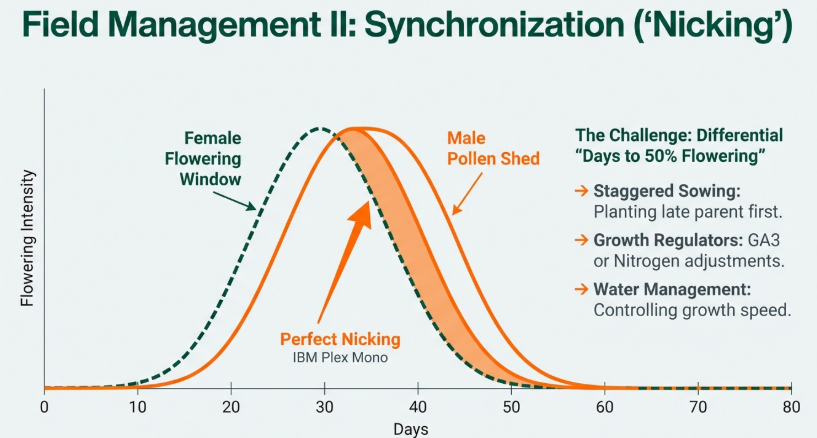
Tools for Achieving Synchrony
| Technique | Target Parent | Action / Chemical Concentration |
|---|---|---|
| Nitrogen (Urea) Spray | Early Parent | Apply a 1%–2% Urea spray to delay development. |
| Phosphate Spray | Late Parent | Apply 1.5% Potassium di-hydrogen phosphate to speed up growth. |
| GA3 Application | Late / Female Parent | Onions: 50 ppm at first seed stalk emergence for uniformity. Rice: 90–135g/ha for panicle alignment. |
| Water Management | Early Parent (Male) | Drain water to delay panicle development; use higher standing water to speed it up. |

2.4 Step-by-Step Field Maintenance and Pollination
A hybrid field is not “set and forget.” It requires active physical intervention to maintain purity and maximize set.
• Vigilant Roguing: Every single morning, before the anthers shed pollen, walk the A-line rows. Identify and physically remove “off-types” and “pollen shedders” (female plants that accidentally produce pollen).
• Physical Staking: In onions, you must stake the scapes (seed stalks) to keep them straight. This ensures the stigmas do not touch the sides of isolation cages, preventing contamination from outside pollen.
• Supplementary Pollination: For Rice, use “rope pulling” or bamboo sticks to shake the C-lines, physically casting pollen onto the A-lines. For Onions, place 3–5 active bee colonies per acre to ensure the cross occurs.
• Anti-Shattering: To prevent losing onion seeds to the ground, spray polyvinyl acetate on the umbels near maturity.
2.5 Precision Harvesting: The Final Safeguard
The most heartbreaking error is mixing your lines at the very end.
The Critical Rule: Always harvest the male C-lines first. Completely remove them from the field and threshing floor before you touch a single female A-line plant.
Checklist for a Successful Harvest
1. Clear the Males: Harvest and secure all C-line seeds. These are not the hybrid product; keep them separate.
2. Verify Dry Matter: For onions, ensure seeds have 60-70% dry matter content while still in the capsule before cutting the stalks.
3. Separate Threshing: Ensure threshing areas are cleaned and designated for specific lines. Heap the A-line umbels separately for curing and drying to maintain genetic identity.
By following these rigorous technical standards, you move beyond traditional farming into the elite science of seed production. Your reward is a high-uniformity, high-yield crop that sets the standard for the modern market.
3. Comparing the Candidates: Open-Pollinated vs. F1 Hybrids
To appreciate the hybrid, we must understand its predecessor, the Open-Pollinated Variety (OPV).
| Feature | Open-Pollinated Varieties (OPVs) | F1 Hybrids |
|---|---|---|
| Genetic Uniformity | Lower; significant variability in bulbs. | Extremely High; plants are genetically identical. |
| Breeding Cycle | Simple; natural crossing in the field. | Highly Complex; requires specialized parental lines. |
| Yield Potential | Standard baseline. | Quantum jump (up to 57% higher). |
| Commercial Feasibility | High for farmers (seed saving is easy). | High for seed companies; low for farm-level seed saving. |
The Bottleneck: Inbreeding Depression
Why can’t we just keep “selfing” the best onions to make them pure? The answer is Inbreeding Depression. Onions are natural out-breeders; when forced to self-pollinate, they lose vitality rapidly. Breeders generally hit a bottleneck after just 2–3 generations of inbreeding, as the plants become too weak to survive. This is why onion “inbreds” are often only partially inbred, requiring it to be surgical in how to manage their genetics.
4. The Pollination Problem: Beyond Hand Labor
If hybrids are the gold standard, why are they so difficult to produce? The primary hurdle is the onion’s own biology. Onions are protandrous, meaning the male pollen is shed 3–4 days before the female stigma is even receptive.
In a lab, “Hand Emasculation”—manually removing male parts— could be performed, but this is an academic reality and a commercial impossibility. To produce the tons of seed needed globally, manual labor would make the seed far too expensive for any farmer to buy. To scale up, a “biological off-switch” for pollen is needed.
5. The Science and Strategy of Hybrid Onion Seed Production
5.1 Strategic Introduction to Onion Hybridization
Onion (Allium cepa L.) is a preeminent high-value spice-cum-vegetable, indispensable to both global food security and the dehydrated processing industry. While India dominates the global landscape in terms of cultivation area (1.20 mha), its productivity remains a strategic bottleneck. Indian yields average approximately 16.1 t/ha, significantly trailing the global average of 19.3 t/ha.
The mission of this document is to delineate the protocols required to achieve a “quantum jump” in productivity by harnessing heterotic vigour. The transition from Open Pollinated Varieties (OPVs) to F1 hybrids is no longer an academic choice but a commercial necessity to ensure uniformity in maturity, bulb shape, and size. As the competitive landscape shifts, public and private sectors must prioritize hybrid seed production to overcome the yield plateaus inherent in traditional breeding.
5.2 Floral Biology and the Mechanics of Cross-Pollination
Success in onion hybridization is predicated on a granular understanding of floral architecture. The onion is a highly cross-pollinated species, and its biological constraints—specifically protandry—serve as the primary hurdle to controlled pollination.
Floral Characteristics and Environmental Induction
• The Umbel: Flowering initiates with the scape, a hollow, middle-swollen stalk bearing an umbel of 50 to 2000 individual flowers (typically 200–600).
• Vernalization Requirements: Flower induction is highly sensitive to temperature. High-standard production requires vernalization at 7–12°C for 4 to 6 weeks. While tropical cultivars may respond at 15–21°C, precise temperature control is the “So What?” factor in securing a synchronized bolting response.
• Protandry: This is the critical biological constraint. Anthers dehisce 3–4 days before the style reaches full length and the stigma becomes receptive. This gap necessitates an absolute reliance on insect-mediated pollination and renders synchronization (nicking) the most vulnerable point in the production cycle.
Anthesis and Stigma Receptivity
1. Opening Sequence: Flowers open irregularly over 2 to 3 weeks within a single umbel.
2. Kinetics of Anthesis: The duration from anthesis to withering is 10 days at 18°C, but it compresses to a mere 5 days at 30°C, narrowing the window for successful fertilization.
3. Pollination Temperature: Data confirms that the highest seed set is achieved at a mean temperature of 25°C.
5.3 The Engine of Hybridization: Male Sterility Systems
Commercial scalability hinges on Cytoplasmic Genic Male Sterility (CGMS). Hand emasculation, while useful for experimental crosses, is economically non-viable for industrial seed production.
Evaluating the CGMS Systems The global industry utilizes the “S” cytoplasm (derived from ‘Italian Red 13-53’) and the “T” cytoplasm (‘Jaunepaille des Venus’). Producers must recognize that the T-system is significantly more complex and difficult to stabilize because it involves three independent restorer loci and a high frequency of restorers in most populations, making “Maintainer” (B-line) identification nearly impossible. Consequently, the S-system remains the strategic standard.
The Genetic Engine: Cytoplasmic Genic Male Sterility (CGMS)
The breakthrough came with the discovery of “Male Sterility,” famously anchored by the 1925 discovery of a sterile “Italian Red” plant. This system, known as CGMS, is the “magic” that makes commercial hybrids possible.

Think of the Cytoplasm as the cellular “hardware” (maternally inherited) and the Nuclear Genes as the “software.”
The Three Pillars of the Hybrid System:
1. A-Line (Male Sterile): The Mother. She cannot produce pollen due to her hardware (S cytoplasm) and software (msms).
2. B-Line (Maintainer): The Twin. Identical to the A-Line but has normal hardware (N cytoplasm). Used to keep the A-line population going.
3. C-Line (Pollen Parent): The Father. Provides the desired traits and, if necessary, the “Restorer” software (MsMs) to make future generations fertile.

The Magic of Genetic Combinations: To be male sterile, a plant must have BOTH the Sterile hardware (S) AND the recessive software (msms). If the dominant Ms gene is present, it “overrides” the sterile cytoplasm.
| Cytoplasm Type | Nuclear Genes (Software) | Resulting Plant |
|---|---|---|
| S (Sterile) | msms (Recessive) | Male Sterile (The A-Line) |
| N (Normal) | msms (Recessive) | Male Fertile (The B-Line) |
| N (Normal) | MsMs (Dominant) | Male Fertile |
| N (Normal) | Msms (Heterozygous) | Male Fertile |
| S (Sterile) | MsMs (Dominant) | Male Fertile (Fertility Restored) |
| S (Sterile) | Msms (Heterozygous) | Male Fertile (Fertility Restored) |
Note: While S-cytoplasm is the standard, breeders also manage a “difficult sibling” known as T-cytoplasm, which is more complex to use because its fertility is restored by multiple independent loci.
5.4 Methodologies for Parental Line Development and Maintenance
Developing stable parental lines requires a rigorous decade-long commitment to backcrossing. The goal is to reach the fifth backcross (BC5), ensuring the A-line reaches >98% genetic identity with the B-line. However, onion is highly susceptible to inbreeding depression; vigor often collapses after three generations, necessitating careful selection to maintain viable populations.
12-Year Systematic Breeding Schematic
| Year | Technical Procedure |
|---|---|
| 1–2 | Selection of 100 primary bulbs; initiation of testcrosses with known male sterile lines to identify potential maintainers. |
| 3–4 | Progeny row evaluation; discard unstable pairs; confirm 100% sterility in F1 testcrosses. |
| 5–8 | Continued backcrossing to the sterile side; massing B-lines in 20/24 mesh cages (10–20 bulbs) to stabilize traits. |
| 9–12 | Transition to seed-to-seed production; complete BC5 to reach 98.44% purity; begin large-scale hybrid testing. |
5.5 Advanced Techniques: Chemical Induction and Gynogenesis
To bypass the decade-long breeding cycle, biotechnological interventions offer accelerated, albeit technically demanding, alternatives.
Chemical Gametocides The application of Gibberellic Acid (GA4/GA7) at 0.1–0.3% during bolting can induce male sterility. However, from a strategic standpoint, this remains “not very attractive” for large-scale operations due to the high cost of chemicals and the associated reduction in seed set. It should be reserved for inter-specific or inter-varietal crosses where seed volume requirements are low.
In-Vitro Haploid Production (Gynogenesis) Gynogenesis via un-pollinated ovule culture provides a “one-step” route to homozygous inbred lines.
• Precision Timing: Flower buds of 3.5–4.5 mm are the most responsive to induction; deviations from this size result in significantly lower haploid recovery.
• Chromosome Doubling: Mitotic poisons—specifically Oryzalin or APM (Amiprophos-methyl)—are mandated for doubling the chromosomes of resulting haploids. This bypasses the severe inbreeding depression typically encountered during successive selfing.
5.6 Operational Protocol for Commercial Hybrid Seed Production
Field-scale production demands logistical rigor and zero-tolerance for contamination.
Planting and Isolation Standards Producers must enforce isolation distances of 200m to 1000m to prevent genetic drift. Recommended row ratios are 4:1 or 8:2 (A:C lines).
Mandatory Synchronization (Nicking) Tactics Nicking failure is the most common cause of seed crop loss.
1. Thermal Adjustment: Store bulbs at 9–14°C to manipulate emergence timing.
2. GA3 Application: A single application of GA3 @ 50 ppm at the first stalk emergence is mandatory. This reduces the time to 80% flower stalk emergence by half and ensures the necessary uniformity for effective pollination.
Pollination and Roguing Management Producers must mandate a minimum of 3–5 active bee colonies per acre. For parental line multiplication, the use of 20–24 mesh insect-proof cages is required.
Critical Roguing Steps:
• Inspect fields daily every morning before anther dehiscence.
• Immediately remove “pollen shedders” (fertile plants) from the A-line.
• Eliminate all off-types and volunteer plants from previous cycles.
Harvesting and Post-Harvest Curing This phase is “make or break” for seed quality.
• Anti-Shattering: Spraying with polyvinyl acetate is required to prevent seed loss.
• Maturity Timing: Harvest when seeds reach 60–70% dry matter content while still in the capsule.
• Curing: Harvested umbels from A- and C-lines must be kept separate and cured in heaps for several days before threshing. This ensures proper seed drying and physiological maturity.
5.7 The Production Craft: Cages, Bees, and Backcrosses
Producing hybrid seed is a high-stakes exercise in precision.
Step-by-Step Breeding Timeline:
1. Selection: Identifying 100 top-quality bulbs for testing.
2. Test Crossing: Breeding selections with known male sterile lines to check for “nicking.”
3. Backcrossing: Repeatedly breeding sterile offspring back to the B-Line.
4. Verification: By the 5th backcross (BC5), the A-Line reaches 98.44% genetic identity with the desired parent while remaining sterile.
5. Scaling: Mass production in isolation.
The Professional’s Toolkit:
• Nature’s Workers: Use 3–5 bee colonies per acre. They are the primary workers on the payroll; without them, the A-Line remains unpollinated.
• The 20 °C Threshold: A critical “pro-tip”: if temperatures rise above 20 °C, some male sterile plants may produce a small amount of viable pollen. This environmental sensitivity can ruin a batch’s purity.
• Mastering “Nicking”: To ensure the Mother and Father flower at the same time, adjust storage temperatures of the bulbs (9-14 °C) or stagger planting dates.
• Chemical Precision: Use GA3 @ 50 ppm at the first sign of seed stalks to synchronize flowering, and polyvinyl acetate as an anti-shattering shield before harvest.

6. Summary: The Future of the Hybrid Seed
You have now seen behind the curtain of the seed industry. By turning a biological quirk—male sterility—into a tool, we have learned to bypass the limitations of nature to create plants that are more than the sum of their parts.
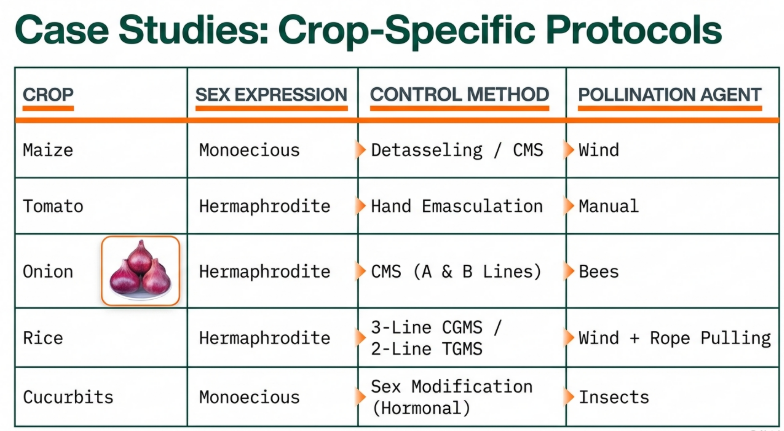
Critical Takeaways:
1. The Quantum Jump: Hybrids provide the yield and uniformity necessary for commercial survival.
2. The Biological Off-Switch: CGMS (hardware + software) is the only way to produce these seeds affordably at scale.
3. Precision is Paramount: Success hinges on exactness—from the 98.44% genetic purity of the A-line to the synchronization of flowering through temperature and chemical management.

As you step into your role in this field, remember that you are the architect of the plant’s potential. Understanding these biological principles is the key to powering global food security, one bulb at a time.
Image Summary


Questions/Answers
1. How do male sterility systems reduce the costs of hybrid seeds?
Male sterility systems reduce the costs of hybrid seeds primarily by eliminating the need for manual emasculation, which is the most labour-intensive and expensive step in hybrid seed production. In traditional hybrid production, workers must manually remove the anthers or male flowers from the female parent line to prevent “female-selfing” and ensure that only the desired pollen from the male parent fertilizes the plant.
The financial and operational impacts of incorporating male sterility include:
• Significant Labour Savings: For many crops, emasculation and manual pollination can account for more than half of the total labour required. For example, in tomato and okra production, manual hybridization operations have been reported to consume approximately 47% to 66% of the total labour employed.
• Enabling Large-Scale Production: While manual crossing is feasible for research, it is often commercially impractical or non-economical for broad-acre crops. Male sterility allows for large-scale production using natural pollinators such as wind or insects (e.g., honeybees), making the process much more efficient.
• Increased Genetic Purity: Using a completely male-sterile female line ensures high varietal purity by removing the human error associated with incomplete manual emasculation. This reduces the costs associated with post-harvest roguing and quality testing.
• Faster Integration into Elite Lines: Modern biotechnological approaches, such as CRISPR/Cas9-mediated mutagenesis, allow male sterility to be introduced into elite breeding lines in as little as 1–2 years. This is significantly faster than traditional backcrossing, which requires many generations to transfer recessive sterility while removing “linkage drags,” thereby reducing research and development costs.
• Efficient Seed Sorting Technologies: Next-generation systems like Seed Production Technology (SPT) and Manipulated GMS Maintainer (MGM) systems utilize transgenic markers (such as seedling or seed colour) to allow for easy identification and sorting of male-sterile seeds from maintainer seeds. This removes the resource-consuming and labour-intensive requirement of roguing fertile plants from the female rows in the field prior to anthesis.
• Improved Resource Management: Because neither the final hybrid seed nor the male-sterile line itself is transgenic in these next-generation systems (only the maintainer line carries the transgene), the costs of transgenic oversight and regulatory compliance for the commercial product are greatly reduced.
2. What role does biotechnology play in next-generation hybrid seed production?
Biotechnology plays a transformative role in next-generation hybrid seed production by moving beyond traditional, labor-intensive methods toward genetically engineered male-sterility platforms that ensure higher purity and lower costs. Unlike first-generation technologies that rely on natural mutations or cumbersome manual emasculation, next-generation systems utilize genome editing and transgenic maintainers to create efficient, sortable seed systems.
1. Targeted Mutagenesis for Male Sterility
One of the primary roles of biotechnology is the precise induction of male sterility using tools like CRISPR/Cas9.
• Rapid Development: CRISPR/Cas9 can be used to disrupt stamen-specific genes (such as SlSTR1 in tomato or ZmMS26 in maize) to generate novel genic male-sterile (GMS) lines in elite breeding backgrounds within just 1–2 years, significantly faster than traditional backcrossing.
• Genetic Stability: These biotechnological systems utilize nuclear-encoded sterility, which is often more genetically stable and reliable than cytoplasmic male sterility (CMS), which can be prone to unpredictable environmental interactions.
2. Transgenic Maintainer Systems
To overcome the difficulty of propagating male-sterile seeds, biotechnology has introduced complex transgenic maintainer lines.
• Fertility Restoration: Maintainer lines are engineered to contain a functional wild-type allele of the mutated sterility gene, allowing the male-sterile plant to self-pollinate and produce seed for the next generation.
• Pollen Inactivation: To prevent the maintainer’s transgene from entering the commercial hybrid seed, biotechnology employs pollen-lethality genes (like alpha-amylase) that disrupt the development of transgenic pollen grains. This ensures that the maintainer transgene is inherited only through the female side.
• Multi-Control Sterility (MCS): Advanced systems add multiple pollen-disruption modules to further minimize the risk of transgene flow, achieving extremely low transmission rates (as low as 0.03%).
3. Precision Seed Sorting
A hallmark of next-generation technology is the ability to easily sort maintainer seeds from male-sterile seeds.
• Visual Markers: Maintainer lines are often linked to visible marker genes, such as seedling-color genes (ANT1) in tomatoes, which allow for easy identification of fertile maintainer plants (e.g., purple seedlings) versus sterile female plants (e.g., green seedlings).
• Fluorescent markers: In crops like maize, biotechnology integrates fluorescent protein markers (such as DsRED) into the seed’s endosperm or aleurone. This allows for high-throughput, automated sorting of maintainer seeds (red fluorescent) from non-transgenic GMS seeds.
4. Supporting Technologies and Hybrid Fixation
Biotechnology provides additional tools that streamline the hybrid production lifecycle:
• Doubled Haploids (DH): This technique allows for the rapid generation of completely homozygous inbred lines in a single generation, drastically reducing the time required to develop parental lines for new hybrids.
• Synthetic Apomixis: Emerging research has shown that biotechnology can induce apomixis (asexual seed production) in hybrids. For example, in rice, researchers have induced mutations that allow F1 hybrids to produce clonal seeds, essentially “fixing” the hybrid vigor so farmers can save and replant the seeds in subsequent seasons.
• Molecular Markers: Marker-assisted selection (MAS) enables the early identification of desired traits and the verification of hybrid purity without waiting for a full growing season.
5. Production of Non-Transgenic Commercial Products
A significant advantage of these next-generation systems is that while they utilize genetic engineering in the parent-maintenance phase, the final commercial hybrid seeds are not transgenic. The transgenic elements are restricted solely to the maintainer line, which simplifies regulatory oversight and avoids the complications associated with marketing genetically modified organisms (GMOs) to consumers.
3. Why is synchronization of flowering between parents critical for high yields?
Synchronization of flowering between parental lines, often referred to as “nicking,” is one of the most critical factors in hybrid seed production because it ensures that viable pollen is available at the exact time the female parent’s flowers are receptive.
Failure to achieve proper synchronization is the most common reason for poor or no seed set, which directly reduces total yields. The importance of synchronization is detailed in the following areas:
1. Optimization of Seed Set and Yield
The primary goal of synchronization is to maximize the number of seeds produced per plant. In many species, seed set depends entirely on the supply of viable pollen from the male parent while the female’s stigma is receptive.
• Maize Yield Components: In maize, if the male sheds pollen too early (before silks emerge) or too late, only portions of the cob will be pollinated. This results in “blind butts” (unfilled bases) or empty tips, leading to significant yield loss due to a reduced number of kernels.
• High Seed Yield in Onions: In onion hybrid production, synchronization is essential to harvest the maximum amount of high-quality seed, often requiring adjustments to bulb storage temperatures or planting dates to ensure simultaneous flowering.
2. Prevention of Genetic Contamination
Poor synchronization exposes female parent plants to significant risks of genetic contamination.
• Vulnerability to Foreign Pollen: If the designated male parent is not shedding pollen when the female parent is receptive, the female is much more likely to be fertilized by unwanted foreign pollen carried by wind or insects from neighboring fields.
• Risk of Female-Selfing: In crops like maize, if detasseling is delayed and synchronization is poor, the female parent may pollinate itself, which severely diminishes the genetic purity and quality of the hybrid seed.
3. Economic and Operational Reliability
Synchronization makes hybrid seed production more reliable and cost-effective. Parents that differ widely in their flowering dates are generally avoided because they make the production process:
• Complicated and Costly: Managing staggered planting or other techniques to force synchronization increases labor and resource requirements.
• Unreliable: If environmental conditions further disrupt an already weak “nick,” the entire crop may be rejected for certification due to poor yield or low genetic purity.
4. Uniformity and Quality
Proper synchronization contributes to a uniform flowering period, which ensures that the resulting seeds develop and mature at a similar rate. This uniformity is a hallmark of F1 hybrids and is necessary for achieving the high-quality standards (such as germination and purity percentages) required for commercial sale.
Techniques to Ensure Synchronization: To achieve a perfect nick, breeders often use staggered (split) planting, where one parent is planted several days before or after the other. Other methods include adjusting fertilizer applications, varying planting depths, or using growth regulators like GA3 to hasten or delay flowering.
4. Explain the major quality control steps from field inspection to seed bagging.
Quality control in hybrid seed production is a rigorous, multi-stage process governed by both field standards and laboratory analyses to ensure genetic purity and physiological soundness.
1. Field Inspection and Monitoring
Field inspections are conducted by authorized personnel from certifying agencies at critical growth stages, such as pre-flowering, flowering, and maturity. These inspections verify that isolation requirements (both space and time) are met to prevent cross-pollination from foreign pollen sources. Inspectors also confirm the authenticity of the source seed and review previous cropping history to ensure the field is free of volunteer plants that could contaminate the hybrid.
2. Roguing and Pollination Control
Roguing is the selective removal of undesirable plants, including off-types, diseased plants, and objectionable weeds, and it must be practiced regularly throughout the growing season. In hybrid production, it is essential to remove “pollen shedders”—male-fertile plants occurring in the female parent line—before they can pollinate the crop and cause “female-selfing”. For crops like maize, timely detasseling (physical removal of tassels from female plants) is a critical quality control step that must be performed daily until all tassels are removed.
3. Harvesting and Separate Handling
Harvesting is timed to coincide with physiological maturity, the point when seed germination and vigor reach their maximum. A major quality control requirement at this stage is the separate harvesting of male (pollen) and female (seed) parents to avoid mechanical mixtures. Harvest equipment and transportation vehicles must be thoroughly cleaned between varieties to prevent accidental contamination.
4. Post-Harvest Processing (Conditioning)
Once harvested, seeds undergo several conditioning steps:
• Seed Drying: Moisture must be reduced to safe levels (typically 9–12% for ambient storage or 6–8% for sealed packaging) using controlled temperatures, often not exceeding 35°C to 44°C, to maintain viability.
• Cleaning: Air-screen machines and specialized separators remove inert matter, trash, weed seeds, and other crop seeds.
• Grading and Sizing: Seeds are separated into uniform lots based on width, thickness, and length to ensure consistent appearance and accurate planting by mechanical equipment.
5. Laboratory Quality Testing
Representative samples are drawn from the homogeneous seed lot for standardized tests. Major quality tests include:
• Genetic Purity: Verified through grow-out tests or molecular techniques to ensure the seed is true to type.
• Physical Purity: Determines the percentage of pure seed versus inert matter and other seeds.
• Germination and Vigor: Measures the seed’s capacity to produce normal, healthy seedlings under diverse conditions.
• Seed Health: Checks for the presence of designated seed-borne diseases and pests.
6. Seed Treatment, Bagging, and Labeling
Before the final step, seeds are often treated with fungicides or insecticides to protect them from soil-borne organisms and storage pests. Bagging is the final operation where seeds are packed into specified units. Each bag must be labeled and tagged with information including the variety name, lot number, purity, germination percentage, and test date. Tags are color-coded by seed class, such as white for foundation seed and blue for certified seed, and bags are sealed to prevent tampering.
5. How are biotechnology and genome editing creating next-generation hybrid breeding systems?
Biotechnology and genome editing are creating next-generation hybrid breeding systems by moving beyond traditional labor-intensive methods toward genetically engineered male-sterility platforms that ensure higher purity and lower costs. Unlike first-generation technologies that rely on natural mutations or manual emasculation, next-generation systems utilize genome editing and transgenic maintainers to create efficient, sortable seed systems.
1. Targeted Mutagenesis for Rapid Male Sterility
One of the primary roles of biotechnology is the precise induction of male sterility using tools like CRISPR/Cas9.
• Rapid Development: CRISPR/Cas9 is used to disrupt stamen-specific genes, such as SlSTR1 in tomato or ZmMS26 in maize, to generate novel genic male-sterile (GMS) lines in elite breeding backgrounds within just 1–2 years.
• Efficiency: This is significantly faster than traditional backcrossing, which requires many generations to transfer recessive sterility while removing “linkage drags”.
• Genetic Stability: These biotechnological systems utilize nuclear-encoded sterility, which is often more genetically stable and reliable than cytoplasmic male sterility (CMS), which can be prone to unpredictable environmental interactions.
2. Transgenic Maintainer Systems (SPT, MCS, and MGM)
To overcome the difficulty of propagating male-sterile seeds, biotechnology has introduced complex transgenic maintainer lines.
• Seed Production Technology (SPT): This system uses a transgenic maintainer that carries a functional wild-type allele to restore fertility, a pollen-inactivating gene to prevent the transgene from spreading, and a color marker for sorting.
• Multi-Control Sterility (MCS): To further minimize the risk of transgene flow, advanced systems add multiple pollen-disruption modules (such as alpha-amylase and DAM), achieving extremely low transgene transmission rates (as low as 0.03%).
• Manipulated GMS Maintainer (MGM): This innovative strategy uses a single transformation to simultaneously create the GMS line and its maintainer, drastically reducing the complexity of the breeding scheme.
3. Precision Seed Sorting
A hallmark of next-generation technology is the ability to easily sort maintainer seeds from male-sterile seeds, eliminating the resource-consuming requirement of roguing fertile plants in the field.
• Visual Markers: Maintainer lines can be linked to visible marker genes, such as seedling-color genes (ANT1) in tomatoes, allowing for easy identification of fertile maintainers (purple) versus sterile female plants (green) at the seedling stage.
• Fluorescent Markers: In crops like maize, biotechnology integrates fluorescent protein markers (such as DsRED) into the seed’s endosperm or aleurone. This allows for high-throughput, automated sorting of maintainer seeds (red fluorescent) from non-transgenic GMS seeds.
4. Non-Transgenic Commercial Products
A significant advantage of these next-generation systems is that while they utilize genetic engineering in the parent-maintenance phase, the final commercial hybrid seeds are not transgenic.
• The transgenic elements are restricted solely to the maintainer line and are prevented from entering the hybrid seed by pollen-lethality genes that disrupt the development of transgenic pollen grains.
• This ensures that only the maintainer line carries the transgene and requires regulatory oversight, while the commercial product remains non-GMO.
6. Can you tell me about different types of classical hybridization?
Classical hybridization refers to the different methods of combining parental lines to produce F1 hybrid seeds, primarily to exploit hybrid vigor (heterosis) and ensure uniformity. The major types include:
1. Single-Cross Hybrids (A × B)
A single-cross hybrid is the first generation produced by crossing two unrelated inbred lines.
• Performance: These hybrids provide the greatest opportunity for expressing hybrid vigor and usually result in the highest grain yields and maximum uniformity.
• Economics: They are generally the most expensive to produce because the inbred female parent typically has low seed productivity, leading to high seed prices.
• Modified Single Cross: This involves crossing two closely related inbred lines (A’ × A) to create a related single-cross, which is then used as a more productive female parent for crossing with an unrelated inbred (B).
2. Three-Way Cross Hybrids (A × B) × C
These are produced by crossing a single-cross hybrid (A × B) as the female parent with an unrelated inbred line (C) as the male parent.
• Economics: The primary purpose is to reduce seed costs because the single-cross female parent is much more productive than a pure inbred line.
• Uniformity: These are common in many markets but are slightly more variable in the field compared to single-cross hybrids.
3. Double-Cross Hybrids (A × B) × (C × D)
A double-cross hybrid involves crossing two different single-cross hybrids.
• Economics: This type produces the lowest seed cost because both parents are vigorous hybrids, allowing for a high female-to-male row ratio in the seed field.
• Uniformity: The resulting crop is the most variable in appearance and grain yield among the major types.
• Modified Three-Way Cross: A variation involving the cross between a single-cross hybrid (A × B) and a single-cross made from two related inbred lines (C’ × C).
4. Top-Cross and Double Top-Cross Hybrids
• Top-Cross: Produced by crossing an inbred line with an open-pollinated variety (OPV). These are generally less uniform and productive but are useful in seed markets requiring lower-cost products.
• Double Top-Cross: A hybrid produced by crossing a single-cross hybrid (F1) with an open-pollinated variety.
5. Varietal Cross Hybrids
A varietal cross is a hybrid produced by crossing two unrelated open-pollinated varieties. While they are among the least uniform and productive types, they have the advantage of abundant pollen production and better synchronization between parents due to their inherent variability.
Comparison Summary
| Hybrid Type | Female Parent | Male Parent | Seed Yield | Uniformity | Yield Potential |
|---|---|---|---|---|---|
| Single-cross | Inbred line | Inbred line | Lowest | Highest | Highest |
| Three-way | Single-cross | Inbred line | High | Moderate | High |
| Double-cross | Single-cross | Single-cross | Highest | Low | Moderate/High |
| Top-cross | OPV | Inbred line | Moderate | Low | Moderate |
| Varietal cross | OPV | OPV | Moderate/High | Lowest | Moderate/Low |
7. How do environmental factors and pollinators affect the success of hybrid seed yields?
Environmental factors and pollinators are the primary external controls that determine the success and yield of hybrid seed production. Their interaction influences everything from the physiological health of the seed to the genetic purity of the final product.
Environmental Factors
The environment exerts a profound influence on the reproductive cycle of parental lines:
• Temperature and Photoperiod: These factors are critical for inducing flowering and maintaining the stability of male sterility systems. In environment-sensitive systems like rice and castor, specific temperature and light regimes are required to ensure the female parent remains sterile during crossing but fertile during maintenance.
• Pollen Viability and Stigma Receptivity: Extreme temperatures can be devastating; for instance, heat above 38°C can desiccate pollen and reduce seed set in crops like sunflower to as little as 60%. Conversely, the duration of stigma receptivity—often longer in male-sterile lines—can be shortened by environmental stress, narrowing the window for successful fertilization.
• Rainfall and Humidity: High rainfall during the flowering period is generally undesirable as it washes away pollen, inhibits insect activity, and increases the risk of seed-borne diseases. High relative humidity is also necessary for some processes but can lead to poor pollen dehiscence in others.
• Synchronization (“Nicking”): Environmental fluctuations are the most common cause of poor “nicking,” where the male and female parents fail to flower simultaneously. Breeders often use techniques like staggered (split) planting or chemical growth regulators to compensate for these environmental shifts.
The Role of Pollinators
Pollinators are essential for transferring pollen from the male parent to the receptive female parent, especially in cross-pollinated species:
• Natural Vectors: In crops like sunflower, onion, and cucurbits, insects such as honeybees, bumblebees, and stingless bees are the primary vectors. The number of seeds produced is often directly correlated with the frequency of pollinator visitations and the amount of pollen deposited on the stigma.
• Pollinator Activity and Weather: Insects are highly sensitive to weather conditions; cool, wet weather or extreme heat and low humidity significantly reduce their foraging activity.
• Supplementary Pollination: To maximize yields, producers often maintain beehives in seed production plots (typically 3–5 per acre). In wind-pollinated crops like rice, humans provide supplementary pollination through manual techniques like rope pulling or shaking the male plants with bamboo sticks to disperse pollen over the female rows.
Mitigation through Management
To stabilize yields against environmental uncertainties, producers employ several agronomic strategies:
• Location Selection: Seed production is typically moved to regions with abundant sunshine and reliable, mild weather during the flowering window.
• Protected Cultivation: The use of polyhouses and insect-proof net houses is an emerging trend, particularly for high-value vegetable hybrids like tomato and bitter gourd. These structures protect the crop from unseasonal rain, temperature spikes, and insect vectors that carry viral diseases.
• Border Rows: Planting several rows of the male parent around the perimeter of the field acts as a pollen barrier, increasing the concentration of desired pollen and protecting against foreign contamination.
8. What are the specific benefits of using polyhouses for hybrid seed?
The use of polyhouses and other protected cultivation structures for hybrid seed production offers significant advantages in terms of yield, quality, and economic returns, particularly for high-value vegetable crops.
1. Environmental Stabilization
Polyhouses provide a controlled environment that shields crops from unpredictable weather patterns.
• Protection from Stress: Seed production under open field conditions is often hampered by environmental stresses, whereas polyhouses mitigate these risks, ensuring more consistent results.
• Optimized Receptivity: For successful fertilization, it is critical that no moisture is present around the stigma for at least four hours. Polyhouses prevent rain from interfering with this window of receptivity, which is especially important in high-rainfall regions.
• Climate Control: They protect against sudden temperature spikes or unseasonal rains that can hamper female flower production, fruit set, and overall development.
2. Enhanced Yield and Seed Quality
Protected environments consistently produce superior physical and physiological seed attributes.
• Higher Productivity: Studies in tomato and bottle gourd production show that polyhouses lead to significantly higher hybrid seed yields compared to open fields.
• Improved Seed Vigor: Seeds produced in these environments often exhibit better germination rates, higher vigor indices, and lower electrical conductivity, which indicates sounder development.
• Photosynthetic Efficiency: Protected conditions can improve a plant’s photosynthetic efficiency and chlorophyll content, leading to better assimilation of food reserves in the seeds.
3. Pest and Disease Management
One of the most critical benefits is the physical barrier these structures provide against biological threats.
• Insect Vector Exclusion: Polyhouses and insect-proof net houses effectively exclude vectors like whiteflies, aphids, and leaf miners, which are major sources of viral disease transmission.
• Reduced Chemical Use: Because the physical barrier reduces the chance of pest attack, producers can achieve high-quality yields with a significant reduction in chemical pesticides.
• Organic Suitability: The decreased reliance on chemicals makes protected cultivation a viable option for organic hybrid seed production.
4. Economic and Strategic Advantages
The increased initial investment in polyhouse infrastructure is often offset by the high value of the resulting product.
• Profitability: Economic analysis of tomato hybrid seed production in plastic houses has shown a net profit of 92% per kilogram of seed. In Nepal, the profit from F1 tomato seed produced in plastic houses was reported to be 350 times higher than that of maize seed production.
• Reliability for Farmers: Farmers can produce their own high-quality F1 seeds in their local environments, reducing dependence on expensive and sometimes unreliable imported seeds.
• Market Expansion: The improved quality and reliability of seeds grown under protection enhance a country’s potential for seed export.
9. How does supplementary pollination improve hybrid seed set and quality?
Supplementary pollination improves hybrid seed set and quality by ensuring that a sufficient quantity of viable pollen reaches receptive stigmas, particularly when natural pollination vectors are insufficient or when the flowering periods of parental lines do not perfectly overlap.
According to the sources, the role of supplementary pollination in enhancing production includes:
1. Maximizing Seed Set and Yield
The primary function of supplementary pollination is to ensure adequate fertilization, which directly correlates to total yield.
• Preventing Empty Grains/Fruits: In maize, inconsistent or insufficient pollen results in empty cobs or unfilled “blind butts,” which causes high yield loss. In cucurbits, insufficient pollination leads to a higher number of underdeveloped seeds.
• Mechanical Methods in Rice: Because rice is a self-pollinated crop with heavy pollen, producers often use manual techniques such as rope pulling or shaking the male parent with bamboo sticks to disperse pollen over the female rows. This process is repeated 4–5 times a day at 30-minute intervals during peak anthesis to maximize fertilization.
• Yield Gains in Berseem: Maintaining three to five honeybee hives in close proximity to seed fields significantly enhances seed set.
2. Enhancing Seed Quality and Vigour
Supplementary pollination contributes to better physiological traits in the resulting seed.
• Higher Vigour Indices: In studies of bitter gourd produced under insect-proof net houses with hand pollination, the resulting seeds showed significantly higher seed vigour index scores (3594.60) compared to those grown in open fields (2112.88).
• Filled Seed Percentage: Supplementary hand pollination in bitter gourd significantly increased the number of filled seeds per fruit (45.3) compared to open field conditions.
• Better Germination: Seeds produced through controlled supplementary pollination often exhibit superior performance in terms of rate and uniformity of germination.
3. Mitigating Environmental and Biological Limitations
• Overcoming Poor “Nicking”: When parental lines flower at slightly different times, supplementary methods like walking through the field with motorized mist-blowers can help blow pollen from the male parent across female rows even if the natural “nick” is weak.
• Ensuring Vector Populations: In cross-pollinated crops like sunflower and onion, natural insect populations may be insufficient due to high plant density or excessive pesticide use. Introduction of supplementary beehives (typically 3–5 per acre in onion or 2.5 per hectare in sunflower) ensures a steady supply of pollinators.
• Cryopreservation: Storing pollen in liquid nitrogen at -196°C can provide a constant supply of fertile pollen for supplementary pollinations, which helps improve seed set regardless of the current season’s male plant performance.
4. Uniformity and Consistency
Supplementary pollination ensures that pollination occurs more uniformly across the entire female parent population. In crops like cauliflower, utilizing stored pollen or synchronized vectors like blowflies helps overcome weak self-incompatibility reactions at high temperatures, which would otherwise result in undesirable selfed or sibling seeds. In sunflower, manual rubbing of the capitula with collected pollen is used to ensure every part of the seed head is fertilized, avoiding scattered empty seeds.
10. How does rope pulling help rice seed set specifically?
Rope pulling is a specialized technique of supplementary pollination used in hybrid rice seed production to maximize seed set by mechanically facilitating the transfer of pollen from male parent plants to receptive female parent plants.
Specifically, rope pulling helps improve seed set through the following mechanisms:
1. Overcoming Biological Barriers
Rice is naturally a self-pollinated crop with heavy pollen grains that do not disperse easily through natural wind alone. In hybrid production, where the female line is male-sterile, seed formation is entirely dependent on external pollen transfer. Rope pulling provides the necessary mechanical force to shake the male parent plants, causing their pollen to be shed and dispersed over the adjacent female rows (A-line).
2. Precision Timing during Peak Anthesis
The effectiveness of rope pulling depends on its alignment with the brief window of rice pollen viability and flower receptivity:
• Peak Anthesis: The first pulling is performed in the morning during the initiation of spikelet opening, specifically when 30–40% of the spikelets are open.
• Frequency: Because rice pollen can lose its viability in as little as 10 minutes due to desiccation at high temperatures, the process is repeated 4–5 times a day at 30-minute intervals until flowering for the day is complete.
• Duration: This activity is carried out for 7–10 days during the entire flowering period to ensure that every receptive female flower has the highest possible chance of being pollinated.
3. Maximizing Pollen Load and Dispersion
By pulling a rope through the male rows, producers can ensure a uniform and abundant cloud of pollen is released directly over the receptive stigmas of the female plants. This is critical because the seed set on the female parent is directly limited by the amount of viable pollen supplied by the male parent during the window when the female’s stigma is receptive.
4. Mitigation of Poor “Nicking”
In cases where the synchronization of flowering (nicking) between the parents is imperfect, supplementary methods like rope pulling—or similar mechanical shaking using bamboo sticks—can help maximize the use of whatever viable pollen is available to ensure the highest possible yield.
11. What are the benefits of using insect-proof net houses?
Using insect-proof net houses for hybrid seed production, particularly for high-value vegetable crops like bitter gourd, tomato, and onion parental lines, offers several significant advantages over traditional open-field cultivation.
1. Enhanced Yield and Productivity
Protected environments consistently produce higher quantities of hybrid seeds.
• Significant Yield Increases: For bitter gourd, studies show a dramatic increase in productivity within net houses, with a reported seed yield of 232 kg per hectare compared to only 141 kg in open fields.
• Improved Fruit Components: Net houses support higher total seeds per fruit (46.7 vs. 38.6) and a significantly greater number of filled seeds per fruit (45.3 vs. 34.9).
• Photosynthetic Efficiency: Plants grown under protection may exhibit better photosynthetic efficiency and increased chlorophyll content, leading to better assimilation of food reserves in the seeds.
2. Superior Seed Quality and Health
The physical and physiological attributes of seeds grown in protected structures are markedly improved.
• Higher Vigour Indices: Research on bitter gourd indicates that seeds from net houses achieve a seed vigour index-I of 3594.60, while open-field seeds reach only 2112.88.
• Physiological Integrity: Seeds from protected environments show lower electrical conductivity (0.13 ds/m vs. 0.18 ds/m), which serves as a reliable indicator of sound development and high seed quality.
• Long-Term Storability: Hybrid seeds produced in net houses maintain their superiority in quality traits even after eight months of ambient storage.
• Physical Soundness: Seeds often have better physical parameters, such as increased width and higher seed coat weight.
3. Pest and Disease Management
One of the primary roles of an insect-proof net house is to act as a physical barrier against biological threats.
• Vector Exclusion: These structures effectively exclude insect vectors like whiteflies, aphids, and leaf miners, which are common carriers of devastating viral diseases.
• Reduced Chemical Dependency: By physically preventing pest attacks, producers can significantly reduce the indiscriminate use of chemical pesticides, making the technology more lucrative and environmentally friendly.
• Organic Suitability: The lower reliance on chemicals makes protected cultivation a viable and lucrative option for organic hybrid seed production.
4. Mitigation of Climatic Stress
Net houses provide a buffer against unpredictable environmental conditions that often derail seed production in open fields.
• Weather Protection: They shield crops from unseasonal rains and sudden temperature spikes that can hamper female flower production, fruit set, and overall development.
• Climate Resilience: Protected environments are considered essential for narrowing the ill effects of changing climate on seed production, ensuring a more stable and reliable supply of seeds.
5. Genetic Purity and Maintenance
For certain crops, net houses are vital for maintaining the integrity of parental lines.
• Physical Isolation: In onion hybrid production, parental lines (A, B, and C lines) are multiplied in insect-proof cages to maintain a high degree of purity.
• Barrier to Foreign Pollen: These structures prevent umbels from coming into contact with foreign pollen carried by external pollinators, which would otherwise lead to genetic contamination.
12. Tell me about the different methods for maize detasseling.
Maize detasseling is the physical removal of the tassel from the female parent line to prevent “female-selfing” and ensure that fertilization occurs only from the desired male parent. This process is generally conducted using manual labor, mechanical equipment, or a combination of both.
1. Manual (Hand) Detasseling
Manual detasseling is the most traditional method and involves workers physically pulling the tassels from the plant.
• Technique: Workers achieve manual detasseling by grasping the stalk just below the tassel and removing it with a quick upward jerk. It is important to grasp the complete tassel so all pollen-bearing parts are removed.
• Execution: Laborers typically walk through the field or ride on motorized high-clearance personnel carriers (detasseling carts). These machines move slowly, allowing workers to stand on platforms and look down into the plant canopy to remove tassels more effectively than they could on foot.
• Advantages: This method causes minimal damage to the plant, is effective even when plants have non-uniform heights, and can be performed when fields are too wet for heavy machinery.
• Disadvantages: It is highly labor-intensive and expensive, often requiring hundreds of workers to cover large acreages within a brief flowering window.
2. Mechanical Detasseling
Mechanical detasselers were developed to reduce the heavy reliance on hand labor. These self-propelled, high-clearance machines generally fall into two categories:
• Cutters: These machines use rotating blades or circular saw blades mounted in a V-position to cut or shred the top of the plant, including the tassel. The blades can be adjusted in height and operated at various planes.
• Pullers: Often called “wheel pullers,” these use two counter-rotating wheels, rubber rollers, or pneumatic tires mounted in a V-position. They grasp the tassel and upper leaves and pull them upward in a motion that mimics hand detasseling.
• Drawbacks: A primary disadvantage of mechanical detasseling is that it often removes the top 1 to 3 leaves along with the tassel. This defoliation can lead to significant yield reductions and a decrease in the percentage of desirable “flat size” kernels.
3. Combined and Supplementary Approaches
Because machines may miss tassels on shorter plants or leave “tassel-stubs,” producers rarely rely on mechanical methods alone.
• Hand Follow-up: Machine detasseling is almost always supplemented by hand detasseling to remove missed, late-maturing, or short tassels.
• Blending for Pollen Security: In some cases, a portion of the hybrid seed produced via detasseling (25% to 50%) is blended with seed produced using male-sterility systems. This ensures that if the male-sterile plants do not shed enough pollen due to environmental stress, the fertile plants from the detasseled fraction will provide supplemental pollen in the farmer’s field.
4. Critical Operational Standards
Regardless of the method, the success of detasseling depends on strict timing and management:
• Timing: Detasseling must commence when the top 3–4 cm of the tassel is visible above the leaf whorl and must be completed before any pollen is shed or silks emerge.
• Frequency: Once started, the operation must be repeated daily, regardless of weather conditions, until all tassels are removed.
• Purity Standards: A tassel is considered to be “shedding” if 2.5 cm or more of its center spike or side branches have exposed anthers. Certifying agencies typically require that no more than 1% of female plants shed pollen at any single inspection.
13. What are the key differences between composite and synthetic varieties?
Composite and synthetic varieties are two types of advanced populations used in plant breeding to enhance crop output, genetic variety, and environmental tolerance. While both aim to integrate beneficial features from multiple parental lines, they differ significantly in their genetic structure, development, and maintenance.
The key differences between composite and synthetic varieties are as follows:
1. Definition and Development Method
• Composite Varieties: These are created by mixing seeds from several genetically distinct but complementary parent lines and permitting unrestricted interbreeding between them over subsequent generations. The resulting population is stabilized through mass selection or natural selection.
• Synthetic Varieties: These are developed through the controlled hybridization of specific inbred lines followed by seed multiplication. The goal is to optimize hybrid vigor (heterosis) while maintaining genetic stability over generations.
2. Genetic Structure and Diversity
• Composite Varieties: They are genetically heterogeneous and possess high genetic diversity. This diversity provides a broad genetic base that enhances the population’s ability to adapt to shifting environmental conditions.
• Synthetic Varieties: They are genetically more homogeneous and form a uniform population. While they have moderate diversity, they are more vulnerable to environmental changes and disease outbreaks due to this relative genetic uniformity.
3. Yield Potential and Performance
• Composite Varieties: These varieties offer moderate but stable yields over time. Their primary advantage is yield stability and resilience across various settings.
• Synthetic Varieties: They have a higher yield potential initially because they capture and hold onto hybrid vigor (heterosis). However, this yield potential may decline over generations due to genetic recombination and the loss of heterosis.
4. Adaptability and Stress Tolerance
• Composite Varieties: They exhibit high environmental adaptability and better resilience to biotic and abiotic stresses (such as drought, pests, and salinity) due to their high internal genetic variability.
• Synthetic Varieties: Their adaptability is moderate, and they are more sensitive to environmental changes. However, they often show improved resistance to specific stresses because their parental inbred lines were specifically selected for those traits.
5. Maintenance and Production Costs
• Composite Varieties: Maintenance is relatively simple, involving mass selection where the top-performing plants are chosen for seed production in each generation. The cost of production is lower, requiring less technical expertise.
• Synthetic Varieties: Maintenance is more difficult and requires controlled pollination and the regular reselection of parental lines to prevent the loss of heterosis. The cost of production is higher due to the need for intensive breeding programs.
6. Suitability and Crop Examples
• Composite Varieties: These are well-suited for low-input farming systems and resource-poor farmers. They are commonly used in self-pollinated crops like rice and wheat. Examples include composite wheat and rice in India and China.
• Synthetic Varieties: These are more suitable for intensive, high-input agricultural systems. They are more prevalent in cross-pollinated crops where heterosis is significant, such as maize, rye, and forage grasses. Examples include synthetic maize in Mexico and sub-Saharan Africa.
Comparison Summary
| Aspect | Composite Varieties | Synthetic Varieties |
|---|---|---|
| Genetic Structure | Genetically heterogeneous (High diversity) | Genetically homogeneous (Uniform) |
| Yield Potential | Moderate and stable | High (declines over time) |
| Adaptability | High (resilient to change) | Moderate (sensitive to change) |
| Maintenance | Mass selection | Controlled pollination/reselection |
| Production Cost | Lower | Higher |
| Ideal Systems | Low-input/Resource-poor | Intensive/High-input |
14. Compare yields of composite versus synthetic variety populations.
In comparing the populations of composite and synthetic varieties, the primary distinction lies in the trade-off between peak yield potential and yield stability over time.
1. Yield Potential and Hybrid Vigor
• Synthetic Varieties: These populations are specifically developed through the controlled hybridization of selected inbred lines to exploit hybrid vigor (heterosis). Consequently, they possess a higher yield potential than composite varieties.
• Composite Varieties: These are created by mixing diverse but complementary parental lines and allowing them to interbreed freely. Their yield potential is generally characterized as moderate compared to synthetics.
2. Stability and Sustainability of Yield
• Composite Varieties: The hallmark of composite populations is yield stability. Because they are genetically heterogeneous and possess high genetic diversity, they provide reliable results across various settings and are more resilient to shifting environmental conditions, pests, and diseases.
• Synthetic Varieties: While they offer high initial yields, this performance is often unstable over generations. As genetic recombination occurs in subsequent years, the captured heterosis is gradually lost, leading to a decline in yield.
3. Performance Under Different Input Systems
• Synthetic Varieties: Their high yield potential makes them most suitable for intensive, high-input agricultural systems where maximizing output is the priority.
• Composite Varieties: Due to their stability and lower requirement for fertilizers and pesticides, they are ideal for low-input farming systems and resource-poor farmers who require consistent, dependable harvests rather than maximum peak yields.
Summary Comparison Table
| Feature | Composite Varieties | Synthetic Varieties |
|---|---|---|
| Initial Yield Potential | Moderate | High (due to heterosis) |
| Yield Consistency | Stable over time | Declines over generations |
| Uniformity | Lower; heterogeneous | Higher; homogeneous |
| Ideal Environment | Low-input/Variable | High-input/Intensive |
15. How are field standards and isolation distances used for purity?
Field standards and isolation distances are fundamental regulatory tools used to maintain the genetic and physical purity of hybrid seeds by preventing contamination from foreign pollen, “volunteer” plants, and mechanical mixtures. These standards are established by national and international certifying agencies, such as AOSCA and the OECD, and are verified through a series of field inspections.
1. Field Standards for Purity
Field standards represent the minimum requirements for growing conditions that a seed lot must meet to be eligible for certification. Key components include:
• Previous Cropping History: To avoid genetic contamination from “volunteer” plants (survivors from the previous season), standards dictate that the field must not have grown the same crop in the preceding year(s). For example, under OECD schemes, legume species require a three-year break from the same crop.
• Off-type Tolerance: Standards specify the maximum permissible percentage of off-types (plants that deviate from the variety’s official description). In maize hybrids, for instance, the maximum tolerance for off-types in a certified field is often as low as 0.3%.
• Pollen Shedding Control: In hybrid production, standards strictly limit the number of “pollen shedders”—male-fertile plants occurring in the female line—to prevent “female-selfing”. In maize, the female parent is typically limited to 1% shedding tassels at any single inspection.
• Disease and Weed Limits: Standards designate specific “objectionable” or “noxious” weeds and seed-borne diseases that must be absent or below a minute threshold to pass inspection.
2. Isolation Distances
Isolation is the spatial separation of a seed production plot from potential sources of contaminating pollen, such as other varieties of the same species or cross-compatible weeds.
Types of Isolation
• Spatial (Distance) Isolation: This is the most common method, requiring a minimum physical distance based on the crop’s pollination method (wind vs. insect) and pollen weight.
◦ Self-pollinated crops (e.g., wheat, rice) require smaller distances, often between 100m and 200m.
◦ Cross-pollinated crops (e.g., onion, sunflower) require much larger distances due to insects or wind carrying pollen long distances. Standards for onion can range from 600m to 1200m, while sunflower may require up to 1.6 km to 6.4 km.
• Temporal (Time) Isolation: This involves staggering planting dates so that the seed crop and any nearby contaminant crops do not flower simultaneously. A difference of 15 to 30 days is typically required to ensure that the window of receptivity for the female parent does not overlap with foreign pollen shed.
• Barrier Isolation: Physical barriers such as buildings, polyhouses, or tall “barrier crops” (e.g., sugarcane, sesbania, or rows of the male parent) can be used to block the flight path of insects or the drift of wind-borne pollen.
3. Modification of Standards
Producers can sometimes reduce spatial isolation requirements by using border rows. By planting several extra rows of the designated male parent around the field’s perimeter, the producer creates a “pollen cloud” that increases the chance of desired fertilization and provides a buffer against foreign pollen. In maize, every 1 meter of barrier rows can sometimes reduce the required isolation distance by 7 to 8 meters.
4. Verification through Field Inspection
Field standards are verified by authorized personnel who conduct 3 to 6 inspections during critical growth stages: pre-flowering, peak anthesis, and maturity. Inspectors use specific walking patterns (such as a “Model X” or “Alternate Directions”) to sample representative areas of the field and count contaminants to determine if the field meets the established standards. If standards are not met—for instance, if too many off-types are detected—the field is rejected for certification.
16. Explain how CRISPR/Cas9 generates manipulated GMS maintainer systems.
The generation of a Manipulated GMS Maintainer (MGM) system represents a next-generation approach to hybrid seed production that uses CRISPR/Cas9 to simultaneously create a male-sterile line and its corresponding maintainer line through a single transformation. This biotechnology-based platform bypasses the years of laborious backcross breeding required by traditional systems to transfer sterility into elite backgrounds.
The process of generating an MGM system involves the following steps:
1. Targeted Mutagenesis of Endogenous Fertility Genes
The first step involves using the CRISPR/Cas9 system to precisely disrupt a nuclear gene essential for stamen or pollen development.
• Gene Selection: Researchers target stamen-specific genes, such as SlSTR1 in tomato or ZmMS26 in maize, which are highly conserved across species.
• Knockout Mechanism: RNA-guided Cas9 nucleases are designed to create specific mutations, such as the deletion of an entire exon (e.g., exon 5 of ZmMS26) or the insertion of an out-of-frame base pair, resulting in a null mutation that renders the plant male-sterile.
2. Integration of the MGM Maintainer Cassette
During the same transformation process, a second vector—the MGM cassette—is introduced to restore fertility to the transformed plant so it can be propagated. This cassette typically contains three functional modules:
• Fertility Restoration Module: A functional, wild-type version of the target gene (e.g., ZmMS26 cDNA or SlSTR1 under its native promoter) that complements the CRISPR-induced mutation.
• Pollen-Inactivation Module: A gene that prevents the transgene from being transmitted through the male side, such as alpha-amylase (ZmAA1), which depletes starch in transgenic pollen grains, making them inviable.
• Sorting Marker Module: A screenable marker gene that allows for the easy identification of transgenic seeds or seedlings. Examples include DsRED for red fluorescence in maize endosperm or ANT1 for purple seedling color in tomatoes.
3. Generation and Inheritance Patterns
Through this single transformation, researchers generate hemizygous maintainer lines that are homozygous for the CRISPR mutation (sterile) but carry a single copy of the MGM element (restoring fertility).
• Unilateral Inheritance: Because the pollen-inactivation module kills all pollen grains carrying the MGM transgene, the maintainer element can only be inherited through female gametes.
• 1:1 Segregation: When a hemizygous maintainer self-pollinates (or is crossed with a male-sterile line), the resulting seeds segregate into a 1:1 ratio of non-transgenic male-sterile seeds and transgenic male-fertile maintainer seeds.
4. Precision Seed Sorting
The visual marker allows for efficient, automated sorting of the two types of seeds.
• In maize, maintainer seeds exhibit red fluorescence, while male-sterile seeds (GMS line) appear dark.
• In tomatoes, maintainer seedlings have purple cotyledons, while sterile seedlings are green, allowing for easy roguing 2–3 days after germination.
Strategic Advantages
• Speed: Sterility can be introduced into elite breeding lines in as little as 1–2 years, compared to many generations for traditional backcrossing.
• Elite Integration: The system can be deployed directly into elite germplasm without the need for unreliable restorer identification.
• Non-Transgenic Product: While genetic engineering is used in the parent-maintenance phase, the final commercial hybrid seeds are non-transgenic because the maintainer transgene is never transmitted to the hybrid offspring.
References
Chrisendo, H. (2022). New Developments and Innovations in Hybrid Seed Production Technology. 11, 1000278–1000279. https://doi.org/10.35248/2168-9881.22.11.278
Colombo, N., & Galmarini, C. R. (2017). The use of genetic, manual and chemical methods to control pollination in vegetable hybrid seed production: a review. In Plant Breeding (Vol. 136, Number 3, pp. 287–299). Blackwell Publishing Ltd. https://doi.org/10.1111/pbr.12473
Curry, H. A. (2022). Hybrid Seeds in History and Historiography. Isis, 113(3), 610–617. https://doi.org/10.1086/721075
Du, M., Zhou, K., Liu, Y., Deng, L., Zhang, X., Lin, L., Zhou, M., Zhao, W., Wen, C., Xing, J., Li, C. B., & Li, C. (2020). A biotechnology-based male-sterility system for hybrid seed production in tomato. Plant Journal, 102(5), 1090–1100. https://doi.org/10.1111/tpj.14678
Gopinath, I. (2022). Next Generation Hybrid Seed Production Methods-Superior and Beneficial Biotechnological Approaches: A Review. Agricultural Reviews, (Of). https://doi.org/10.18805/ag.r-2437
Gupta, A. J., & Singh, B. K. (2016). Principles and Production Techniques of Hybrid Seeds in Vegetables.
Mackenzie, S. (2011). Male sterility and hybrid seed production. In Plant Biotechnology and Agriculture: Prospects for the 21st Century (pp. 185–194). Elsevier. https://doi.org/10.1016/B978-0-12-381466-1.00012-2
Pathak, C. S. (2000). Hybrid seed production in onion. Journal of New Seeds, 1(3–4), 89–108. https://doi.org/10.1300/J153v01n03_04
Potts, H. C., & Productions, “. (2021). Productions of Hybrid Seeds of Field Crops. https://scholarsjunction.msstate.edu/seedtechpapershttps://scholarsjunction.msstate.edu/seedtechpapers/138
Qi, X., Zhang, C., Zhu, J., Liu, C., Huang, C., Li, X., & Xie, C. (2020). Genome Editing Enables Next-Generation Hybrid Seed Production Technology. Molecular Plant, 13(9), 1262–1269. https://doi.org/10.1016/j.molp.2020.06.003
Rauf, S., Khan, A., Teixeira Da Silva, J. A., Asif, •, Khan, A., & Naveed, A. (2010). Consequences of Plant Breeding on genetic diversity Bt cotton in Pakistan: Performance and adoption with imperfect information View project Drought tolerant Sunflower breeding material View project International Journal of Plant Breeding Consequences of Plant Breeding on Genetic Diversity. https://www.researchgate.net/publication/235910237
Thakur, R., Kumari, M., Sharma, P., & Baghla, S. (2023). Methods of hybrid seed production in vegetables: Methods of Hybrid Seed Production in Vegetable Crops. 3(11). www.justagriculture.in


Related posts:
 The Evolutionary Genomics of Crop Plants: From Ancestral Polyploidy to Modern Pangenomes
 Gene Discovery Revolution: EMS Mutagenesis and Multi-Omics Accelerate Wheat Rust Resistance Breeding
 Bats as Natural Pest Controllers: How Chinese Smallholder Farms Benefit from Ecological Pest Management
 Engineering Plant Immunity: Unlocking NLR Receptors for Disease-Resistant Crops
 Bacillus velezensis ATC-AL Emerges as a Natural Shield Against Black Rot in Sweetpotatoes


