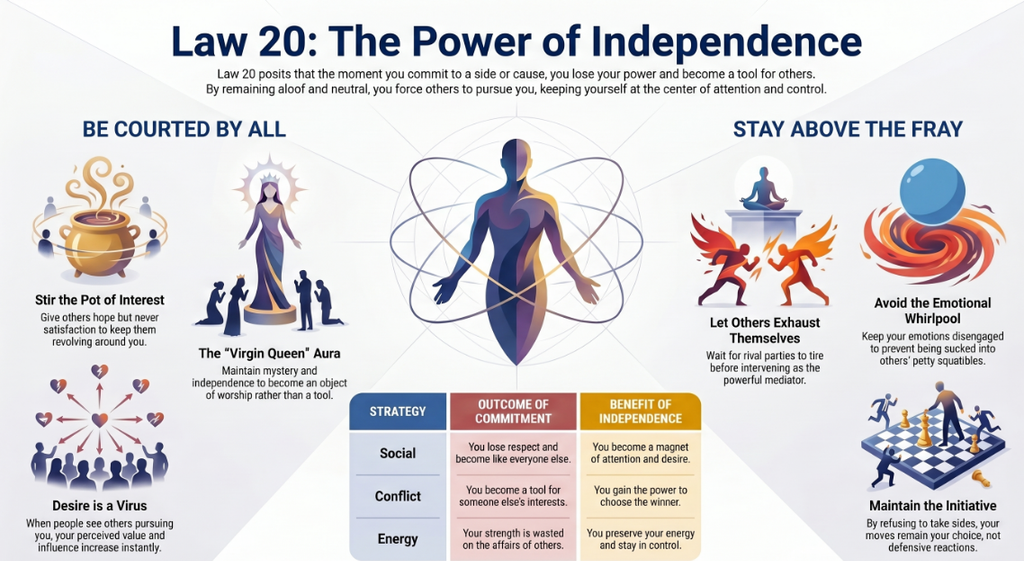
In our modern professional and social landscapes, there is a relentless, almost predatory pressure to “take a side.” Whether it is a corporate restructuring, a political movement, or a high-stakes social rivalry, we are told that neutrality is a sign of weakness or untrustworthiness. However, from the perspective of high-level strategy, premature commitment is nothing less than a voluntary surrender of power.
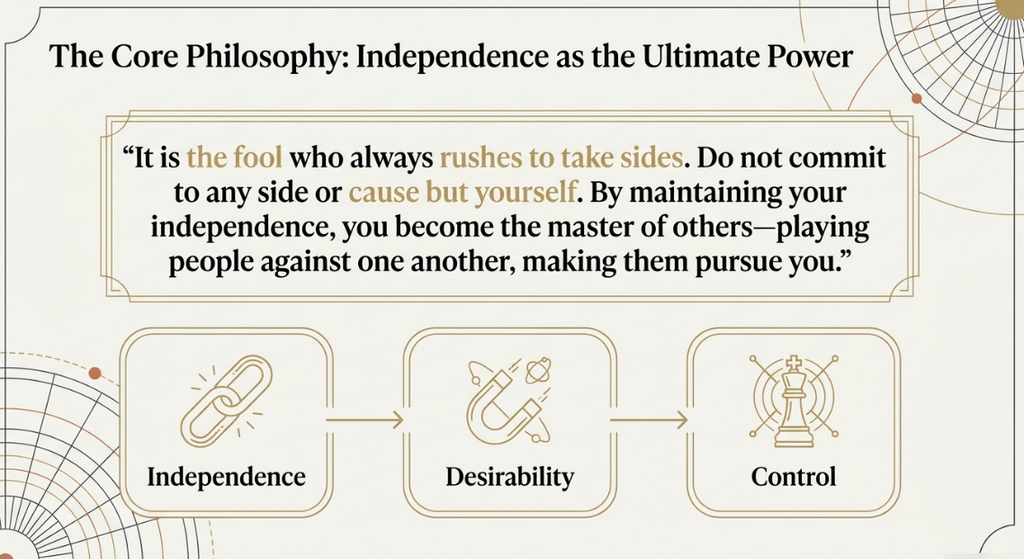
By rushing to join a camp, you relinquish your autonomy and transform yourself into a tool for someone else’s agenda. The most sophisticated masters of power—those who navigate transitions and crises with seemingly effortless grace—remain “ungraspable.” They understand that by maintaining strategic independence, they secure a position of asymmetric leverage, forcing others to vie for their favor while they remain the only masters of their own fate.
The Power of Frustrated Desire
The long and prosperous reign of Queen Elizabeth I provides a masterclass in the utilization of strategic ambiguity. Upon her ascension in 1558, Elizabeth was besieged by demands to marry and secure the succession. To marry, however, was to choose an ally and, by extension, a master. Instead of capitulating, she spent decades dangling the possibility of her hand before the most powerful men in Europe, from the Earl of Leicester to the Dukes of Anjou and Alençon.
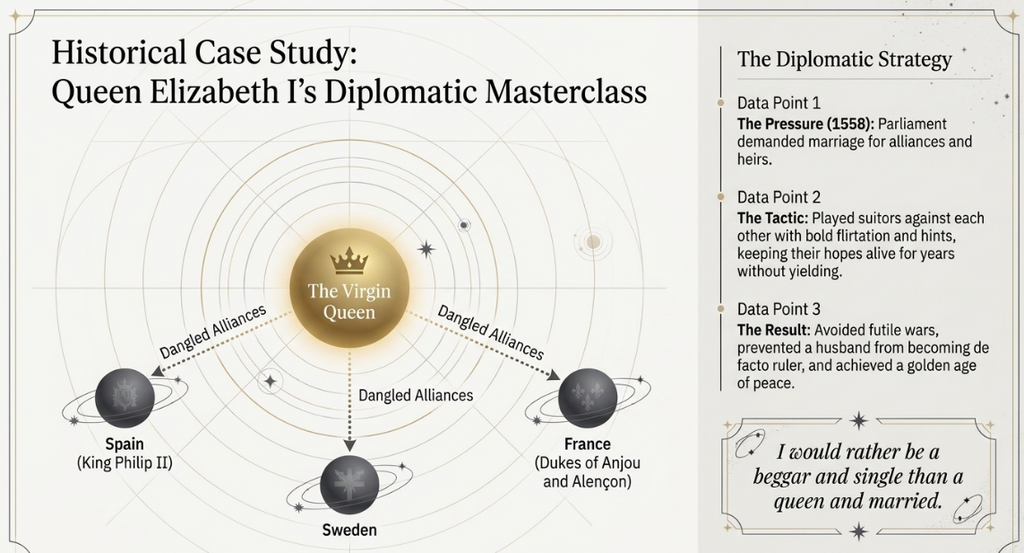
By refusing to be “possessed,” Elizabeth maximized her reputational scarcity. Desire in the realm of power functions like a virus; it is socially contagious. When an individual is perceived as being desired by many yet remaining aloof, their perceived value does not merely add up—it multiplies. This aura of independence creates a feedback loop: the more ungraspable you remain, the more others believe that winning your commitment will be the ultimate validation of their own power. Elizabeth used this frustrated desire to keep her enemies off-balance and her allies perpetually hopeful, ensuring that England remained the center of the European diplomatic map without ever firing a shot.
> “I would rather be a beggar and single than a queen and married.” — Queen Elizabeth I
Turning Competition into Your Orbit
To command a room or an industry, one must resist the urge to join a side and instead position oneself as the independent variable. This is the “Alcibiades tactic,” named for the Greek statesman who famously maneuvered between Athens, Sparta, and Persia. By refusing to commit fully to any single power, he forced all three to court him, effectively shifting the competitive landscape.
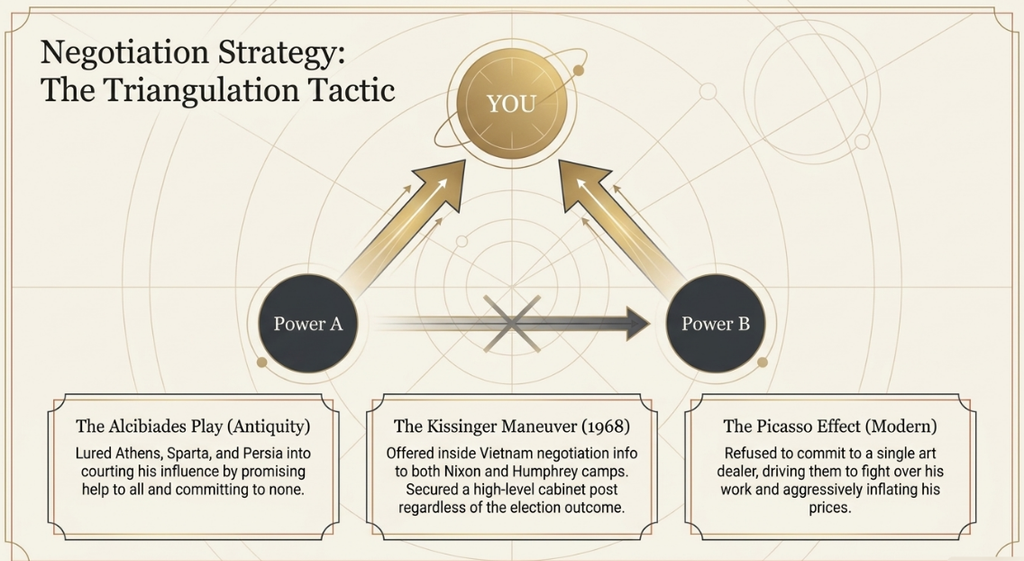
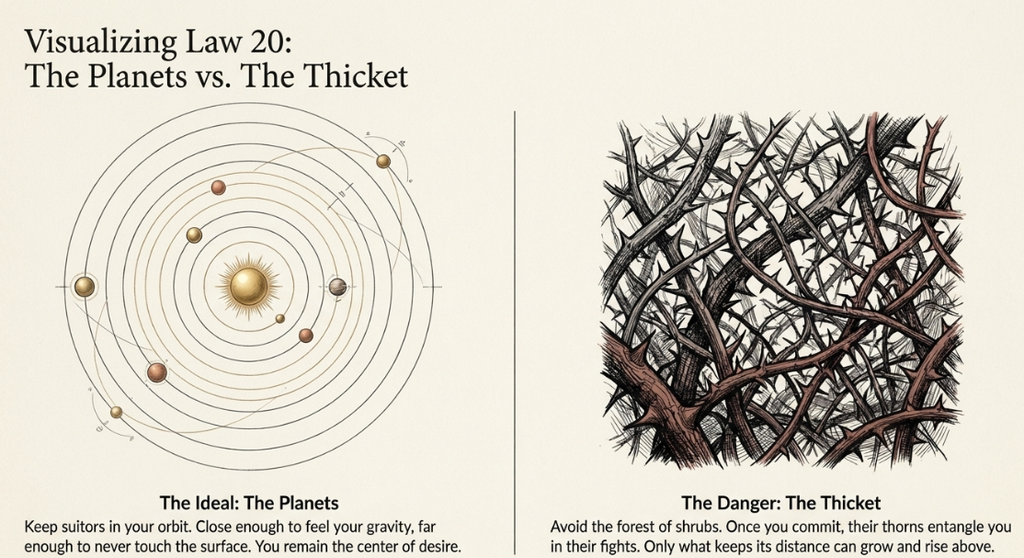
This maneuver relies on the psychology of the center. When you remain independent, you force others to become “planets” revolving around your “orbit.” In this configuration, your competitors stop competing with you and begin competing with each other for the privilege of your presence. Consider Pablo Picasso: early in his success, he refused to commit to any single art dealer. By appearing indifferent to their offers, he fueled a competitive frenzy. Because he was unattached, the dealers’ primary struggle was no longer with the market, but with one another to see who could satisfy Picasso’s terms. By remaining the “sun,” Picasso ensured the art world revolved around his interests, not the other way around.
The Kissinger Maneuver: Playing Both Ends
Strategic distance is the ultimate insurance policy for surviving turbulent transitions. During the 1968 U.S. presidential election, Henry Kissinger demonstrated this with cold-blooded efficiency. While ostensibly allied with Nelson Rockefeller, Kissinger maintained simultaneous, high-level channels with both the Nixon and Humphrey camps. He offered “inside information” to both, making himself appear indispensable regardless of the electoral outcome.
Those who use this strategy understand a strange phenomenon of human psychology: those who rush to help others are viewed as commodities and gain little respect, as their loyalty is easily obtained and cheaply held. Conversely, those who stand back—maintaining a “little distance”—find themselves besieged with supplicants. Kissinger’s refusal to commit prematurely guaranteed him a cabinet post no matter who won. He survived Watergate and the transition to the Ford administration because he was never perceived as a “party man,” but as a singular talent whose commitment was always just out of reach.
Staying Above the Fray
For the smaller player navigating a field of giants, the “whirlpool of emotions” is a death trap. Isabella d’Este, the Marchesa of Mantua, maintained her sovereignty in the face of the predatory powers of France, Venice, and the Papacy by refusing to be dragged into their petty squabbles. She understood that emotional entanglements turn you into a tool for another’s interests.
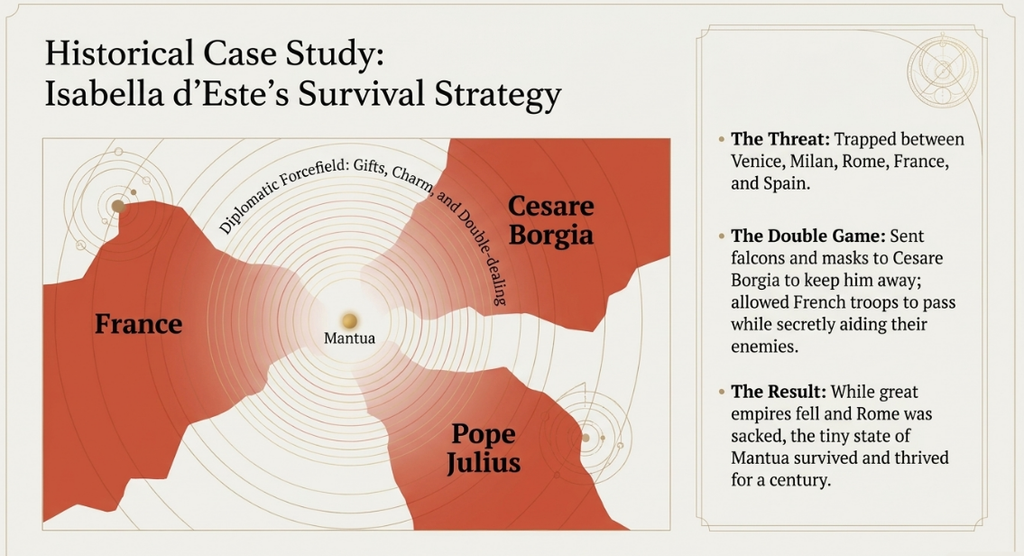
Her strategy was that of the “go-between.” She would appear interested, sympathetic, and charming to all sides, while privately allowing the combatants to exhaust their resources and emotional capital in direct conflict. By the time the dust settled, the “giants” were often too depleted to threaten Mantua, and frequently required Isabella to mediate their peace—a position of supreme leverage she used to protect her territory for decades.
> “Do not commit yourself to anybody or anything, for that is to be a slave, a slave to every man. . . . Above all, keep yourself free of commitments and obligations—they are the device of another to get you into his power.” — Baltasar Gracián
The Art of the Plausible Invasion
Isabella d’Este also mastered the “double game” of maintaining outward gestures of support while keeping her inner energy disengaged. When Pope Julius II went to war against her brother, the ruler of Ferrara, Isabella found herself in an impossible bind. To offend the Pope was ruin; to abandon her brother was unthinkable.
She resolved this by utilizing proxies. She sent her husband, Gonzaga, to fight for the Pope, but instructed him to fight with such calculated incompetence that he posed no real threat to her brother. Simultaneously, she allowed French troops to pass through her territory to aid Ferrara. When the Pope complained, she orchestrated a “plausible invasion,” having the French pretend to plunder Mantua so she could claim she was a victim of force. This “slowness to pick up your weapons” is a weapon in itself. By delaying her true commitment, she forced her opponents to reveal their hands and exhaust their energy, while she remained fresh and “un-invaded” in any real sense.
The Price of Envy
The danger of inviting an outside party to resolve your conflicts is best illustrated by the ancient Indian fable:
- The Conflict: A dog and a cat fought over a piece of cheese, unable to agree on a fair division.
- The Mediator: In their envy of one another, they asked a fox to act as a neutral referee.
- The Result: The fox bit off a piece of the cheese to “balance” the portions, then bit off a piece from the other side to “correct” the new imbalance. He continued this “judicious” process until he had consumed the entire prize himself.
Strategic Warning: In the modern professional arena, be wary of “The Mediator.” Whether it is a third-party consultant or a neutral HR representative brought into a conflict, they often end up consuming the “cheese”—the project, the budget, or the credit—while the original combatants are left with nothing.
Strategic Realignment: When Commitment is a Tool
While strategic independence is a source of power, staying uncommitted indefinitely can eventually lead to a reputational vacuum where parties “gang up” on you out of shared distrust. The reversal of this law requires you to understand when an outward commitment is necessary for appearances’ sake.
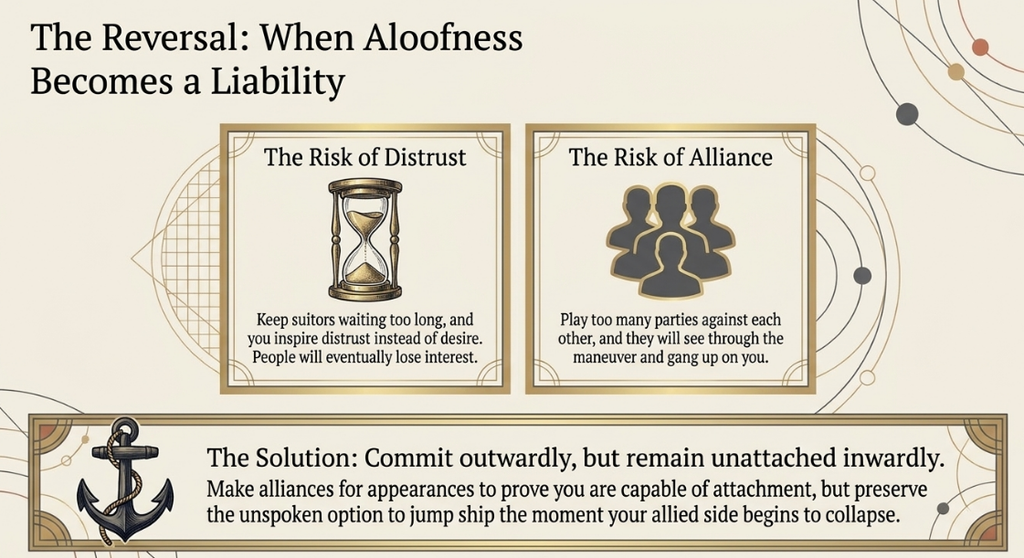
The key is to maintain inner independence. If you must align with a side, do so without emotional investment. Maintain a “mental exit strategy” at all times. By keeping your emotional stakes at zero, you preserve the ability to “jump ship” the moment your chosen ally begins to collapse. The friends you made while being courted by all sides will provide plenty of places to land once you reclaim your freedom.
Conclusion: The Sovereign Mind
Time and energy are your most finite resources. Every moment wasted on the affairs and conflicts of others is a tax on your own strength. The most sophisticated actors understand the “luxury of waiting,” a concept perfectly encapsulated by the French statesman Talleyrand. During the Revolution of 1830, as the bells rang to signal the end of the rioting, Talleyrand remarked, “Ah, the bells! We’re winning.” When asked who “we” were, he replied, “Not a word! I’ll tell you who we are tomorrow.”
True sovereignty comes from defining “we” on your own terms and timeline.
Reference


Related posts:
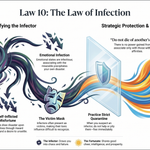 The Tenth Law: Why Your Inner Circle Is a Biohazard: The Hidden Law of Emotional Infection
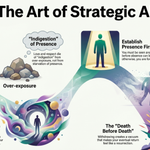 The Sixteenth Law: The Scarcity of the Soul: Why Your Absence is Your Greatest Asset
 The Seventeenth Law: The Power of the Unseen Move: Why Unpredictability is Your Greatest Strategic Asset
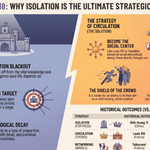 The Eighteenth Law: Why Your Best Defense is a Crowd: The Hidden Dangers of the “Fortress” Mentality
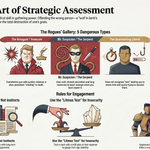 The Nineteenth Law: The Cost of a Miscalculation: Why Knowing Your Opponent is the Ultimate Power Skill