Introduction: The Human Craving for Pattern
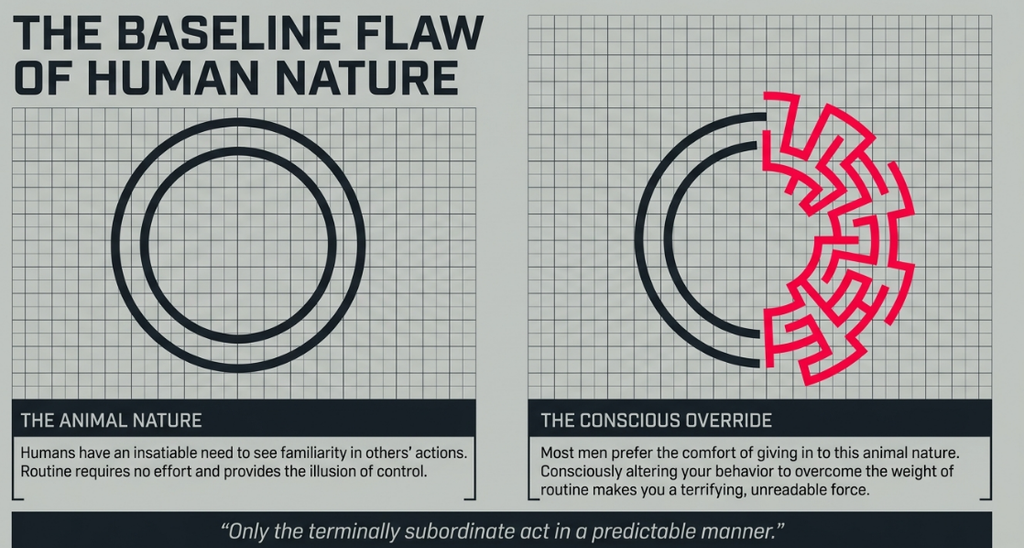
Your predictability is a leash. Every routine you follow is a handle your enemies can use to lead you, and every habit you exhibit provides a map for your eventual subversion. Human beings possess a biological, insatiable need to see familiarity in the actions of others because it grants a sense of control over the environment.
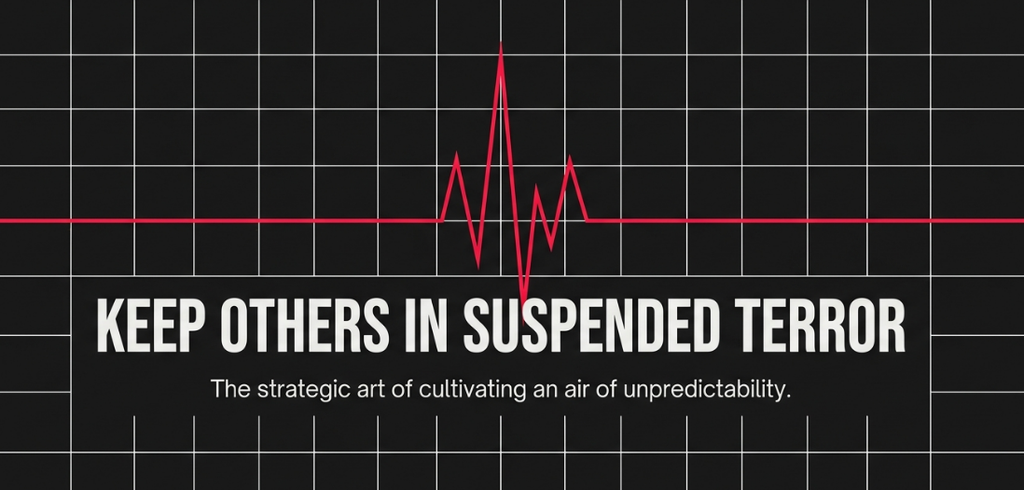
The core of strategic vulnerability lies in this rhythmic certainty. When you act in a way that lacks apparent consistency, you strip the observer of their security and force them into a defensive posture of constant, agonizing interpretation. This exploration delves into how shattering expectations can shift the balance of power in any arena.
Takeaway 1: Predictability is a Vulnerability
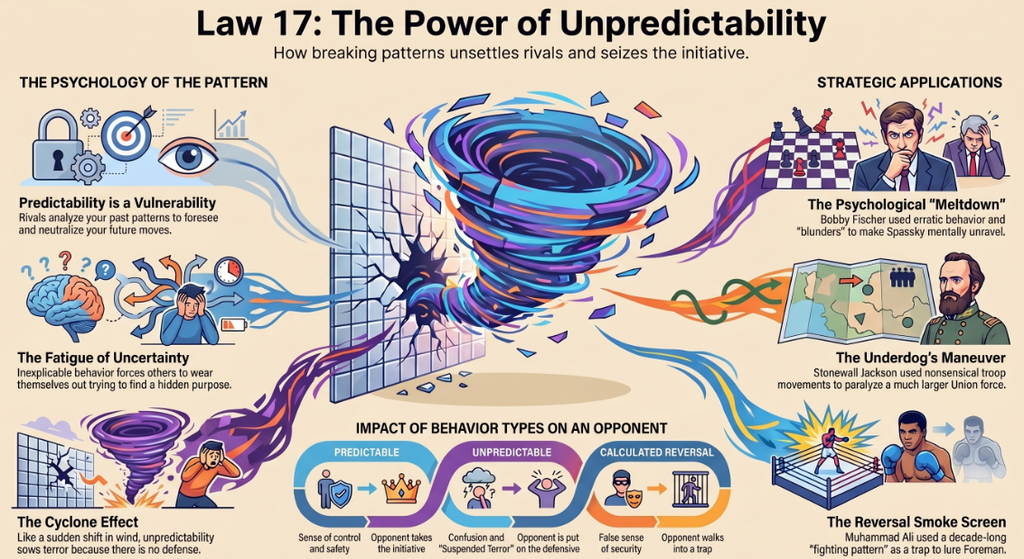
Humans are “creatures of habit,” a trait that mirrors the animal kingdom and makes us easy to “hunt.” Just as a predator relies on the set trails of its prey, your rivals use your established behavioral monotony to anticipate your future moves and manipulate your choices. Most people cling to routine because it requires zero cognitive effort, but this comfort is a profound strategic trap.
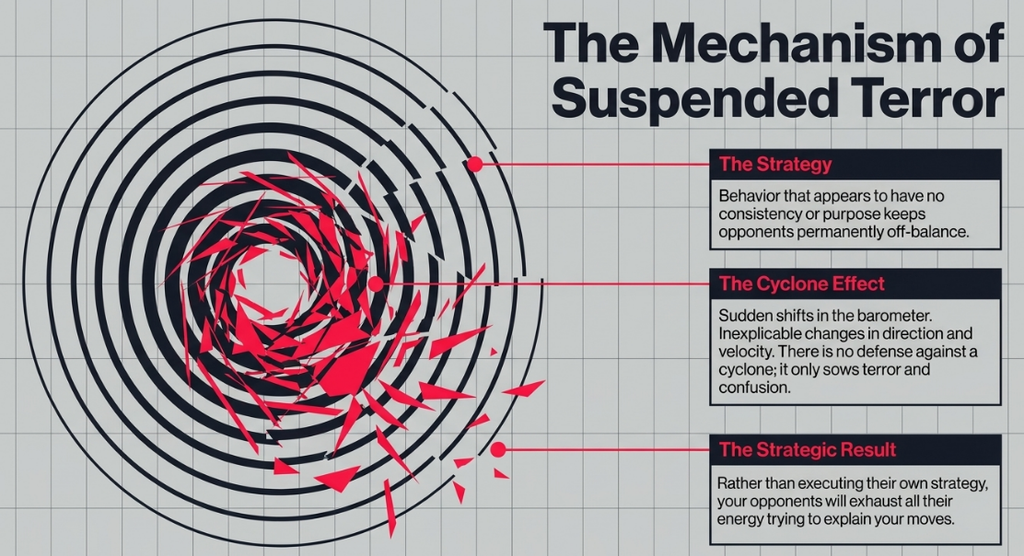
When you deliberately break your rhythm, you force those around you to suffer from cognitive exhaustion. They become so preoccupied with deciphering your motives that they see complex schemes where none exist, effectively defeating themselves. As the source text notes:
> “Behavior that seems to have no consistency or purpose will keep them off-balance, and they will wear themselves out trying to explain your moves.”
Takeaway 2: The Underdog’s Force Multiplier
Unpredictability is the primary tool for the disadvantaged to paralyze a superior force. In 1862, General Stonewall Jackson utilized this principle to torment Union forces in the Shenandoah Valley, using only 4,600 men to delay a massive force of 90,000. By moving in inexplicable circles and nonsensical directions, he created a mental vacuum that the Union generals filled with their own fears of an attack on Washington.
This strategy proves that a smaller force can effectively seize the initiative by remaining illegible to the “logical” mind. By refusing the standard geometry of warfare, Jackson kept his opponents in a state of perpetual hesitation and tactical blunder. His philosophy remains a cornerstone of asymmetric strategy:
> “Always mystify, mislead, and surprise the enemy, if possible… such tactics will win every time and a small army may thus destroy a large one.”
Takeaway 3: Engineering the Psychological Meltdown
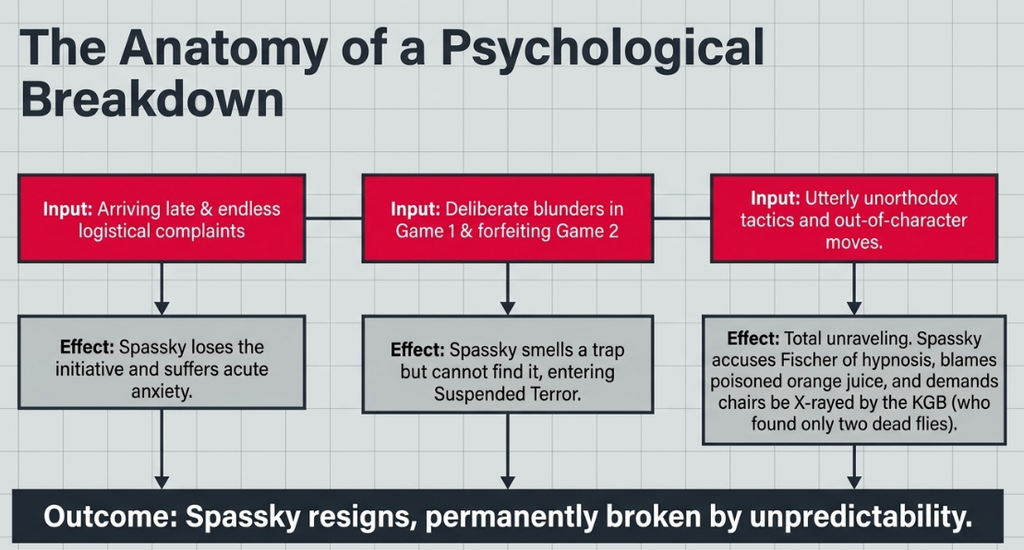
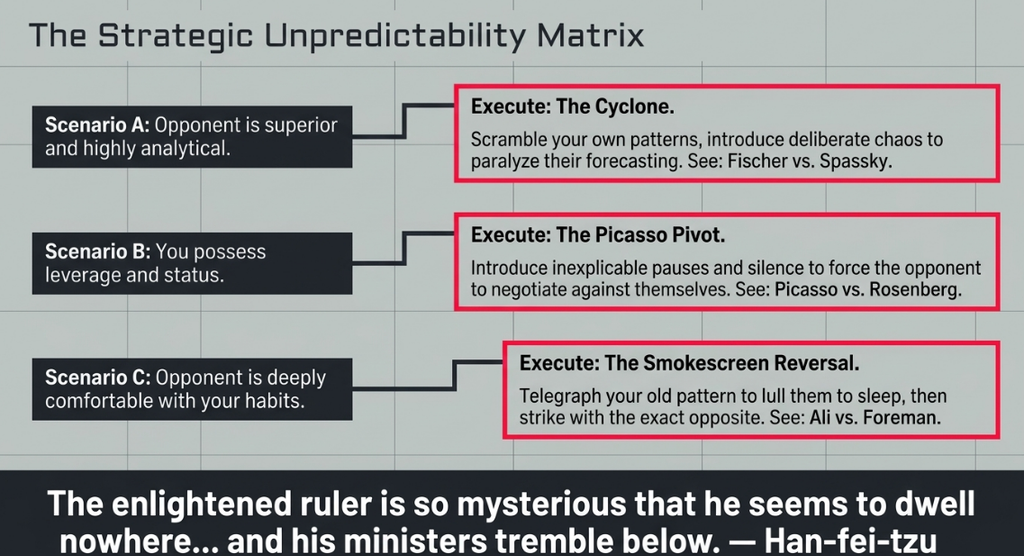
The 1972 World Championship of Chess serves as a masterclass in using caprice to trigger a total mental unraveling. Bobby Fischer disrupted Boris Spassky not through superior board play alone, but by scrambling his own patterns through late arrivals, complaints about chairs, and a deliberate forfeit. While Fischer looked “clumsy” in the first game, by the third game he had a “ferocious look in his eye” that signaled the trap was set.
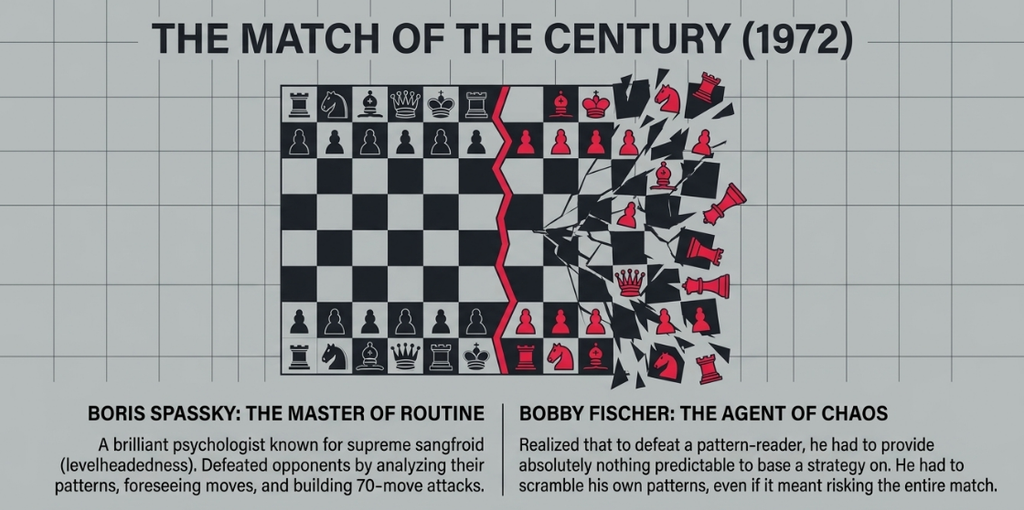
Spassky, the master of sangfroid, was driven to such a state of “suspended terror” that he began to hallucinate and cry. He eventually accused Fischer’s team of mind control, leading to a desperate X-ray of their chairs that revealed nothing but two dead flies in a lighting fixture. Fischer’s brilliance lay in choosing the move that destroyed the man, not just the pieces:
> “He doesn’t just look for the best move. He looks for the move that will disturb the man he is playing.”
Takeaway 4: The “Absence of Calculation” as High-Level Negotiation
In professional negotiations, the assumption is that every move is a calculated play for leverage. Pablo Picasso mastered the “dark” art of negotiation by intentionally acting without apparent logic, particularly with art dealer Paul Rosenberg. By suddenly refusing to provide work for no reason, Picasso created a vacuum of silence that forced the dealer to bid against his own anxiety.
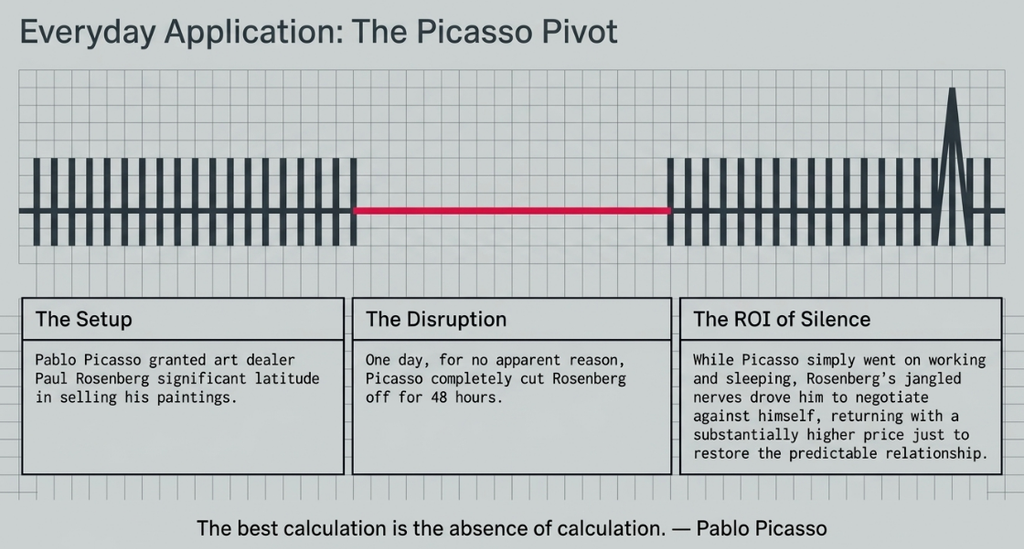
Rosenberg spent forty-eight hours in a state of “jangled nerves” trying to solve a mystery that didn’t exist. This “absence of calculation” is a high-level power move; it forces the other party to offer substantially more just to regain a sense of certainty. Picasso understood the psychological weight of the unknown:
> “The best calculation is the absence of calculation… You’re better off acting capriciously.”
Takeaway 5: The “Double-Bluff” – Telling the Truth to Deceive
The habit of assuming patterns is so deeply ingrained that the truth itself can become the ultimate smoke screen. During the 1974 “Rumble in the Jungle,” Muhammad Ali told George Foreman exactly what he would do: abandon his “dancing” style to slug it out. Because Ali was perceived as a master of the bluff, Foreman’s cynicism filtered the truth and transformed it into a lie in his own mind.
Even when Ali’s trainer loosened the ropes—a clear sign of a slugging strategy—Foreman dismissed it as a setup. Ali used his reputation as a “comedian” to hide the truth in plain sight, proving that people are often too cynical to believe the obvious. Foreman walked directly into the trap he had been told to expect, defeated by his own inability to accept a broken pattern.
Takeaway 6: The Weight of Respect and Authority
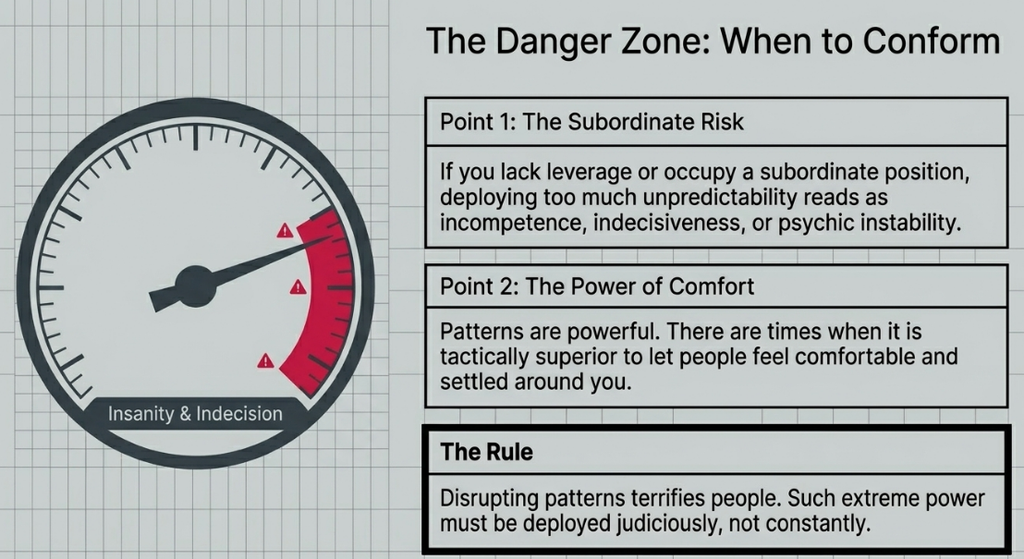
In the hierarchy of power, “only the terminally subordinate act in a predictable manner.” High-level authority is maintained through a calculated air of mystery that keeps ministers and courtiers in a state of respectful fear. Filippo Maria, the Duke of Milan, maintained his rule by showering a courtier with attention, only to suddenly pivot to cold disdain for no discernible reason.
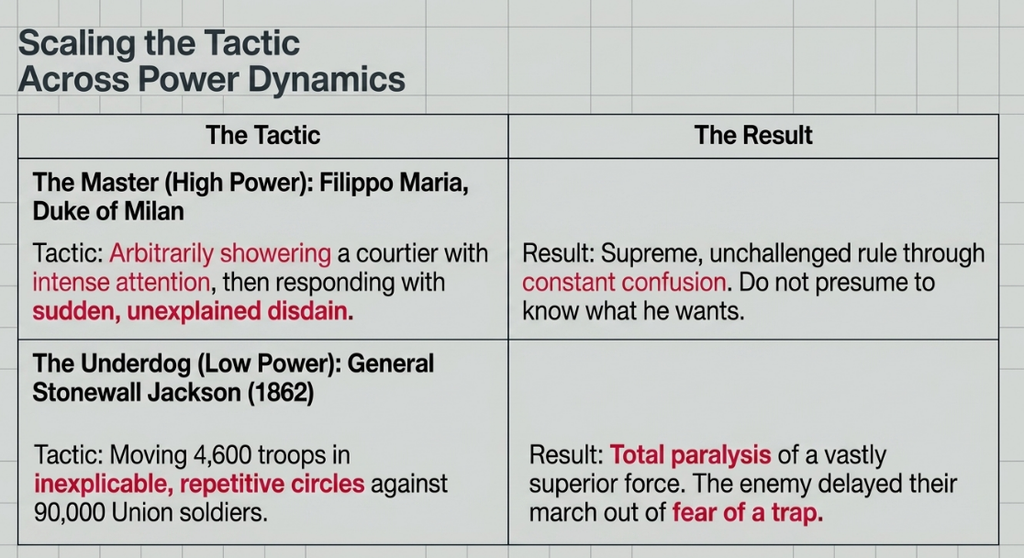
The genius of this cruelty was its internal effect: the courtier would blame himself, assuming his “ambition had become obvious.” When the man would later try to act without ambition to please the Duke, Maria would rebuke him for a “lack of ambition” and send him away. This capricious behavior ensures that no one can ever gain leverage over the ruler, as Han-fei-tzu observed:
> “The enlightened ruler is so mysterious that he seems to dwell nowhere, so inexplicable that no one can seek him. He reposes in nonaction above, and his ministers tremble below.” (Han-fei-tzu, Chinese philosopher, third century B.C.)
Conclusion: The Cyclone Strategy
Strategic unpredictability is best envisioned as The Cyclone: a force of nature that cannot be foreseen, characterized by sudden shifts in direction and velocity. Against such a force, there is no defense because there is no pattern to counter. By scrambling your day-to-day habits, you stimulate interest, garner respect, and keep the initiative firmly on your side.
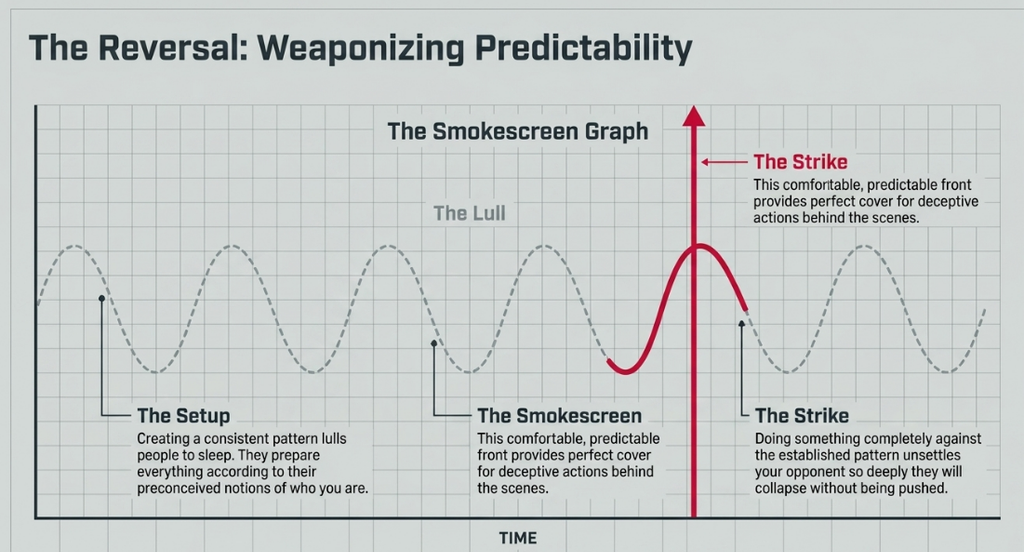
However, this power must be used judiciously. Too much unpredictability, especially in a subordinate position, can be seen as a sign of indecisiveness or even a “serious psychic problem.” It is a tool for the master to maintain order and for the underdog to create chaos; used correctly, it ensures you are the only element in the room that no one can manage.
In a world that rewards consistency, are you brave enough to be the one element that no one can predict?
Reference


Related posts:
 Eighth Law of Power: The Strategy of the Lure: Mastering the Initiative
 The Thirteenth Law: Why Your Requests Are Being Ignored: The Hidden Psychology of Getting “Yes”
 The Fourteenth Law: The Art of the Invisible Inquisitor: Why Your Best “Friend” Might Be Your Best Spy
 The Fifteenth law: Why “Halfway” is the Most Dangerous Place to Stop: 5 Lessons in Total Victory
 The Sixteenth Law: The Scarcity of the Soul: Why Your Absence is Your Greatest Asset