1. Introduction: The Illusion of Privacy
In the theater of social life, the most dangerous moments are those that feel the most secure. At a dinner party, over a glass of wine, or during a casual stroll, the target relaxes, believing they are in the company of a friend. They view conversation as a bridge for bonding; the strategist views it as a probe for extraction.
Law 14 commands us to Pose as a Friend, Work as a Spy. It is a realization that social grace is not an end in itself, but a sophisticated camouflage. To gather the intelligence required for total dominance, one must move beyond the amateurish world of tarot cards and horoscopes and embrace the cold mechanics of artful spying. Every polite encounter is an opportunity to map a rival’s psychological terrain, identifying the cracks in their armor before they even realize a battle has begun.
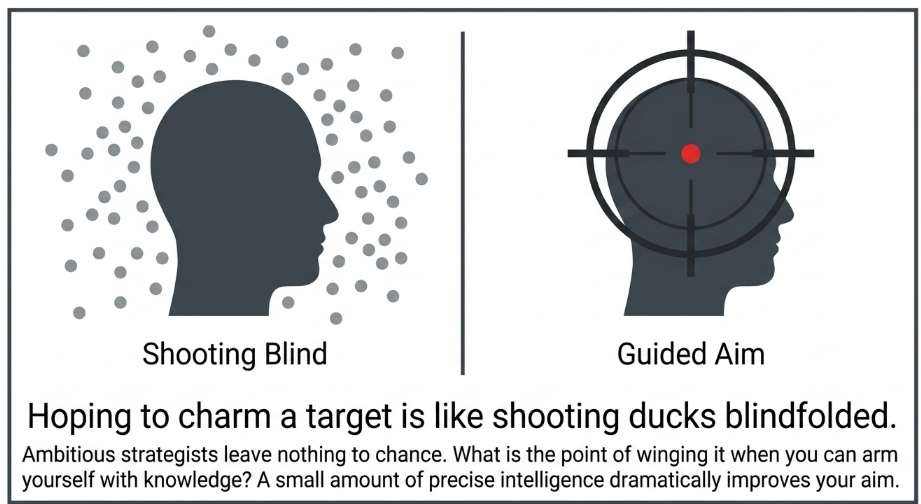
2. Engineering the “Uncanny” Coincidence
The legendary art dealer Joseph Duveen did not leave his success to the vagaries of luck. When he set his sights on the industrialist Andrew Mellon—a man famously cold and unreachable—he launched a calculated psychological siege. Duveen did not merely “meet” Mellon; he manufactured a sense of destiny.
For years, Duveen maintained a network of informants, secretly putting Mellon’s own household staff on his payroll. He learned Mellon’s phobias, his precise tastes in art, and his daily movements with the intimacy of a spouse. In 1921, hearing Mellon was staying on the third floor of Claridge’s Hotel in London, Duveen booked the suite directly below him on the second floor. He instructed his valet to befriend Mellon’s valet. When the signal came that Mellon was heading to the lift, Duveen was ready.
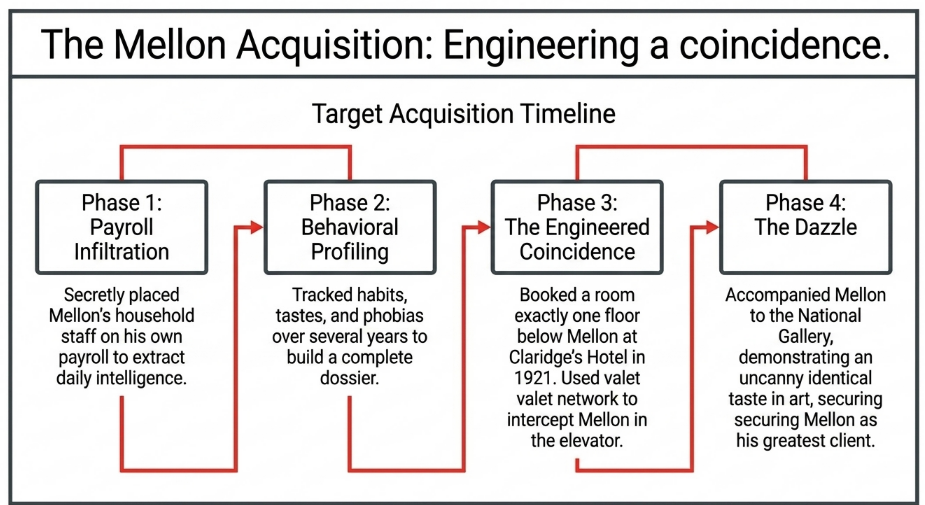
He stepped into the elevator, seemingly by chance, and “happened” to be heading to the National Gallery. This manufactured rapport—this appearance of having a “sixth sense”—did more than just close a sale; it demoralized Duveen’s competition. His rivals, seeing him appear everywhere with clairvoyant ease, became so discouraged and disheartened that they simply gave up. As the Law dictates:
> “Knowing about your rival is critical. Use spies to gather valuable information that will keep you a step ahead. Better still: Play the spy yourself. In polite social encounters, learn to probe. Ask indirect questions to get people to reveal their weaknesses and intentions. There is no occasion that is not an opportunity for artful spying.”
3. The Power of the Suppressed Personality
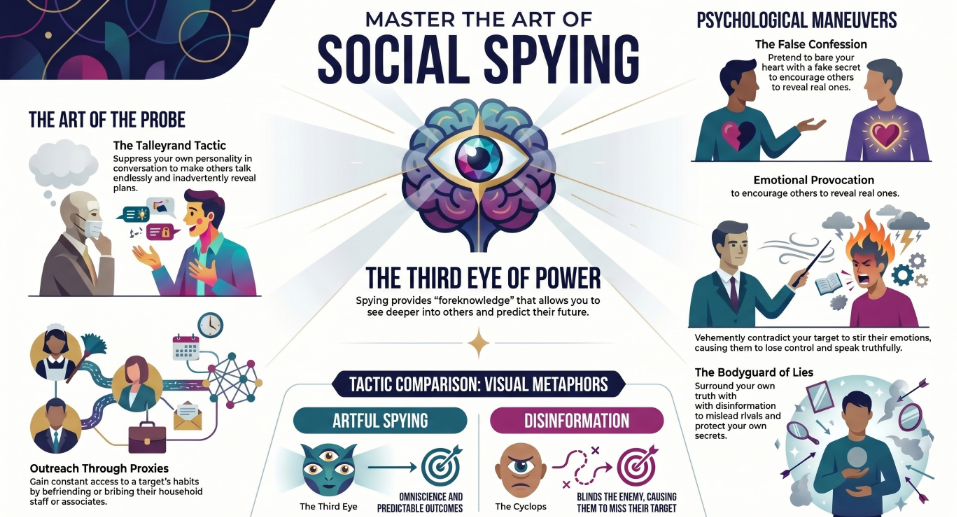
The French statesman Talleyrand was a master of the “transparent veil.” Known as a superb conversationalist, he managed to dominate rooms while revealing absolutely nothing of his own designs. His secret was the strategic suppression of his own personality. By withdrawing his own ego, he created a vacuum that others—driven by their own vanity—were eager to fill.
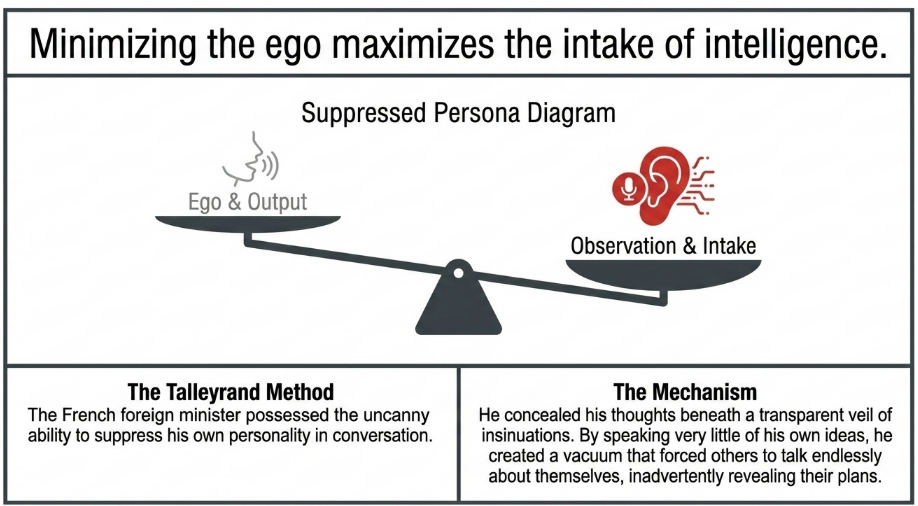
Talleyrand famously organized “friendly games of charades” for foreign diplomats. In these seemingly innocuous social settings, he would cajole confidences and weigh every word spoken by his guests. People frequently mistake an inquisitor’s intense interest for genuine friendship. The strategist knows that the more the target talks, the more they betray their intentions. In the mind of the target, they have found an ally; in reality, they have provided the predator with the keys to their own kingdom.
4. Firing a “Pistol into the Air” to See Who Jumps
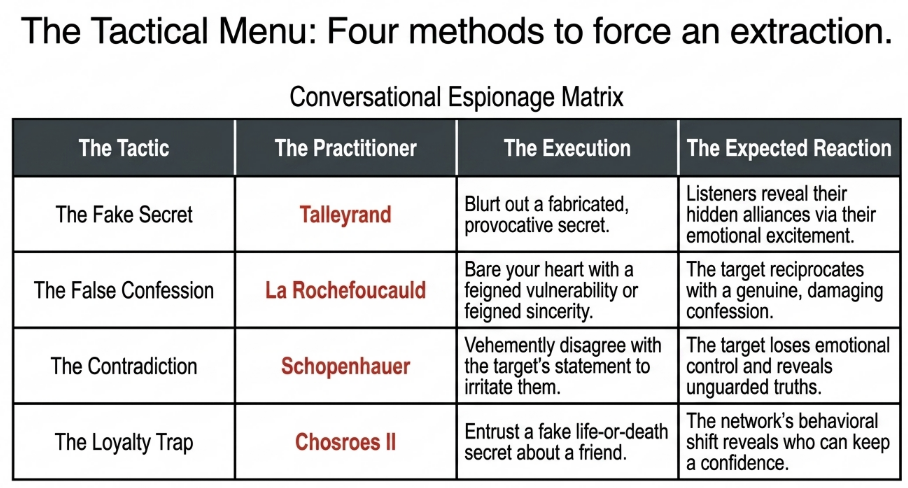
There are times when a passive ear is insufficient. At the Congress of Vienna, Talleyrand employed the diagnostic tool of disinformation. He would “blurt out” a fabricated secret—such as a rumor that the Russian Czar intended to arrest a high-ranking general for treason—and then meticulously observe the fallout.
By watching which diplomats panicked or grew excited, he could determine which nations had hidden designs on Russia. This is the art of firing a pistol into the air to see who jumps out the window. However, this maneuver carries a sharp risk: if your probing is too blatant, the “friendly front” shatters. People will strictly avoid you, and you will find yourself the one being analyzed, having revealed your own hunger for information.
5. The Strategic Sincerity of the False Confession
La Rochefoucauld observed that sincerity is often the “cleverest of ruses.” In the economy of information, a false confession is a small investment that yields a massive return. By pretending to “bare your heart” and sharing a manufactured vulnerability, you create a psychological debt.
Human nature demands reciprocity. When you appear to lower your guard, the target feels an instinctive pressure to do the same. They will offer up real secrets to match your fake ones. This “strategic sincerity” bypasses their natural defenses, leaving them exposed while you remain entirely opaque.
6. Irritation as a Truth Serum
If charm fails, the strategist turns to friction. The philosopher Arthur Schopenhauer noted that vehement contradiction is a powerful solvent for the truth. By sharply disagreeing with a person or challenging their assertions, you can provoke an emotional reaction that bypasses their “veil of insinuations.” In their heat and irritation, they will blurt out truths they intended to hide.
Conversely, if you suspect someone is lying, Schopenhauer suggests a more subtle trap: look as though you believe every word they say. This feigned credulity gives the liar the courage to go on, becoming more vehement in their assertions until they eventually betray themselves. Whether through irritation or false encouragement, you are forcing them to lead out their reserve of truth.
7. Testing Character Through “Loyalty Traps”
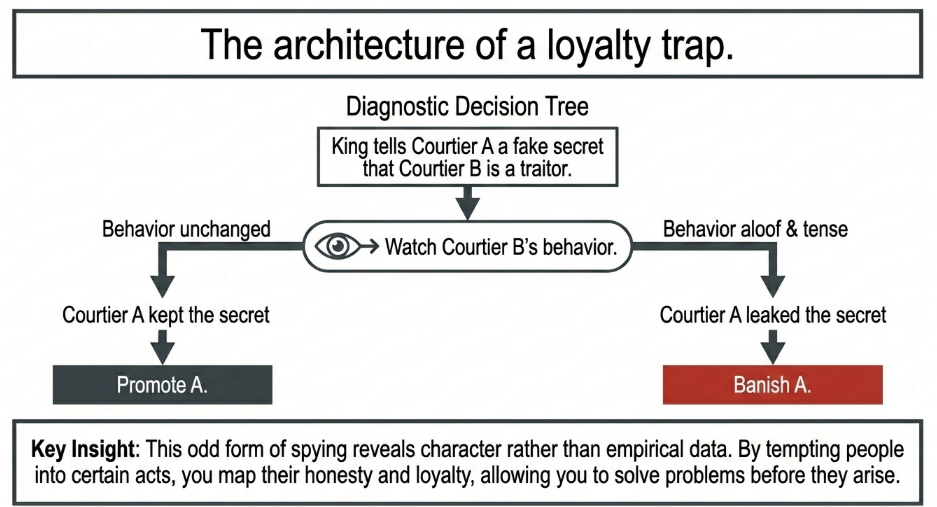
Data points are useful, but character is the only reliable predictor of future behavior. King Chosroes II of the Persians understood this, using fabricated “loyalty traps” to purge his court of the unreliable. He would tell a courtier a fake secret—for instance, that a mutual friend was a traitor marked for death—and then watch the courtier’s reaction.
If the courtier’s behavior toward the “traitor” changed, Chosroes knew the secret had been leaked. The stakes were absolute: the loyal were promoted, while the courtier who failed the test was not merely dismissed, but banned from the entire kingdom. This method moves beyond empirical facts to reveal the fundamental nature of the target.
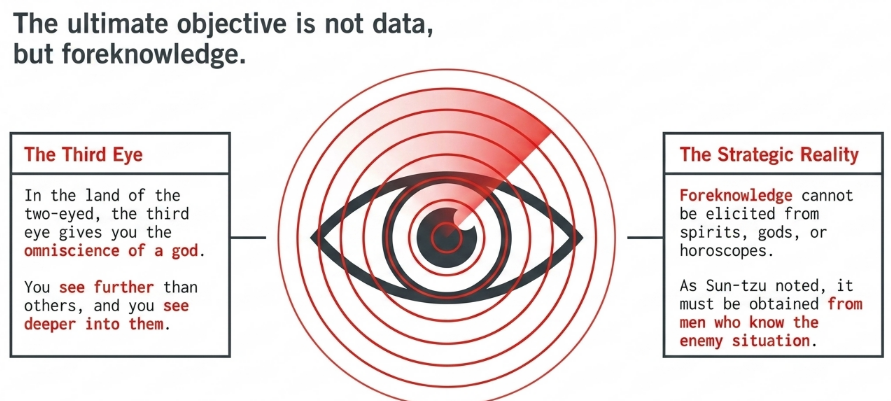
> The Third Eye of the Spy In the land of the two-eyed, the third eye gives you the omniscience of a god. You see further than others, and you see deeper into them. Nobody is safe from the eye but you.
8. The “Bodyguard of Lies” (The Reversal)
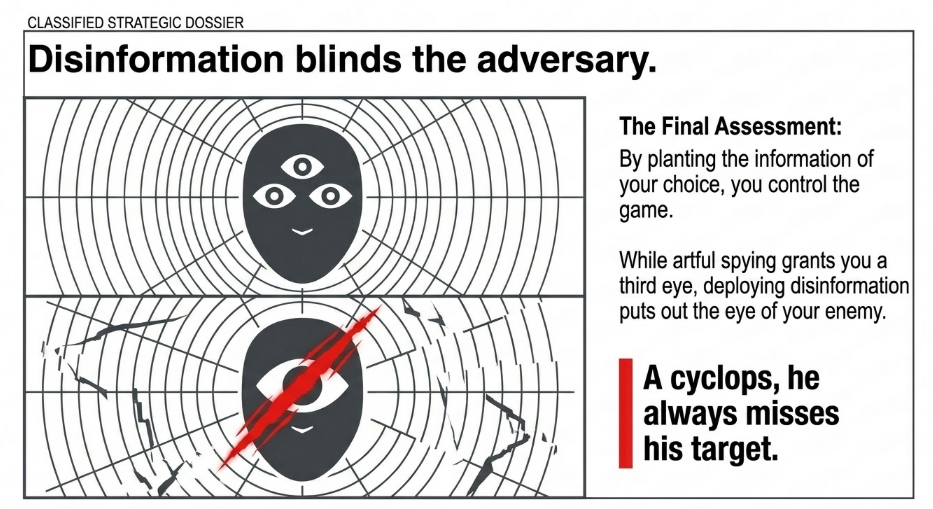
As you refine your third eye, you must ensure your enemies are blinded. Winston Churchill understood that “Truth is so precious that she should always be attended by a bodyguard of lies.” During World War II, the British used “English-controlled” German agents to feed the Nazis false data about V-1 rocket hits.
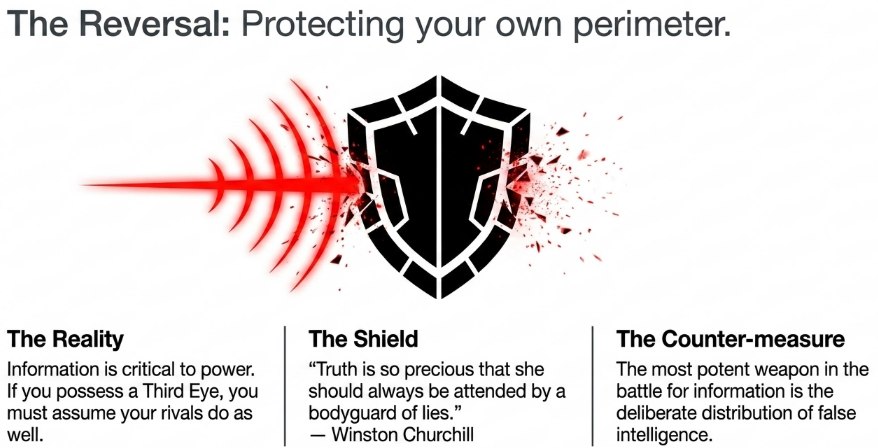
By reporting that the rockets were hitting their marks when they were actually falling short, the British induced the Nazis to adjust their aim further and further away from London’s population centers. By the end of the campaign, the rockets were landing harmlessly on cows in the countryside. By planting disinformation, you turn your enemy into a “cyclops”—a blinded giant swinging at shadows, missing his target because his reality has been carefully curated by you.
9. Conclusion: Beyond the Two-Eyed World
Foreknowledge is the ultimate currency of power. To leave your understanding of the world to chance, astrology, or the “good nature” of others is a form of strategic suicide. True advantage is wrestled from the world through deliberate, artful spying.
As Sun-tzu wrote in The Art of War:
> “Now, the reason a brilliant sovereign and a wise general conquer the enemy whenever they move… is their foreknowledge of the enemy situation. This ‘foreknowledge’ cannot be elicited from spirits… It must be obtained from men who know the enemy situation—from spies.”
In the land of the two-eyed, the third eye gives you the omniscience of a god. You see further than others, and you see deeper into them. Remember: nobody is safe from the eye but you. In your next “polite social encounter,” will you be the one revealing your intentions, or the one artfully discovering theirs?
Image Summary
Reference


Related posts:
 Fifth Law of Power: The Invisible Shield: Why Your Reputation Is More Powerful Than Your Skills
 Sixth Law of Power: The Art of Being Seen: 5 Provocative Lessons from the Masters of Attention
 Seventh Law of Power: Why Doing All the Work is a Losing Game: 5 Ruthless Lessons on Credit and Power
 Eighth Law of Power: The Strategy of the Lure: Mastering the Initiative
 The Eleventh Law Why Being “Good” Isn’t Enough: 5 Cold Truths About Becoming Indispensable