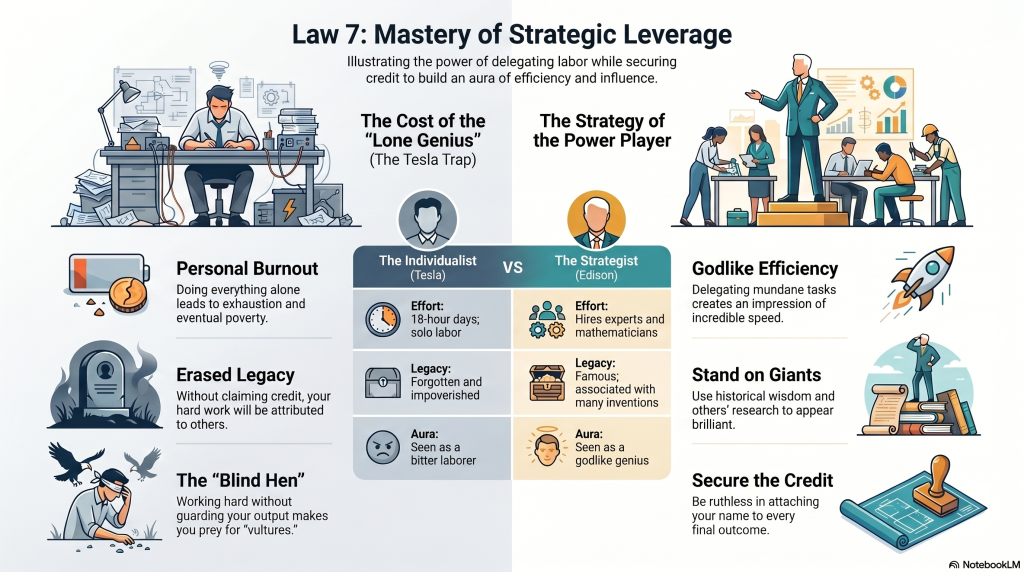
The professional landscape is littered with the remains of the “lone genius”—those diligent, exhausted souls who believe that eighteen-hour days and pure merit will eventually be rewarded with the keys to the kingdom. They are mistaken. In the cold geometry of influence, hard work is not a virtue; it is a commodity. If you are slaving away in the trenches, you are not a leader; you are a resource to be harvested by those who understand the true mechanics of Law 7: Get others to do the work for you, but always take the credit.
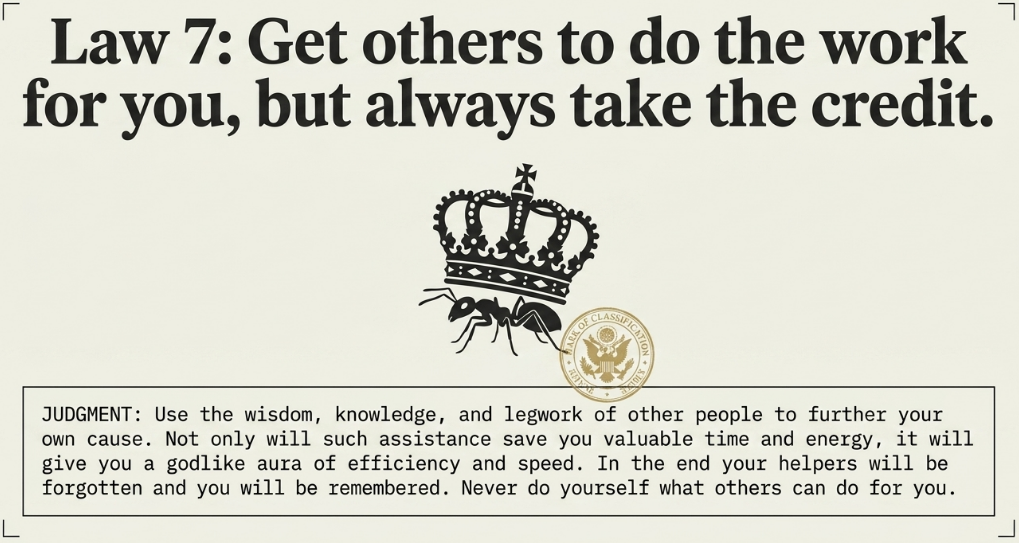
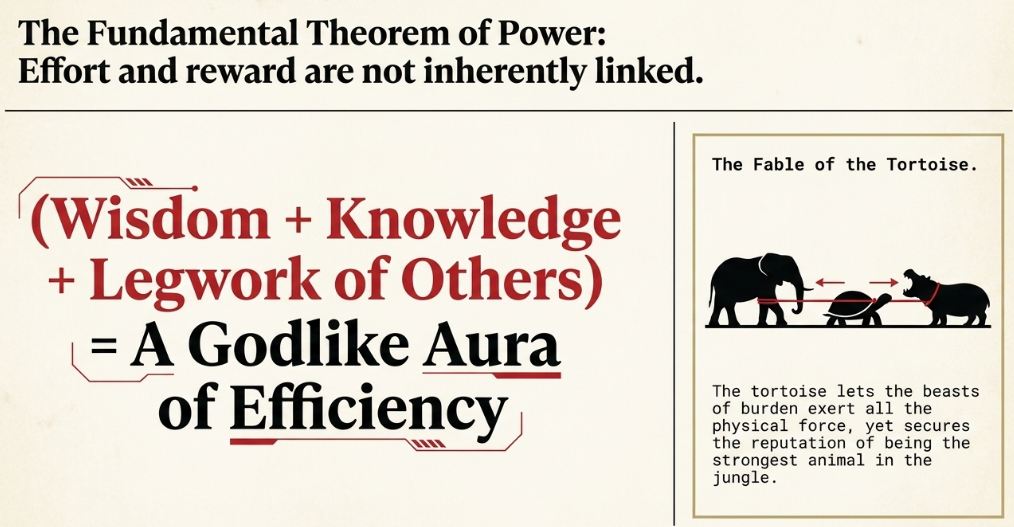
The aura of power is built upon efficiency and speed, a godlike presence that suggests your results are the product of divine inspiration rather than manual labor. To master this, one must realize that time is short and life is too precious to waste on tasks others can perform. If you do not claim the credit, a more vigilant predator surely will.
1. The Tesla Trap: Why Brilliance is No Shield Against Naivety
Nikola Tesla serves as a cautionary tale of intellectual vanity—a man who mastered lightning but was electrocuted by his own strategic naivety. A brilliant Serbian scientist who gave the world the AC system and the induction motor, Tesla was obsessed with the work itself, treating business and reputation as “petty rivalries” beneath his station. This was a terminal error.
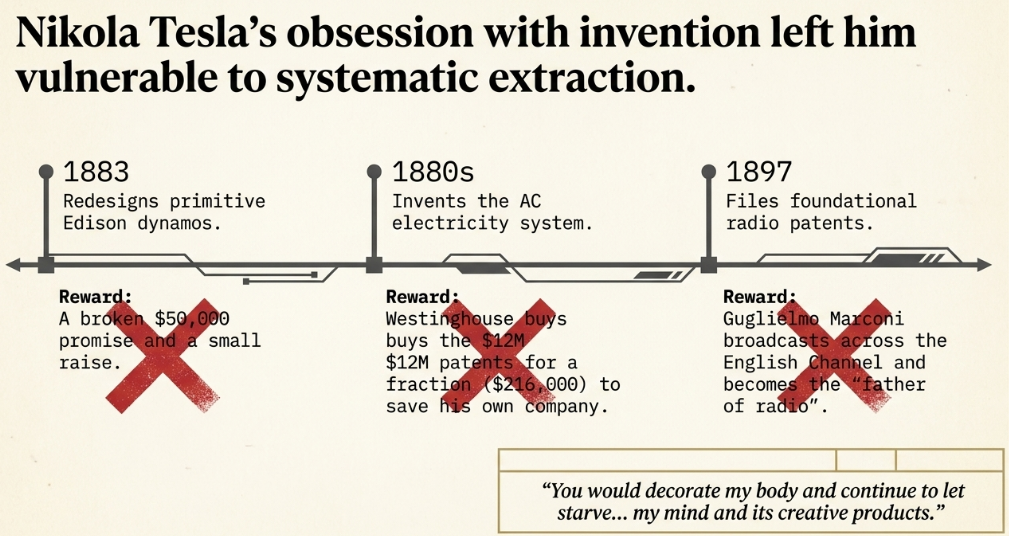
When Tesla redesigned Thomas Edison’s primitive dynamos, he was promised fifty thousand dollars for his labor. After a year of day-and-night toil, he presented the results, only for Edison to dismiss the debt with a smirk:
“Tesla, you don’t understand our American humor!”
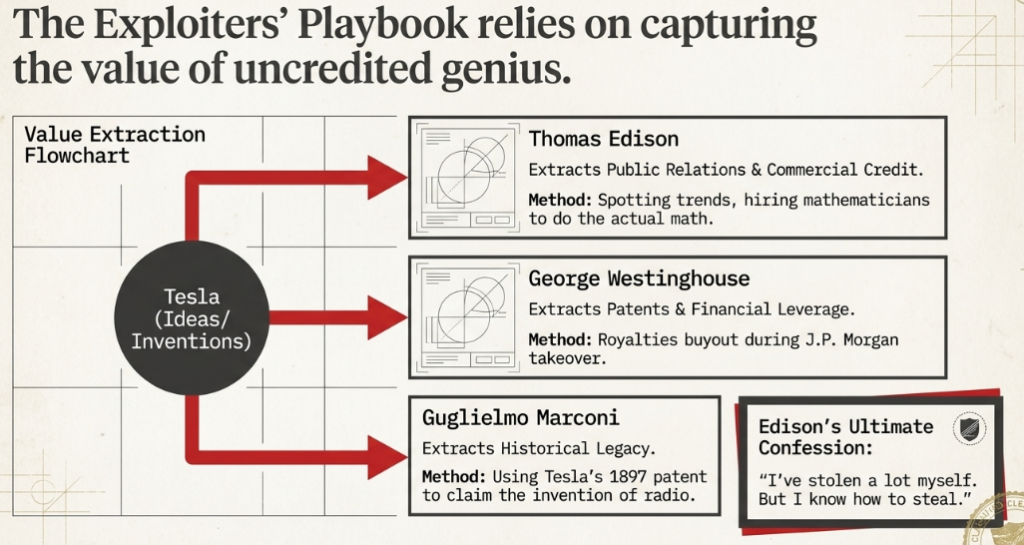
Tesla’s failure to secure his interests followed him. When George Westinghouse faced a takeover bid from J.P. Morgan, he persuaded Tesla to accept a buyout of his patents for a mere 216,000∗∗—apittancecomparedtothe∗∗12 million they were worth at the time.
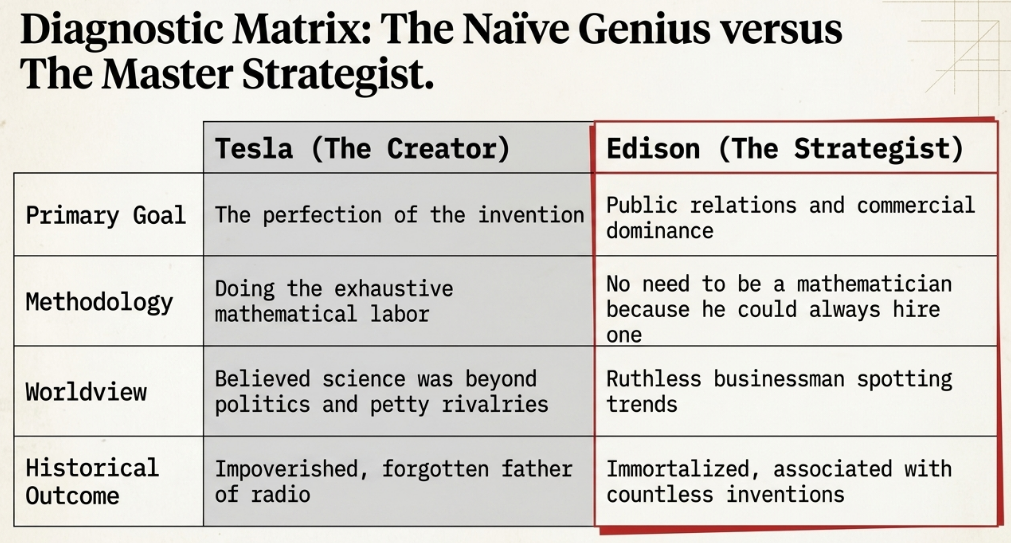
Tesla died in poverty, a footnote in history while men like Marconi and Westinghouse built empires on his “legwork.” To labor without securing the credit is not noble; it is a strategic suicide.
2. The Rubens Factory: Manufacturing the Godlike Aura
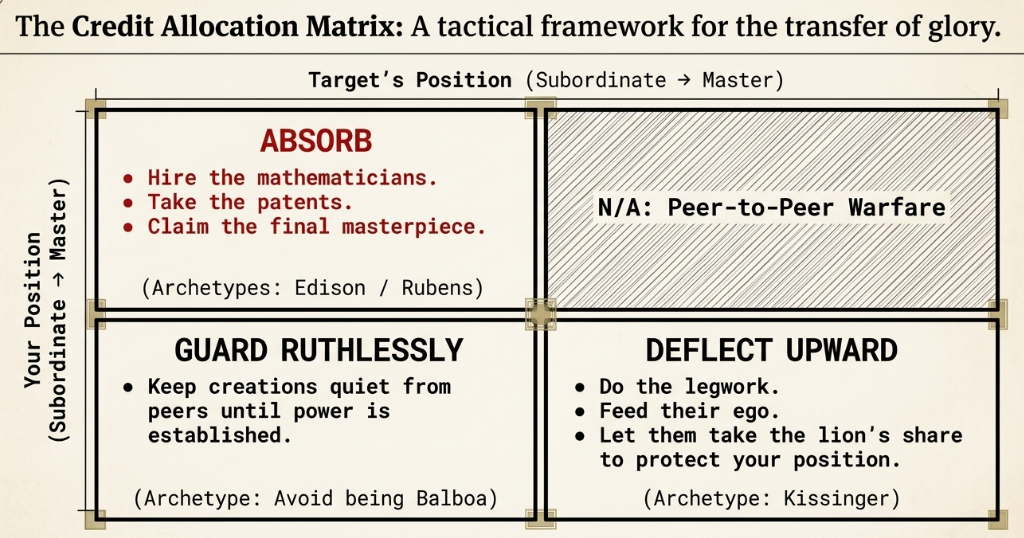
If Tesla represents the tragedy of the laborer, the artist Peter Paul Rubens demonstrates the mastery of the architect. Late in his career, Rubens was deluged with commissions he could not possibly fulfill alone. Rather than drowning in work, he established a sophisticated “production line” of specialists—one for backgrounds, another for robes, another for anatomy.
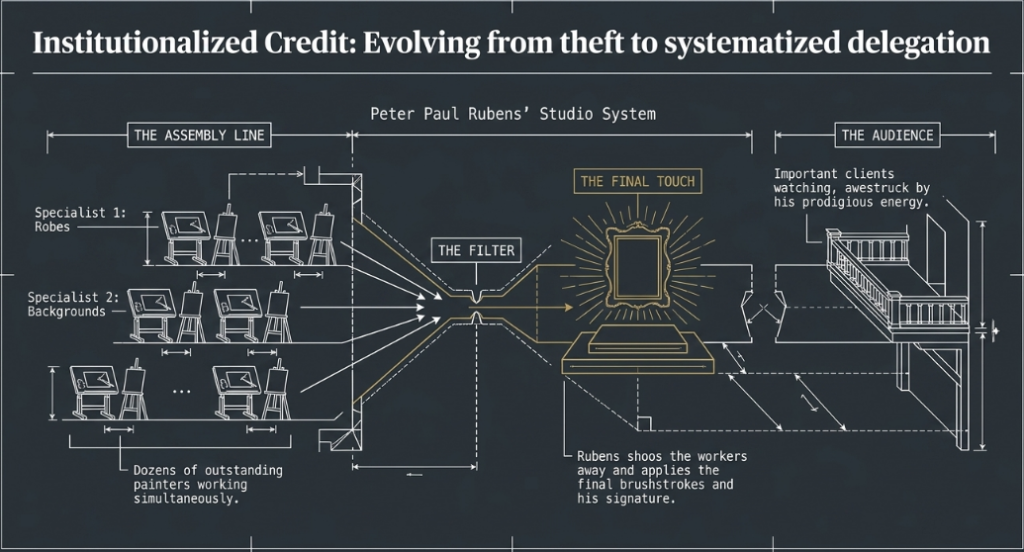
Rubens understood that power is a performance. When prospective clients visited his studio, he would shoo his hired painters out for the day and have the patron watch from a balcony while he worked alone with unbelievable energy. The client would leave in awe of a man who seemed to paint masterpieces in a single afternoon. This is the essence of power: let others provide the sweat, while you provide the “aura of genius.” By putting his name on the final product, Rubens ensured he was the only one remembered, while his helpers faded into the shadows of history.
3. Standing on the Shoulders of Giants: The Reputation of an Oracle
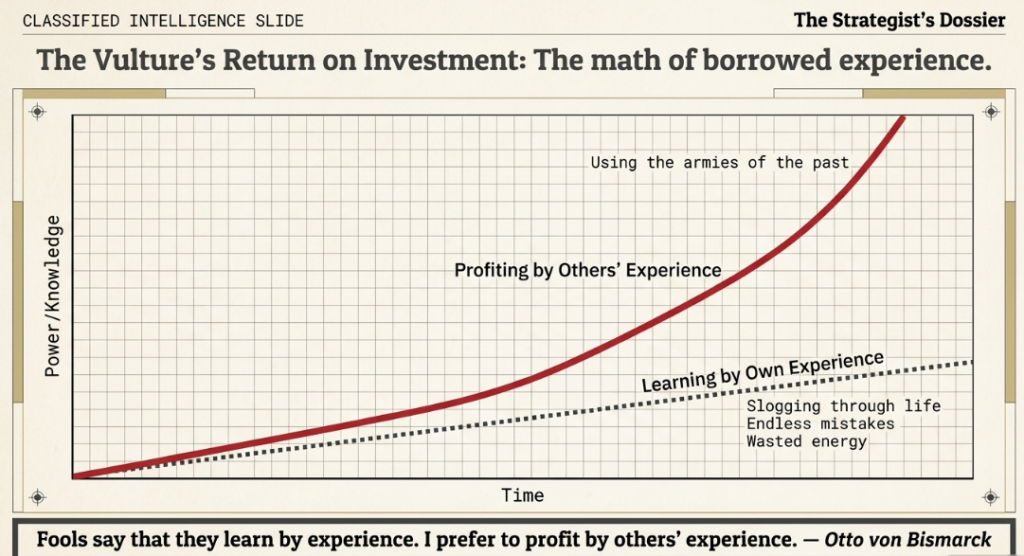
You do not always need to exploit the labor of your contemporaries; you can also use the “armies of the past.” Intellectual and strategic power is manufactured by leveraging the vast storehouse of knowledge already developed by those who came before you.
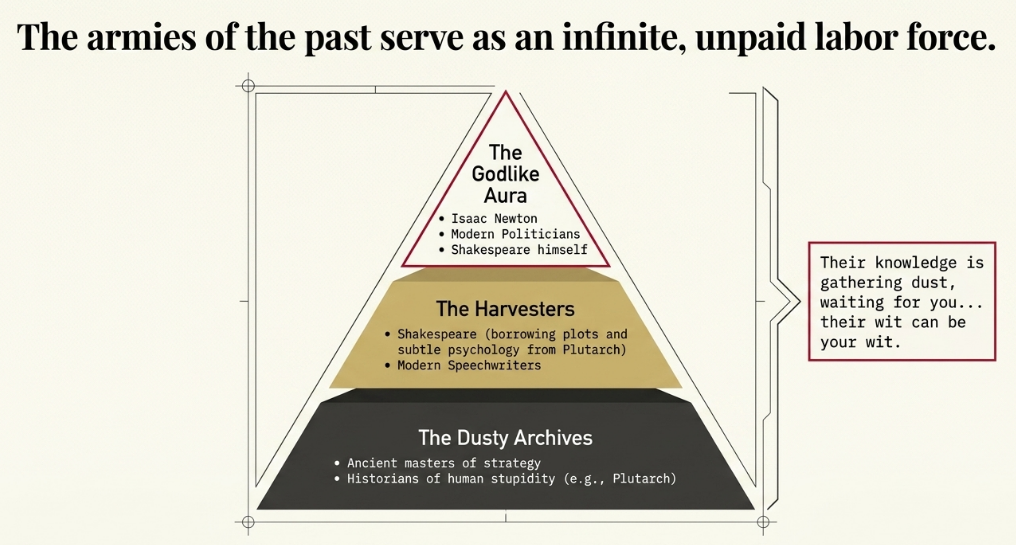
Isaac Newton “stood on the shoulders of giants” to appear as a singular genius, and William Shakespeare unashamedly “borrowed” plots and psychology from Plutarch to create his masterpieces. By using the knowledge of the past, you avoid the waste of time involved in making every mistake yourself. As Baltasar Gracián observed:
“There is much to be known, life is short, and life is not life without knowledge. It is therefore an excellent device to acquire knowledge from everybody. Thus, by the sweat of another’s brow, you win the reputation of being an oracle.”
Efficiency is the primary currency of reputation. As the statesman Bismarck once noted:
“Fools say that they learn by experience. I prefer to profit by others’ experience.”
4. The Vulture Mentality: Surviving the Jungle of Power
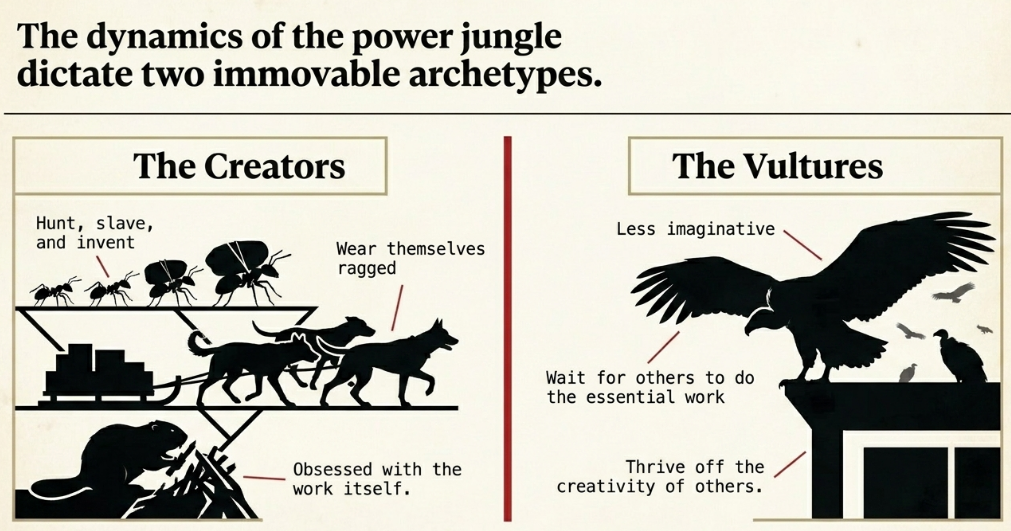
The world of power mirrors the dynamics of the jungle. There are hunters who kill, and there are “vultures and hyenas” who thrive on the hunting of others. To be successful, you must abandon the morality of the prey.
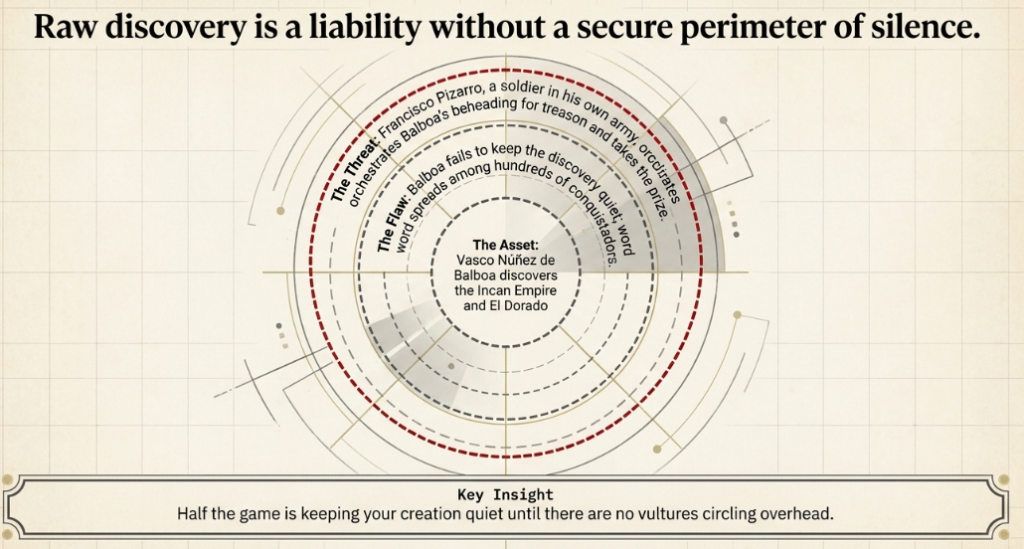
Consider the explorer Vasco Núñez de Balboa. He spent years enduring death-defying hardships to discover the Incan empire in present-day Peru. However, he failed to keep his discovery quiet or watch the subordinates “circling above.” One of his own soldiers, Francisco Pizarro, helped have Balboa beheaded for treason and then simply stepped into the role Balboa had carved out. Pizarro claimed the riches and the credit for a discovery he did not make.
The lesson is ruthless: do not be naive. While you are slaving away, vultures are watching. The choice is binary: either protect your creation with vigilant secrecy until it is ready to be claimed, or, as the law suggests—do not fight the vulture; join him. Once you have established your own power base, become the scavenger of others’ efforts to save your own time and energy.
5. The Kissinger Exception: Knowing When to Give Credit Away
The smartest predators know when to hide their claws. There is a strategic “reversal” to this law: if your power base is not yet “unshakable,” hogging the limelight can be a fatal mistake. If you appear to be pushing a superior out of the frame, you will be branded a deceiver and removed.
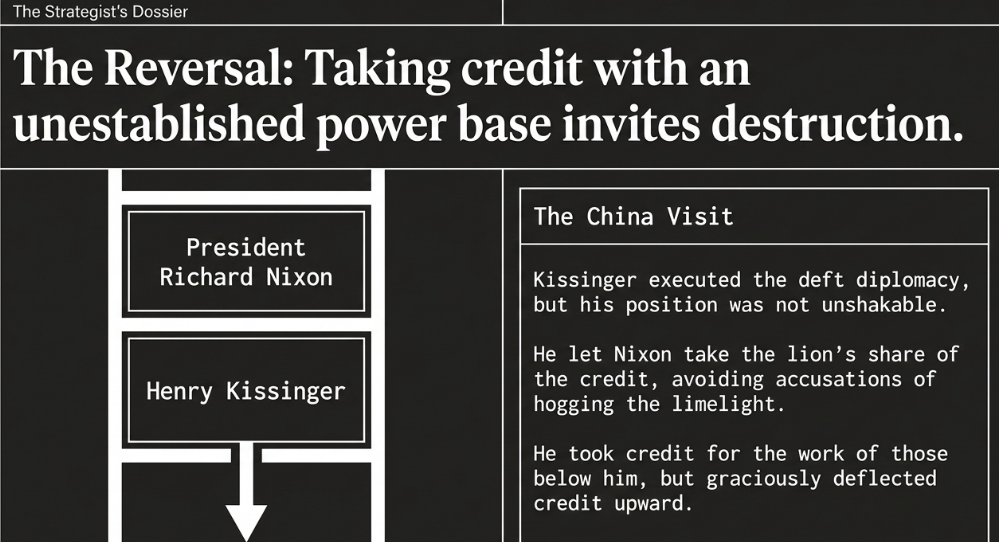
Henry Kissinger played this game with surgical precision during Richard Nixon’s presidency. The historic diplomatic opening to China was Kissinger’s brainchild, yet when the time came to receive the accolades, he adroitly let Nixon take the lion’s share. By taking credit for the work of those below him while graciously deferring to the “master” above, Kissinger made himself indispensable without ever becoming a threat. He played the game expertly: he exploited the talent beneath him but knew that his own survival depended on the reflected glory of the man at the top.
Conclusion: The Economics of Time and Reputation
Time is a finite resource, and running yourself ragged is a terminal waste of the limited currency that is a human lifespan. The “godlike aura of efficiency and speed” possessed by the powerful is rarely a result of their own manual labor; it is a manufactured asset—the product of leveraging the wisdom, knowledge, and legwork of others.
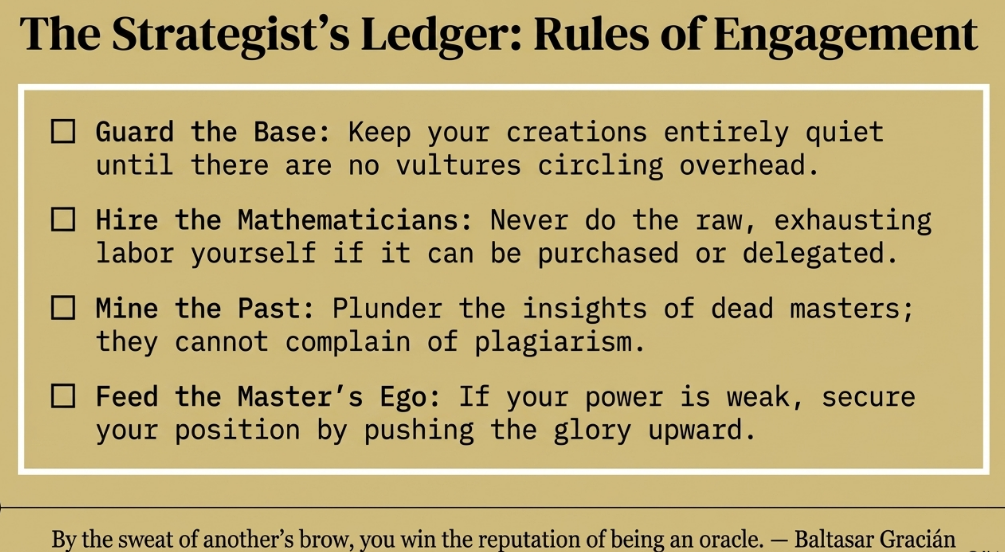
By conserving your forces and pouncing on the opportunities created by others, you ensure that your name is the one etched into the record. History does not remember the helper; it remembers the name on the patent, the signature on the canvas, and the leader on the podium.
In your current project, are you acting as the exhausted Tesla, or are you building the foundation to be the remembered Edison?
Image Summary
Reference


Related posts:
 Fifth Law of Power: The Invisible Shield: Why Your Reputation Is More Powerful Than Your Skills
 Sixth Law of Power: The Art of Being Seen: 5 Provocative Lessons from the Masters of Attention
 How to Win Friends and Influence People: Complete Chapter-by-Chapter Notes
 First Law of Power: Why Your Best Work Might Be Your Biggest Liability: Lessons from the Architecture of Power
 Second Law of Power: Why Your Best Friend Might Be Your Worst Business Partner: The Strategic Case for Using Enemies