The Fatal Flaw of the Familiar
In the harsh, zero-sum theater of professional life, the instinct toward the familiar is a seductive siren song. When we ascend to power, our first impulse is to surround ourselves with friends, seeking a sanctuary of trust in an otherwise predatory environment. We crave the warmth of affection to soften the cold demands of leadership. However, as any seasoned strategist will attest, this instinct harbors a catastrophic oversight. In the realm of power, friendship does not provide a safety net; it creates a blind spot.
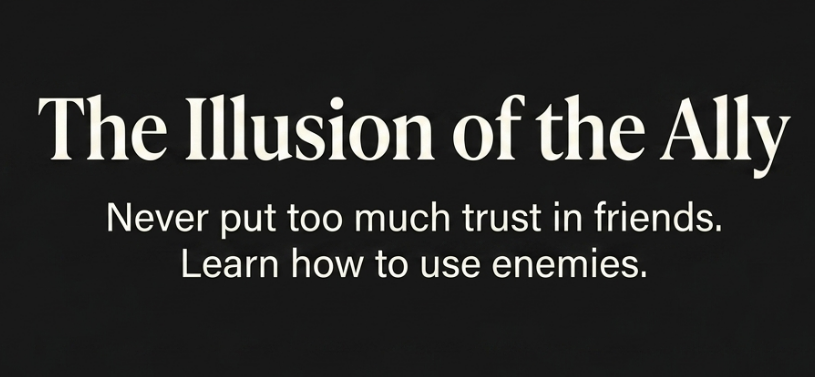
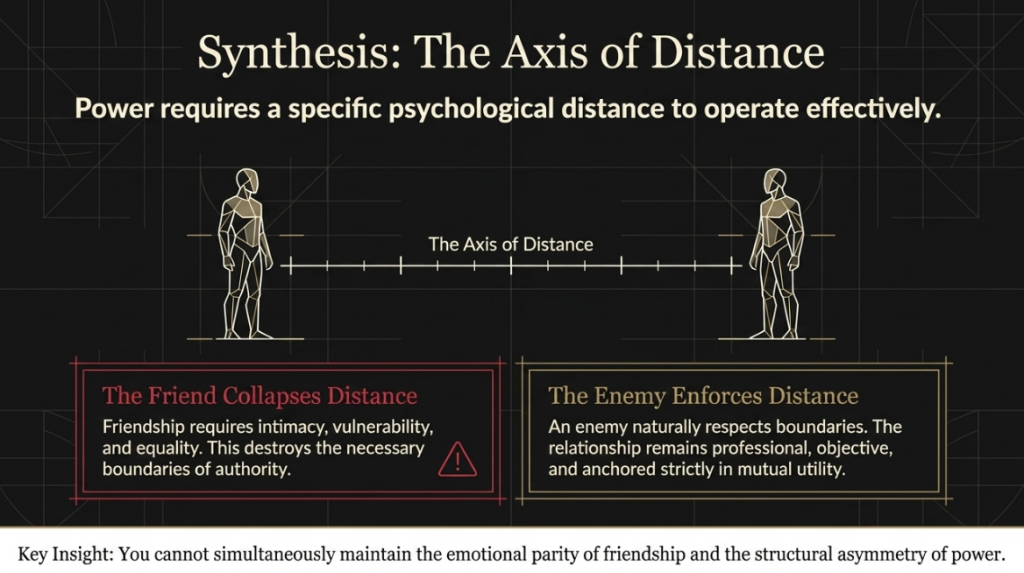
The core tenet of Law 2 from The 48 Laws of Power offers a counterintuitive but essential warning: We must be far more wary of our friends than our enemies. While the intentions of an adversary are transparent and predictable, the proximity of a friend obscures the subtle shift from affection to envy. To maintain a strategic equilibrium, a leader must learn to transcend the “tempting trap of friendship” and master the art of utilizing those who have everything to prove.
The “Jaws of Ingratitude”: Why Friends Betray Faster
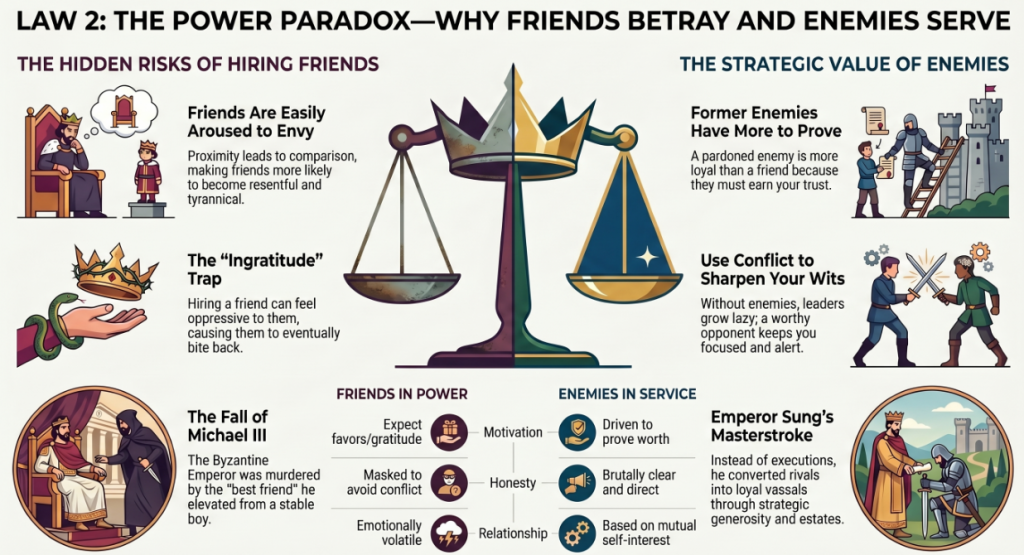
The annals of Byzantine history offer a visceral cautionary tale on the fragility of gratitude. In the mid-ninth century, the young Emperor Michael III found himself surrounded by profligates and conspirators. Seeking a bedrock of loyalty, he turned to Basilius, a young groom of peasant stock who had once saved his life. Michael did not merely hire his friend; he attempted to manufacture a peer. He sent Basilius to the finest school in Byzantium, transforming a crude horse trainer into a cultured courtier, doubling and tripling his salary, and even marrying him off to his own mistress.
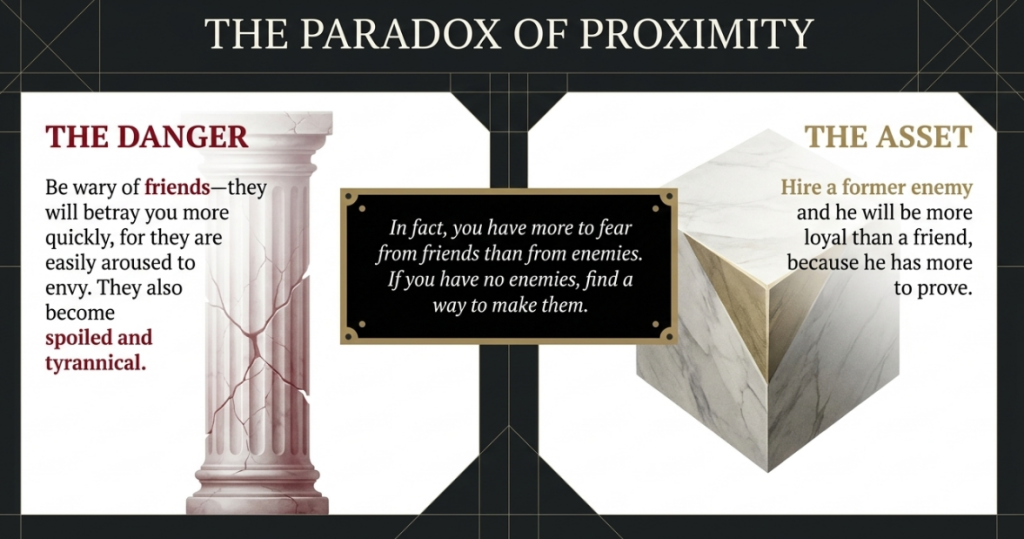
Michael’s fatal error was his belief that overwhelming favors ensure loyalty. In reality, such largesse often triggers a pathological ingratitude. To the recipient, a massive favor feels like a burden—an act of condescension that reminds them of their initial inferiority. Friends “cover up their unpleasant qualities” to avoid offense, laughing extra hard at jokes while nursing a secret resentment. As Louis XIV famously observed:
“Every time I bestow a vacant office I make a hundred discontented persons and one ingrate.”
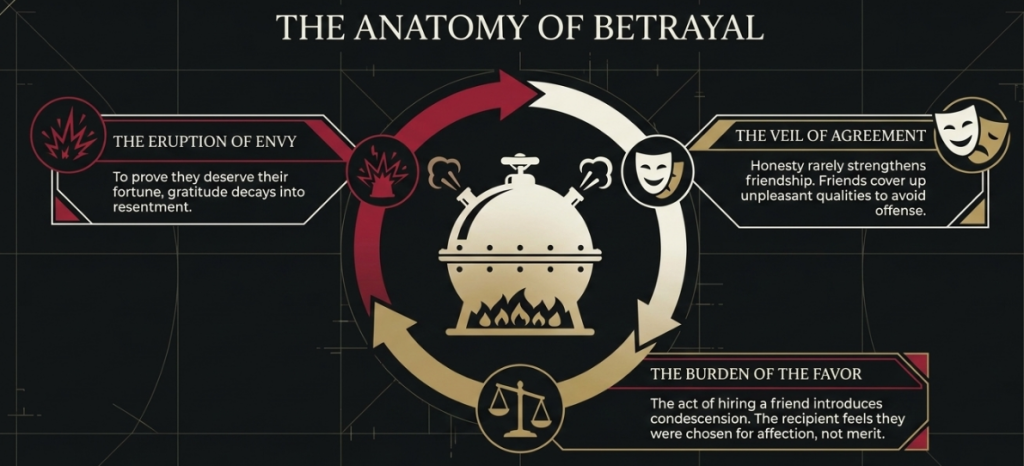
Michael had a man right under his nose who possessed the competence to steer him right: his uncle Bardas. Yet, blinded by sentiment, Michael allowed Basilius to poison his ear against the qualified Bardas. Basilius eventually murdered Bardas in a crowd and, soon after, turned his sights on the Emperor. Michael awoke one evening after a night of heavy drinking to find himself surrounded by soldiers; he watched in horror as they stabbed him to death while Basilius, the “friend” who owed him everything, looked on with an impudent smile. This is the “Image” of the Jaws of Ingratitude: if you put your finger in the mouth of a lion, you are cautious; if you put it in the mouth of a friend, you are eaten alive.
The Loyalty of the Pardoned: Why Enemies Have More to Prove
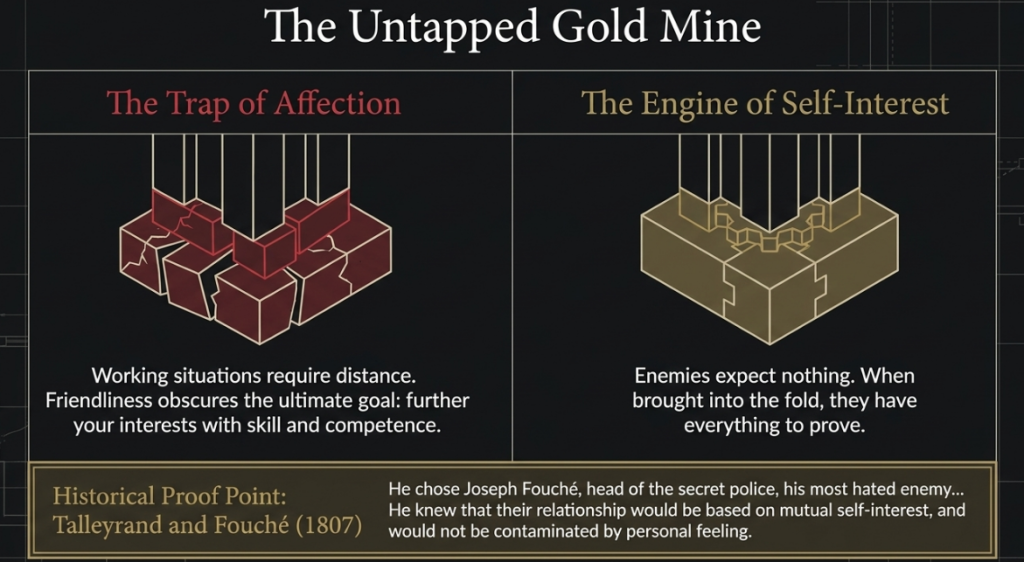
While friends become spoiled and tyrannical under the sun of your favor, a former enemy is a gold mine of untapped potential. Consider the meritocratic distance maintained by Emperor Sung (General Chao K’uang-yin) in A.D. 959. To break China’s centuries-long cycle of bloody coups, Sung invited his most powerful generals to a banquet. Once they were drunk on wine, he offered them a strategic choice: instead of a life of anxiety and potential execution, they could resign their commands in exchange for estates, singers, and riches.
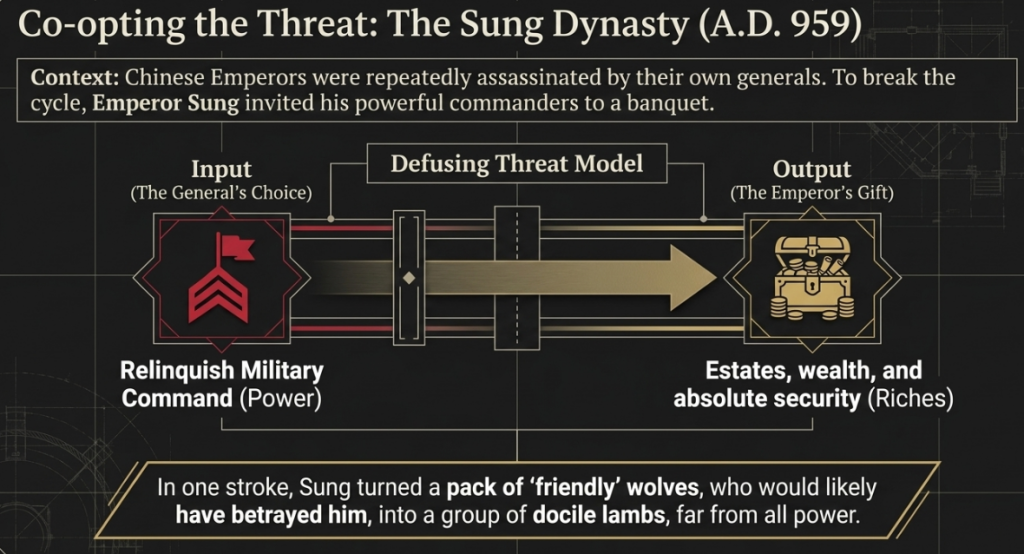
By “emasculating” his rivals with wealth rather than the sword, Sung turned a pack of “friendly” wolves into a group of docile, loyal subjects. A former enemy who is spared the “guillotine” will go to the ends of the earth for the leader who pardoned them. They have more to prove and expect nothing, whereas a friend expects everything and feels they deserve it.
As Baltasar Gracián advised in his “Authority” on the matter:
“Know how to use enemies for your own profit. You must learn to grab a sword not by its blade, which would cut you, but by the handle, which allows you to defend yourself. The wise man profits more from his enemies, than a fool from his friends.”
Skill Over Sentiment: Professional Distance as a Power Tool
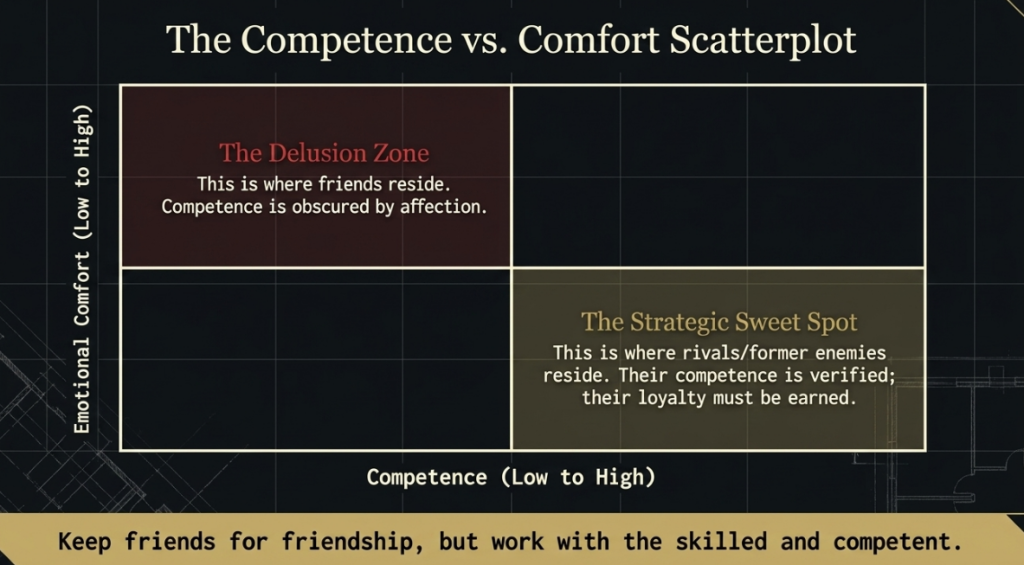
Mixing sentiment with strategy limits your reach because it prioritizes emotional comfort over competence. Every professional situation requires a degree of meritocratic distance. Friendliness, whether real or feigned, only obscures the reality of whether a person can actually do the job.
A master of this cold efficiency was Talleyrand, Napoleon’s foreign minister. When he realized Napoleon was leading France toward ruin in 1807, he needed a partner for a conspiracy. He did not turn to a friend; he turned to Joseph Fouché, the head of the secret police and his most hated enemy—a man who had once tried to have Talleyrand assassinated. Their partnership was successful precisely because it was devoid of “emotional contamination.” They were united by mutual self-interest and a shared goal, untainted by the unstable feelings of friendship. Talleyrand knew that Fouché, having much to prove in this new alignment, would move mountains.
The strategic directive for the modern leader is clear: Keep friends for friendship, but work with the skilled and competent.
The Sharpening Effect: Why You Need a Worthy Opponent
Opposition is not a hurdle; it is a requirement for excellence. Mao Tse-tung’s philosophy centered on the idea that a group cannot grow stronger without a worthy opponent. He famously thanked the Japanese for invading China, arguing that the conflict kept his “ragtag army” from growing “rusty” and provided the perfect training to eventually defeat his domestic rivals, the Nationalists.
Mao’s strategy of constant conflict serves as a template for target creation in modern leadership. Sometimes, a leader must artificially create an adversary to unify a complacent team or define a cause. Mao’s strategy involved:
- Victory Assurance: Only pick fights you are certain to win in the long run.
- Target Creation: If no enemies exist, turn a friend into an enemy or set up a convenient target to keep your forces focused.
- Cause Definition: Use the conflict to frame your mission as a struggle of “good against evil,” giving your team a sense of meaning that words alone cannot provide.
An enemy at your heels sharpens your wits, keeping you focused, alert, and safe from the rot of complacency.
The Perilous Pivot: When Friendship Serves a Darker Purpose
In the “reversal” of this strategy, a friend’s primary utility in the world of power is often as a sacrificial lamb. Because a friend’s affection makes them willing to take risks for you, they are the ideal candidates for “dirty work” that a leader cannot be seen performing.
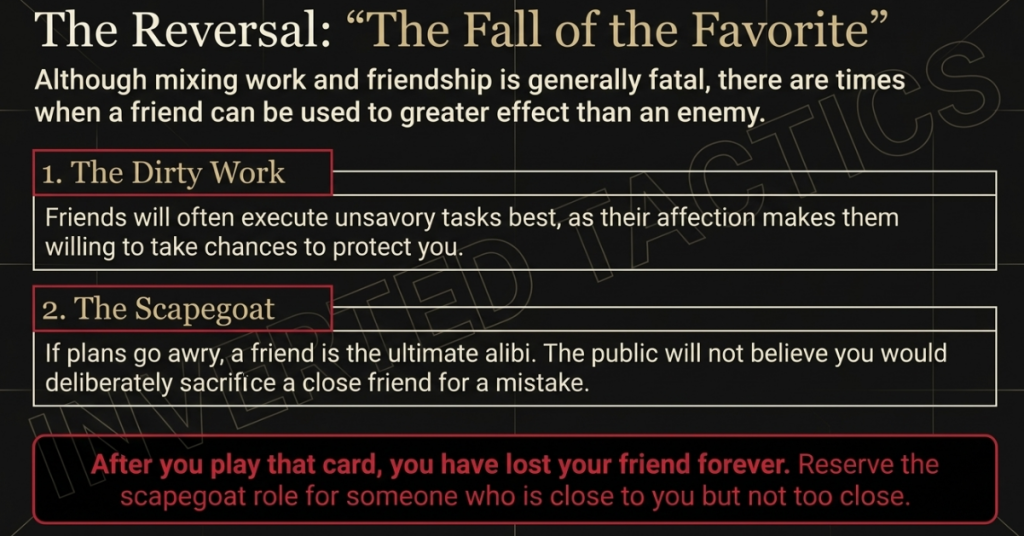
More ruthlessly, a leader may employ the “fall of the favorite.” If a plan goes awry, a sovereign might sacrifice their closest confidant as a convenient scapegoat. The tactical nuance here is to choose someone who is close to you but not too close. The public is less likely to believe the sacrifice was a calculated move because they assume the emotional bond would prevent such cold-bloodedness. Be warned, however: this move destroys the friendship forever. It is a one-time currency that, once spent, leaves you in the isolation that power often demands.
Conclusion: A Strategic Path Forward
The world is a harsh place, and while friends may soften that harshness, they also dull the edge of your judgment. To navigate the modern professional landscape, one must maintain professional distance and embrace the strategic value of conflict. Reliance on friends often leads to a “lazy” lack of opposition or a “blind” trust that invites betrayal.
This philosophy is best captured in a story from the American Civil War. Abraham Lincoln was once chastised by an elderly lady for speaking kindly of the Southerners. She insisted they were “irreconcilable enemies who must be destroyed.” Lincoln replied:
“Why, madam, do I not destroy my enemies when I make them my friends?”
By transforming enemies into allies, you gain a loyal servant with everything to prove. By keeping friends at a distance, you preserve both the friendship and your power.
Ask yourself: Is your current peace merely the rot of complacency? Are you blind because you have no one to watch your back, or because those watching it are the ones you love?
Reference: