1. Introduction: The Fatal Flaw in Our Pleas for Help
In the high-stakes world of strategic partnerships and corporate maneuvers, few things are more frustrating than a request that falls on deaf ears. You approach an ally, perhaps a former colleague or a long-standing business partner, and you frame your plea around “years of loyalty” or the time you “saved their skin” on a previous project. You expect reciprocity; you receive a cold dismissal.
From a behavioral analysis perspective, this is a failure of leverage-based alignment. The fatal flaw in these requests is the assumption of a shared emotional ledger.
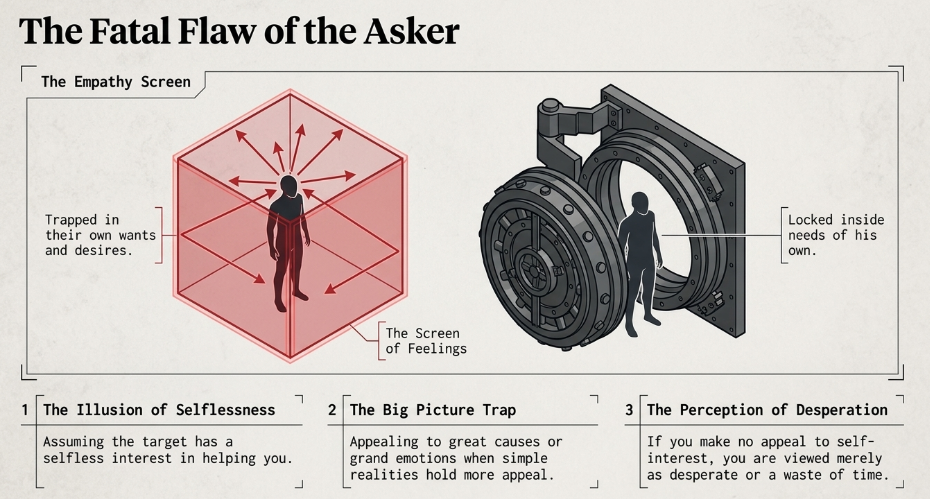
In reality, the most successful requests are built on the bedrock of the other person’s future gain, not their past obligations. To secure a “yes,” you must navigate away from the friction of the past and toward the friction-less promise of the future. This is not just a matter of manners; it is the fundamental mechanics of influence.
2. The Burden of Gratitude: Why the Past is a Weak Foundation
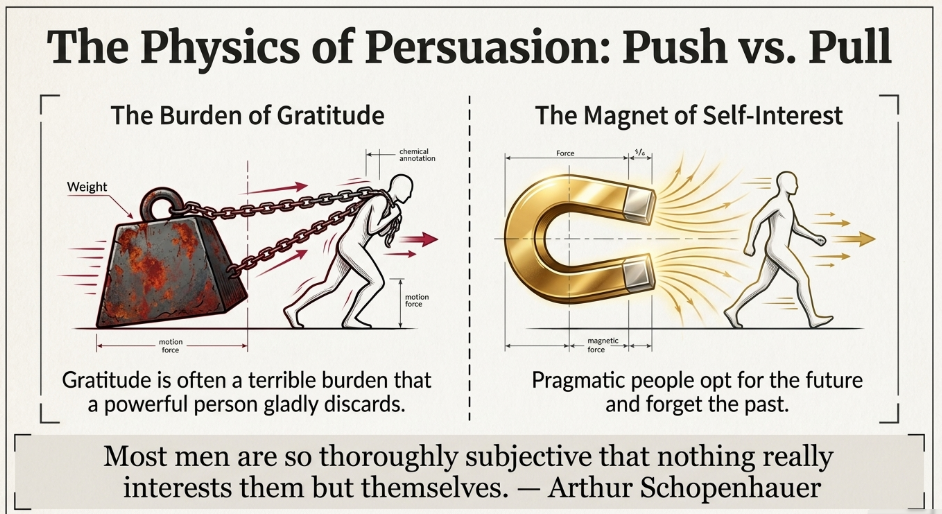
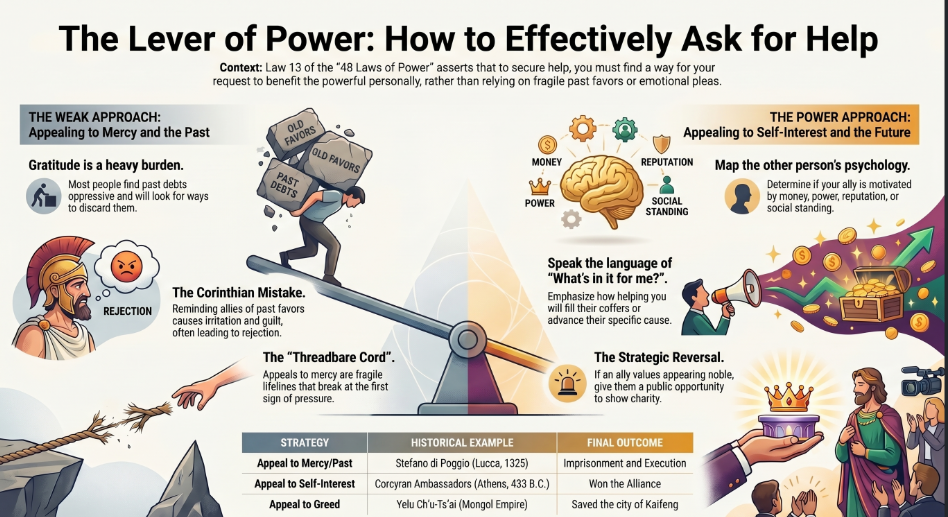
Reminding a powerful individual of a past favor creates what I call “asymmetric emotional expectations.” It transforms a once-voluntary gesture into a “terrible burden” that the recipient is often eager to discard. Most people do not want to be reminded that they owe you; they want to feel independent and autonomous. When you invoke the past, you are essentially attempting to collect a debt with interest, which triggers ego-preservation and resentment.
Consider the 14th-century case of Stefano di Poggio and the prince Castruccio Castracani. The Poggio family had been instrumental in Castruccio’s rise to power, yet they eventually turned against him. Stefano, a peaceful man who had not joined the rebellion, personally intervened to quell the riots. When Castruccio returned, Stefano appealed for mercy for his family, specifically citing the Poggios’ “past generosity” and his own role in bringing peace.
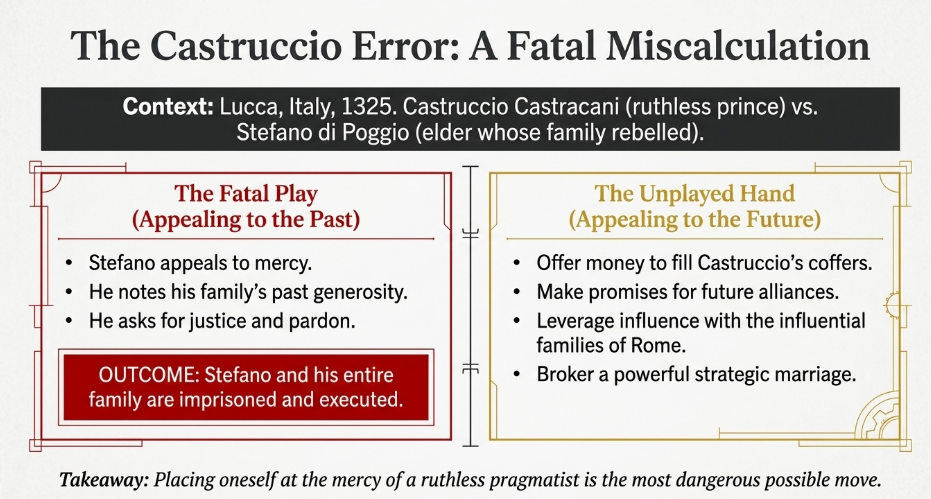
Stefano’s appeal was a catastrophic strategic error. By emphasizing his family’s role in the prince’s rise and his own “agency” in stopping the riots, he did not project value—he signaled weakness and reminded a ruthless realist of a debt he wanted to cancel. Castruccio did not see an old friend; he saw a “new enemy” whose existence served as a constant reminder of his own past dependence. Had Stefano offered tangible future assets—strategic influence in Rome or powerful marriage alliances—he might have survived. Instead, Castruccio permanently cleared the ledger by executing the entire Poggio family, including Stefano.
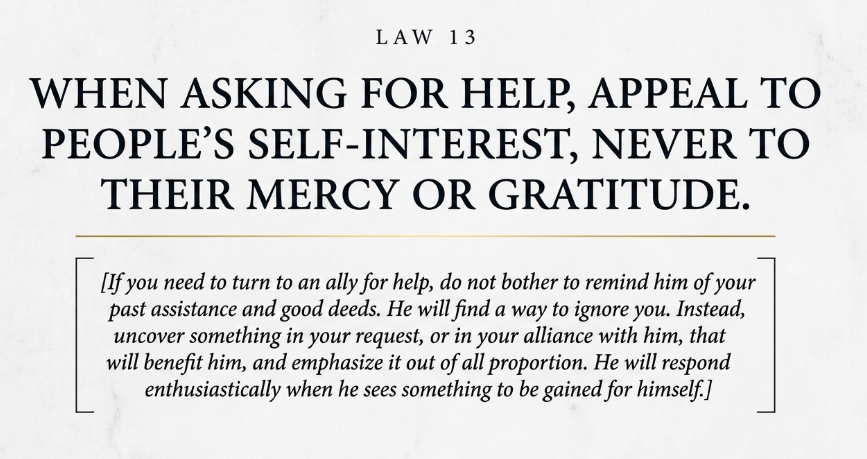
> “If you need to turn to an ally for help, do not bother to remind him of your past assistance and good deeds. He will find a way to ignore you.”
3. Pragmatism Over Sentiment: The Corcyran Strategy
In 433 B.C., as the Peloponnesian War loomed, the island of Corcyra and the city-state of Corinth both petitioned Athens for an alliance. The two ambassadors presented diametrically opposed psychological frameworks.
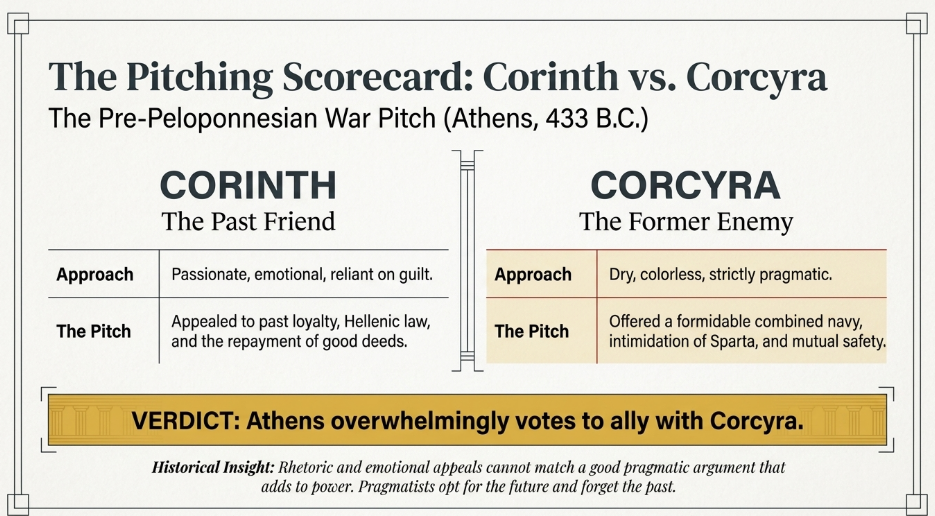
The Corinthians relied on sentiment. They delivered a passionate, emotional speech listing every historical service they had performed for Athens, arguing that the Athenians were morally obligated to show gratitude. They appealed to Hellenic law and the “repayment of good deeds.”
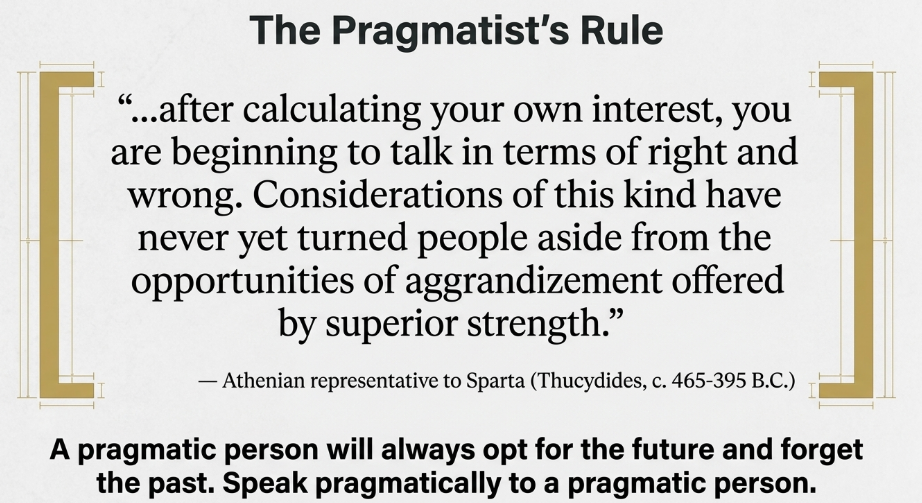
In contrast, the Corcyran ambassador was “dry and colorless.” He admitted Corcyra had no history of friendship with Athens and had even been an ally to their enemies. However, he offered a cold, pragmatic value proposition: Corcyra possessed a navy surpassed only by Athens’ own. An alliance would create a combined force capable of intimidating Sparta. The Athenians, being preeminent realists, chose the Corcyran alliance. They understood that references to past generosity were merely attempts to induce guilt—a cognitive load they had no interest in carrying. As the Athenian representative famously put it:
> “Considerations of this kind [right and wrong] have never yet turned people aside from the opportunities of aggrandizement offered by superior strength.”
4. Self-Interest as the Universal Language
Self-interest is the only bridge that successfully bypasses cultural barriers and conflicting worldviews. We see this in the sixteenth-century interaction between the Japanese Emperor Ieyasu and European powers. Portuguese missionaries failed to convert the ruling elite because their primary focus was religious proselytization—a goal that antagonized Ieyasu and ignored his practical needs.
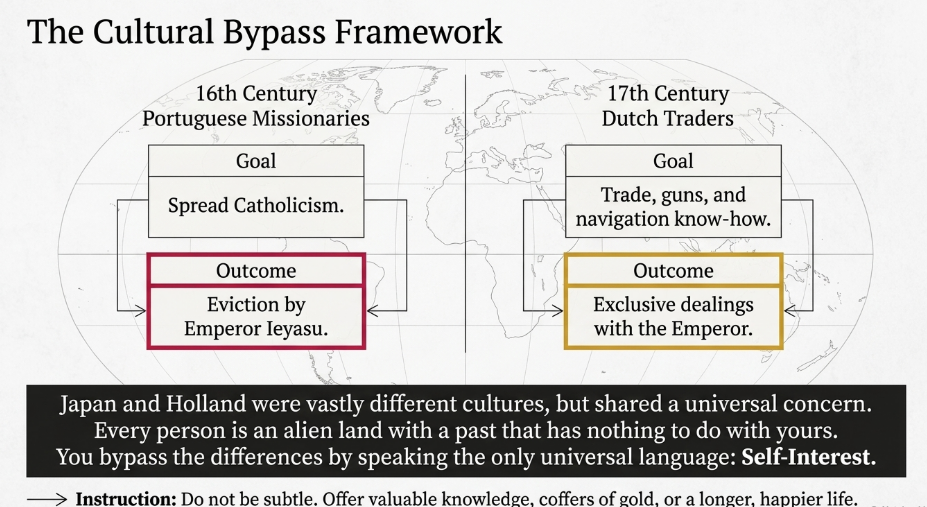
When the Dutch arrived, they succeeded by caring “nothing for spreading religion.” They focused exclusively on trade, navigation, and guns. Ieyasu moved to evict the Portuguese and deal solely with the Dutch because their goals were transparent and met his specific needs for know-how and wealth. When you appeal to self-interest, you are speaking a universal language. There is no need for subtlety: clearly demonstrate how you will fill their coffers, protect their status, or advance their specific agenda.
5. The Greed Lever: Lessons from the Mongol Conquest
To influence a high-value target, you must “think your way inside the other person’s mind” to identify their specific lever. In the twelfth century, Genghis Khan planned to obliterate the Chinese civilization and level its cities to create pasture for his horses. He saw no value in “culture.”
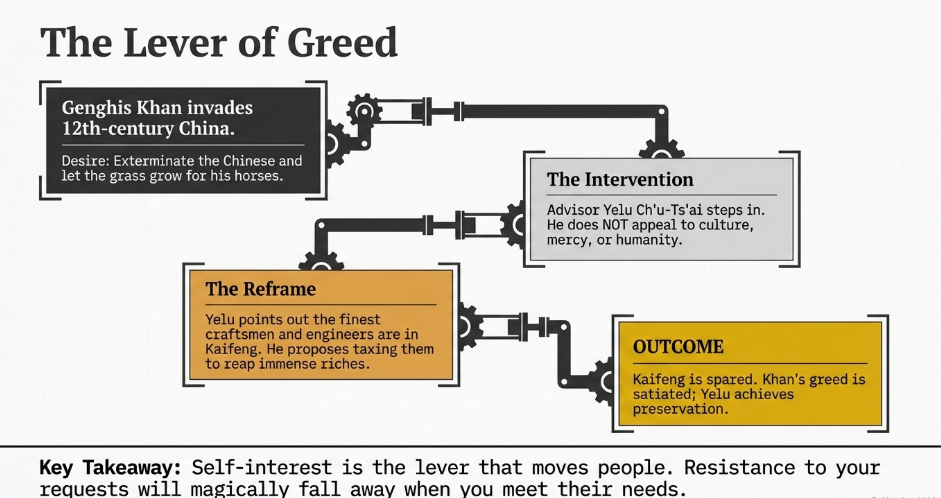
China was saved by Yelu Ch’u-Ts’ai, a foreigner who understood that the Khan was a “barbaric peasant” motivated purely by practical results. Yelu did not appeal to mercy or the artistic value of the cities. Instead, he presented a financial model: by taxing the inhabitants rather than killing them, the Khan would reap immense, recurring riches. Later, when Khan besieged the city of Kaifeng, Yelu prevented a massacre by pointing out that the city contained the “finest craftsmen and engineers in China” who could be put to work for the Mongol cause. By framing the survival of a civilization as a win for the Khan’s greed, Yelu achieved what no army could.
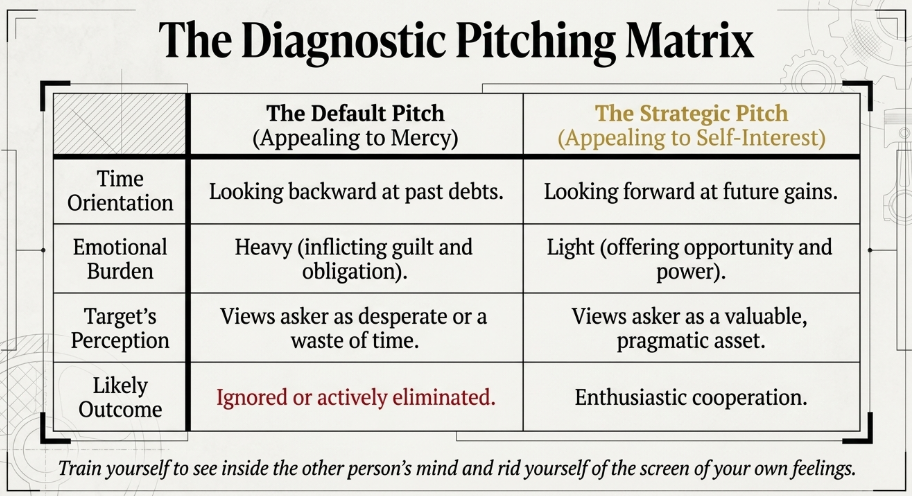
> “Self-interest is the lever that will move people. Once you make them see how you can in some way meet their needs… their resistance to your requests for help will magically fall away.”
6. The Pivot Point: When Charity is the Self-Interest
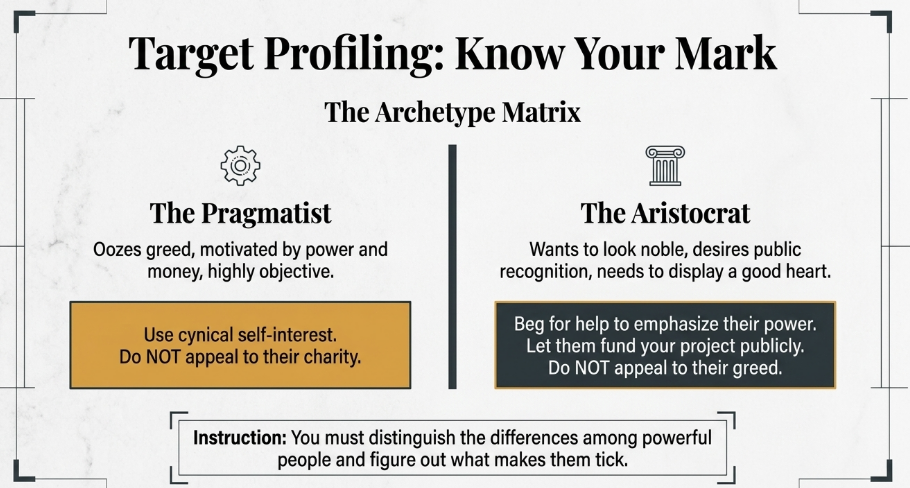
A critical nuance warning for any analyst: self-interest is not always synonymous with “greed.” For some, the primary driver is the desire to feel superior, noble, and charitable. When dealing with these individuals, a cynical appeal to money or power will backfire because it feels “ugly and ignoble.”
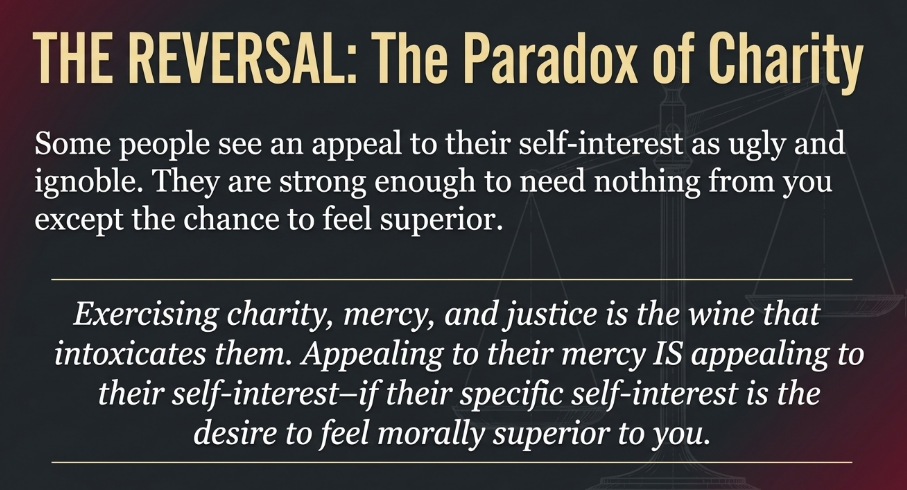
If a person prides themselves on their public nobility, your request for help is the “wine that intoxicates them.” By asking for their help, you emphasize their superior position and power. They are often “dying to fund your project” or grant a favor because it provides a public opportunity to display their “good heart.” You must distinguish between the “greedy” profile and the “noble” profile. When your target “oozes greed,” appeal to their wallet; when they seek to look noble, appeal to their sense of charity and legacy. Never confuse the two.
7. Conclusion: The Cord That Binds
When seeking a “yes,” you must decide which cord you will use to bind your ally to your cause. The cord of mercy and gratitude is “threadbare.” It is a fragile lifeline that snaps under the first shock of reality because it is built on a foundation of resentment and debt. Do not throw such a lifeline to a person of power.
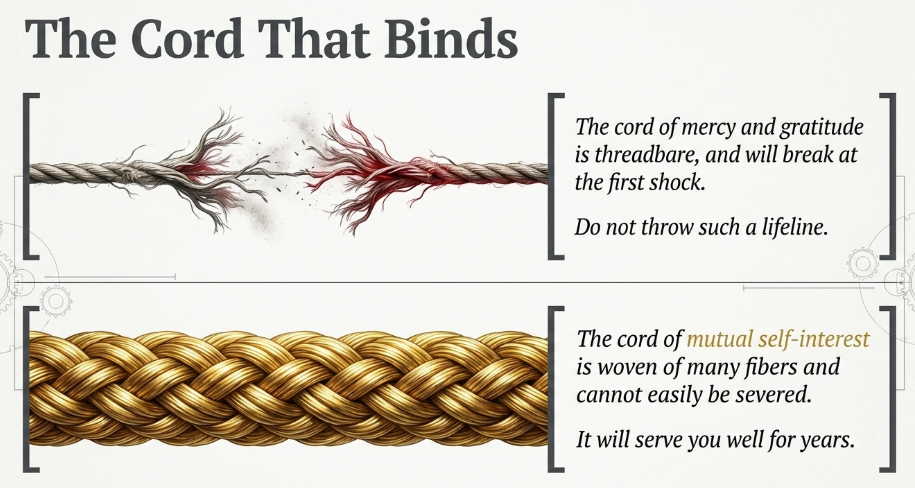
The cord of mutual self-interest, however, is woven of many fibers. It is a durable, long-term foundation for partnership because both parties are tethered by their own desire for gain. It cannot easily be severed because to break the cord would be to act against one’s own prosperity.
Next time you prepare a pitch or request a favor, analyze your foundation. Are you asking for a handout based on what you have done in the past, or are you offering a partnership based on where they want to go in the future?
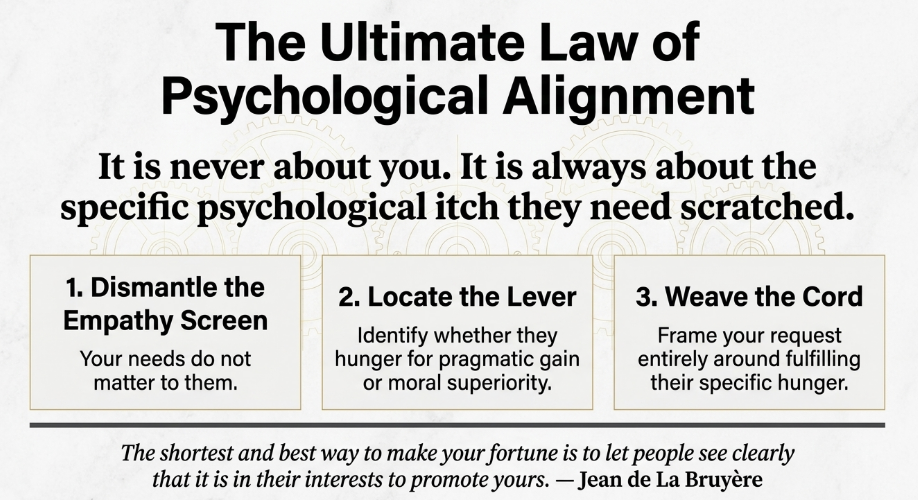
Image Summary
Reference


Related posts:
 First Law of Power: Why Your Best Work Might Be Your Biggest Liability: Lessons from the Architecture of Power
 Second Law of Power: Why Your Best Friend Might Be Your Worst Business Partner: The Strategic Case for Using Enemies
 Third Law of Power: The Hidden Hand: Why Your Total Honesty is a Strategic Liability
 Fourth Law of Power: Why Your Biggest Career Move Might Be Saying Nothing at All: Lessons in Strategic Silence
 Fifth Law of Power: The Invisible Shield: Why Your Reputation Is More Powerful Than Your Skills