In the modern professional arena, we are conditioned to view silence as a void—a technical failure in the machinery of social interaction. There is a pervasive, almost visceral urge to fill every pause with explanations, justifications, or wit. We labor under the delusion that more information equals more influence, and that the person controlling the conversation is the one doing the talking.
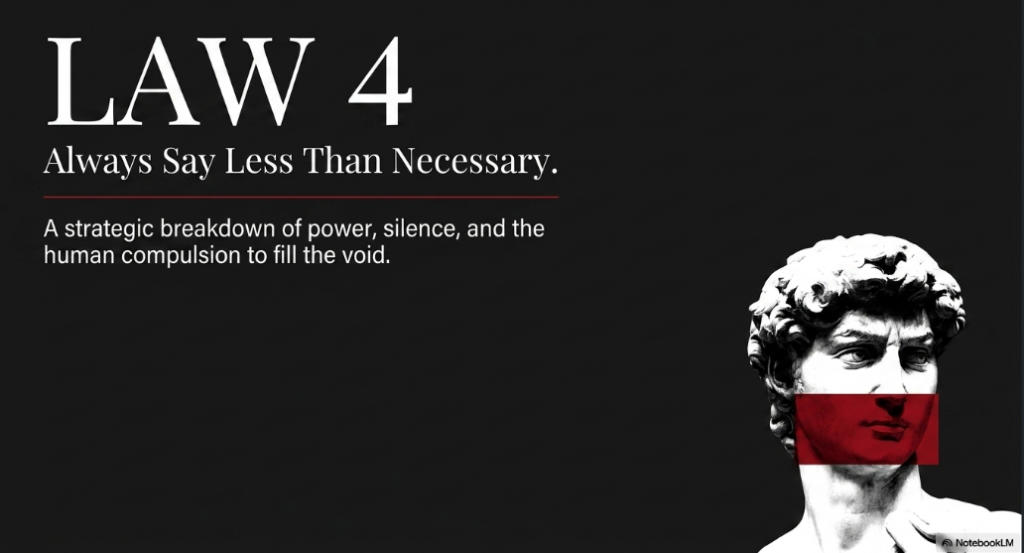
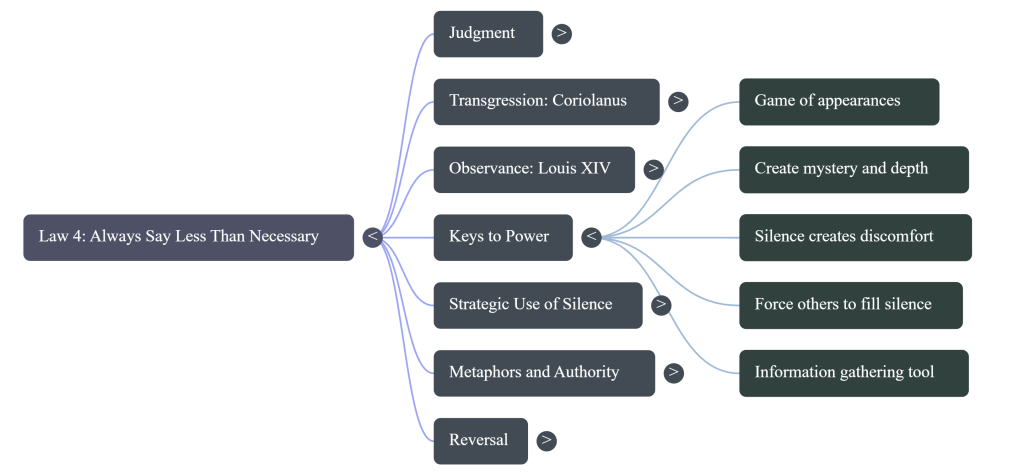
The architecture of influence, however, is built on a different foundation: the economy of presence. In the sophisticated game of appearances that defines power, the most formidable figures are often the quietest. To speak is to reveal; to reveal is to relinquish control. By saying less than necessary, you manipulate the perceptions of those around you, ensuring you inevitably appear greater and more powerful than you actually are.
The High Cost of Being a “Common Braggart”
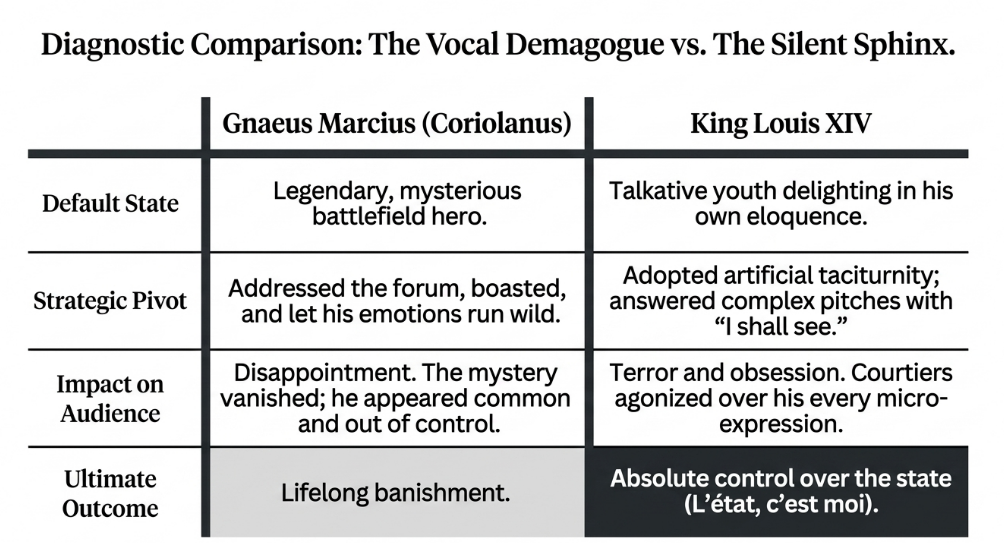
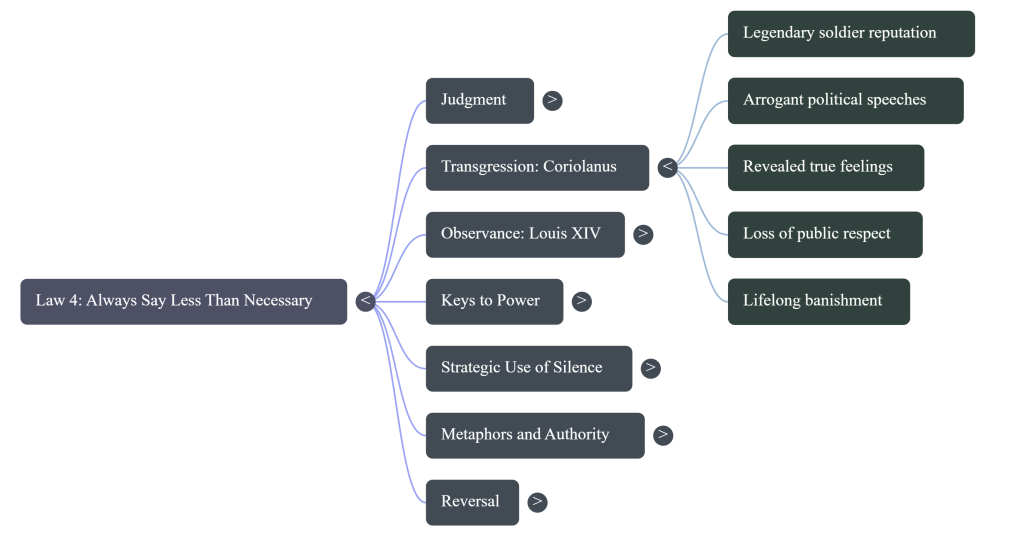
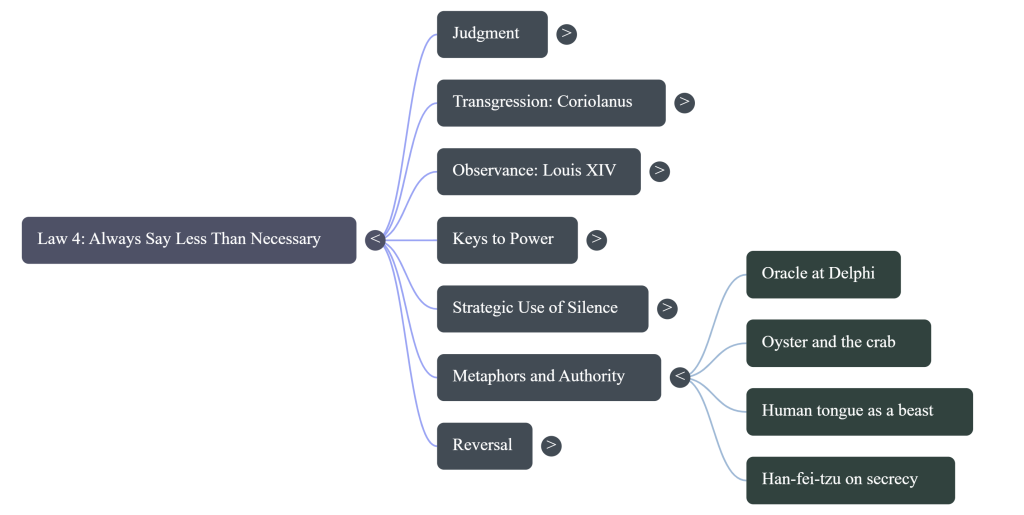
The legend of Gnaeus Marcius—the Roman hero known as Coriolanus—serves as a stark reminder of how a lack of verbal restraint can dismantle a meticulously crafted reputation. In the first half of the fifth century B.C., Marcius was a mythic figure, a man of scars and battlefield valor whom the public worshipped from afar. However, in 454 B.C., when he sought the rank of consul, the discrepancy between the legend and the reality became a public liability.
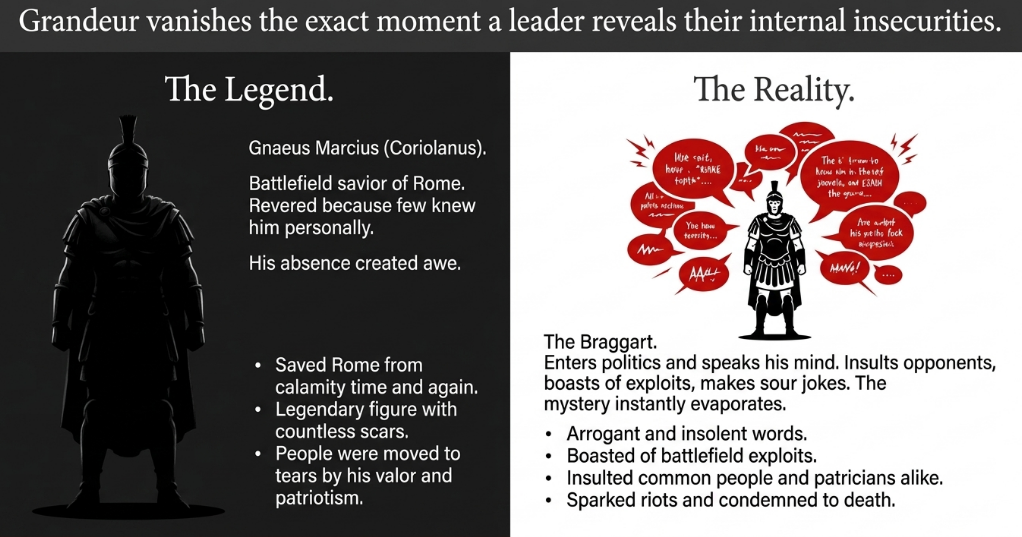
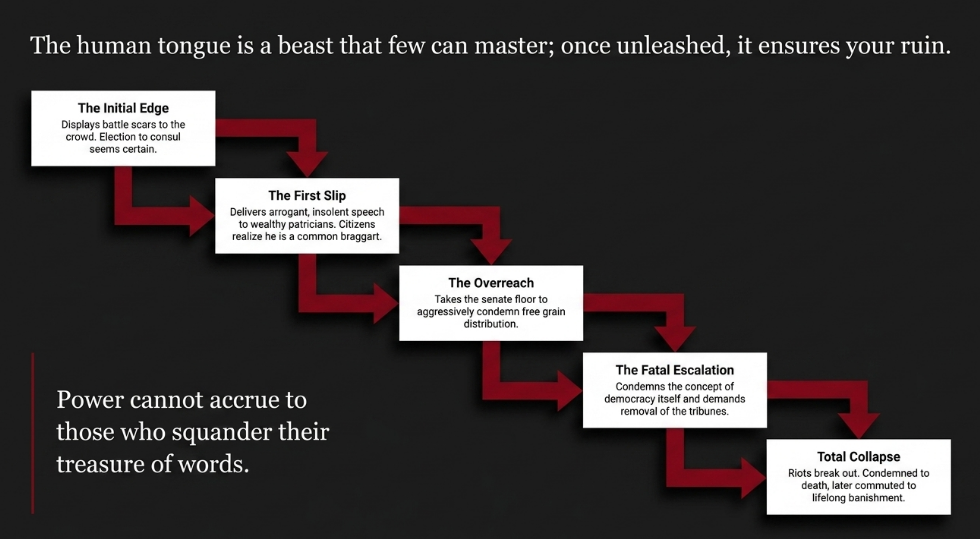
Initially, his silence and the display of his seventeen years of battle scars moved the people to tears. But when the time came for political discourse, the hero vanished, replaced by an arrogant and insolent “common braggart.” He insulted the populace, voiced sour jokes only the aristocracy could appreciate, and blustered about his exploits. His inability to master his tongue transformed him from a legendary patriot into an insecure provincial. This verbal incontinence did more than cost him the election; it fueled the public rage that led to his eventual banishment and death.
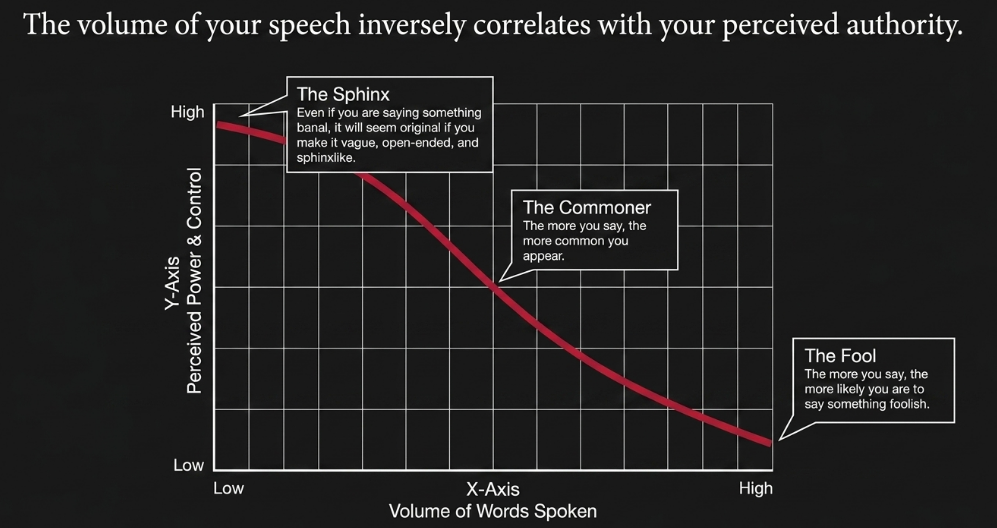
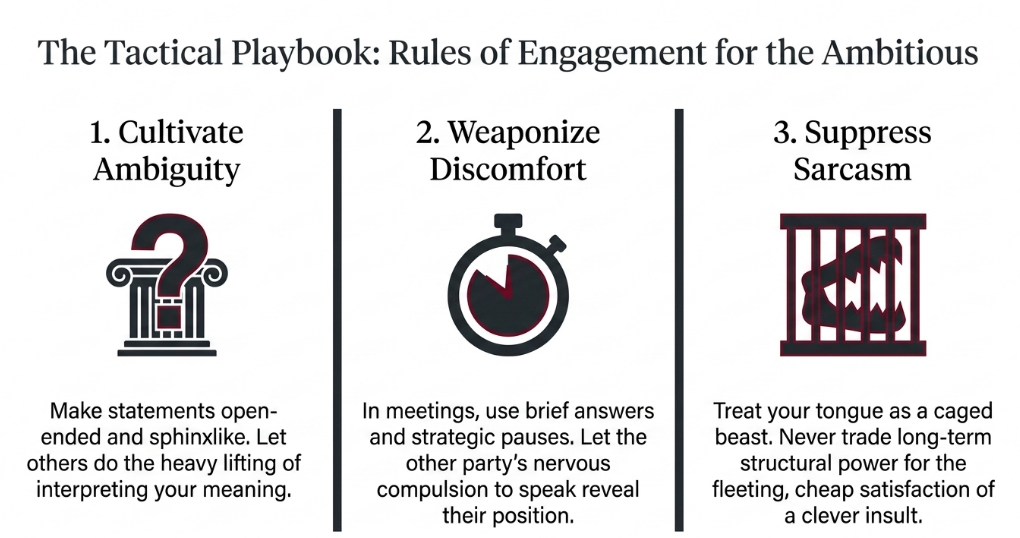
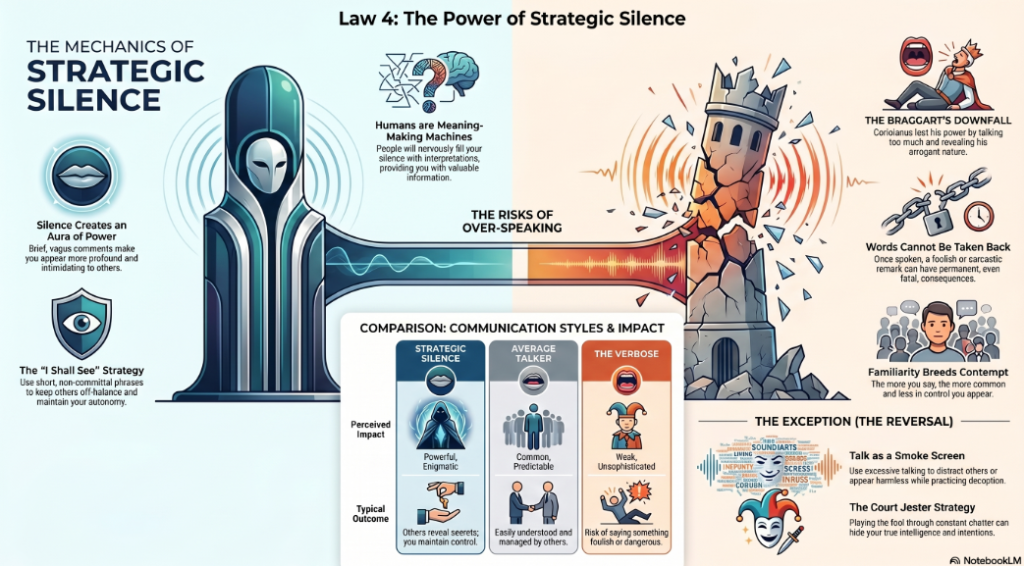
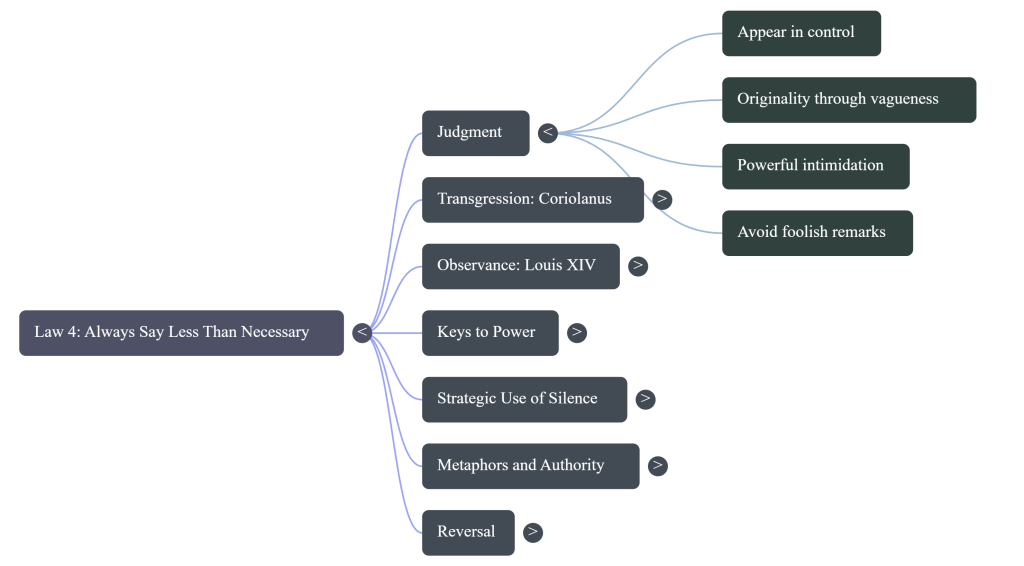
When you are trying to impress people with words, the more you say, the more common you appear, and the less in control. Even if you are saying something banal, it will seem original if you make it vague, open-ended, and sphinxlike. Powerful people impress and intimidate by saying less. The more you say, the more likely you are to say something foolish.
Vagueness is a transformative agent. When a sentiment is stripped of its specifics and delivered with brevity, it assumes a Sphinxlike weight. Silence creates a vacuum that others fill with their own idealized projections; speech, by contrast, grounds you in the mundane.
Silence as a Tool for Information Warfare
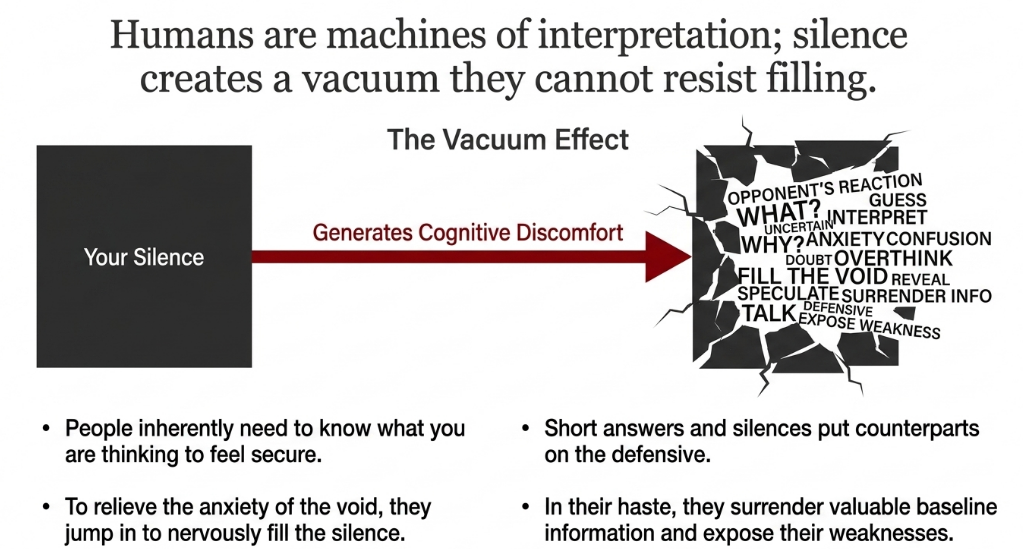
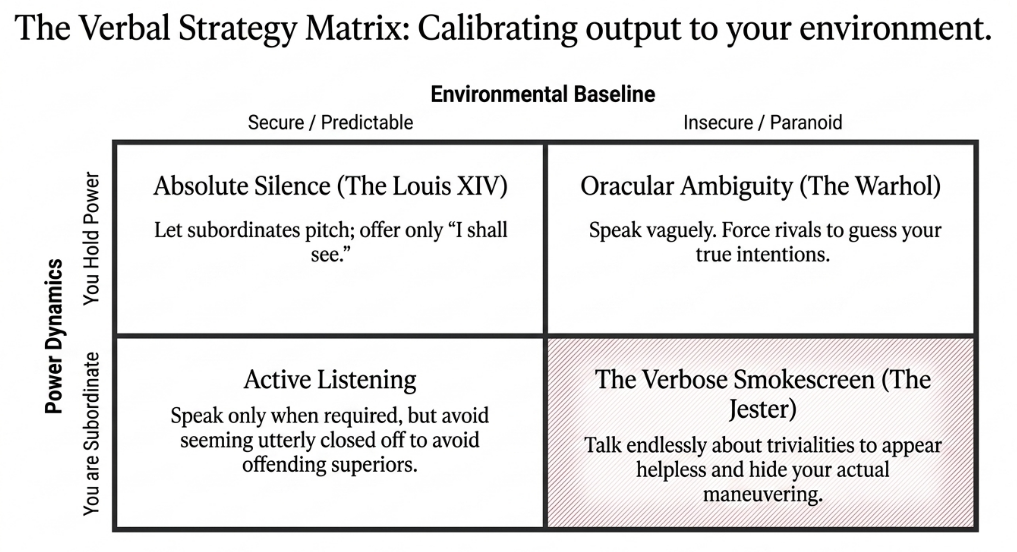
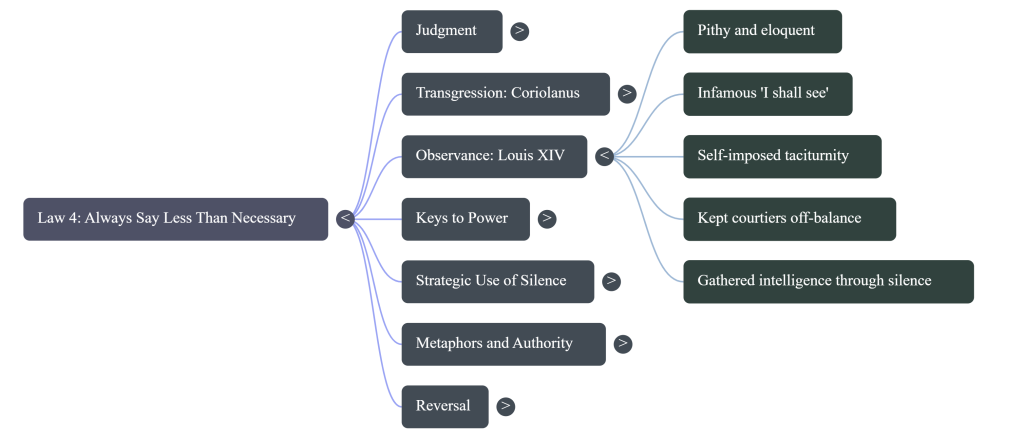
For the strategist, silence is not merely a stylistic choice but a tactical mask. King Louis XIV of France perfected this “self-imposed taciturnity.” Though eloquent in his youth, the Sun King realized that transparency was the enemy of absolute rule. When his ministers would present complex, agonizingly debated issues of state, Louis would listen with an impenetrable, fox-like expression. His eventual response was a devastatingly brief mantra: “I shall see.”
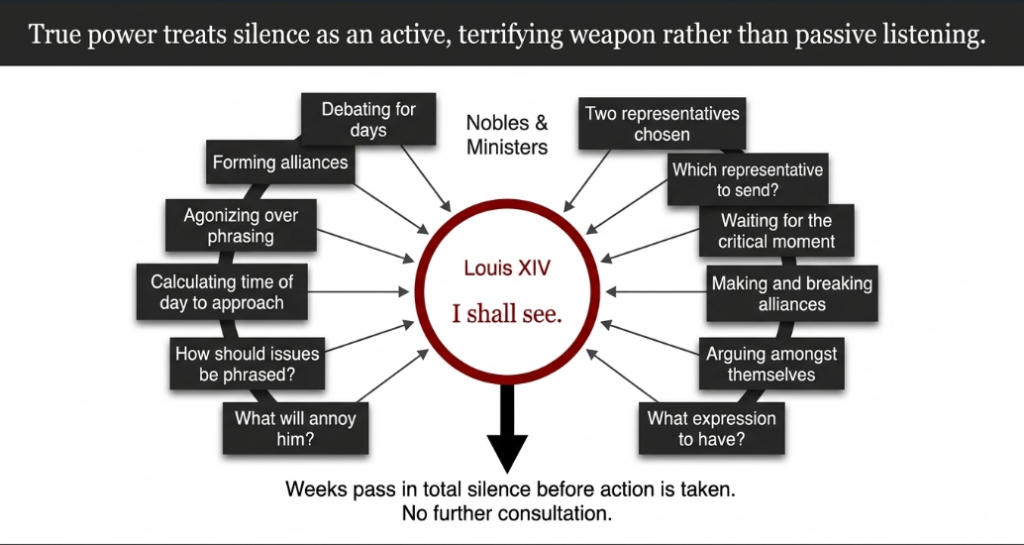
This refusal to provide immediate feedback placed his courtiers on the defensive. Because humans are “machines of interpretation,” they felt a desperate, nervous need to fill the silence. They would continue to talk, inadvertently revealing their true intentions, hidden alliances, and personal weaknesses. Louis effectively turned the court’s own anxiety into a source of intelligence, keeping everyone below him off-balance and under his thumb.
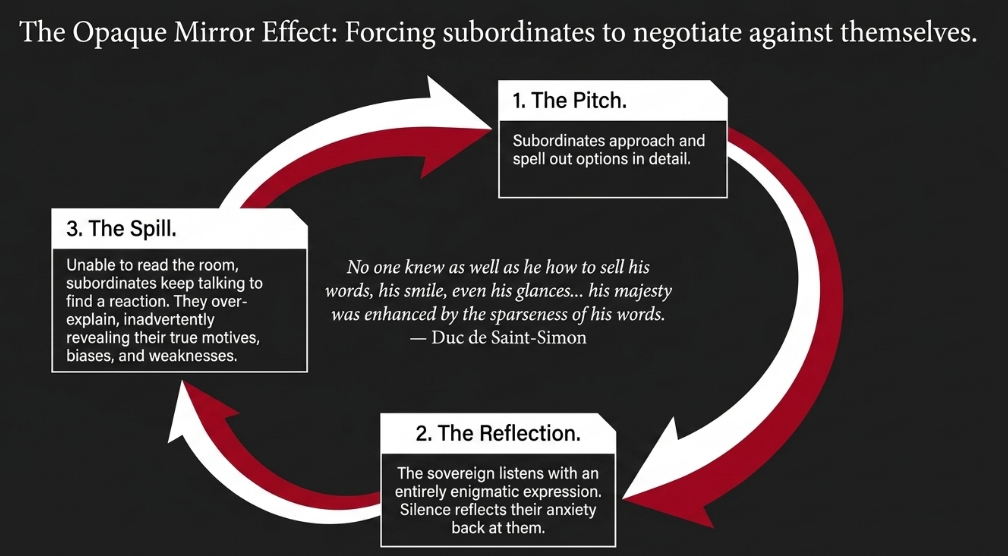
“Never start moving your own lips and teeth before the subordinates do. The longer I keep quiet, the sooner others move their lips and teeth. As they move their lips and teeth, I can thereby understand their real intentions.” — Han-fei-tzu
Manufacturing Mystery and Value
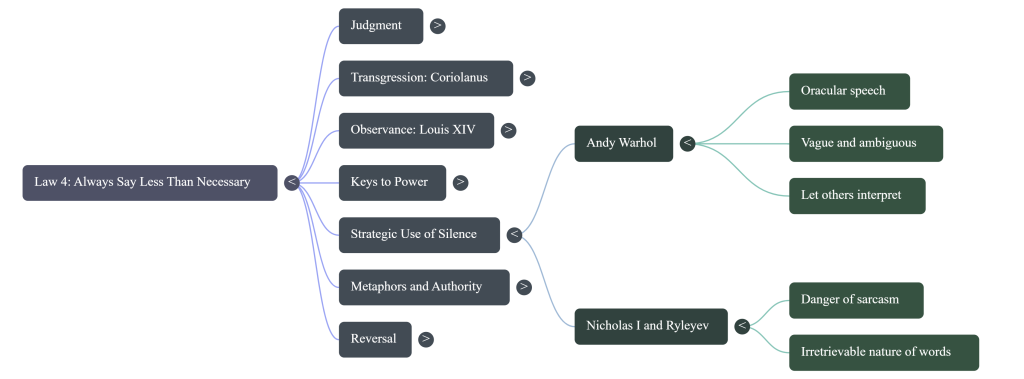
In the spheres of art and culture, silence is the ultimate manufacturer of value. Andy Warhol understood early on that talking to people was often a counter-productive exercise; they would subvert his wishes or attempt to categorize his genius. Taking a cue from the “master of enigma” Marcel Duchamp, Warhol adopted a strategy of oracular speech.
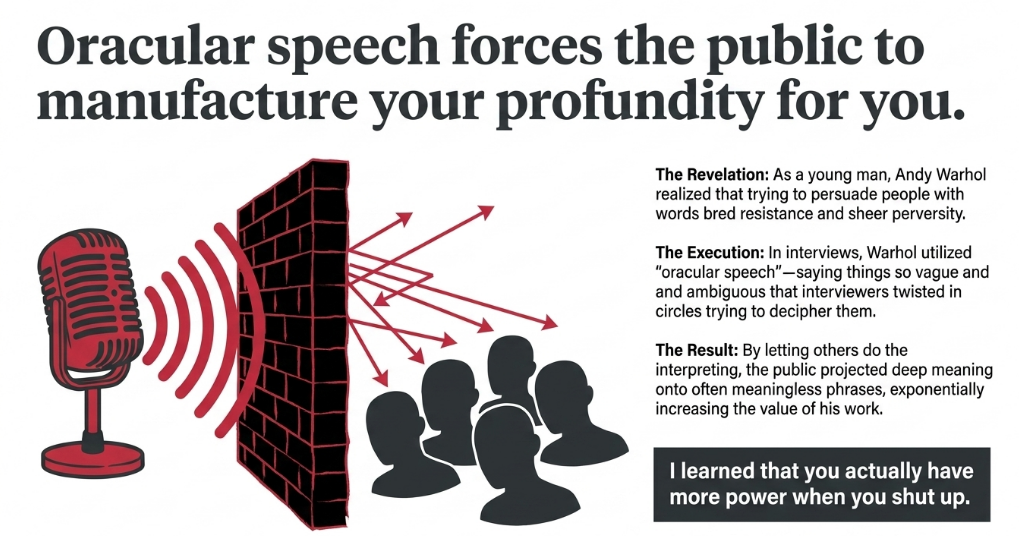
By giving vague, ambiguous interviews, Warhol forced the public to do the intellectual labor of interpretation. He rarely spoke about his work, allowing others to “twist in circles” trying to find profound depth in his often-meaningless phrases. This curated absence of explanation didn’t just protect his ego—it increased the perceived value of his persona. When you refuse to define your work, you allow the world to define it as a masterpiece. As Warhol realized, “you actually have more power when you shut up.”
The Lethal Price of the Last Word
The danger of an unbridled tongue is that once words are released into the world, they can never be retracted. This lesson was learned too late by Kondraty Ryleyev, a leader of the 1825 Decembrist Uprising in Russia. Facing the gallows, Ryleyev experienced what many would call a miracle: the rope broke. In that era, such a failure was often interpreted as divine intervention, warranting a pardon.
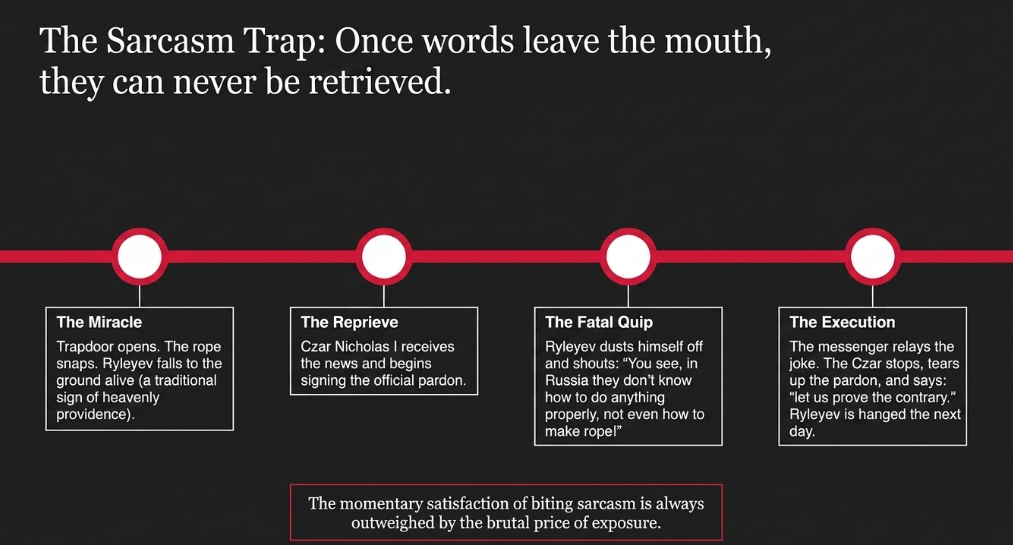
As he stood up, bruised but alive, Ryleyev succumbed to the urge for sarcasm. He called out to the crowd: “You see, in Russia they don’t know how to do anything properly, not even how to make rope!” When Czar Nicholas I heard of the remark, he tore up the pardon he had begun to sign. Ryleyev’s momentary satisfaction in having the last word cost him his life the following day.
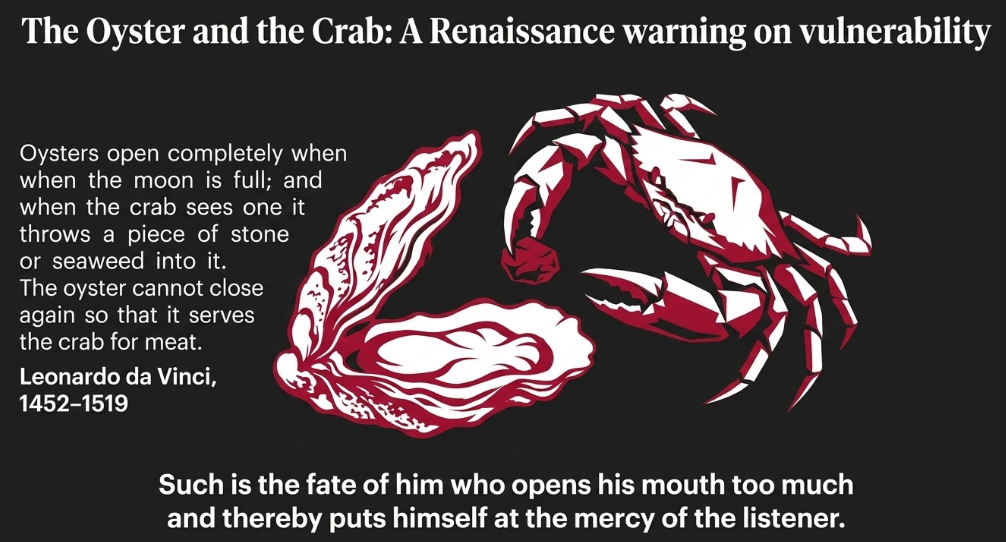
“Oysters open completely when the moon is full; and when the crab sees one it throws a piece of stone or seaweed into it and the oyster cannot close again so that it serves the crab for meat. Such is the fate of him who opens his mouth too much and thereby puts himself at the mercy of the listener.” — Leonardo da Vinci
The Strategic Pivot
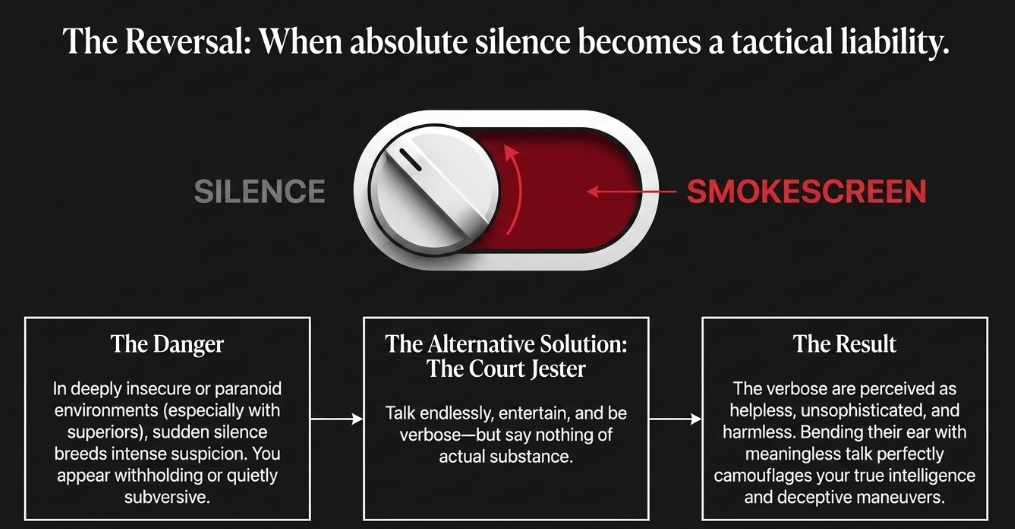
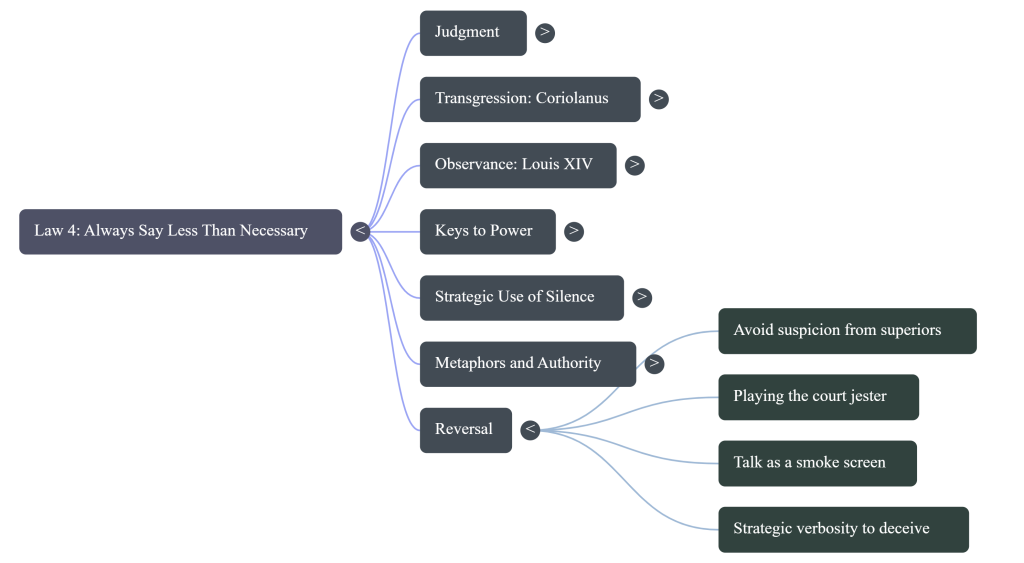
While silence is a primary tool of power, its application requires nuance. There are specific moments where verbosity becomes the superior strategy. First, an excess of silence can occasionally arouse suspicion in superiors, making you appear threateningly mysterious.
Second, talk can be deployed as a “smoke screen” for deception. By adopting the persona of the court jester and talking at length, you can distract and mesmerize your mark. In this “reverse policy,” the more you talk, the less suspicious you become. A verbose individual is rarely perceived as a calculating strategist; instead, they are viewed as “helpless and unsophisticated.” By making yourself appear weaker and less intelligent through a flood of words, you can practice deception with far greater ease.
Conclusion: Taming the Beast
The human tongue is a beast that strains constantly to break from its cage. If it is not tamed, it runs wild and causes grief. Every professional interaction is a balance sheet of words, and power cannot accrue to those who squander their treasure.
In your next high-stakes negotiation or executive meeting, consider the leverage of the pause. When you have made your point, stop. Allow the silence to sit in the room like an uninvited guest. Watch as your colleagues scramble to fill the void, and listen closely—it is in those nervous moments that they will hand you the keys to their own positions. What secrets are you currently talking yourself out of discovering?
Image Summary
Reference


Related posts:
 First Law of Power: Why Your Best Work Might Be Your Biggest Liability: Lessons from the Architecture of Power
 Second Law of Power: Why Your Best Friend Might Be Your Worst Business Partner: The Strategic Case for Using Enemies
 Third Law of Power: The Hidden Hand: Why Your Total Honesty is a Strategic Liability
 How to Win Friends and Influence People: Complete Chapter-by-Chapter Notes