1. Introduction: The Paradox of the Open Hand
We are biologically calibrated to scan for the predator’s snarl, yet we possess a catastrophic cognitive vulnerability: the “open hand.” When someone approaches us with a gesture of blatant honesty or unexpected generosity, our visceral defenses—the walls we build to survive a world of wolves—spontaneously dissolve. We mistake a tactical choice for a moral character.
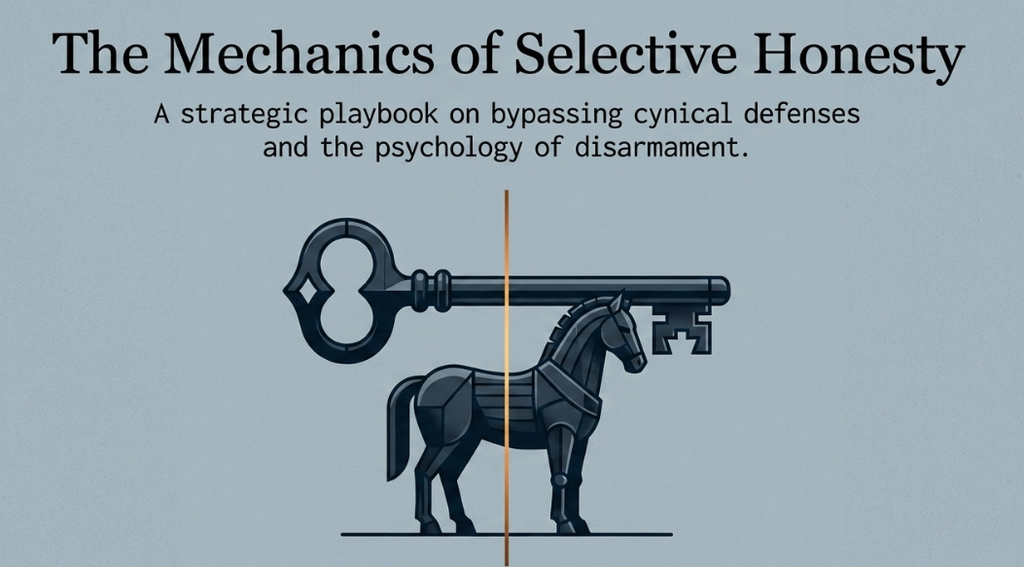
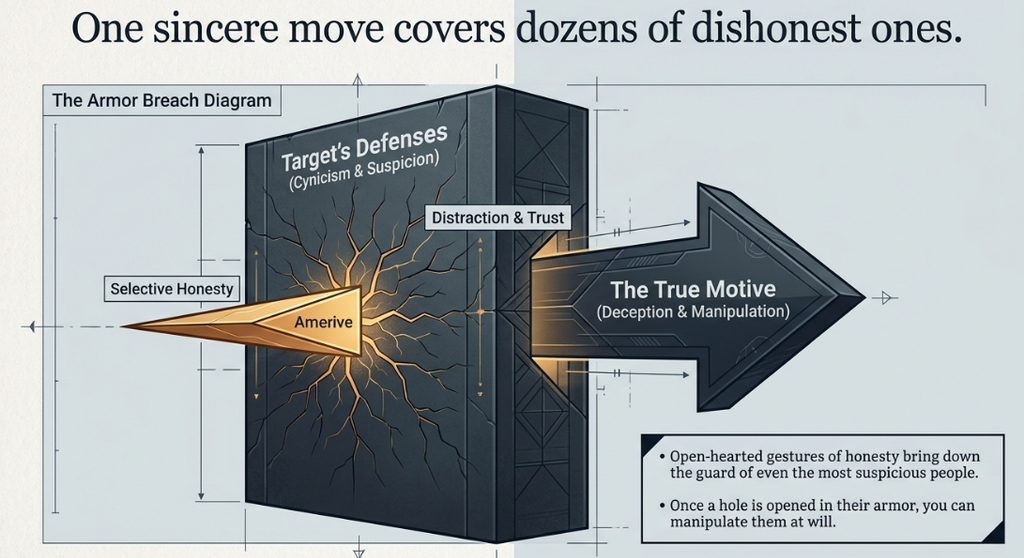
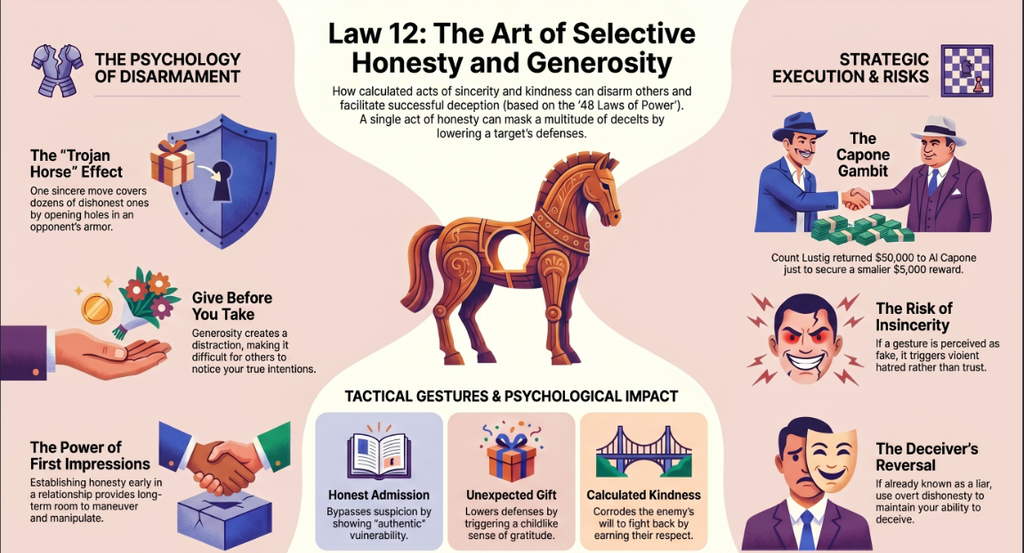
In the architecture of power, “Selective Honesty” is rarely an expression of virtue; it is a sophisticated psychological strike. By offering a single, undeniable truth or an act of perceived kindness, a strategist creates a hole in the target’s emotional armor. Once that breach is established, the subject ceases to look for a trap and begins to look for a friend.
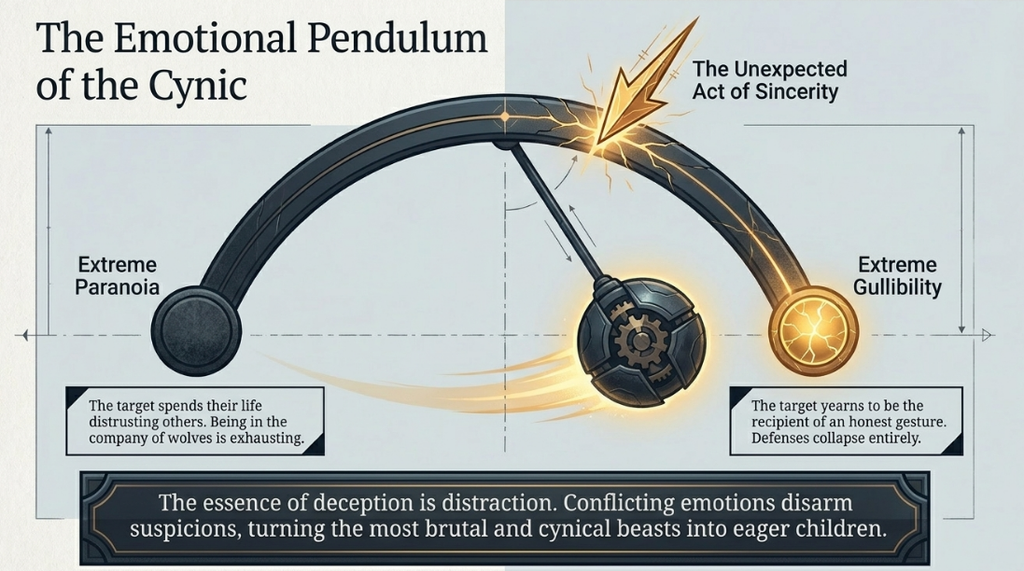
The brilliance of this maneuver lies in our own psychological exhaustion. Living in a world of constant competition is draining, and we yearn to believe that not everyone has an angle. This desire to lower our guard is the leverage the master manipulator uses to subvert our judgment. Understanding this paradox is the difference between being a player in the game and being the mark.
2. The First Impression is a Permanent Shield
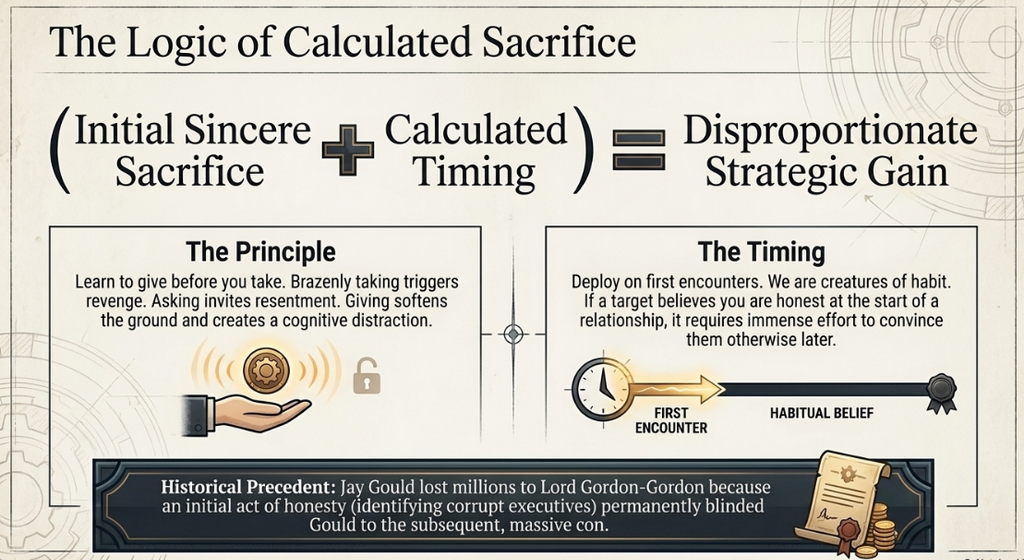
The tragedy of the human mind is its willingness to let the first five minutes of an encounter dictate the next five years. Because we are creatures of habit, our initial perception of a person creates a psychological veneer that colors every subsequent interaction. A single act of honesty at the outset provides an immense amount of “room to maneuver” for future deceptions.
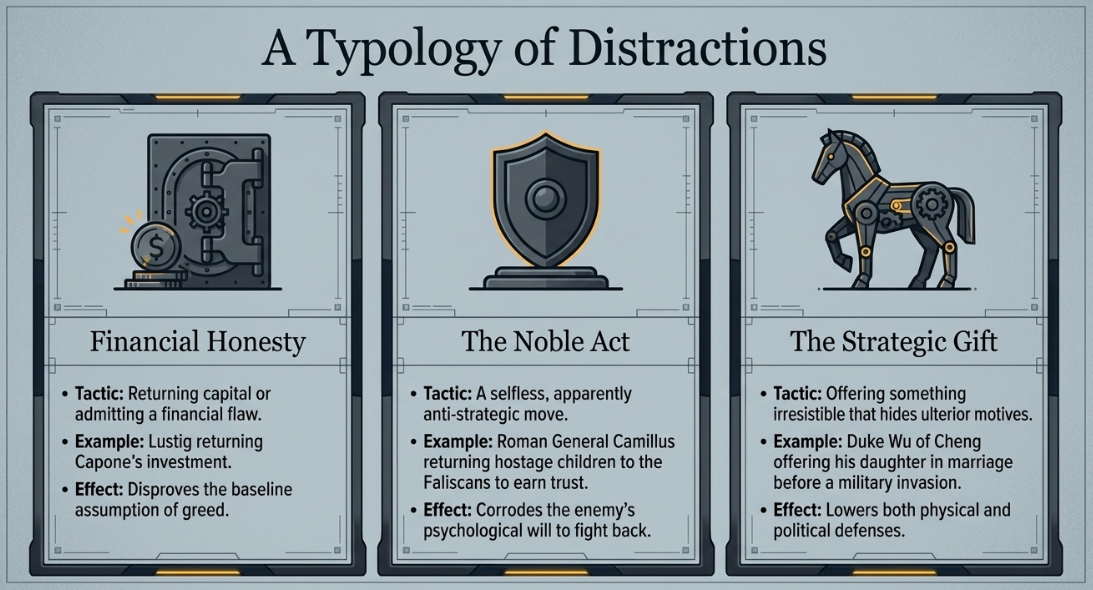
Consider the 1926 encounter between the dapper con artist Count Victor Lustig and Al Capone, perhaps the most suspicious man in America. Lustig convinced Capone to invest $50,000 in a scheme, then let the money sit untouched in a safe-deposit box for two months. When he returned, he didn’t bring a profit; he returned the original $50,000 in full, cloaking himself in an air of profound regret and claiming the plan had failed.
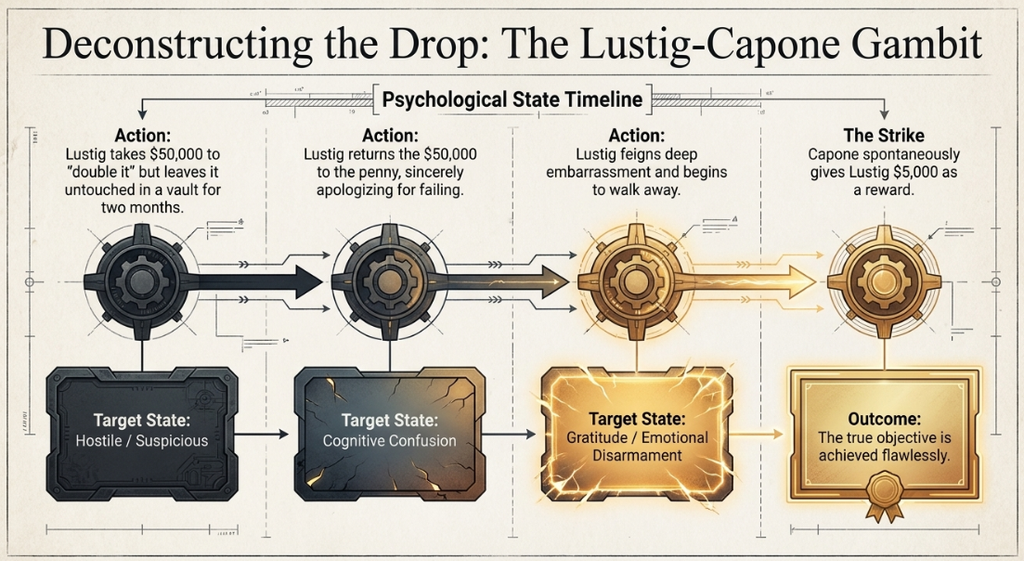
Capone, a man who spent his life surrounded by people trying to bleed him dry, was stunned by this apparent integrity. By “confessing” a failure and returning the capital, Lustig established a first impression of absolute honesty. Capone was so disarmed that he personally handed Lustig $5,000 as a “reward” for his integrity. This $5,000 was the real target, secured through the calculated return of a much larger sum.
“One sincere and honest move will cover over dozens of dishonest ones. Open-hearted gestures of honesty and generosity bring down the guard of even the most suspicious people.”
3. “Give Before You Take” — The Art of the Psychological Distraction
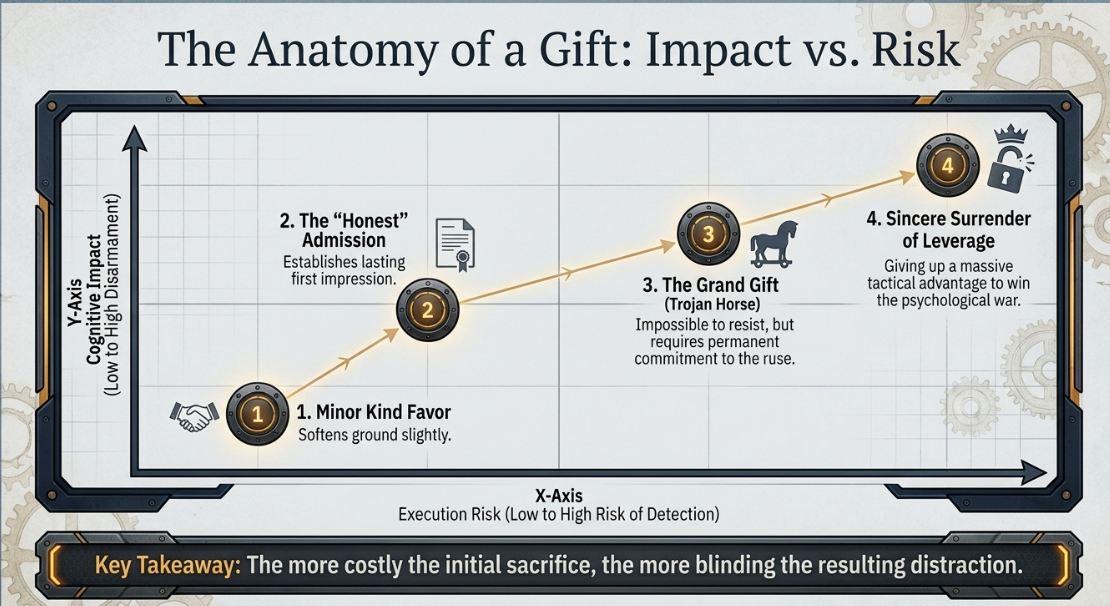
The most efficient way to seize what you want is to first offer something the target desperately desires. This primal calculus was mastered by the Chinese philosopher Han-fei-tzu, who understood that an act of kindness serves as a potent distraction. It shifts the power dynamic from a confrontation of wills into a state of infantile emotional debt.
History is littered with examples of this “softening of the ground.” When Duke Hsien of Chin wanted to raid the state of Yü, he did not lead with a sword; he presented them with a gift of jade and a team of horses. Similarly, when Earl Chih sought to invade Ch’ou-yu, he offered grand chariots. In both cases, the recipients were so busy “lapping up the affectionate gesture” that they failed to notice the taking that followed. By the time the trap was sprung, their defenses were nonexistent.
“When you are about to take, you should give.”
4. The Trojan Horse Strategy (Generosity as a Weapon)
Generosity is often a far more surgical weapon than brute force. A ten-year siege failed to break the walls of Troy, yet a single, irresistible gift—the Trojan Horse—shattered the city in a single night. This strategy works because it appeals to the heart’s greed and the ego’s desire to be honored, bypassing the rational brain entirely.
This principle of “selective kindness” can even corrode the will of a hardened enemy. During the Roman siege of the Faliscans, a schoolteacher attempted to betray his city by leading the children of the nobility into the Roman camp as hostages. General Camillus, recognizing a masterstroke of theatrical honesty, refused the offer. He stripped the teacher, tied his hands, and gave the children rods to whip the man back to the city.
This performance of noble integrity did what years of warfare could not: it broke the Faliscans’ spirit. They were so overwhelmed by Camillus’s “generosity” and “justice” that they surrendered immediately. By aiming for the heart, Camillus won the war without a single casualty.
5. The Danger of the “Honesty Reputation”
A reputation for honesty can be built on entirely inconsequential acts, yet once established, it confers a form of social invisibility. Once you are perceived as a supporter rather than a predator, your most audacious schemes go unnoticed because the target has stopped looking for them.
Take the case of the millionaire Jay Gould and the con man Lord John Gordon-Gordon. Gould was a man of legendary cynicism, yet Gordon-Gordon blinded him by providing initial “honesty” and support during a corporate crisis, even hiring handwriting experts to help Gould prove a case against rivals. This early display of integrity created a shield that allowed Gordon-Gordon to manipulate Gould for years. By the time Gordon-Gordon dumped his stock and disappeared with millions, Gould was still convinced he was dealing with a friend. Once a reputation for honesty is set, it is nearly impossible to shake, no matter how many red flags appear.
6. The Reversal — When Dishonesty Becomes Your Only Honest Move
There is a limit to the utility of selective honesty: it requires a relatively clean slate. If your history of deceit is already public knowledge, acting “honest” will only trigger deeper suspicion. In these rare instances, the only way to appear authentic is to lean into your own corruption.
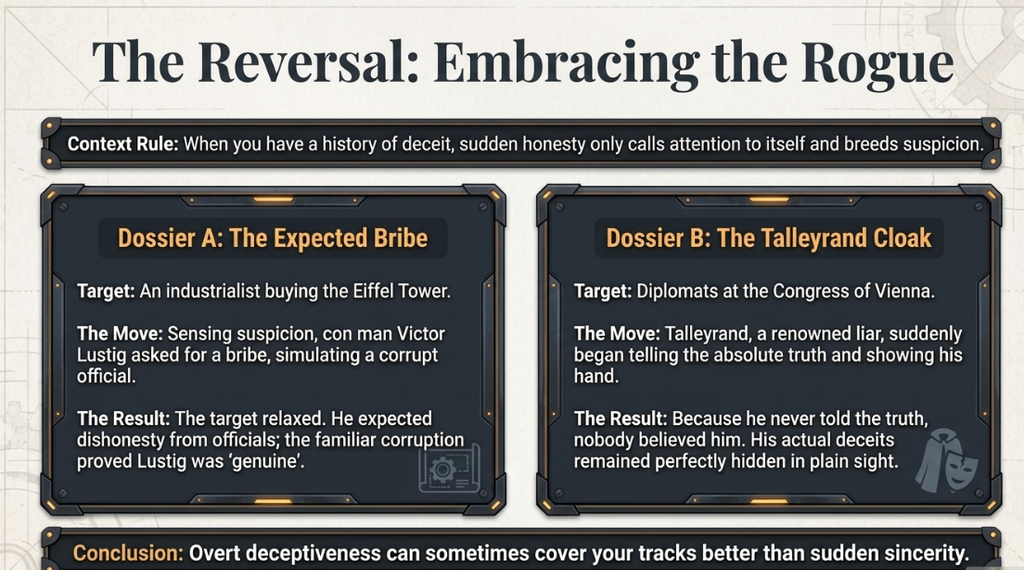
Count Lustig encountered this while trying to “sell” the Eiffel Tower to an industrialist. When he sensed the mark becoming suspicious of his government official persona, Lustig pivoted. He leaned in and whispered a “confession” about his low salary and his desperate need for a bribe. Paradoxically, this act of overt dishonesty made him believable. The industrialist relaxed; a corrupt official was something he understood and could trust.
Similarly, the diplomat Talleyrand would spin fabulous, obvious lies to create a smoke screen. This “fake deceptions” strategy made it impossible for his peers to distinguish his obvious untruths from the moments when he was really deceiving them. By embracing a reputation for dishonesty, he preserved his power to lie effectively.
7. Conclusion: The Sincerity Requirement and the Final Thought
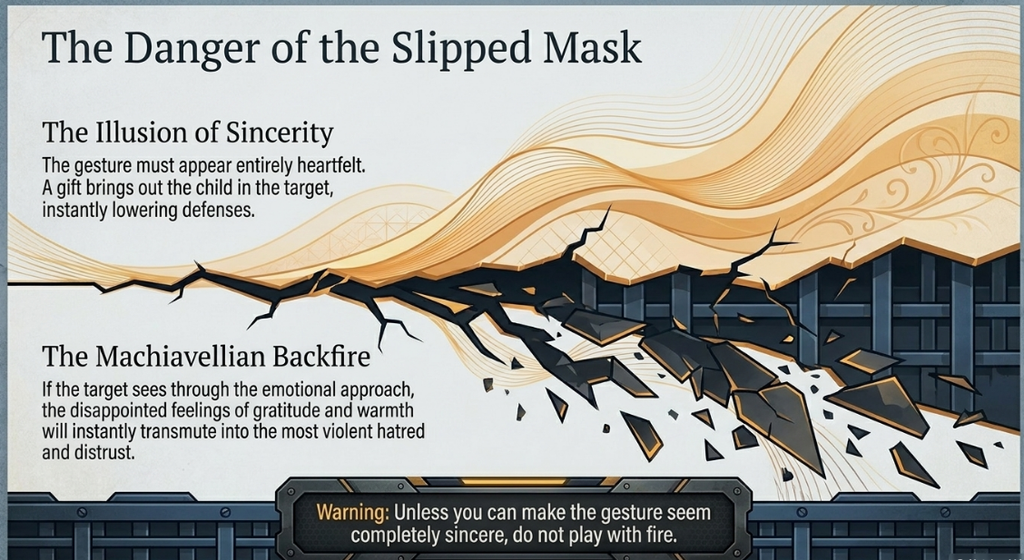
Using selective honesty is a high-stakes gamble. For the tactic to succeed, the gesture must appear entirely heartfelt and spontaneous. If the target catches even a faint scent of the calculus behind the kindness, the resulting “disappointed feelings of gratitude” will transform into the most violent hatred and distrust imaginable.
As you navigate the world, it is worth auditing the “gifts” and “confessions” you receive. Are they genuine bridges of connection, or are they tools designed to dismantle your defenses? The most dangerous people do not look like villains; they look like the most authentic people you have ever met. They understand that most men lead desperate lives of boredom, and they use the thrill of “honesty” to lead them toward the trap.
Consider this cynical epitaph from Count Victor Lustig, a master who saw clearly through the veneer of human morality:
“I cannot understand honest men. They lead desperate lives, full of boredom.”
Reference


Related posts:
 First Law of Power: Why Your Best Work Might Be Your Biggest Liability: Lessons from the Architecture of Power
 Second Law of Power: Why Your Best Friend Might Be Your Worst Business Partner: The Strategic Case for Using Enemies
 Third Law of Power: The Hidden Hand: Why Your Total Honesty is a Strategic Liability
 Fourth Law of Power: Why Your Biggest Career Move Might Be Saying Nothing at All: Lessons in Strategic Silence
 Fifth Law of Power: The Invisible Shield: Why Your Reputation Is More Powerful Than Your Skills