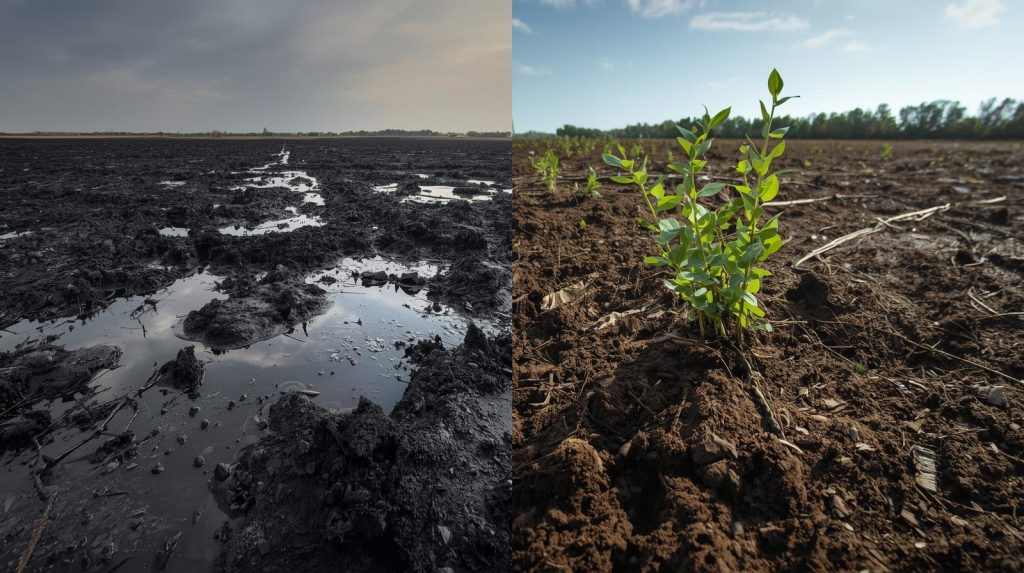

A research team from Damghan University, Iran, has identified a soil-dwelling bacterium, Enterobacter hormaechei subsp. hoffmannii MK-DU2, which shows extraordinary potential for crude oil bioremediation. The findings, published in Applied Biochemistry and Biotechnology, reveal that this newly isolated strain produces a potent biosurfactant capable of breaking down petroleum hydrocarbons with 99.23% efficiency.
The researchers screened soil microbes using oil spread, drop collapse, and hemolysis assays to find the most promising biosurfactant producers. The MK-DU2 isolate stood out for its ability to reduce surface tension from 69.7 to 44.4 mN/m and form stable emulsions, even under acidic and high-salinity conditions. This robustness suggests it could perform effectively in challenging environments, such as oil-contaminated soils or coastal ecosystems.
Chemical analysis of the crude biosurfactant using thin-layer chromatography (TLC), FTIR, and ¹H-NMR revealed that it contains both lipid and protein components. This amphiphilic structure enhances its surface-active properties. The compound maintained thermal stability up to 100 °C and demonstrated remarkable emulsification across various oils, including olive and diesel.
In biodegradation tests, E. hormaechei MK-DU2 achieved complete degradation of crude oil within six days, significantly outperforming previously reported strains. The study highlights its dual role as both a hydrocarbon-degrading microbe and a biosurfactant producer, making it an efficient, sustainable tool for cleaning up oil spills.
Reference
Kalantari, M., & Salimi, F. (2025). Isolation and Characterization of Biosurfactant-Producing Enterobacter hormaechei subsp. hoffmannii MK-DU2 with Potential Application in Bioremediation of Crude Oil Contamination. Applied Biochemistry and Biotechnology. https://doi.org/10.1007/s12010-025-05384-0


Related posts:
 Lead-Tolerant Bacteria: A Dual Solution for Lead Bioremediation and Plant Growth Promotion
 Halotolerant Pseudomonas Strain Shows Breakthrough Potential for p-Nitrophenol Bioremediation in Aquatic Environments
 Scientists Harness Enzyme–Microbe Synergy to Clean Microplastic-Contaminated Soils
 Stenotrophomonas maltophilia SaRB5: A Novel Endophytic Ally for Plant Growth and Stress Tolerance
 Harnessing Beauveria bassiana’s Beauvericin: A Natural Biocontrol Breakthrough Against Cotton Aphids


