The Hook: The Frustration of the Unheard Truth
We have all experienced the professional “blackout”: You have the data, the logic is unassailable, and your technical expertise is objective reality. Yet, as you present your case, you watch your counterpart’s posture stiffen. Instead of the “Aha!” moment you expected, you face a wall of stubbornness.
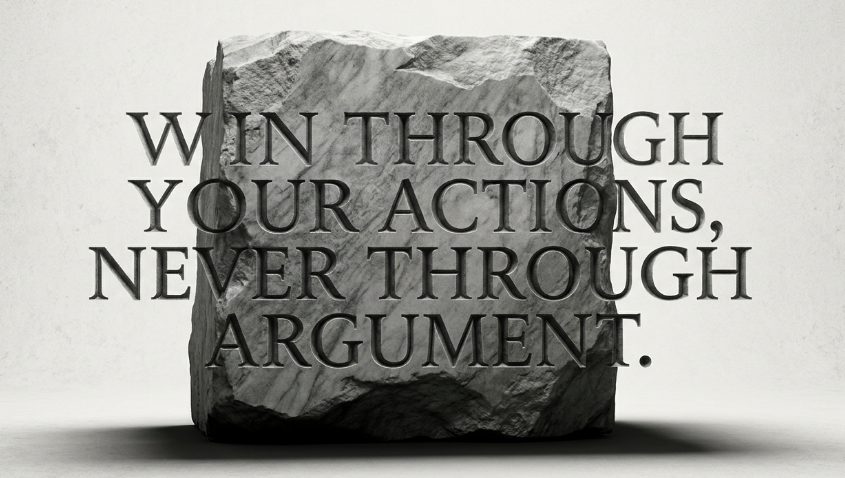
As a behavioral psychologist, I see this daily. The mistake is viewing communication as a neutral exchange of information. In high-stakes environments, a direct correction is rarely processed as “truth”—it is processed as a status threat. By attempting to explicate your correctness, you trigger an amygdala hijack in the other person; their brain perceives your logic as an attack on their intelligence. The “Ninth Law” of power offers the only viable escape: True victory is achieved through demonstration, never through argument.
The Pyrrhic Victory: Intellectual Success, Professional Suicide
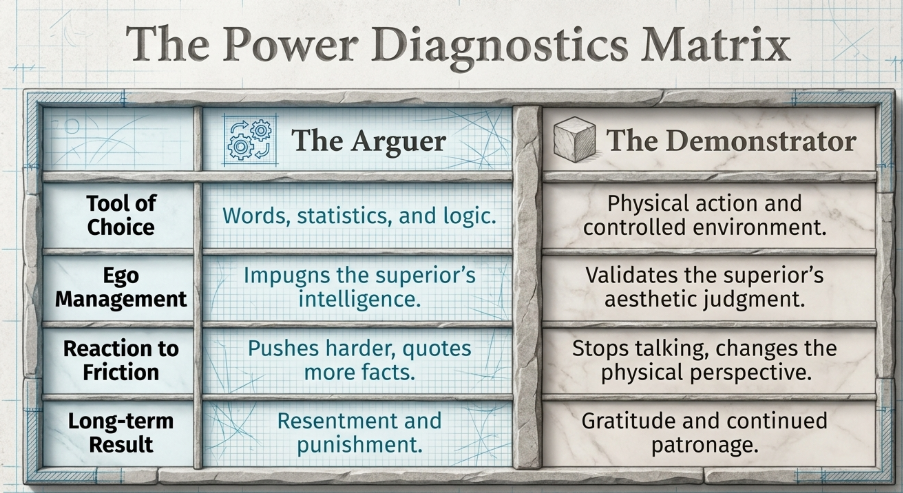
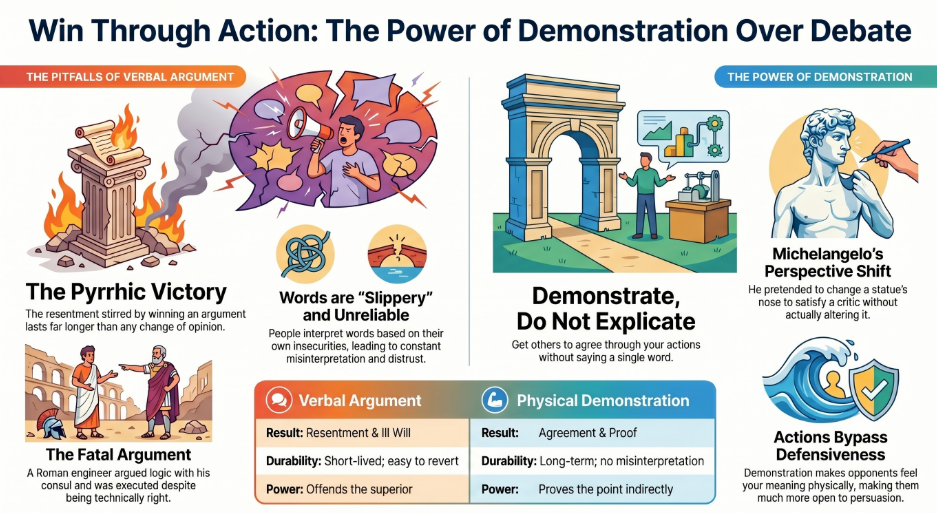
Winning a verbal argument is a net loss in the currency of influence. Imagine a seesaw: Up and down the arguers go, kicking and pushing, getting nowhere fast. When you “win” a debate, you leave your opponent at the top of the seesaw, feeling exposed and inferior. Eventually, gravity—and their resentment—will bring them back down, usually at your expense.
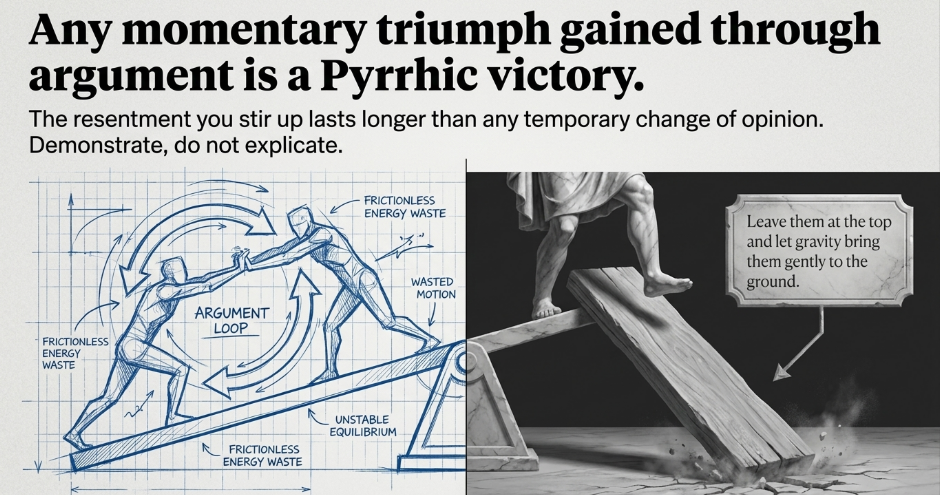
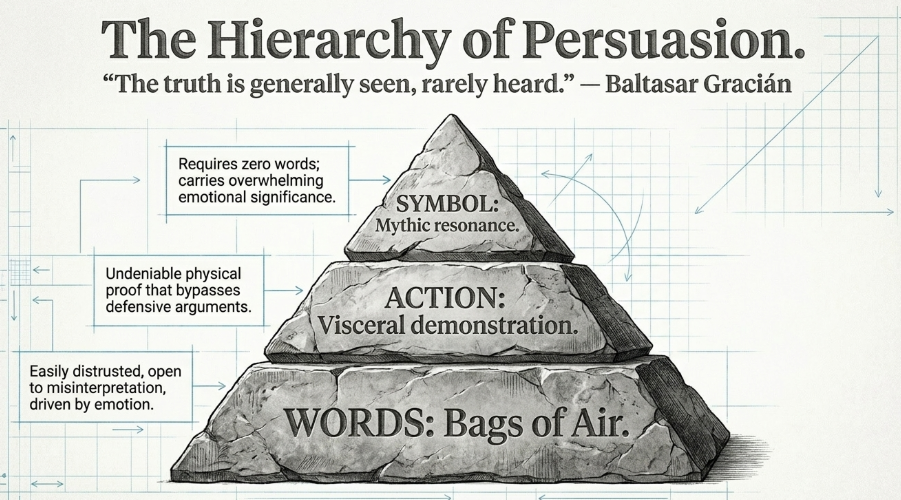
In the realm of power, you must judge moves by their long-term effects on people’s feelings, not the technical accuracy of the moment. Verbal triumphs are slippery; they are “bags of air” that people distrust.
Any momentary triumph you think you have gained through argument is really a Pyrrhic victory: The resentment and ill will you stir up is stronger and lasts longer than any momentary change of opinion.
Takeaway 1: When Expertise Becomes a Death Sentence
The “Arguer’s Grave” is filled with brilliant people who prioritized being right over being alive. In 131 B.C., the Roman consul Mucianus needed a large ship’s mast to build a battering ram. He sent an order to a military engineer in Athens for the largest mast available.
The engineer, a master of his craft, knew a smaller mast was scientifically superior for the task. He didn’t just disagree; he drew diagram after diagram, patronizing the soldiers by telling them they “had no clue what they were talking about.” He eventually sent the smaller mast, certain that his “neutral science” would be rewarded.
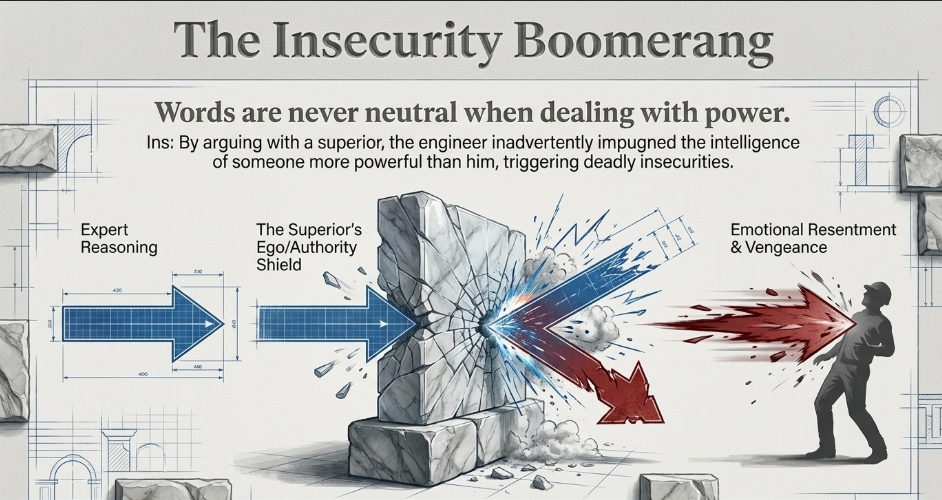
Mucianus, however, didn’t see a better ram; he saw a subordinate who had publicly impugned his intelligence. He had the engineer stripped and flogged to death.
Behavioral Insight: Ego-Preservation. Logic cannot save you once you have triggered identity protection in a superior. To Mucianus, the “technical truth” was an impudent attempt to make him look incompetent before his troops.
Takeaway 2: The Art of the “Phantom Fix”
If you must correct a superior, you must change their perspective, not their mind. This is the “Michelangelo Secret.”
In 1502, Piero Soderini, the Mayor of Florence, prided himself on being an aesthetic connoisseur. When he told Michelangelo that the nose on the statue of David was too large, Michelangelo didn’t argue that the Mayor was standing in a spot with poor perspective. Instead, he invited Soderini up the scaffolding. Michelangelo feigned work, tapping his chisel and letting pre-gathered marble dust fall to the floor. He changed nothing, but he gave Soderini the feeling of being the architect of the solution.
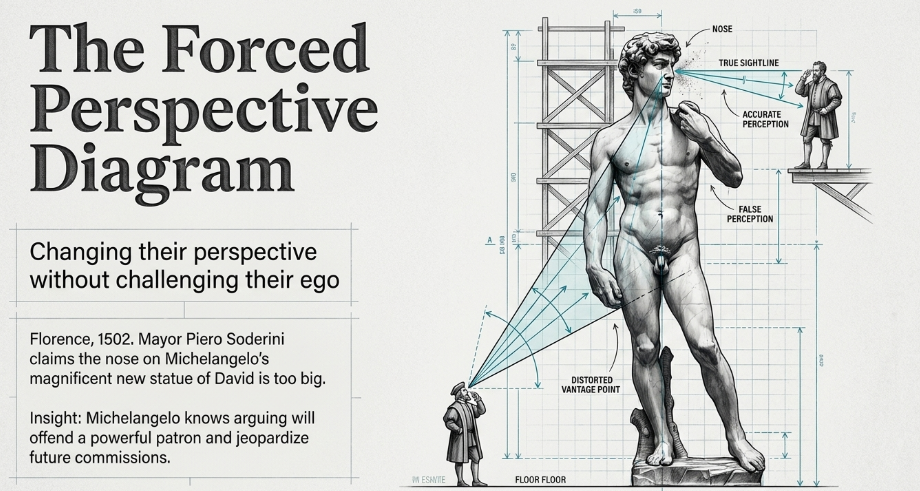
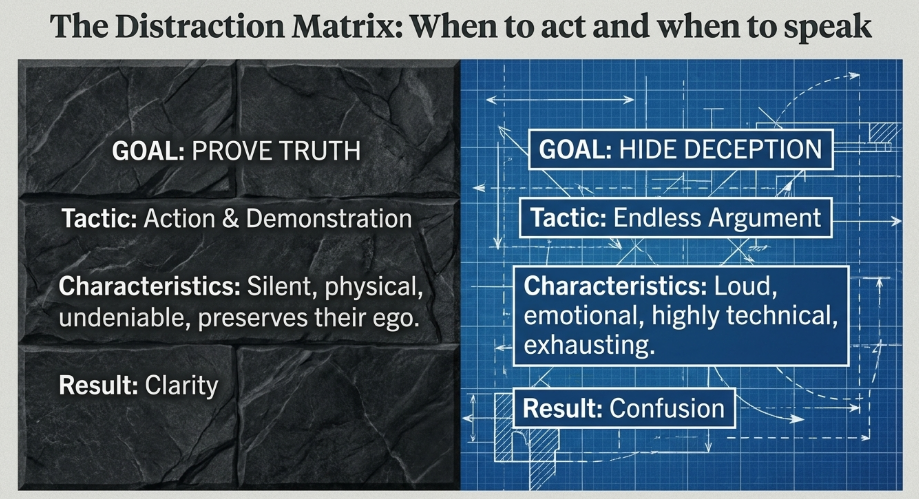
Action and demonstration have no offensive words and no possibility of misinterpretation.
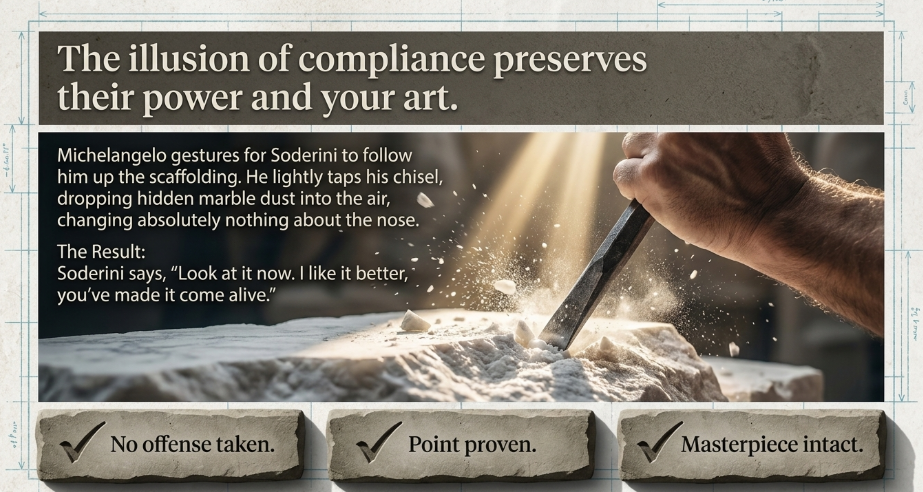
Consultant’s Note: This is the ultimate “Client Management” tactic. By allowing the stakeholder to “feel” they have contributed to the perfection of the project, you neutralize their need to find flaws.
Takeaway 3: Using Symbolism for Visceral Impact
The most sophisticated leaders bypass the prefrontal cortex entirely and strike the emotions through symbolism.
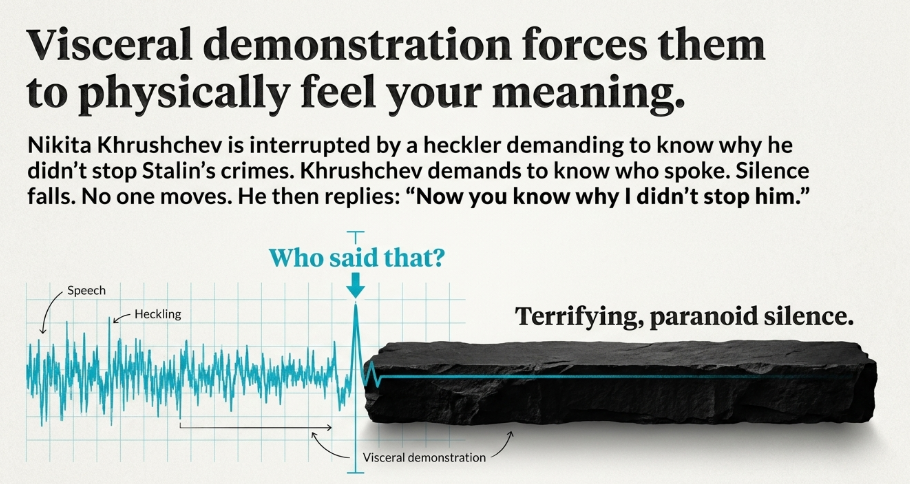
- The Silence of Khrushchev: When a heckler yelled, “Why didn’t you stop Stalin?” during a speech, Khrushchev barked, “Who said that?” The room fell into a terrifying, paralyzed silence. After a few beats of pure dread, he whispered, “Now you know why I didn’t stop him.” He didn’t explain the fear; he induced a visceral state of it.
- Kissinger’s Silent Warning: During 1975 negotiations, Henry Kissinger took Israeli officials to the ruins of Masada—the site of a historic mass suicide. He didn’t need to warn them of the dangers of their current path; the symbol did the work for him.
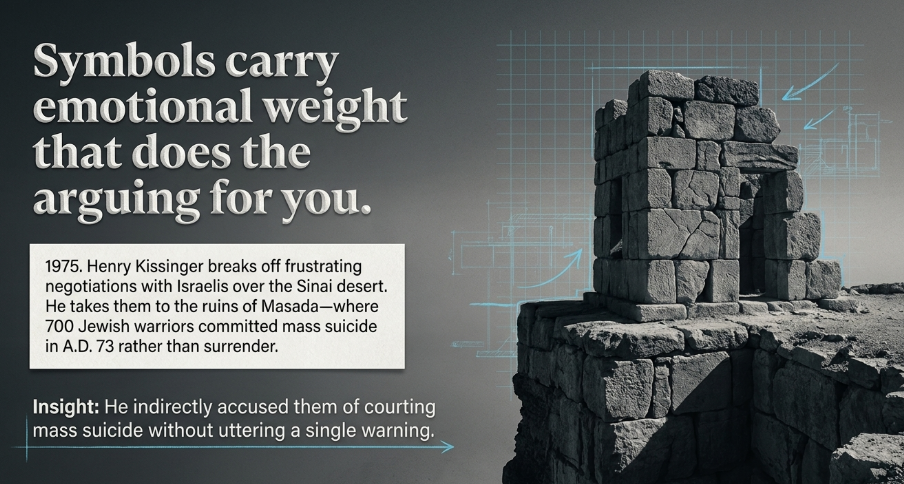
These demonstrations are more powerful than words because the audience “sees” the truth for themselves, which bypasses the natural defensiveness triggered by direct warnings.
Takeaway 4: The “Dummy Column” Strategy
Sir Christopher Wren was a master of the sciences—astronomy, mathematics, and physics. Yet, he possessed the intellectual humility to realize that science does not soothe a nervous ego.
When the Mayor of Westminster insisted that a town hall floor was structurally unsound and demanded extra columns, Wren didn’t argue. He knew his design was perfect, but he also knew the Mayor was suffering from a “safety” obsession. Wren built the columns, but he built them as dummies—they stopped just short of the ceiling.
The Mayor felt safe, and Wren’s original architectural vision remained intact. He provided “emotional structural support” rather than a lecture on physics. In the realm of power, if it doesn’t matter in the long run, do not bother with a demonstration—and never bother with an argument.
The Counter-Intuitive Twist: Argument as a Smoke Screen
There is one niche scenario where verbal argument is vital: Obfuscation. When you are practicing deception or covering your tracks, you want to overwhelm your target’s cognitive load.
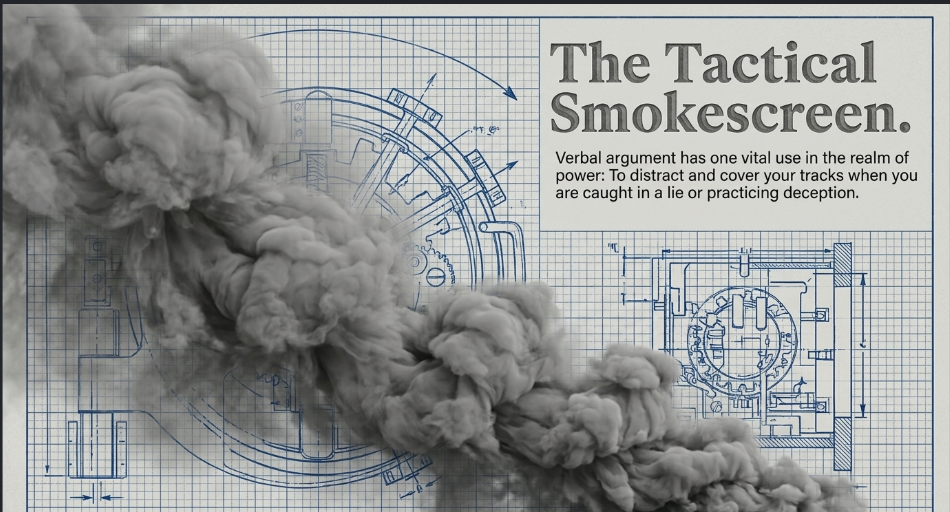
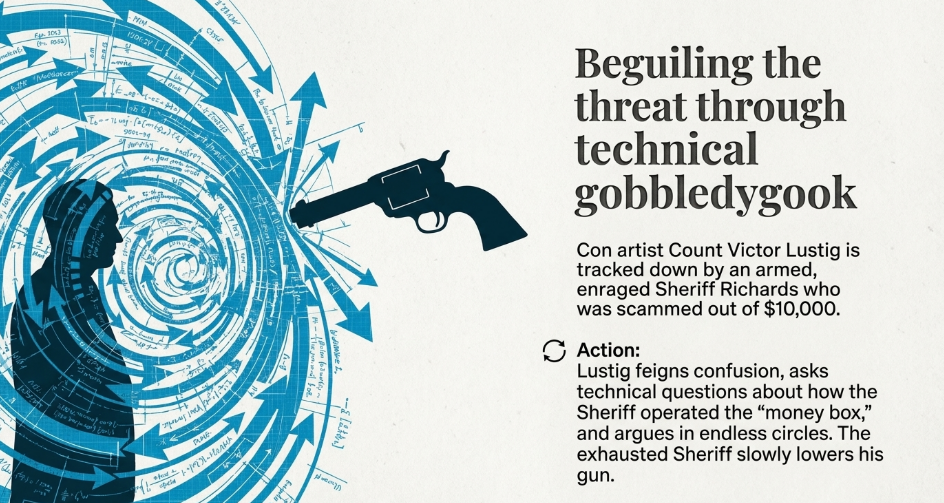
The con artist Count Victor Lustig used “technical gobbledygook” and circular arguments to confuse Sheriff Richards, a man who had tracked him down at gunpoint. By feigning confusion and dragging the Sheriff into a “dummy” explanation about the mechanics of a phony money-making machine, Lustig lowered the man’s guard. Here, the argument is not a tool of persuasion; it is a smoke screen designed to distract the target while you prepare your escape.
Conclusion: Moving Toward Results, Not Rhetoric
The most effective professionals realize that in society, nothing should be discussed—only results should be delivered. When you demonstrate, you present a reality that cannot be argued against. You avoid the resentment of the “loser” and the insecurity of the “superior.”
The next time you find yourself about to prove someone wrong, ask yourself: Is the momentary satisfaction of being “right” worth the cost of creating a hidden, permanent enemy?
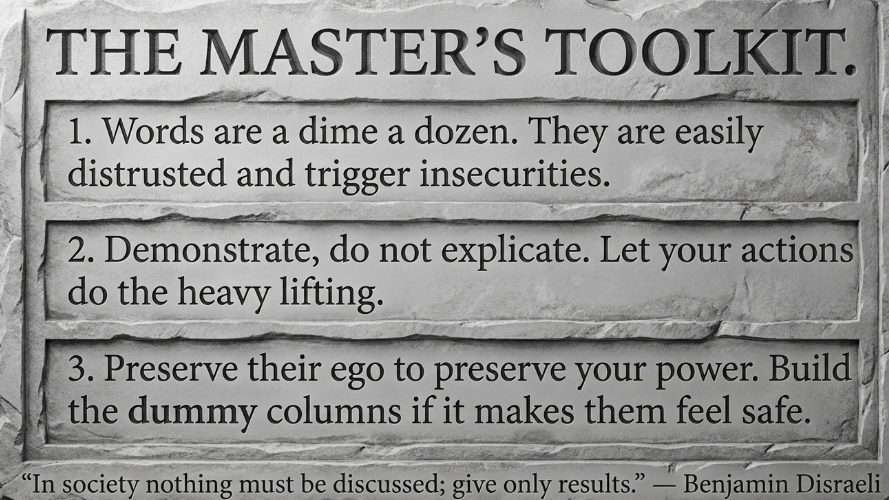
The truth is generally seen, rarely heard. — Baltasar Gracián
Image Summary
Reference


Related posts:
 How to Win Friends and Influence People: Complete Chapter-by-Chapter Notes
 First Law of Power: Why Your Best Work Might Be Your Biggest Liability: Lessons from the Architecture of Power
 Second Law of Power: Why Your Best Friend Might Be Your Worst Business Partner: The Strategic Case for Using Enemies
 Third Law of Power: The Hidden Hand: Why Your Total Honesty is a Strategic Liability
 Fourth Law of Power: Why Your Biggest Career Move Might Be Saying Nothing at All: Lessons in Strategic Silence