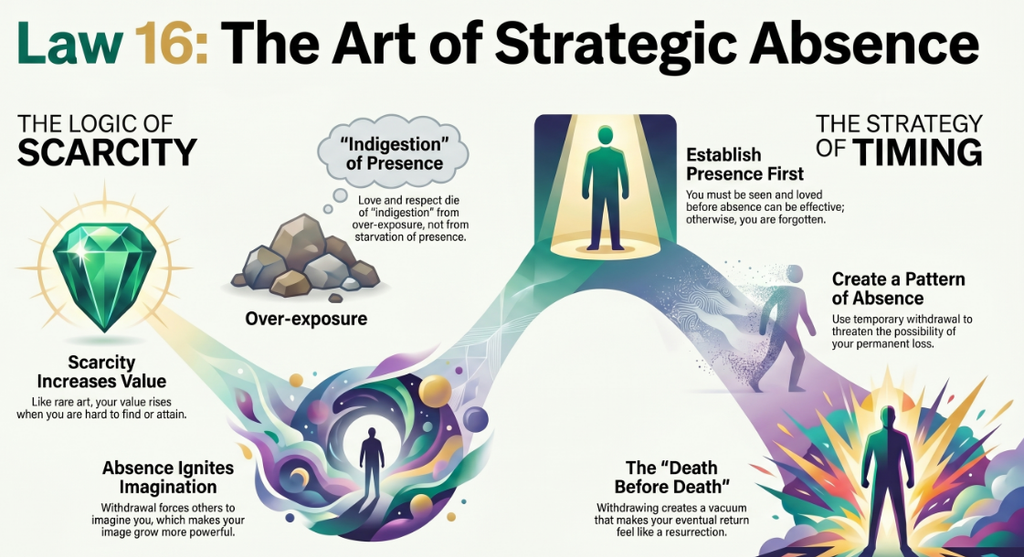
In our era of radical transparency, we are drowning in a sea of forced availability. We are told to stay “top of mind,” to inundate our networks with content, and to respond to every digital ping with the Pavlovian urgency of a servant. However, this hyper-visibility is a strategic catastrophe. To the strategic mind, the logic is clear: too much circulation makes the price go down. The more you are seen and heard from, the more common you appear—and the more your value degrades into mere utility.
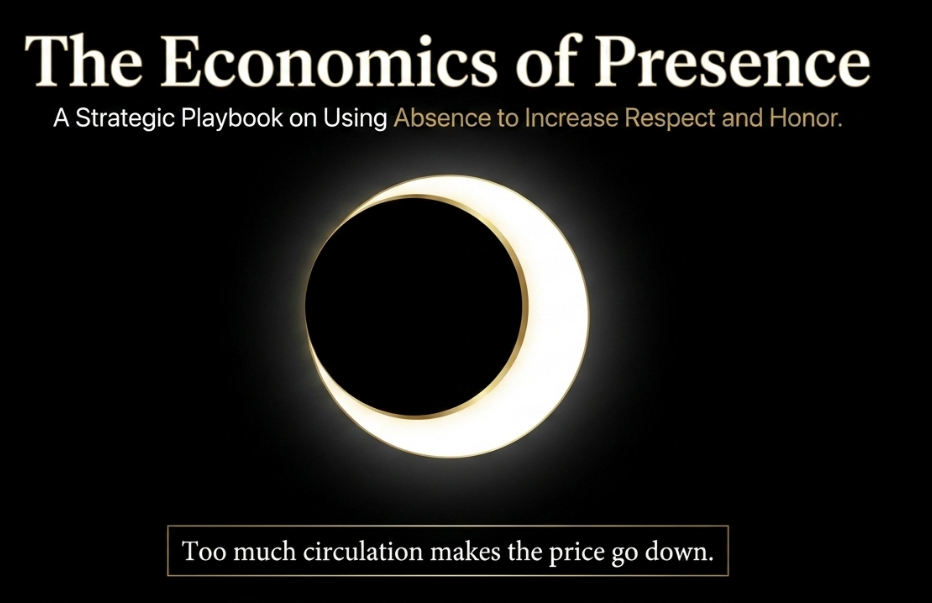
We must understand that respect is not a product of presence, but of the strategic creation of scarcity. As a Dervish once replied to a man asking why they did not meet more often: “Because the words ‘Why have you not been to see me?’ are sweeter to my ear than the words ‘Why have you come again?'”
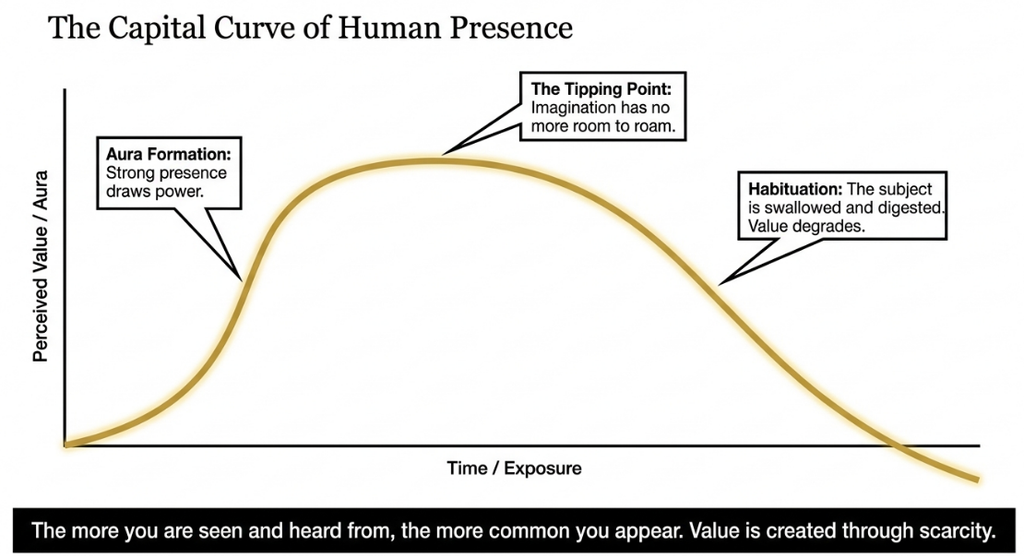
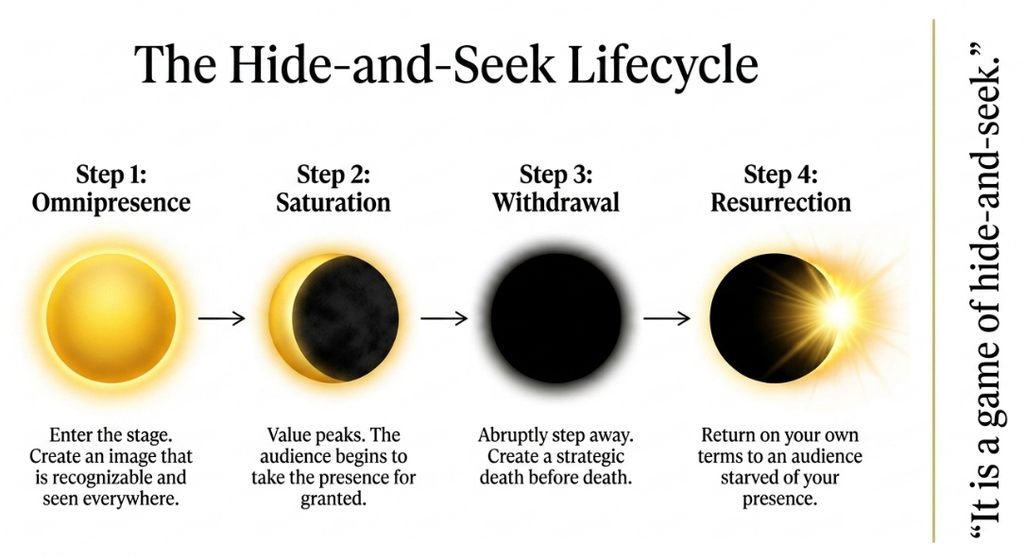
To truly increase your honor, you must master the art of the withdrawal. This is not a game of “hard to get”; it is the calculated preservation of the aura of your presence.
The Indigestion of Love: Why Distance Inflames Passion
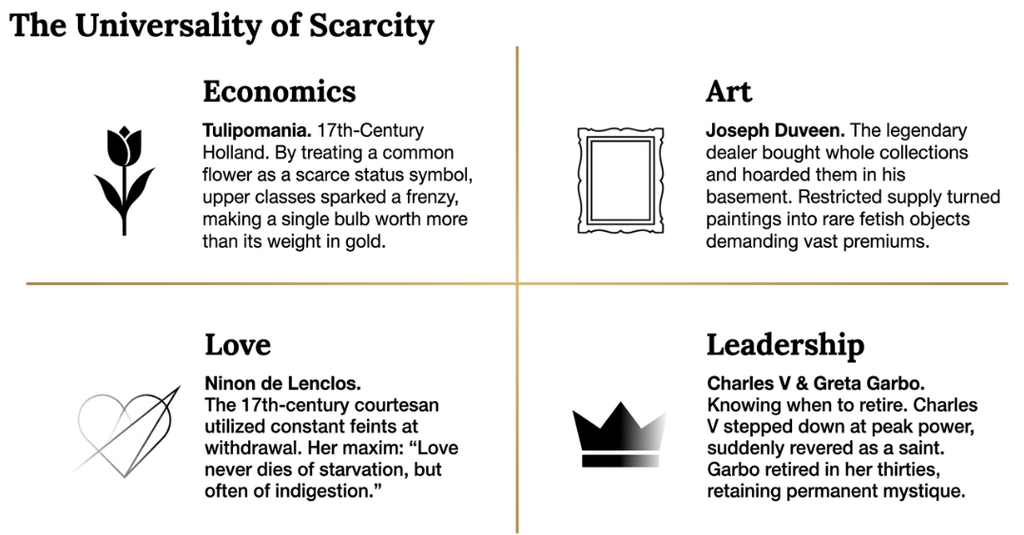
The most precarious arena for over-presence is the romantic bond. When one is too accessible, the imagination of the other is suffocated; the partner becomes a known quantity, a habit, and eventually, a burden. The seventeenth-century French courtesan Ninon de Lenclos captured this psychological reality with biting precision:
> “Love never dies of starvation, but often of indigestion.”
Consider the troubadour Sir Guillaume de Balaun, who sought to experience the “bliss of reconciliation” by feigning a withdrawal from his lady, Guillelma de Javiac. His first attempt was a failure of the highest order: he feigned anger, but Guillelma responded with such frantic love and “forwardness” that Guillaume found her lack of dignity repulsive. She had become too present, and his feelings began to suffocate.
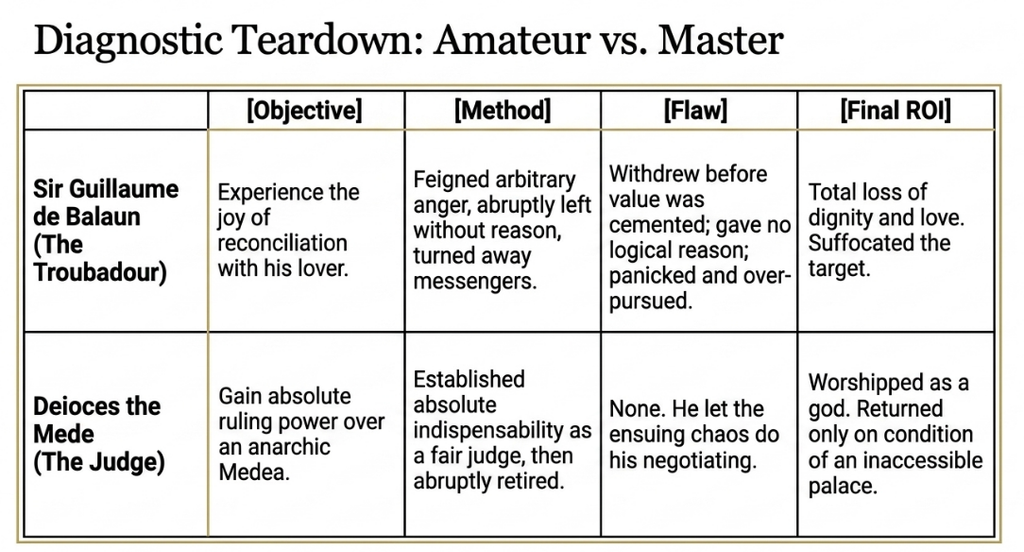
To reset the dynamic, Guillaume had to resort to extremity. He drove her away with harsh words and threatening gestures, vowing never to see her again. It was only during this protracted, painful absence—a “death before death”—that their love was able to recrystallize. Absence forced Guillelma to assume she was at fault, stimulating an imagination that presence had dulled. Only after a year of agonizing distance and the dramatic penance of removing the nail from his own little finger to send to her was Guillaume able to achieve a reconciliation that surpassed all others. By starving her of his presence, he forced her to venerate him once more.
The Deioces Effect: Transforming Presence into Legend
One can transition from a mere mortal to a mythic figure by understanding the “Deioces Effect.” In the eighth century B.C., Deioces rose to power as a judge for the Medes, known for an incorruptible impartiality that made him the sole arbiter of justice in a land of chaos. Yet, at the height of his influence, he realized the peril of his own visibility. He had become too available, and the people were beginning to take his wisdom for granted.
He chose total withdrawal. He retired, allowing the country to descend back into lawlessness until the people begged for his return. When he finally accepted the crown, he did so on the condition of absolute invisibility. He moved into a palace surrounded by walls, where admission to his presence was forbidden. Communication happened only through messengers; even his royal court saw him but once a week, and then only by permission.
By vanishing, Deioces allowed his reputation to transform into worship. As the historian Herodotus observed, there was a calculated risk in being seen habitually: it leads to jealousy, resentment, and the plotting of equals. But if nobody sees you, the legend grows that you are “a being of a different order from mere men.” The Medes came to believe Deioces was not a man at all, but the son of a god.
The Economics of You: Scarcity as Value
The laws that govern the market also govern the market price of your soul. In seventeenth-century Holland, the upper classes sparked “Tulipomania” not because the flower was inherently useful, but because they made it nearly impossible to obtain. Similarly, the legendary art dealer Joseph Duveen would buy entire collections only to hide them in his basement. By keeping the paintings rare, he turned them into “fetish objects.” As he once remarked, getting a picture for fifty thousand dollars is easy, but “to get pictures at a quarter of a million apiece—that wants doing!”
You must extend this law of scarcity to your own skills and presence. In our “always-on” digital culture, being the “Strategic Ghost” is a power move. If you are the one who handles every crisis and attends every Zoom call, you are not a leader; you are a utility. You are the air—necessary, but entirely unappreciated. To increase your value, you must make what you offer rare and hard to find. When you withdraw your presence from the market, you create instant, speculative value.
The Snow Goose Strategy: Choosing Rarity Over Utility
An ancient Chinese parable contrasts the Cock with the Snow Goose. The Cock is a creature of five great virtues: its crest symbolizes civility, its talons strength, its daring courage, its instinct to share food benevolence, and its punctuality veracity. Yet, despite these virtues, the Cock is slaughtered for the dinner table every day because it is always within reach.
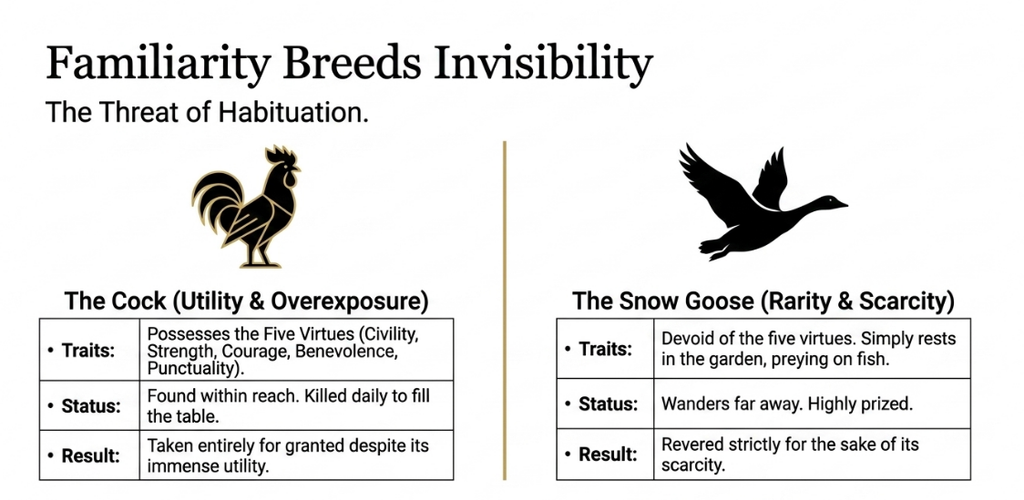
The Snow Goose, meanwhile, possesses none of these specific virtues. It preys on fish and turtles and pecks at the garden. Yet, it is prized and respected because it is rare, traversing a thousand li in a single flight. Utility leads to the dinner table; rarity leads to veneration.
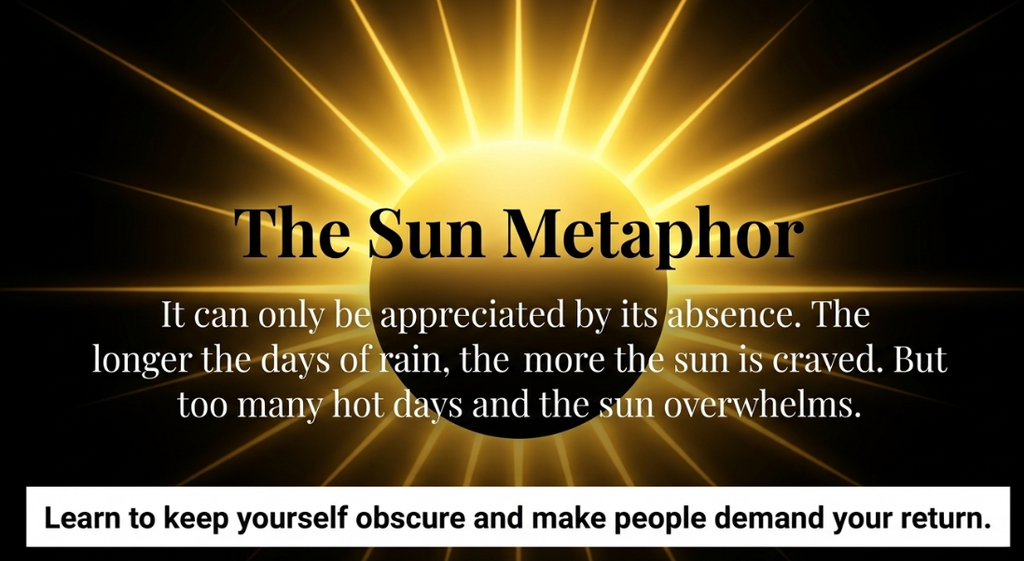
This mirrors the image of the sun: it can only be truly appreciated by its absence. After many days of rain, the sun is craved with an almost religious fervor. But when the hot days are too many, the sun overwhelms and is disdained. Learn to keep yourself obscure, and you force the world to demand your return.
The Warning: The Danger of the Premature Exit
Every law of power has its reversal. The Law of Absence is only effective once you have established a presence that is worth missing. If you withdraw too early—before your image is recognizable and your respect is earned—you will not be missed; you will simply be forgotten.
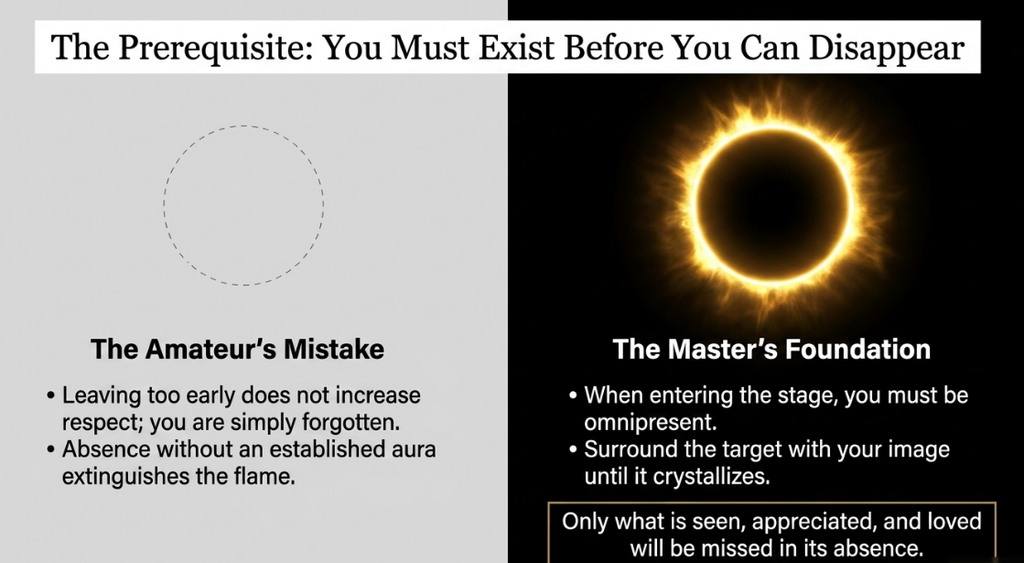
In the beginning stages of any endeavor, whether in leadership or seduction, you must be omnipresent. You must surround the other with your image and your excellence until you become a necessary part of their mental landscape. Only once the fire is burning brightly can you use the wind of absence to fan the flames. If the fire is weak, the wind will only put it out.
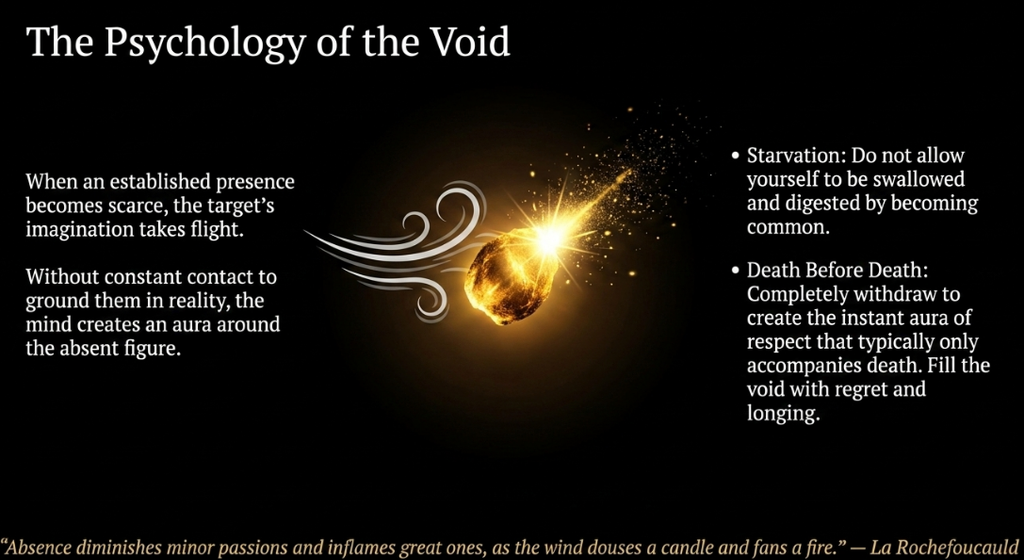
As La Rochefoucauld wrote:
> “Absence diminishes minor passions and inflames great ones, as the wind douses a candle and fans a fire.”
Final Reflection: Knowing When to Leave
The masters of history knew the art of the exit. Charles V, the Hapsburg emperor who ruled much of the New World, retired to a monastery at the peak of his power, causing a captivated Europe to see him as a saint. Greta Garbo, sensing the aura of her power might wear away, retired in her mid-thirties, choosing to leave on her own terms rather than waiting for the public to grow tired of her.
Ask yourself: Are you currently “inundating” your circles with your presence? Are you becoming a habit that people are starting to disdain? If you are already established in a group, a temporary withdrawal will make you more talked about and more admired.
Turn the game around. Make yourself less accessible and you will find that the value of your presence—and the price the world is willing to pay for it—will inevitably rise. Remember the Dervish: make them ask why you haven’t been to see them, rather than why you have come again.
Image Summary
Reference


Related posts:
 First Law of Power: Why Your Best Work Might Be Your Biggest Liability: Lessons from the Architecture of Power
 Second Law of Power: Why Your Best Friend Might Be Your Worst Business Partner: The Strategic Case for Using Enemies
 Third Law of Power: The Hidden Hand: Why Your Total Honesty is a Strategic Liability
 Fourth Law of Power: Why Your Biggest Career Move Might Be Saying Nothing at All: Lessons in Strategic Silence
 Fifth Law of Power: The Invisible Shield: Why Your Reputation Is More Powerful Than Your Skills