

Lead pollution threatens global food security — but a new study points to an innovative solution using nanotechnology and beneficial microbes.
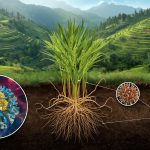
Researchers from Pakistan have demonstrated that combining zinc ferrite nanoparticles (ZnFe₂O₄ NPs) with a plant growth-promoting rhizobacterium, Alcaligenes pakistanensis (NCCP-650), can effectively counter lead (Pb) toxicity in mung beans (Vigna radiata). The findings, published in Folia Microbiologica, reveal that this nano-microbial partnership significantly improves seed germination, plant growth, and leaf anatomy in lead-contaminated soils.
Restoring Growth Under Heavy Metal Stress
Under lead stress, mung bean plants typically experience poor germination, reduced biomass, and structural leaf damage. The study showed that applying ZnFe₂O₄ NPs and NCCP-650 together restored germination rates up to 100%, increased plant height by nearly 30%, root length by 34%, and leaf area by 28%. Plants also showed better water retention and nutrient uptake.
Anatomical and Physiological Recovery
Microscopic analysis revealed that lead exposure severely damaged leaf epidermis and stomatal cells. However, co-treatment with nanoparticles and rhizobacteria restored stomatal and guard cell dimensions close to normal levels, improving gas exchange and photosynthetic function.
Why the Combination Works
Zinc ferrite nanoparticles provide essential micronutrients and neutralize oxidative stress, while A. pakistanensis improves soil nutrient bioavailability and reduces metal uptake through biosorption and organic acid secretion. Together, they form a synergistic defense system against Pb toxicity.
A Sustainable Path Forward
The authors recommend integrating such nano-bioremediation approaches into agricultural practices, especially for soils near industrial zones. This dual strategy could help restore productivity in degraded lands while maintaining food safety and environmental health.
Reference
Nafees, M., Khan, I., Ullah, S., & Ahmed, I. (2025). Synergistic effects of zinc ferrite nanoparticles and plant growth-promoting rhizobacteria in alleviating lead toxicity in Mungbean. Folia Microbiologica. https://doi.org/10.1007/s12223-025-01365-2


Related posts:
 Scientists Develop First Dual Microbial Consortium to Enhance Iron and Zinc Uptake in Wheat
 New Bacillus Consortium Offers Eco-Friendly Defense Against Devastating Apple Valsa Canker
 Bacillus velezensis ATC-AL Emerges as a Natural Shield Against Black Rot in Sweetpotatoes
 Hybrid Biological and Chemical Control Shows 100% Efficacy Against White Mold in Oilseed Rape
 Scientists Harness Enzyme–Microbe Synergy to Clean Microplastic-Contaminated Soils


