

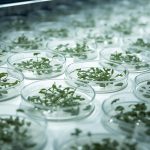
A research team from the Siberian Branch of the Russian Academy of Sciences established an efficient in vitro regeneration protocol for Populus davidiana × P. bolleana cv. Baicheng-1, a female, fluff-free, hypoallergenic poplar hybrid valuable for urban environments. Using Murashige and Skoog medium with thidiazuron (TDZ) and meta-Topolin (m-T) at 0.1–1 µM, the scientists compared morphogenic responses from leaf and nodal explants. TDZ induced the highest shoot multiplication rates—up to 26 shoots per explant—but produced shorter shoots and minor chlorosis, while m-T yielded fewer yet greener, thicker, and more vigorous shoots with larger leaves. Rooting on hormone-free medium reached 100%, and acclimatization survival exceeded 84%.
Molecular marker analysis (RAPD and ISSR) showed significant genetic polymorphism among TDZ-derived regenerants, whereas m-T treatments preserved greater clonal fidelity. Nodal segments proved the best explant source. The developed system enables large-scale, stable propagation of P. davidiana × P. bolleana—a promising ornamental and pollution-tolerant poplar ideal for hypoallergenic urban greening.
Reference
Zheleznichenko, T., Karakulov, A., Asbaganov, S., & Kochetov, A. (2025). Effect of thidiazuron and meta-topolin on in vitro shoot multiplication and development of the Populus davidiana × P. bolleana hybrid. Plant Cell, Tissue and Organ Culture (PCTOC), 163(1), 35. https://doi.org/10.1007/s11240-025-03228-7


Related posts:
 Azospirillum brasilense Boosts Survival, Growth, and Nutrient Uptake in Micropropagated Sugarcane
 Revolutionizing Paeonia ostii Propagation: A Breakthrough Tissue Culture System for Scalable Production
 Graphene Oxide and Auxin Work Together to Boost Root Formation in Apple Rootstock
 GABA Breakthrough: Optimizing Anther Culture in Pepper to Accelerate Breeding
 Sodium Selenite Boosts Growth and Selenium Uptake in Medicinal Trichosanthes kirilowii Seedlings


