

Researchers from the University of Tehran and the University of Florida have unveiled a groundbreaking biofertilization technique that could drastically reduce the use of synthetic nitrogen fertilizers in rice farming.
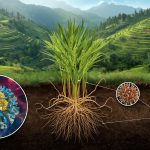
The study, published in the Journal of Plant Growth Regulation (2025), demonstrates how periphyton biofilms—microbial mats naturally forming in flooded rice paddies—can be enriched with high-efficiency nitrogen-fixing bacteria (Delftia lacustris and Nostoc sp.).
In greenhouse trials, the enriched biofilm improved soil nitrogen by 37.8%, ammonium by 42.1%, and phosphorus by 35%, achieving plant growth comparable to crops treated with 125 kg ha⁻¹ of urea fertilizer. Rice plants showed remarkable increases in height, biomass, and nutrient uptake.
Unlike traditional inoculants, this method uses native periphyton as a delivery system, creating a self-sustaining microbial ecosystem that continuously fixes atmospheric nitrogen and releases nutrients. Beyond nitrogen fixation, the biofilm also enhances phosphorus and potassium availability, improving overall soil fertility.
Lead authors highlight that this innovation represents a paradigm shift in sustainable agriculture, combining ecological engineering and microbiome science to minimize fertilizer dependence, lower greenhouse gas emissions, and support smallholder farmers.
The team emphasizes that future field trials will focus on yield performance and scalability—but their findings already offer a viable path toward eco-friendly, cost-effective rice production.
Reference
Gholami, M., Alikhani, H. A., Etesami, H., Noroozi, M., & Inglett, P. (2025). Enhancing Biological Nitrogen Fixation in Rice (Oryza sativa L.) Cultivation Through Diazotrophs-Enriched Periphyton Biofilm. Journal of Plant Growth Regulation. https://doi.org/10.1007/s00344-025-11904-3


Related posts:
 डायाजोट्रोफले समृद्ध पेरिफाइटन बायोफिल्मले यूरियाबिनाको धानको वृद्धि अभूतपूर्व रूपमा बढायो
 Scientists Develop First Dual Microbial Consortium to Enhance Iron and Zinc Uptake in Wheat
 Mycorrhizal Fungi Boost Nitrogen Uptake in Rice by Reshaping Soil Microbial Networks
 Sewage Sludge Biochar and Trichoderma afroharzianum Join Forces to Combat Tomato Root Disease
 Beneficial Bacillus Bacteria Boost Cotton Growth and Sustainability in Brazil

