
Sustainable Agriculture Meets High-Yield Tomato Production
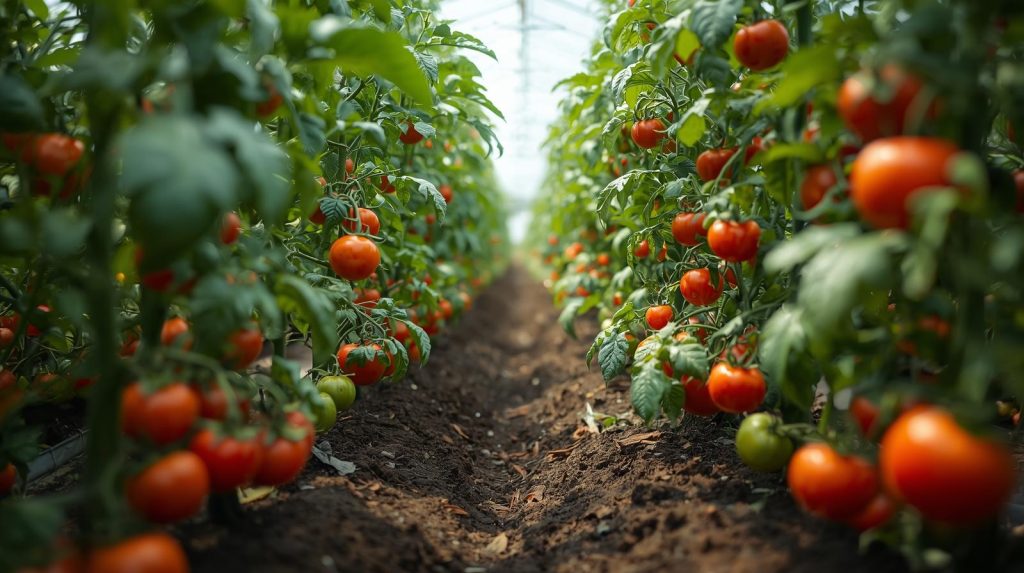
Greenhouse tomato production faces a critical challenge: balancing high yields with sustainable practices. A recent study published in Frontiers in Plant Science explores how biogas slurry, a nutrient-rich byproduct of anaerobic digestion, combined with biochar, a carbon-rich soil amendment, can partially replace chemical fertilizers while improving plant growth, root traits, and fruit yield.
Key Findings from the Study
- Optimal Fertilizer Combination:
The research tested different ratios of chemical fertilizers, biogas slurry, and biochar. The BS75+C treatment—where 75% of nitrogen came from biogas slurry combined with biochar—produced the highest tomato yield (151,341 kg ha⁻¹) and improved plant height, stem diameter, and root vitality. - Root Development Boost:
The BS75+C treatment enhanced root activity by over 187%, significantly increasing root surface area, volume, and branching—critical for nutrient absorption and plant health. - Improved Growth Quality Index (GQI):
Path analysis revealed that root activity, stem diameter, and root-to-shoot biomass ratio were the most influential factors in improving tomato growth quality. - Economic and Environmental Benefits:
While BS75+C achieved the highest yields, the BS25 treatment offered the best economic returns, reducing chemical fertilizer dependency and cutting costs.
Why It Matters
Excessive use of chemical fertilizers can degrade soil health and harm the environment. This study provides scientific evidence that integrating biogas slurry and biochar into greenhouse farming can:
- Reduce chemical fertilizer use,
- Improve soil fertility and water retention,
- Support sustainable and climate-resilient agriculture.
Practical Takeaways for Farmers
- Start Small: Begin by replacing 25–50% of chemical fertilizers with biogas slurry and biochar.
- Optimize Ratios: For maximum yield, consider the 75% biogas slurry + biochar combination.
- Monitor Soil Health: Regular testing ensures optimal nutrient balance and long-term productivity.
Conclusion
The study highlights a win–win solution for farmers seeking high yields, cost savings, and sustainability. With rising concerns about soil degradation and climate change, biogas slurry and biochar offer a practical path toward eco-friendly greenhouse tomato production.
Reference
Sa, Q., Zheng, J., Wang, Y., Fu, X., Wu, Y., & Liu, A. (2025). Evaluating the effects of biogas slurry and biochar as a partial substitute for chemical fertilizers on greenhouse tomato growth, root traits, and yield: a minimum data set approach. Frontiers in Plant Science, Volume 16-2025. https://www.frontiersin.org/journals/plant-science/articles/10.3389/fpls.2025.1657694


Related posts:
 Sustainable Growing Media Boosts Glasshouse Strawberry Production and Soil Health
 Biochar and Compost Together Boost Barley’s Drought Tolerance by Regulating Stress-Response Genes
 Biochar-Enhanced Soil Treatment Cuts Antibiotic Resistance Genes by Over 59%
 Biochar Boosts Soil Microbial Diversity and Nutrient Cycling Across Tobacco Growth Stages
 Silicon-Enriched Biochar Offers New Pathway to Reduce Cadmium Contamination in Rice Fields


