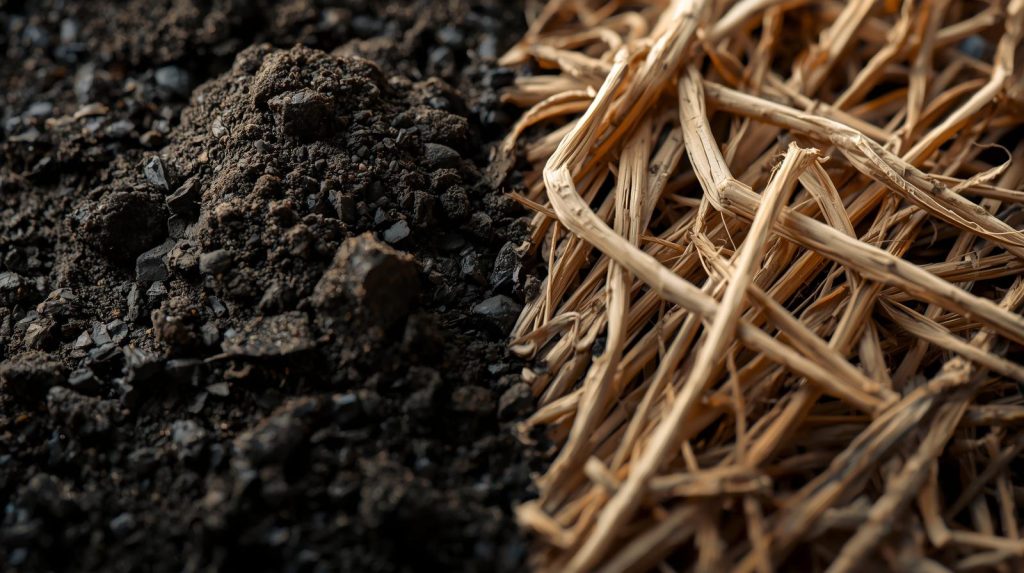

Biochar Helps Soils Breathe Easier: Turning Crop Waste into Climate Solutions
A 2025 study published in Chemical and Biological Technologies in Agriculture by Zhang et al. unveils how biochar can drastically accelerate crop straw decomposition while slashing greenhouse gas emissions through microbial community modulation.
Researchers at Hunan Agricultural University tested biochar made from rice and maize straw under different pyrolysis temperatures and application rates. The 90-day controlled incubation showed that biochar produced at 300 °C and applied at 2.5–5% concentration increased straw breakdown by up to 36%, while simultaneously reducing methane (CH₄) emissions by up to 90% and nitrous oxide (N₂O) by 91%.
The study demonstrated that low-temperature biochar enriched soil organic matter by up to 29%, raised pH levels by 11%, and enhanced enzyme activities—including cellulase and β-glucosidase—key drivers of straw degradation. Microbial analysis revealed biochar’s pivotal role in reshaping soil microbial communities, fostering beneficial groups like Proteobacteria and Ascomycota that accelerate organic matter decomposition.
Path analysis highlighted a strong biochar–enzyme–microbe linkage (coefficient = 0.92), suggesting that biochar acts as both a microbial habitat and catalyst for enzymatic breakdown of lignocellulosic material. However, biochars made at higher temperatures (500–700 °C) were less effective due to their increased stability and reduced microbial accessibility.
The takeaway? Applying biochar derived from rice or maize straw at moderate rates (2.5–5%) and low pyrolysis temperatures provides an optimal balance—boosting straw recycling efficiency while cutting agricultural greenhouse gas emissions.
This research provides a critical blueprint for sustainable straw management and supports global climate-smart agricultural strategies, turning waste into a resource for healthier soils and a healthier planet.
Reference
Zhang, S., Xu, G., Quan, X., Tan, X., Zhang, R., Fu, X., Peng, H., & Luo, S. (2025). Biochar accelerates straw decomposition and reduces greenhouse gas emissions by driving microbial community dynamics. Chemical and Biological Technologies in Agriculture, 12(1), 150. https://doi.org/10.1186/s40538-025-00869-w


Related posts:
 बायोचारले परालको विघटन छिटो गराएर हरितगृह ग्यास उत्सर्जन ९०% सम्म घटायो
 Boosting Sunflower Growth in Saline Soils: The Role of Phosphate-Solubilizing Bacteria and Phosphorus-Enriched Biochar
 Biochar Boosts Soil Microbial Diversity and Nutrient Cycling Across Tobacco Growth Stages
 Turning Olive Waste into Green Gold: Pseudomonas aeruginosa Converts Olive Mill Wastewater into Eco-Friendly Rhamnolipids with Plant-Boosting Power
 Microbes Boost Strawberry Growth Under Salt Stress

