

A groundbreaking study published in Plant and Soil has demonstrated that combining Bacillus subtilis (BS) with a water-retaining agent (WRA) substantially improves wheat nutrition, soil microbial diversity, and the plant’s internal metabolic processes. With global wheat production threatened by drought, soil degradation, and heavy fertilizer dependence, these findings present a promising strategy for sustainable crop management.
Researchers tested four treatments under controlled pot experiments: a control, BS alone, WRA alone, and a combined BS + WRA treatment. Their results revealed that the combined treatment (T3) delivered the strongest benefits across every major growth indicator.
Key Findings
- Nutrient Boost: Wheat spikes in the combined treatment showed increased nitrogen (4.62%), phosphorus (8.34%), and potassium (18.15%) compared to the control.
- Microbial Diversity: Soil bacterial richness and diversity were higher in all BS and WRA treatments, with the combined treatment performing the best.
- Enhanced Antioxidant Defense: Activities of SOD, POD, and CAT increased significantly, while harmful MDA levels were reduced by up to 19.46%.
- Metabolic Activation: Metabolomic analysis showed activation of pathways related to amino acid biosynthesis, ABC transporters, and overall nutrient cycling in flag leaves.
- Growth Promotion: Fresh and dry weights of stems, leaves, and spikes were consistently higher in the combined treatment.
What This Means for Agriculture
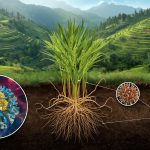
The study shows that BS and WRA do not merely add individual benefits — they work synergistically. The water-retaining agent stabilizes soil moisture and nutrient release, while Bacillus subtilis enhances root health, nutrient accessibility, and microbial balance. Together, they promote better nutrient uptake, stronger antioxidant responses, and metabolic activation inside wheat tissues.
A Step Toward Sustainable Wheat Production
The findings highlight an eco-friendly biotechnology approach that may help reduce dependence on chemical fertilizers and pesticides. The authors note that field trials are needed to validate these results, but the evidence strongly supports integrating BS and WRA into future wheat production systems.
Reference
Yuan, X., Zhu, P. & Shi, Y. Modulation of wheat flag leaf metabolome and inter-root microorganisms by Bacillus subtilis and water retaining agents. Plant Soil (2025). https://doi.org/10.1007/s11104-025-08108-9


Related posts:
 Beneficial Bacteria Help Cactus Pear Survive Severe Drought by Boosting Nitrogen and Metabolic Defenses
 Cross-Kingdom SynCom Breakthrough: Trichoderma–Bacterial Consortium Doubles Alfalfa Yield and Soil Carbon in Saline-Alkaline Soil
 Scientists Develop First Dual Microbial Consortium to Enhance Iron and Zinc Uptake in Wheat
 Beneficial Bacillus Bacteria Boost Cotton Growth and Sustainability in Brazil
 Marine-Derived Streptomyces albidoflavus S20 Shows Breakthrough Biocontrol Against Tobacco Black Shank


