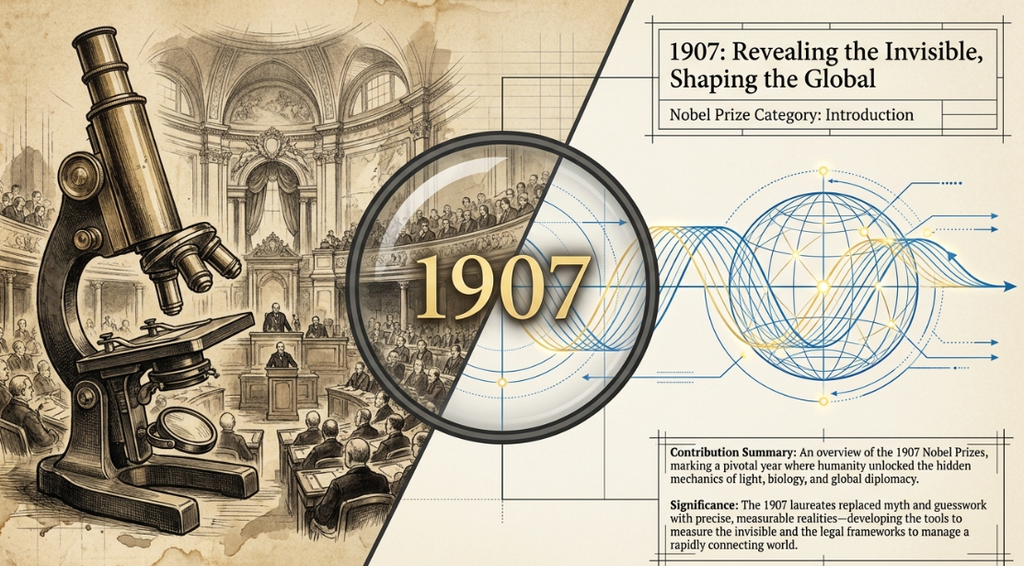
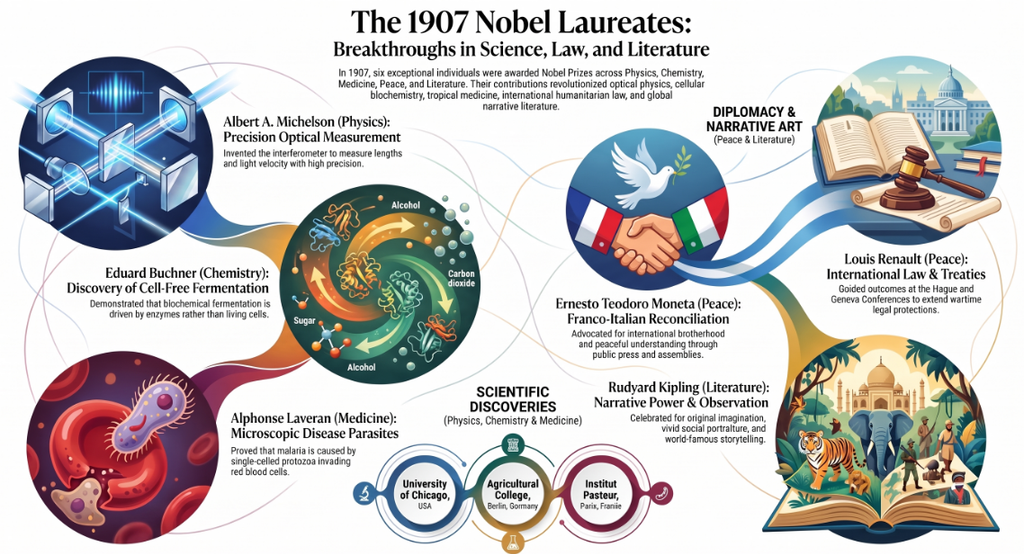
The conferral of the 1907 Nobel Prizes represents a watershed epoch in early twentieth-century intellectual history. Occurring during the height of the Belle Époque—a period characterized by unprecedented industrial expansion, colonial consolidation, and subtle geopolitical friction—the 1907 awards reflected a pivotal shift toward rigorous empirical precision, biochemical reductionism, protozoan etiology, imperial narrative synthesis, and formalist international law. By recognizing breakthroughs that challenged nineteenth-century scientific orthodoxies and legal paradigms, the prize-awarding institutions in Stockholm and Christiania (Oslo) validated methodologies that would define modern scholarly inquiry. In physics, the reward of optical metrology laid the groundwork for testing fundamental physical hypotheses, including optical ether drift and special relativity. In chemistry and medicine, the prizes marked the decisive dismantling of vitalist dogma and bacterial exclusivity. Simultaneously, the awards for literature and peace captured the complex ideological landscape of an imperial world seeking both cultural self-definition and institutional mechanisms for war prevention, culminating in the legal milestones of the Second Hague Peace Conference of 1907.
| Category | Laureate Name(s) | Institutional Affiliation / Country of Residence | Prize Share | Official Prize Motivation |
|---|---|---|---|---|
| Physics | Albert A. Michelson | University of Chicago, Chicago, IL, USA | 1/1 | “for his optical precision instruments and the spectroscopic and metrological investigations carried out with their aid” |
| Chemistry | Eduard Buchner | Landwirtschaftliche Hochschule (Agricultural College), Berlin, Germany | 1/1 | “for his biochemical researches and his discovery of cell-free fermentation” |
| Physiology or Medicine | Charles Louis Alphonse Laveran | Institut Pasteur, Paris, France | 1/1 | “in recognition of his work on the role played by protozoa in causing diseases” |
| Literature | Rudyard Kipling | United Kingdom | 1/1 | “in consideration of the power of observation, originality of imagination, virility of ideas and remarkable talent for narration which characterize the creations of this world-famous author” |
| Peace | Ernesto Teodoro Moneta | Italy | 1/2 | “for his work in the press and in peace meetings, both public and private, for an understanding between France and Italy” |
| Peace | Louis Renault | France | 1/2 | “for his decisive influence upon the conduct and outcome of the Hague and Geneva Conferences” |
The 1907 Nobel conferrals highlight profound conceptual transitions across the physical, biological, and social sciences. In the chemical sciences, Eduard Buchner’s extraction of cell-free fermentation disproved the long-cherished vitalist doctrine, which maintained that metabolic transformations required an intact, living cellular “life force.” Buchner demonstrated that biological reactions were chemical processes mediated by intracellular catalysts, or enzymes. In pathology, Charles Louis Alphonse Laveran fundamentally broadened infectious disease theory by demonstrating that complex single-celled protozoa—specifically of the Plasmodium family—were the primary causative agents of malaria, shattering the prevailing assumption that all infectious fevers were attributable to bacteria. In the political realm, the joint Peace award recognized two complementary strategies for conflict mitigation: combining Ernesto Teodoro Moneta’s grassroots journalistic campaign for Franco-Italian reconciliation with Louis Renault’s formalist expansion of international humanitarian law and neutral rights through codifying treaties at the Hague and Geneva Conferences.
This high-level synthesis demonstrates how the 1907 awards signaled a universal transition toward systematic empiricism and institutional formalization. To fully appreciate the mechanics of these transformations, it is necessary to examine first the technical and laboratory breakthroughs that reshaped physical measurement, enzymatic chemistry, and tropical pathology.
2. Physical and Life Science Breakthroughs (Physics, Chemistry, Medicine)
The scientific awards of 1907 were linked by an underlying epistemological commitment: replacing speculative or macroscopic assumptions with direct empirical measurement, cellular isolation, and microscopic observation. At the turn of the twentieth century, physical and life sciences were increasingly defined by the ability to isolate and quantify microscopic phenomena. The achievements of Michelson, Buchner, and Laveran established foundational empirical techniques that anchored physical metrology, modern biochemistry, and protozoan parasitology.
Physics – Albert A. Michelson
Albert Abraham Michelson was born on December 19, 1852, in Strelno, Prussia (now Strzelno, Poland). He later emigrated to the United States and joined the faculty of the University of Chicago, where he conducted his primary optical research. In the mid-1880s, Michelson engineered an optical precision instrument known as the interferometer. The device used a semi-transparent mirror to split a single beam of uniform light into two perpendicular pathways. After traveling along these separate routes, the light beams reflected off mirrors and recombined. Any minute discrepancy in the distance traveled or the medium encountered produced a phase displacement, creating visual light-and-dark interference fringes.
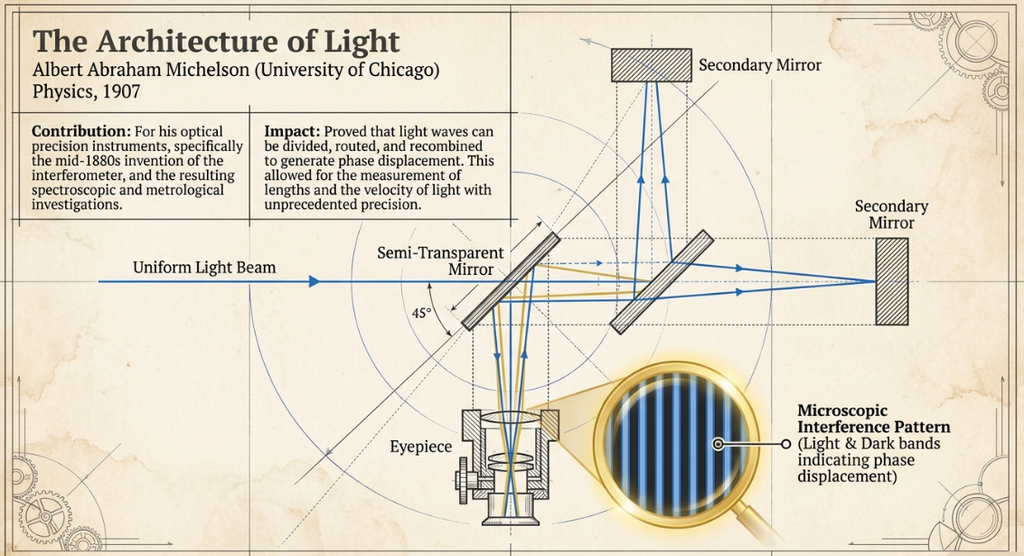
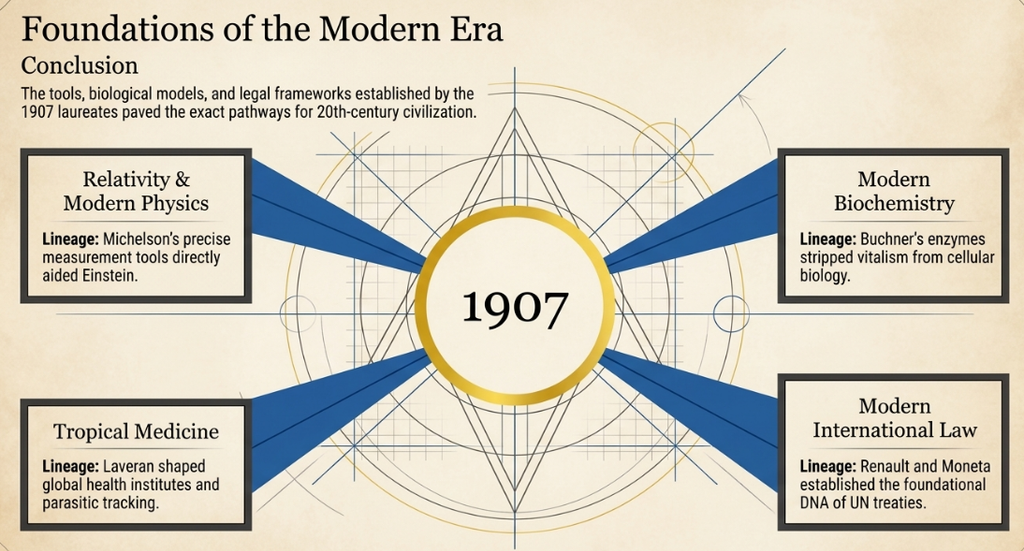
Michelson’s optical precision instruments transformed metrology and spectroscopy. By determining whether light waves reinforced one another (in phase) or canceled one another out (out of phase), his instrument enabled physicists to establish standard length measurements based on light wavelengths and compute the velocity of light with unprecedented exactitude. Beyond its immediate metrological utility, Michelson’s interferometer provided the experimental precision necessary to test fundamental physical hypotheses, including optical ether drift, laying the empirical groundwork for twentieth-century theoretical physics and special relativity.
Chemistry – Eduard Buchner
Eduard Buchner was born in Munich, Bavaria (now Germany), on May 20, 1860. He pursued his higher scientific education at the Bavarian Botanical Institute in Munich under the direction of prominent chemists Adolf von Baeyer and Emil Fischer (who received the Nobel Prizes in Chemistry in 1905 and 1902, respectively). Buchner held academic appointments at several German institutions, including the Universities of Kiel, Tübingen, and Würzburg, before accepting a professorship at the Landwirtschaftliche Hochschule (Agricultural College) in Berlin. His scientific career ended during World War I when he served as a major in a field hospital in Focsani, Romania, where he was mortally wounded, dying on August 13, 1917.
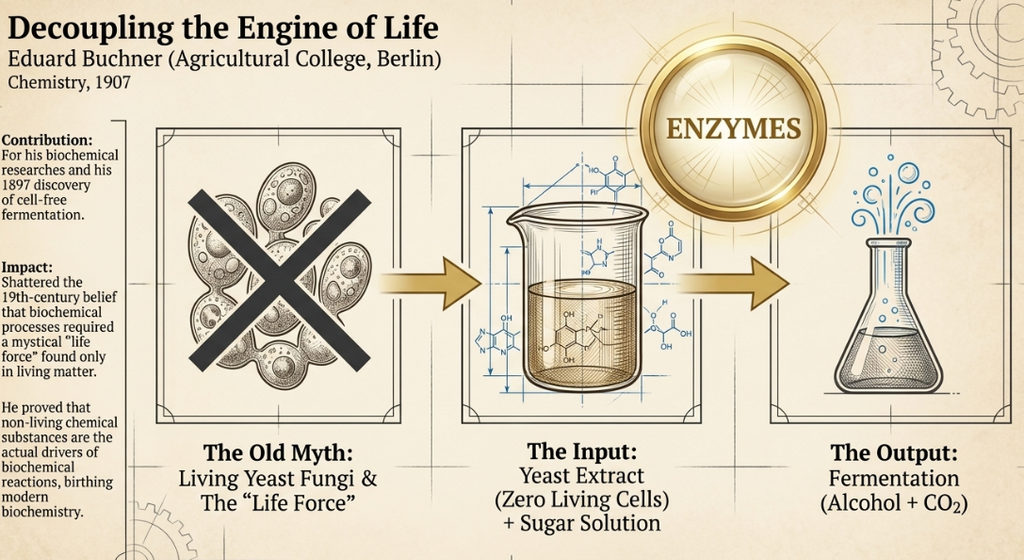
Buchner’s award-winning breakthrough occurred in 1897 through an elegant laboratory demonstration: he prepared a cell-free yeast extract, completely free of living yeast cells, and demonstrated that it transformed a sugar solution into alcohol and carbon dioxide. Throughout the nineteenth century, biological chemistry was dominated by vitalist theory, which held that fermentation was a vital process inextricably bound to the metabolic life cycle of living micro-organisms. Buchner’s discovery of cell-free fermentation conclusively disproved this assumption. He demonstrated that metabolic transformations were chemical reactions driven by specific non-living agents—enzymes—manufactured within cells, establishing the modern field of biochemistry.
Physiology or Medicine – Charles Louis Alphonse Laveran
Charles Louis Alphonse Laveran was born in Paris, France, on June 18, 1845, the son of a military physician. He completed his medical training at the École de Val-de-Grâce in Paris and served as a French military surgeon during the Franco-Prussian War (1870–1871). Posted to Algeria and later Rome to investigate malaria—which posed a severe health threat to troops and civilian populations in tropical regions—Laveran conducted extensive microscopic studies of blood samples. Demonstrating a philanthropic commitment to scientific research, Laveran allocated his 1907 Nobel Prize money equally: half to establish the Société de Pathologie Exotique and half to support the Institut Pasteur in Paris, his research home at the time of the award.
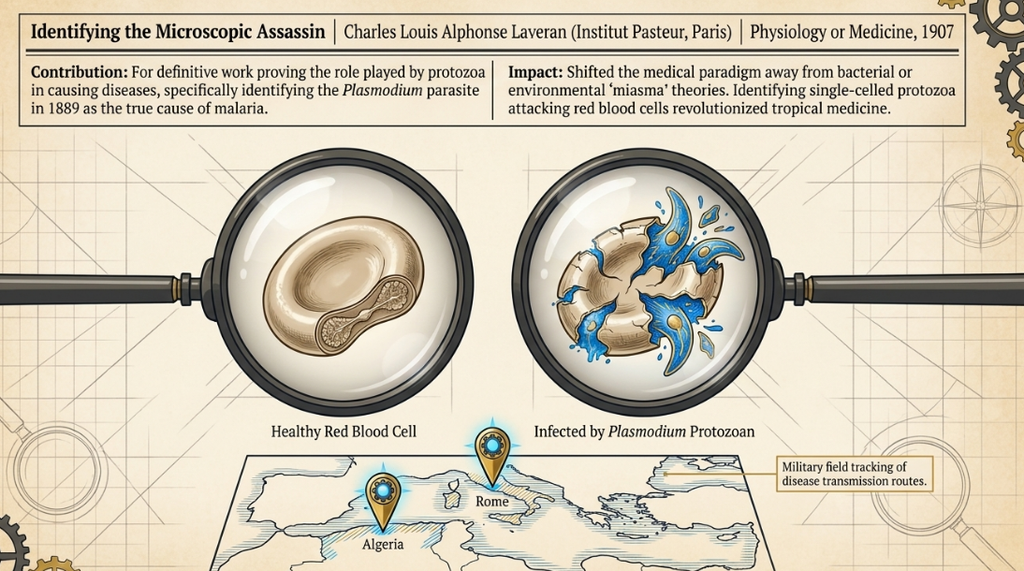
During the late nineteenth century, the rise of bacteriology led most pathologists to assume that tropical fevers were caused by bacterial agents. However, in 1889, while examining fresh blood smears from malaria patients, Laveran identified single-celled protozoan parasites belonging to the Plasmodium family inside infected red blood cells.
Laveran broadened his investigations to identify multiple other parasitic protozoa responsible for human and animal tropical diseases. By proving that complex single-celled protozoa, rather than bacteria, were the causative pathogens of malaria, Laveran expanded medical pathology, providing a scientific foundation for vector-control strategies and modern tropical medicine.
The analytical rigor that characterized these physical and biological breakthroughs reflected a broader intellectual current in early twentieth-century culture. Just as scientists sought precise laws to explain physical light, cellular metabolism, and microscopic pathogens, contemporary writers and legal scholars sought to analyze human society, colonial identity, and international conflict through structured, empirical, and institutional frameworks.
3. Cultural Narratives and International Law (Literature and Peace)
The 1907 Nobel Prizes for Literature and Peace addressed the geopolitical and social dynamics of an interconnected, imperial world. The Swedish Academy and the Norwegian Nobel Committee selected laureates whose works either synthesized the human experiences of global empires through narrative art or sought to regulate international competition through public advocacy, press mobilization, and international legal treaties.
Literature – Rudyard Kipling
Rudyard Kipling was born on December 30, 1865, in Bombay, British India (now Mumbai, India). His early childhood in India exposed him to a multilingual environment encompassing English, Hindi, and Portuguese. Sent to England at age six, he lived with relatives until age seventeen, when he returned to India to work as a journalist and newspaper correspondent. At the time of his Nobel award in 1907, Kipling’s official country of residence was the United Kingdom.
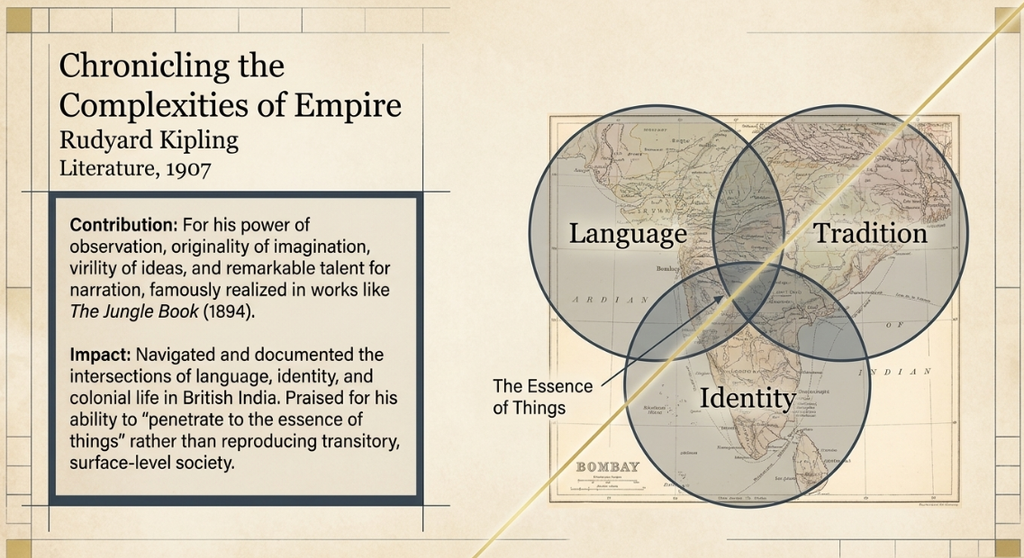
Kipling’s literary career included poetry, short stories, journalism, and novels. He achieved international acclaim for works such as The Jungle Book (1894)—later adapted into a 1967 animated film by Disney—and poems celebrating military life that became popular within the British Army. His narratives provided vivid portrayals of the British colonial empire in India, describing its landscapes, social structures, and cultural encounters for a global readership.
In awarding Kipling the 1907 Literature Prize, the Swedish Academy cited his “power of observation, originality of imagination, virility of ideas and remarkable talent for narration.” In its assessment, the Academy emphasized a key distinction in Kipling’s technique: rather than merely recording superficial or “transitory” details of contemporary social life, his character portraits and descriptions of social settings succeeded in penetrating “to the essence of things,” capturing the underlying cultural dynamics of his era.
Peace – Joint Award: Ernesto Teodoro Moneta and Louis Renault
The 1907 Nobel Peace Prize was divided equally between two figures representing distinct but complementary paths to conflict resolution: grassroots journalistic mobilization and formalist international law.
Ernesto Teodoro Moneta
Ernesto Teodoro Moneta was born in Milan, Austrian Empire (now Italy), on September 20, 1833. At age fifteen, he participated alongside his father and brothers in the 1848 street fighting of Milan to free the city from Austrian rule. He subsequently received military training and served under Giuseppe Garibaldi during the Italian unification campaigns. Transitioning from military service to journalism, Moneta became editor of the Milanese daily newspaper Il Secolo in 1867.
Through Il Secolo, Moneta argued that standing state armies should be replaced by popular militias intended strictly for defensive warfare. As President of the Lombard League of Peace and a prominent figure in the Italian peace movement of the 1890s, he used print media and public assemblies to promote international brotherhood, working to foster mutual understanding and avert conflict between France and Italy.
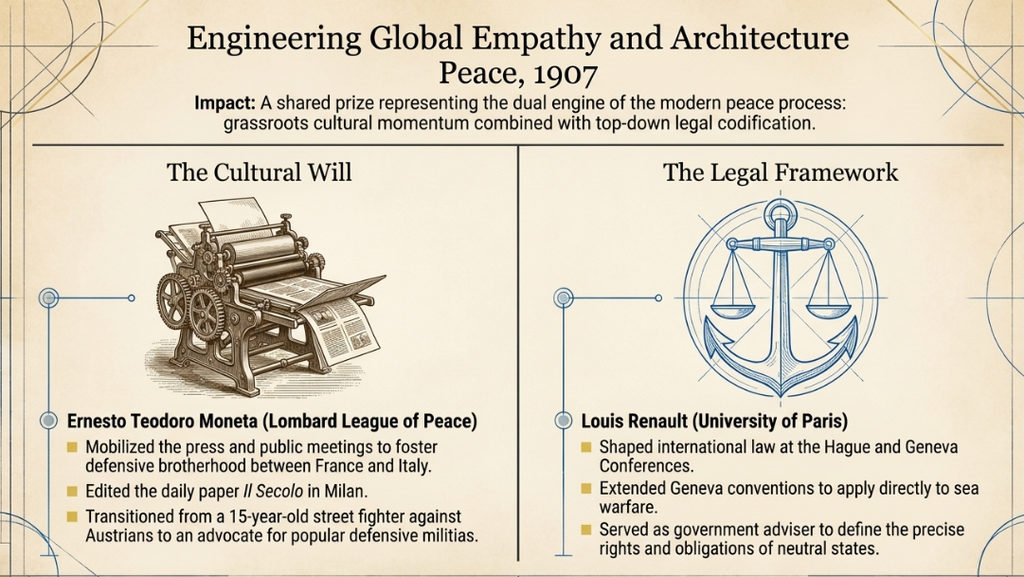
Louis Renault
Louis Renault was born in Autun, France, on May 21, 1843. He served as Professor of International Law at the Universities of Dijon and Paris, delivering his final lecture at age 75, two days before his death in Barbizon, France, on February 8, 1918. In addition to his academic duties, Renault served as a legal adviser to the French Ministry of Foreign Affairs, representing France at international conferences on transport, communications, and artistic copyright during the 1880s.
Renault’s primary diplomatic contributions occurred at the Hague Peace Conferences of 1899 and 1907, where his legal drafting helped shape modern international humanitarian law. Renault led efforts to extend the maritime protections of the Geneva Convention of 1864 to naval warfare and worked to codify the legal rights and obligations of neutral states during international armed conflicts.
Comparative Analysis of the Dual Peace Paradigm
The decision to divide the 1907 Peace Prize between Moneta and Renault highlights two distinct strategies for war prevention in pre-World War I Europe:
- Grassroots Journalistic Mobilization (Moneta): Operated through mass media (Il Secolo), public congresses, and civic organizations to shape public opinion, foster Franco-Italian understanding, and advocate for defensive militia structures.
- Formalist International Law (Renault): Operated through legal scholarship, state advisement, and international conferences (Hague and Geneva) to establish binding multilateral treaties governing maritime warfare and neutral state rights.
Together, these awards recognized that durable international peace required both popular anti-war advocacy and formalist legal frameworks to govern state conduct.
4. Standardized 1907 Laureate Summary Matrix
The following section provides the direct, year-wise summary of the 1907 Nobel Laureates and their official award motivations, structured in accordance with historical Nobel archive registry standards.
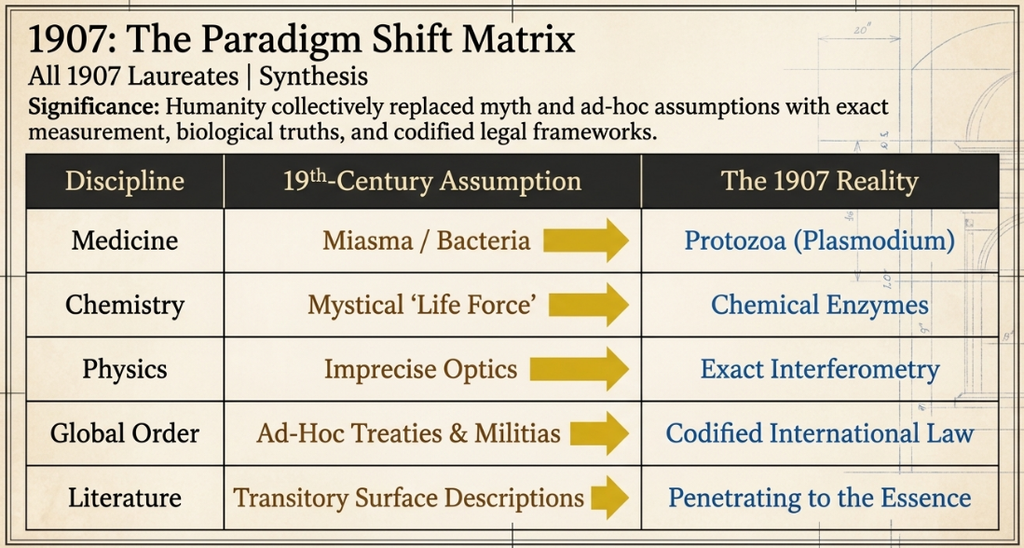
1907
- Albert A. Michelson: For his optical precision instruments and the spectroscopic and metrological investigations carried out with their aid.
- Eduard Buchner: For his biochemical researches and his discovery of cell-free fermentation.
- Charles Louis Alphonse Laveran: In recognition of his work on the role played by protozoa in causing diseases.
- Rudyard Kipling: In consideration of the power of observation, originality of imagination, virility of ideas and remarkable talent for narration which characterize the creations of this world-famous author.
- Ernesto Teodoro Moneta: For his work in the press and in peace meetings, both public and private, for an understanding between France and Italy.
- Louis Renault: For his decisive influence upon the conduct and outcome of the Hague and Geneva Conferences.
Reference
https://www.nobelprize.org/prizes/lists/all-nobel-prizes/1909-1901