History is a vast, silent graveyard of the openly honest. While the “open book” is a celebrated virtue in the parlance of modern ethics, in the arena of power, it is a fatal vulnerability. Humans possess a primal, almost compulsive urge to blurt out their feelings, plans, and intentions. It is the path of least resistance; it takes no effort to be transparent, but immense psychological discipline to monitor the tongue. This natural transparency, however, renders you predictable, and predictability is the death of influence.
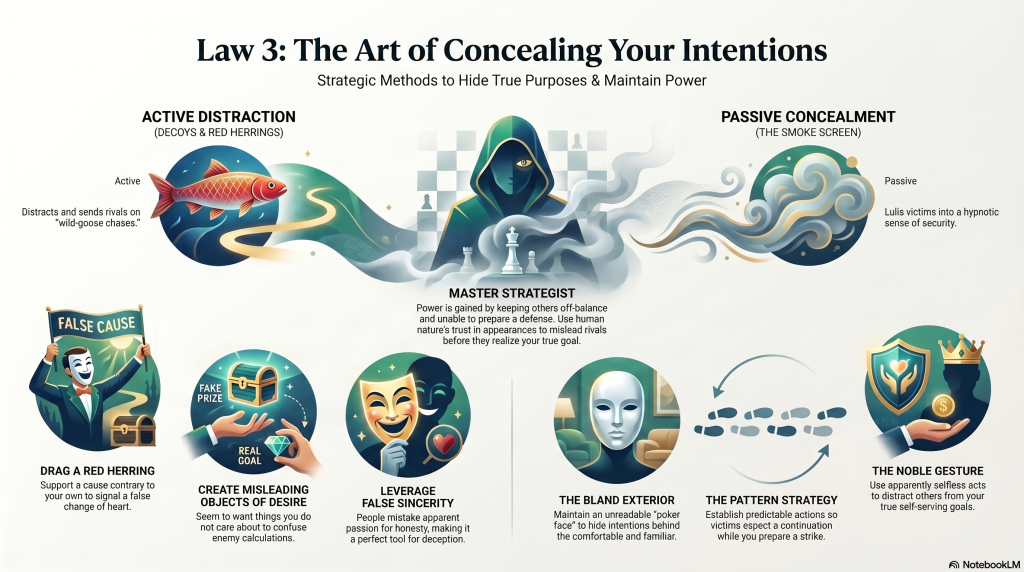
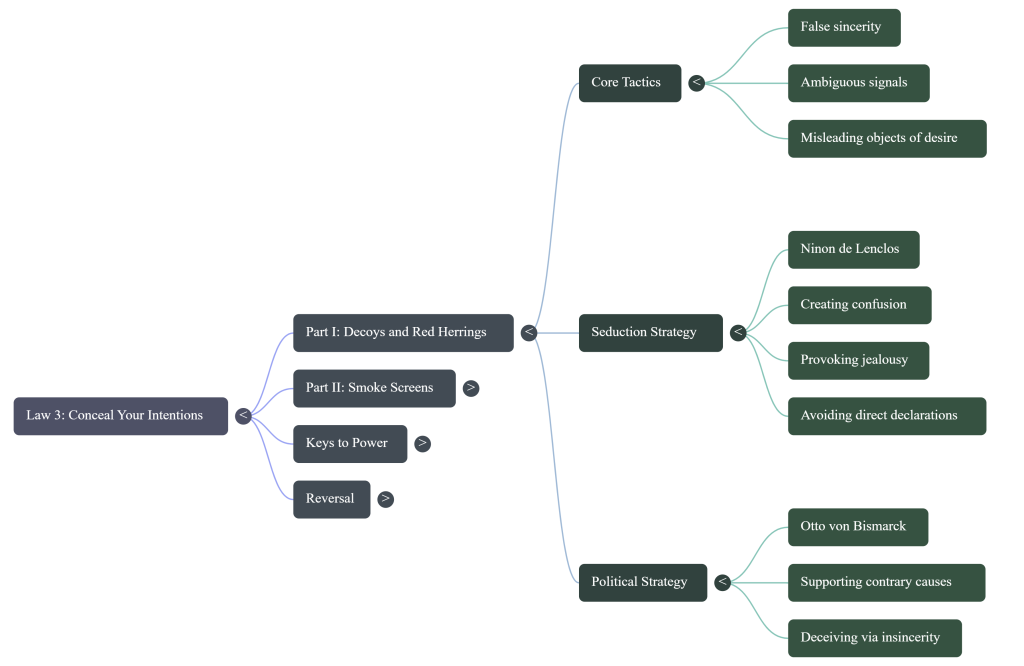
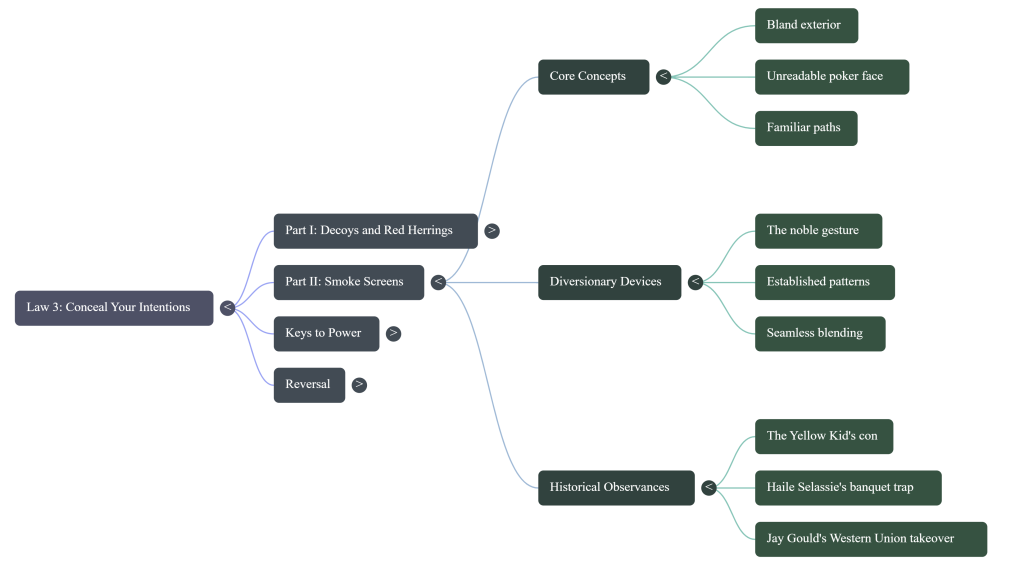
Consider the calculated silence of Haile Selassie or the strategic pivot of Otto von Bismarck. In 1850, the young Bismarck stood before the Prussian parliament and delivered a speech that appeared to betray every principle he held dear. A man of “iron and blood” who craved the humiliation of Austria, he instead praised the Austrians and supported the King’s path of peace. This was no change of heart; it was a red herring. By supporting a cause he detested, he threw his rivals off the scent, convinced the King of his loyalty, and was rewarded with a promotion to cabinet minister. He won the power to eventually wage the very war he had publicly decried. He understood a truth the honest never learn: unreadability is the ultimate leverage.
Honesty is a Blunt Instrument
We are taught that honesty is a virtue, but in practice, it is a blunt instrument that “bloodies more than it cuts.” Total transparency is more often a form of self-indulgent laziness than it is moral courage. By being unabashedly open, you make yourself so familiar that it is nearly impossible for others to respect or fear you. Power does not accrue to the predictable.
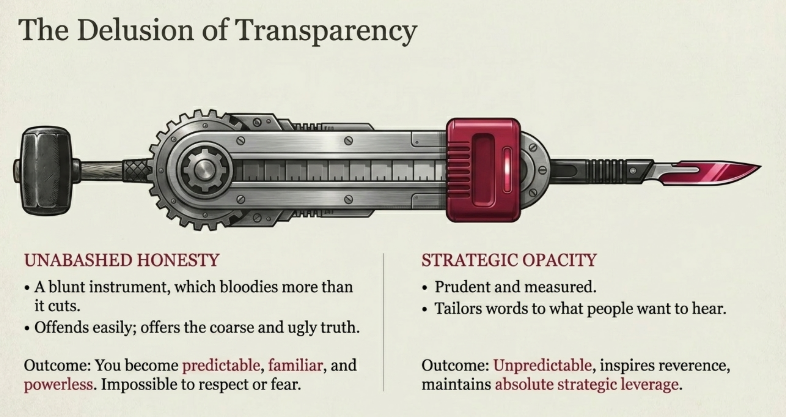
When you reveal the “coarse and ugly truth” of your thoughts, you do not win hearts; you provide your enemies with a map of your weaknesses. It is far more prudent to tailor your words to what your audience hungers to hear. If you cannot inspire the awe that comes from the unknown, you will find yourself relegated to the status of a known quantity—easily managed, easily countered, and eventually, easily ignored.
The Seduction of the “Wrong Path”
In both the boudoir and the boardroom, the target of a pursuit does not desire clarity; they desire the thrill of the chase. Seduction depends entirely on suggestion. As the legendary courtesan Ninon de Lenclos taught the young Marquis de Sevigné, the moment you announce your intentions directly, the spell is broken.
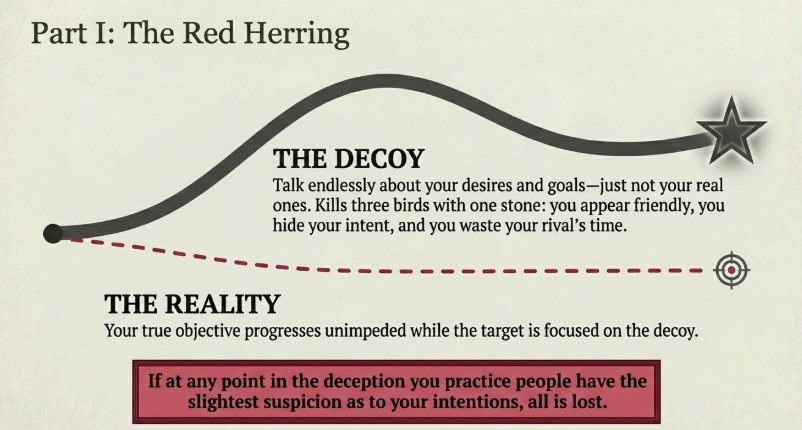
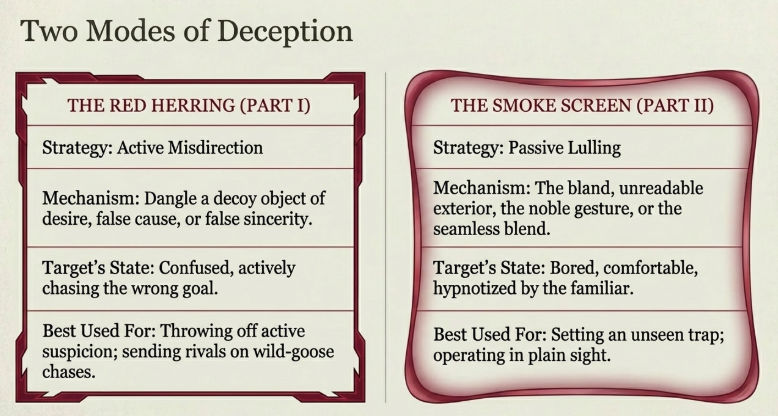
Lenclos instructed the Marquis to lead the Countess down a “wrong path” using red herrings. He was to appear interested in other women and feign a mere friendly interest in the Countess herself. This created a state of emotional confusion in the target—and confusion, for the human psyche, is far more intoxicating than security. As Lenclos knew, any emotion, even jealousy or doubt, is better than the boredom of safety. The Marquis failed only when he succumbed to an “artless show of passion,” blurting out his love. This directness made his previous maneuvers look conniving rather than charming, closing the door on the relationship forever. You cannot lead someone to a destination if they can see the finish line from the start.
The Power of the Bland Exterior
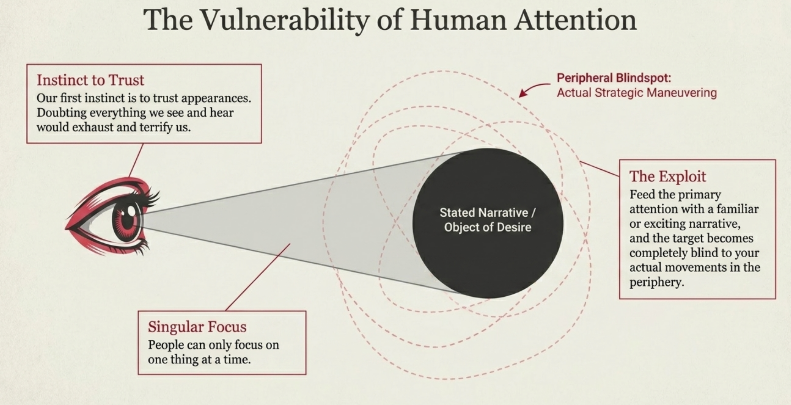
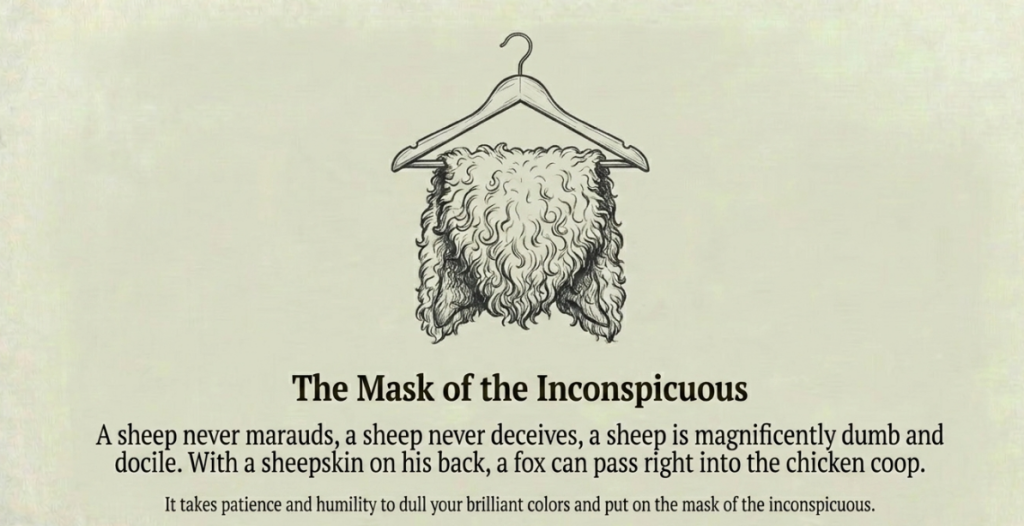
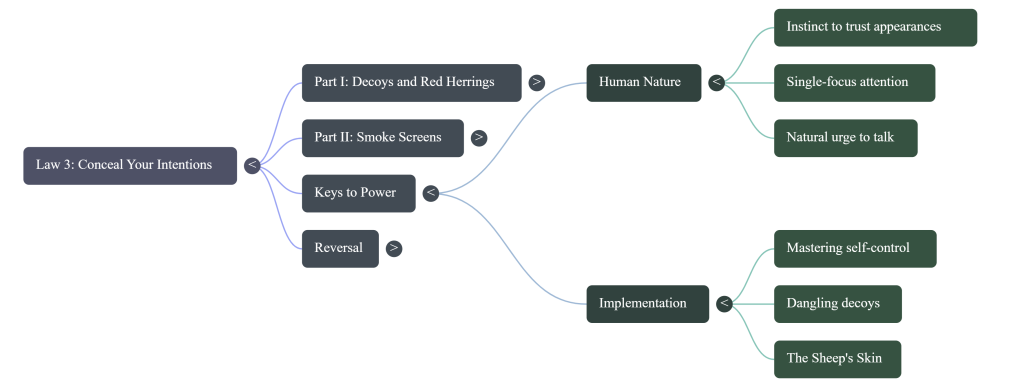
While red herrings actively distract, the “Smoke Screen” lulls. If you believe the great deceivers are colorful characters, you have already fallen for their trap. The most effective predators wear the “Sheep’s Skin”—a mask of docility, a “magnificently dumb” exterior that allows the fox to enter the chicken coop unnoticed.
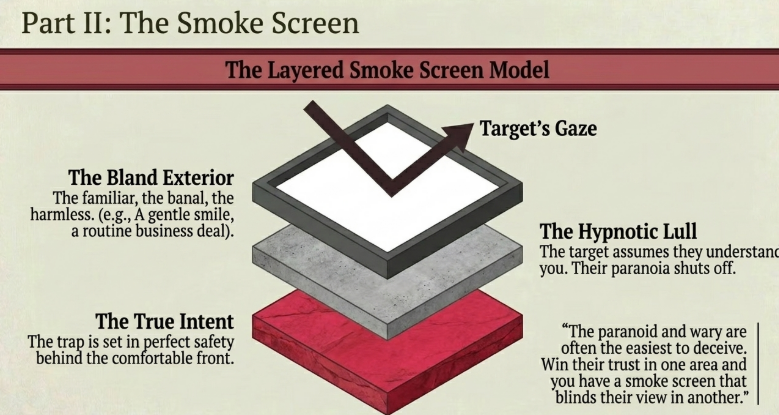
Consider the “Yellow Kid” Weil, who used the mundane prospect of a business deal regarding a hunting lodge to distract the millionaire Sam Geezil. This bland front was so convincing that Geezil failed to notice he was being led into a fixed boxing match scam. The smoke screen was so thick that even when the “boxer” supposedly died from a blow—a climax masterminded with a mouthful of chicken blood—Geezil was too blinded by the fear of a murder charge to realize his $35,000 was gone.
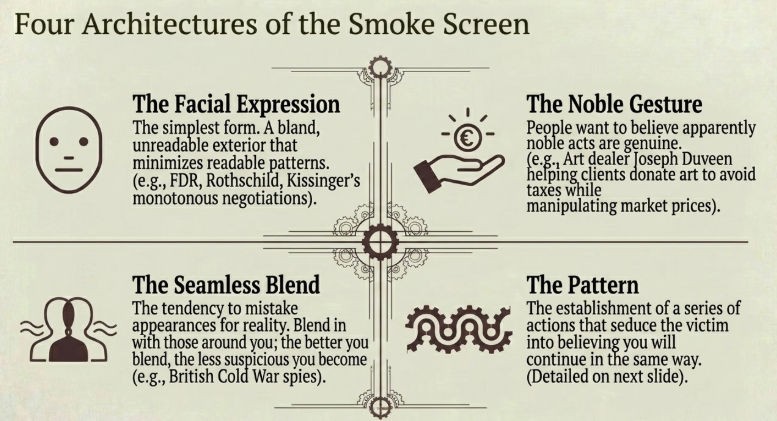
This is the power of the inconspicuous. Henry Kissinger utilized a monotonous voice and endless recitations of boring detail to glaze the eyes of his opponents, only to strike with bold, intimidating terms the moment their focus wavered. When you blend into the background of the familiar and the banal, you can maneuver unseen in broad daylight.
False Sincerity as a Tactical Weapon
The human mind has a built-in defect: we are biologically programmed to trust appearances. To go through life doubting everything we see and hear would be “exhausting and terrifying.” Therefore, we take the path of psychological relief and believe what is presented to us.
The “Strategic Psychologist” exploits this exhaustion through “false sincerity.” Take the case of the art dealer Joseph Duveen. In 1937, he orchestrated a “Noble Gesture” by helping create the National Gallery of Art. To the public, he was a benefactor; in reality, the move allowed his clients to avoid inheritance taxes, cleared wall space for new purchases, and artificially reduced the supply of paintings to keep prices high.
Similarly, the diplomat Talleyrand would use “feigned confidence,” sharing meaningless, seemingly heartfelt “secrets” with others. This triggered the psychological rule of reciprocity, prompting his targets to reveal real secrets in return. By cultivating an air of honesty in one trivial area, you successfully buy the license to be profoundly dishonest in others.
The Reversal: The Honest Rogue
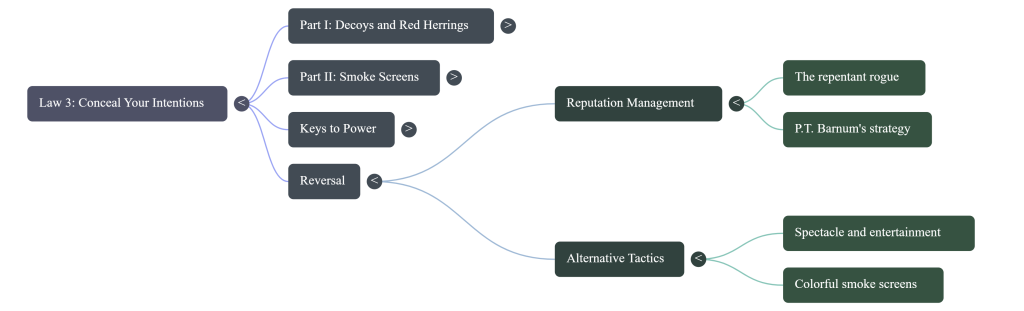
There comes a point where a reputation for deception is so established that even a smoke screen becomes transparent. In this state, appearing naive makes you look like a “rank hypocrite,” which is a strategic dead end.
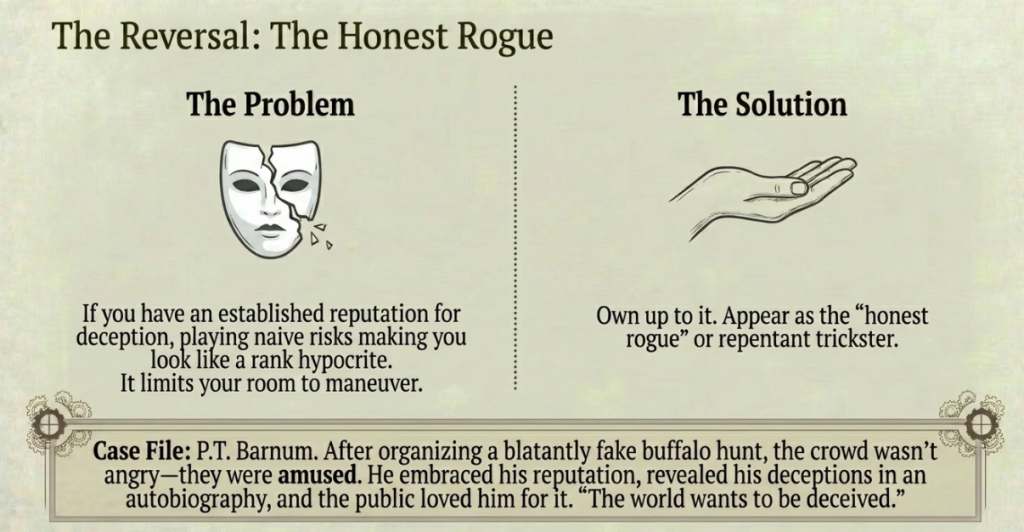
The solution is the “Honest Rogue” maneuver, perfected by P.T. Barnum. When Barnum’s tricks became too famous to hide, he leaned into his reputation as the “King of Humbuggery.” He published a tell-all autobiography, exposing his own deceptions. This was the ultimate layer of humbuggery: by appearing to be a “repentant rogue,” he won the public’s affection and regained the freedom to continue his stratagems. As Kierkegaard observed, “The world wants to be deceived.” Even transparency can be a mask if you wear it with enough calculated theater.
Final Reflection: A World of Smoke and Mirrors
In the relentless machinery of social and political life, it is impossible to survive, let alone thrive, without being a “cheat” of one’s own intentions. The “hidden hand” is not a luxury of the wicked; it is a necessity for the ambitious.
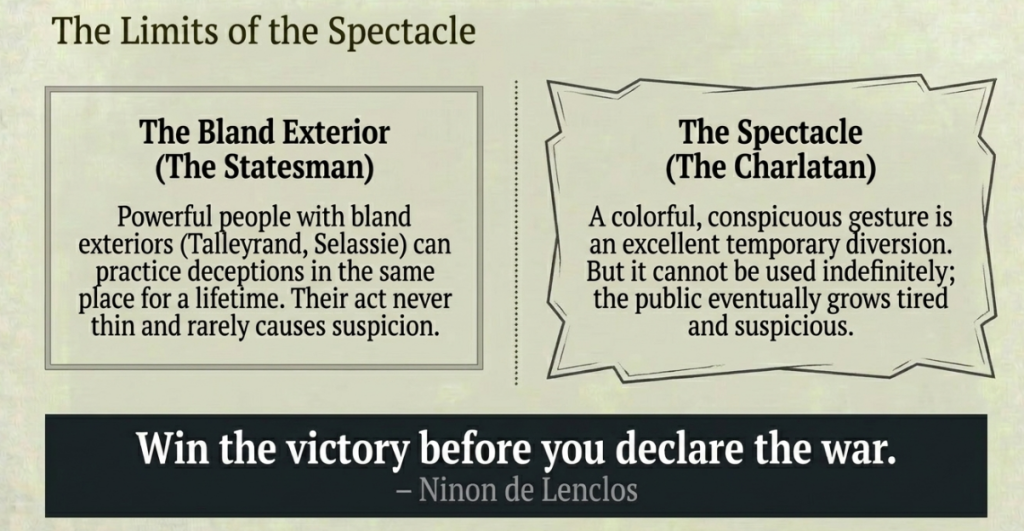
The world will always look for patterns in your behavior to predict your next move. Your unreadability is not merely an asset; it is your only true shield. In a world of predators, the most dangerous move you can make is to show your teeth before you are ready to strike. The question is no longer whether you will use the smoke screen, but whether you have the discipline to let it settle.
Image Summary
Reference


Related posts:
 First Law of Power: Why Your Best Work Might Be Your Biggest Liability: Lessons from the Architecture of Power
 Second Law of Power: Why Your Best Friend Might Be Your Worst Business Partner: The Strategic Case for Using Enemies
 How to Win Friends and Influence People: Complete Chapter-by-Chapter Notes