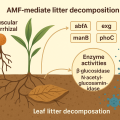
A new scientific review published in Archives of Microbiology provides an in-depth examination of how arbuscular mycorrhizal fungi (AMF) enhance plant resilience to salt stress by reprogramming endogenous phytohormones. Soil salinization remains a major global challenge, and the paper highlights urgent knowledge gaps and emerging pathways that could support sustainable agriculture in saline-alkali soils.
Salt Stress Disrupts Plant Physiology
The paper begins by outlining the severe damage caused by salt stress: osmotic imbalance, ROS generation, reduced photosynthesis, and ion toxicity. Plants typically respond using osmoregulation, selective ion compartmentalization, antioxidant systems, and hormonal adjustments.
How AMF Reprogram Plant Hormones
The review synthesizes how AMF alter classical and emerging phytohormones—including ABA, SA, JA, CTK, BR, SLs, AUX, and melatonin—to coordinate stress tolerance. These hormonal shifts regulate key processes such as:
Mycorrhizal symbiosis establishment:
Elevated ABA, SLs, BR, JA, and CTK enhance spore germination, hyphal branching, arbuscule formation, and root system architecture.
Water use efficiency and osmoregulation:
AMF increase ABA and BR levels, promoting stomatal closure, aquaporin regulation, glycinebetaine synthesis, and polyamine-associated membrane protection.
Antioxidant defense activation:
AMF improve enzymatic (SOD, CAT, APX, GR) and non-enzymatic systems (ASA, GSH, flavonoids) through ABA, SA, IAA, and IBA, reducing ROS damage.
Photosynthetic protection:
CTK-driven improvements in photochemical quenching, chlorophyll content, and thylakoid membrane stability help maintain photosynthesis under salinity.
Key Knowledge Gaps Identified
The authors emphasize that multi-hormonal crosstalk remains poorly understood. The paper highlights:
- Understudied hormones such as melatonin and peptide signals
- Context-dependent effects of ABA, SA–JA balance, SLs variability
- Threshold-dependent outcomes for hormones like CTK
- Limited understanding of hormone-regulated ionic homeostasis (Na⁺/K⁺, Ca²⁺/Mg²⁺)
Future Directions
The authors propose integrating multi-omics, characterizing emerging signaling molecules, and conducting field-scale AMF applications to support saline-soil agriculture.
Reference
Cao, Z., He, C., Li, J., Yang, K., Zhang, Y., Fan, X., Qi, D., Song, F., & Chang, W. (2025). Arbuscular mycorrhizal fungi enhance plant salt tolerance to salt stress using endogenous phytohormones. Archives of Microbiology, 207(12), 334. https://doi.org/10.1007/s00203-025-04538-2


Related posts:
 Scientists Develop First Dual Microbial Consortium to Enhance Iron and Zinc Uptake in Wheat
 Beneficial Bacillus Bacteria Boost Cotton Growth and Sustainability in Brazil
 Microbes That Clean Greywater Also Boost Crop Growth
 Native Fungus Beauveria bassiana Offers Dual Pest Control and Plant Growth Boost Against Cabbage Aphids
 How Wild Soybeans Use Microbes to Thrive in Salty Soils: Lessons from the Yellow River Delta