

A Microbial Strategy for Survival in Salty Soils
Salinity is one of the biggest threats to global agriculture, reducing soil fertility and crop yield. In the Yellow River Delta, where saline-alkali land dominates, wild soybeans (Glycine soja) have evolved an exceptional ability to tolerate salt.
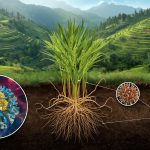
A 2025 study published in BMC Microbiology decodes how the rhizosphere microbiome—the community of bacteria around plant roots—plays a vital role in this resilience.
Inside the Rhizosphere: Microbes That Protect the Plant
Using high-throughput 16S rRNA sequencing, researchers compared bacterial communities in the rhizosphere and surrounding water under different salt levels (0, 100, 200, and 300 mmol/L NaCl).
The results were fascinating:
- Diversity Decline: As salinity increased, microbial diversity in both the rhizosphere and water decreased.
- Proteobacteria Dominance: This bacterial group—especially Pseudomonas and Acinetobacter—thrived even under extreme salt stress.
- Functional Allies: Pseudomonas, Shewanella, and Rhizobium were key players helping wild soybeans cope with high salt by improving nutrient uptake and antioxidant activity.
Microbial Resilience Mechanisms
The study found that certain microbes adapt through strategies like:
- Producing extracellular polysaccharides that shield roots from osmotic stress.
- Fixing nitrogen and producing plant hormones such as indole-3-acetic acid (IAA).
- Forming biofilms that create a protective microenvironment around the roots.
Such plant–microbe interactions form a biological shield, allowing wild soybeans to flourish where most crops fail.
Why This Research Matters
Understanding the rhizosphere–microbiome relationship offers real-world agricultural benefits:
- Crop Improvement: Harnessing salt-tolerant bacteria could aid in the development of stress-resistant soybean varieties.
- Sustainable Land Use: Turning saline-alkali lands into productive farmland.
- Biofertilizer Innovation: Formulating microbial inoculants based on naturally adaptive strains.
Reference
Liu, J., Ding, H., Li, W., Zhou, B., Zhao, L., Wang, J., & Shang, S. (2025). Differences in bacterial community composition and diversity in the rhizosphere and surrounding environment of wild soybean (Glycine soja) under different salt stress conditions. BMC Microbiology, 25(1), 648. https://doi.org/10.1186/s12866-025-04383-9


Related posts:
 Native Fungus Beauveria bassiana Offers Dual Pest Control and Plant Growth Boost Against Cabbage Aphids
 Maize Fights Back: How a Fungal Infection Recruits Friendly Bacteria for Natural Disease Resistance
 How Intercropping Persimmon with Apple Trees Fights Root Rot Through Microbiome Harmony
 Scientists Develop First Dual Microbial Consortium to Enhance Iron and Zinc Uptake in Wheat
 New Bacillus Consortium Offers Eco-Friendly Defense Against Devastating Apple Valsa Canker


