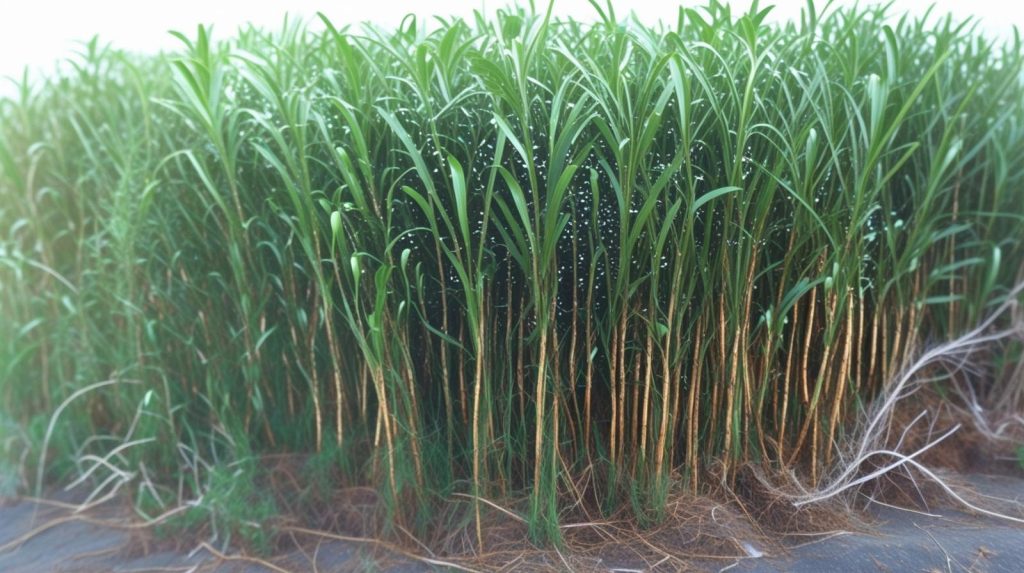

Soil fertility depletion is a growing concern for global agriculture, especially as climate change and intensive farming degrade soil health and reduce productivity. A groundbreaking study published in Biologia Futura has revealed that combining wastewater sludge compost (WSC) with arbuscular mycorrhizal fungi (AMF) significantly improves soil fertility, microbial enzymatic activity, and nutrient availability when cultivating giant reed (Arundo donax L.) on low-fertility soils.
Why Giant Reed and Soil Fertility Matter
Giant reed is a fast-growing energy crop used for bioenergy production and capable of thriving on nutrient-poor, contaminated soils. However, its productivity is often limited by poor soil fertility and heavy metal contamination.
The study explored whether low doses of wastewater sludge compost, rich in nitrogen (N), phosphorus (P), and potassium (K), combined with AMF inoculation could:
- Enhance nutrient availability
- Improve soil enzymatic activity
- Reduce heavy metal accumulation in plant roots and shoots
- Support microbial diversity for long-term soil health
Key Findings from the Study
- Soil Nutrient Enrichment
- WSC significantly increased phosphorus (P) and potassium (K) levels in soils and plant tissues, boosting nutrient uptake without harming plant growth.
- AMF inoculation further improved nutrient balance in roots and shoots.
- Enhanced Microbial Enzymatic Activity
- Soils inoculated with AMF—particularly Funneliformis geosporum (AMF2)—showed higher enzymatic activity, including dehydrogenase and phosphatase enzymes, key indicators of soil microbial health.
- Heavy Metal Mitigation
- WSC naturally contains small amounts of heavy metals such as Cu, Zn, and Mn.
- AMF treatments significantly reduced toxic metal accumulation in roots, decreasing potential environmental risks.
- Root–Soil Interaction
- Electrical capacitance tests showed greater root–soil contact area in WSC and AMF-treated plants, improving water and nutrient absorption capacity.
- Plant Growth Performance
- While biomass yield did not differ dramatically across treatments, leaf area and root enzymatic activity improved with AMF inoculation, suggesting better physiological resilience under nutrient-poor conditions.
Implications for Sustainable Agriculture
The study highlights several real-world applications:
- Low-fertility soils can be revitalized using organic waste compost rather than relying solely on synthetic fertilizers.
- Mycorrhizal inoculation offers an eco-friendly strategy to enhance microbial biodiversity and reduce heavy metal toxicity.
- Energy crops like giant reed can be cultivated sustainably on marginal lands, reducing competition with food crops for fertile soils.
Conclusion
By combining wastewater sludge compost with arbuscular mycorrhizal fungi, farmers and land managers can restore soil fertility, improve microbial health, and mitigate heavy metal risks—all while producing sustainable biomass crops like giant reed.
This synergistic approach opens new possibilities for climate-resilient agriculture, bioenergy production, and the sustainable use of marginal lands.
Reference
Rév, A., Parádi, I., Füzy, A. et al. Improvement of soil fertility and enzymatic activity by wastewater sludge compost and arbuscular mycorrhizal fungi in giant reed’s rhizosphere. BIOLOGIA FUTURA (2025). https://doi.org/10.1007/s42977-025-00286-y


Related posts:
 Mycorrhizal Fungi Boost Nitrogen Uptake in Rice by Reshaping Soil Microbial Networks
 Planting Nitrogen-Fixing Species Can Boost Soil Carbon and Fight Climate Change
 Antagonistic Effects of AMF and SOB in Soybean Rhizosphere: New Insights into Soil Microbial Interactions
 Sugarcane-Legume Intercropping Boosts Yield, Soil Health, and Sustainability with Less Nitrogen
 Straw vs. Biochar: How Organic Amendments Shape Soil Carbon and Microbial Life


