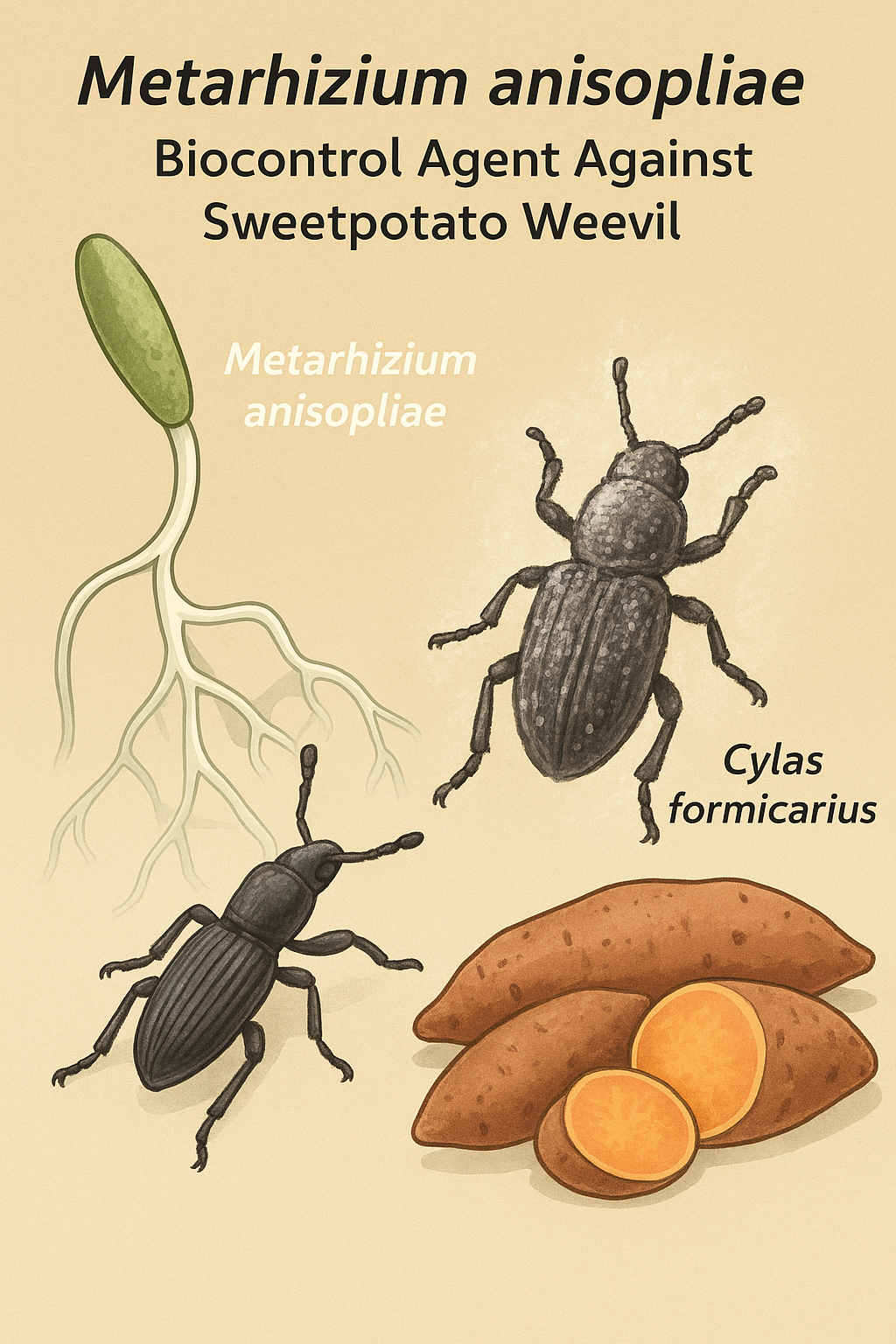

A new laboratory study has identified a native strain of Metarhizium anisopliae sensu lato (s.l.) as a highly potent biological control agent against the destructive sweetpotato weevil, Cylas formicarius. The research, conducted in Taiwan, isolated the fungal pathogen from naturally infected weevils and systematically evaluated its morphology, molecular identity, virulence, enzyme activity, and growth characteristics.
A serious pest with limited control options
The sweetpotato weevil is one of the most economically damaging pests of sweetpotato crops, attacking both field plants and stored tubers. Its cryptic, subterranean behavior significantly reduces the effectiveness of chemical insecticides.
A native fungal isolate with exceptional virulence
The newly identified M. anisopliae strain Pm04 demonstrated markedly higher pathogenicity than the widely used commercial strain ARSEF5369. At the highest concentration tested (1.2×10⁸ conidia/mL), Pm04 caused 96.67% mortality compared to 33.33% for ARSEF5369.
Dose–response analysis further confirmed the isolate’s potency. Pm04 exhibited low LC30 and LC50 values (2.15×10⁷ and 3.7×10⁷ conidia/mL), while the commercial strain failed to reach similar mortality thresholds even at the highest dose.
High enzyme activity may explain superior efficacy
The native strain produced significantly stronger chitinase and protease activity than the commercial strain, suggesting enhanced ability to penetrate the insect cuticle.
SEM reveals a complete infection process
Scanning electron microscopy confirmed the pathogen’s infection sequence—from conidial adhesion and germ tube formation to hyphal penetration and mycelial proliferation—culminating in complete host colonization and mummification.
Optimized growth conditions support mass production
The fungus showed optimal growth and sporulation at 25°C on SDA medium, providing favorable conditions for potential industrial-scale formulation.
Implications for sustainable pest management
The findings underscore the high potential of locally adapted Metarhizium isolates for integrated pest management (IPM) programs. With superior virulence, strong enzymatic activity, and reliable growth characteristics, strain Pm04 represents a promising candidate for developing an effective mycoinsecticide against the sweetpotato weevil.
Reference
Riaz, M., Chang, TY., Kafle, L. et al. Pathogenicity of the Entomopathogenic Fungus Metarhizium anisopliae s.l. (Ascomycota: Hypocreales) Against Sweetpotato Weevil (Cylas formicarius, Coleoptera: Brentidae) Under In Vitro Conditions. Neotrop Entomol 54, 116 (2025). https://doi.org/10.1007/s13744-025-01334-x


Related posts:
 Indian Scientists Identify Potent Metarhizium Fungi to Combat Fall Armyworm in Maize
 भारतीय वैज्ञानिकद्वारा फॉल आर्मीवर्म (Fall Armyworm) नियन्त्रणका लागि प्रभावकारी मेटाराइजियम राइली फङ्गस पहिचान
 Native Fungus Beauveria bassiana Offers Dual Pest Control and Plant Growth Boost Against Cabbage Aphids
 Fungal Enzymes Offer a Sustainable Breakthrough Against Mulberry Mealybugs
 Eco-Friendly Fungal Biopesticide Offers Sustainable Control for Mango Leaf Hoppers