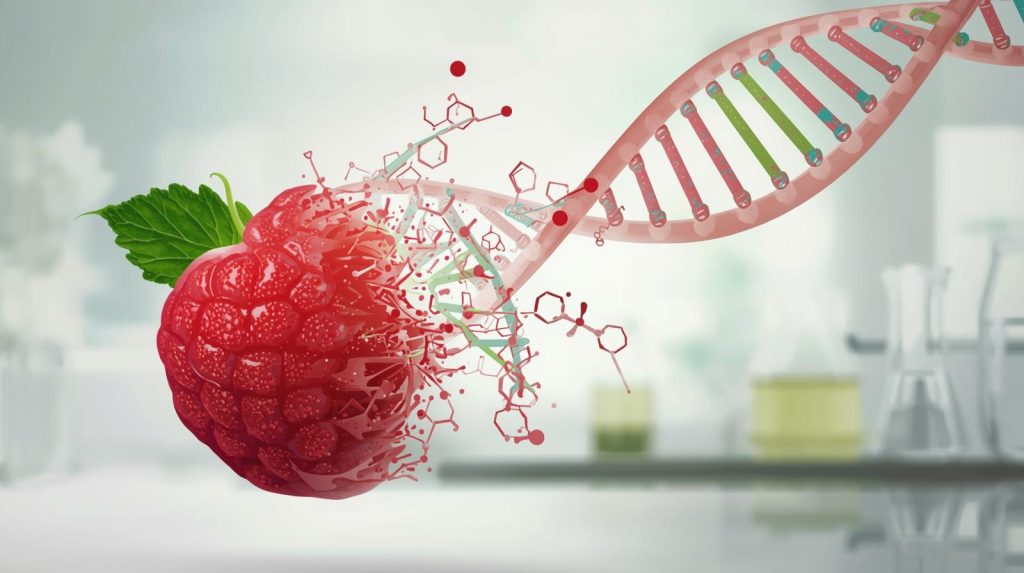

Editing Raspberries Without Leaving a Genetic Trace
Raspberries aren’t just a summer favorite — they’re also a nutritionally rich berry crop valued worldwide. But like many fruits, raspberries face challenges from pests, diseases, and climate change. Improving them through conventional breeding can take years, and genetic engineering often raises regulatory and consumer concerns.
Now, researchers have demonstrated a powerful alternative: DNA-free CRISPR genome editing in raspberry (Rubus idaeus) protoplasts, opening the door to faster and safer crop innovation.
How the Method Works
Instead of delivering DNA constructs that linger in the plant genome, the team used CRISPR ribonucleoproteins (RNPs) — pre-assembled complexes of the Cas9 protein and guide RNA. These were introduced into raspberry protoplasts (plant cells with their walls removed) via PEG-mediated transfection.
This approach enables precise, transient genome editing without leaving behind foreign DNA sequences. In essence, the CRISPR “scissors” do their job and then degrade, leaving only the desired edit.
Key Findings
- High efficiency: Targeted mutagenesis was confirmed at selected genomic loci.
- DNA-free system: No integration of transgenic DNA, making the edits “cleaner.”
- Regulatory advantage: Edited plants may avoid GMO classification in some countries, easing commercialization.
- Versatility: The method provides a platform for functional genomics in raspberry and potentially other fruit crops.
Why This Matters
For raspberry growers and consumers, this breakthrough has big implications:
- Improved traits: Faster development of varieties resistant to fungal diseases, pests, and environmental stress.
- Nutritional boost: Potential to enhance flavor, antioxidants, or shelf life without GMO stigma.
- Sustainable farming: Reduced reliance on chemical pesticides through naturally resistant cultivars.
As agriculture faces mounting pressure to deliver more resilient crops, DNA-free CRISPR offers a pathway to innovation that is both precise and publicly acceptable.
Conclusion
This study represents the first report of DNA-free CRISPR genome editing in raspberry, proving that delicate fruits can benefit from cutting-edge biotechnologies without triggering GMO debates. With further refinement, this platform could reshape the future of berry breeding — giving us tastier, healthier, and more sustainable raspberries.
Reference
Creeth, R., Thompson, A., & Kevei, Z. (2025). DNA-free CRISPR genome editing in raspberry (Rubus idaeus) protoplast through RNP-mediated transfection. Frontiers in Genome Editing, 7, 1589431. https://doi.org/10.3389/fgeed.2025.1589431
Related Articles


Related posts:
 Gene Gun Gets a Major Upgrade: Flow Guiding Barrel Boosts Plant Genome Editing Efficiency
 Unlocking Nature’s Toolkit: How Plants Use Hormones to Build Organs for Symbiosis and Survival
 CluSeek: A New Tool for Efficient and Scalable Clustering of Large-Scale Genomic Data
 Gene Discovery Revolution: EMS Mutagenesis and Multi-Omics Accelerate Wheat Rust Resistance Breeding
 Engineering Plant Immunity: Unlocking NLR Receptors for Disease-Resistant Crops