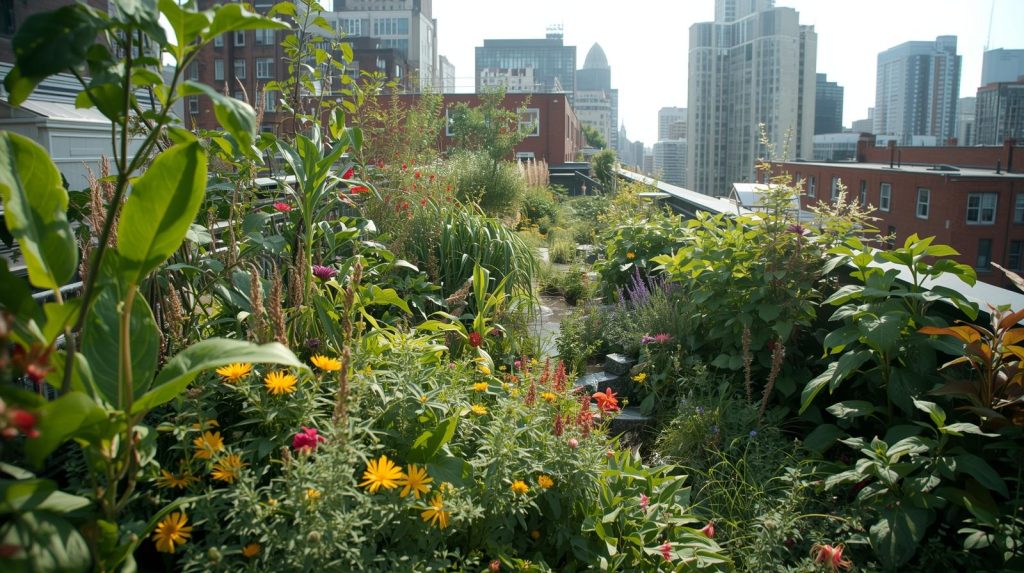

Urban Farming: A Green Revolution in the Concrete Jungle
Cities around the world are facing the dual challenges of feeding growing populations and preserving biodiversity. A groundbreaking study reveals how urban agriculture—from rooftop gardens to vertical farms—can do more than just provide fresh produce. It can also create biodiversity conservation environments, turning concrete jungles into ecological sanctuaries.
Key Findings: Urban Farms as Biodiversity Hotspots
The research highlights that urban agriculture:
- Enhances pollinator habitats by integrating flowering plants and green corridors
- Supports soil microbes and beneficial insects crucial for ecosystem balance
- Provides refuge for birds, butterflies, and small mammals, boosting urban wildlife diversity
By mimicking natural ecosystems, urban farms act as living laboratories where food production and biodiversity conservation coexist.
Benefits Beyond Food Production
Urban agriculture reduces the ecological footprint of cities by:
- Lowering food transportation emissions
- Improving air quality and microclimates
- Increasing community engagement in sustainable practices
The Future of Urban Farming
As cities expand, policy support, green infrastructure planning, and citizen participation will be key to scaling up urban agriculture as a tool for biodiversity conservation and climate resilience.
Conclusion
Urban agriculture isn’t just about growing food—it’s about growing ecosystems. By blending food production with ecological design, cities can become hubs of biodiversity, sustainability, and resilience.
Reference
Pires, M. J. F. C. dos S., Ribeiro, S. A., Ferreira, L. de S., Antunes, L. F. de S., Uzeda, M. C., & Correia, M. E. F. (2025). Urban agriculture as a biodiversity conservation environment for edaphic fauna in the West Zone of the municipality of Rio de Janeiro, Brazil. Environmental Monitoring and Assessment, 197(10), 1154. https://doi.org/10.1007/s10661-025-14619-w


Related posts:
 Trehalose: The Sugar Shield Boosting Cold Tolerance in Beneficial Insects
 Boosting Bt-Cotton Yields with Climate-Smart Cyanobacterium-Based Biofilms
 Foliar Selenium Boost: Enhancing Conilon Coffee Yield Under ENSO Stress
 Wastewater Sludge Compost and Mycorrhizal Fungi Boost Soil Fertility and Microbial Activity in Giant Reed
 Temporal Dynamics of Microbial Communities: How Microbes Adapt to Changing Environments


