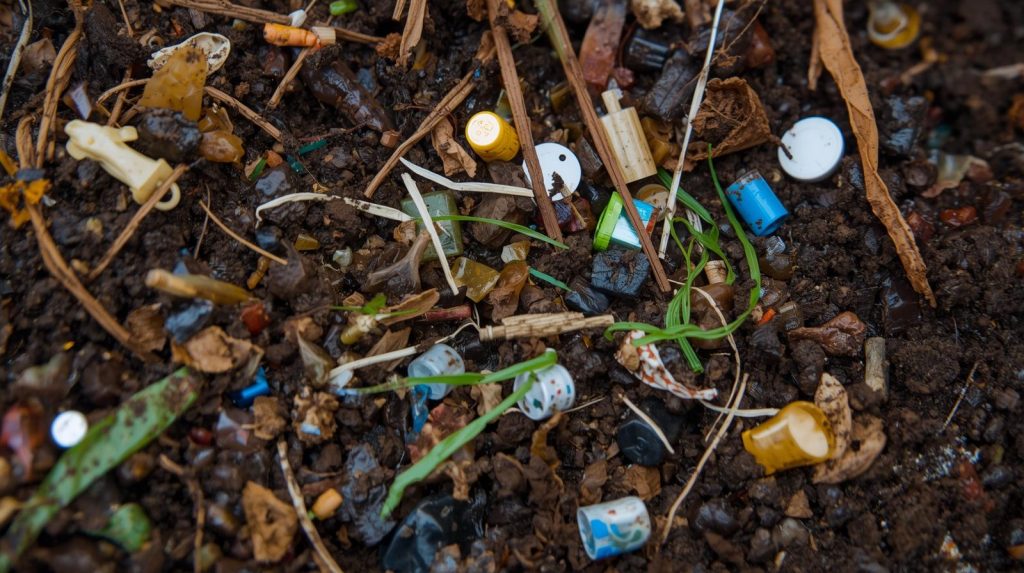

Microplastics have become a rising environmental concern, infiltrating not only oceans but also agricultural soils. Their interactions with nanofertilizers like zinc oxide nanoparticles (ZnO NPs) raise questions about long-term soil fertility and food safety. A recent study explored how biodegradable polylactide (PLA) and conventional polyethylene (PE) microplastics interact with ZnO NPs in soil, using mung bean plants as a model system.
Why This Study Matters
Agriculture relies heavily on plastic mulch films and nanofertilizers to enhance yields. However, these innovations bring unintended consequences:
- Microplastics alter soil properties and microbial communities.
- Nanoparticles, while improving nutrient availability, can accumulate and affect plant health.
- The combination of both may lead to complex interactions with unknown risks.
This research bridges the knowledge gap by examining plant growth, soil nutrients, microbial diversity, and Zn uptake under different microplastic and nanoparticle exposures.
Key Findings at a Glance
- Plant Growth Impact:
- ZnO NPs alone reduced root and shoot dry weights.
- Microplastics mitigated some negative effects, especially PE, which improved soil carbon content.
- Soil Health Changes:
- PE enriched carbon-fixing microbes, while PLA promoted carbon degradation and nitrogen-cycle disturbances.
- High-dose PLA plus ZnO NPs caused more oxidative stress and nutrient loss than PE.
- Microbial Community Shifts:
- ZnO NPs and microplastics altered soil bacterial composition significantly.
- Xanthomonadaceae bacteria played a key role in zinc uptake but can also be plant pathogens.
- Zinc Uptake Dynamics:
- Microplastics increased zinc absorption in roots but reduced its transfer to leaves and grains.
- PLA bound zinc more strongly due to its rougher surface compared to PE.
Environmental Implications
The findings highlight the double-edged nature of biodegradable plastics: while eco-friendly in theory, PLA with ZnO NPs caused greater oxidative stress in plants and nutrient imbalances in soil compared to conventional PE. This calls for careful regulation of plastic mulch films and nanofertilizer use in agriculture.
Future Outlook
More research is needed to:
- Explore long-term soil fertility impacts.
- Develop safer biodegradable plastics with minimal ecological risks.
- Optimize nanofertilizer application to balance productivity and sustainability.
Reference
Li, W., Gong, Y., Guo, J., Wang, J., Lv, Z., Liu, J., Siddique, K. H. M., & Mao, H. (2025). Effects of biodegradable and conventional microplastics on soil-mung bean system under ZnO nanoparticle stress. Plant and Soil. https://doi.org/10.1007/s11104-025-07883-9


Related posts:
 Sugarcane-Legume Intercropping Boosts Yield, Soil Health, and Sustainability with Less Nitrogen
 Boosting Bt-Cotton Yields with Climate-Smart Cyanobacterium-Based Biofilms
 Harnessing the Rhizosphere Microbiome: New Insights into Combating Konjac Soft Rot
 Zinc Oxide Nanoparticles and Salicylic Acid Team Up to Boost Tomato Drought Tolerance
 Beneficial Bacillus Bacteria Boost Cotton Growth and Sustainability in Brazil


