
Breaking Down the Biofilm Barrier: AHPP’s Potential Against Deadly Superbugs
The rise of multidrug-resistant (MDR) pathogens like Klebsiella pneumoniae and Acinetobacter baumannii—major players in the notorious ESKAPE group—has pushed modern medicine to a breaking point. These superbugs form stubborn biofilms that protect them from antibiotics and the immune system, leading to persistent and often deadly infections, especially in hospital settings.
A new study introduces 1-acetyl-4-(hydroxylphenyl) piperazine (AHPP) as a potential game-changer in this fight.
Why Biofilms Are a Big Deal
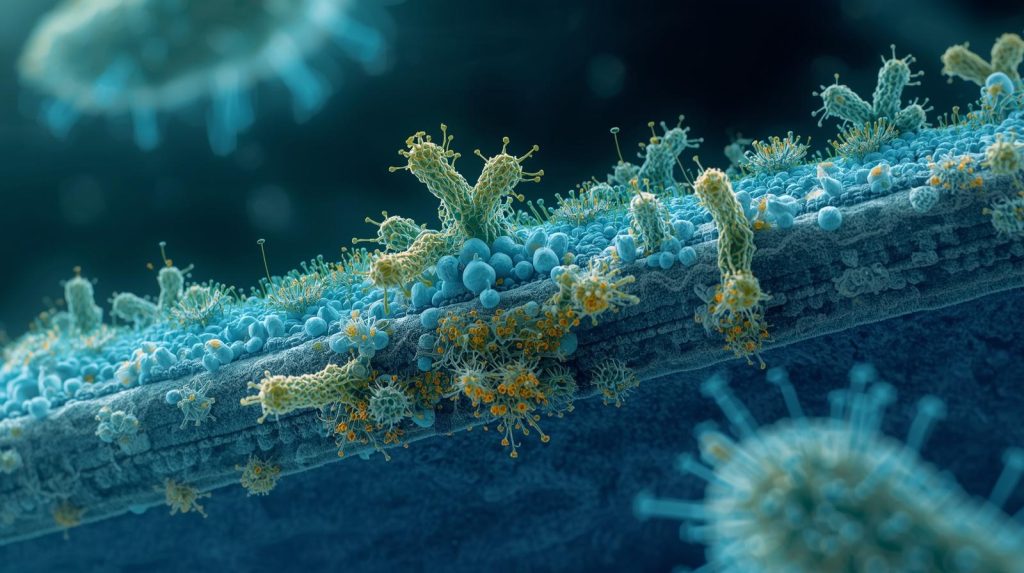
Biofilms are like armored fortresses for bacteria. Once formed, they make infections extremely tough to treat, often requiring higher antibiotic doses or even last-resort drugs like colistin. With resistance rates soaring—A. baumannii at up to 87.5% in some regions—the need for alternative solutions is urgent.
What the Study Found
Researchers tested AHPP against clinical isolates of MDR K. pneumoniae, A. baumannii, and MRSA.
Key findings include:
- Minimum Inhibitory Concentration (MIC): AHPP stopped bacterial growth at just 1 mg/ml for K. pneumoniae and A. baumannii and 0.5 mg/ml for MRSA.
- Biofilm Inhibition: At double the MIC, AHPP reduced biofilm formation by over 30%, confirmed via Confocal Laser Scanning Microscopy (CLSM).
- Molecular Docking: AHPP binds strongly to biofilm-associated proteins like YcgR and BlrP1 in K. pneumoniae and BfmR in A. baumannii, disrupting key biofilm signaling pathways.
- Safety Profile: AHPP showed over 90% cell viability in mammalian cells, indicating low toxicity.
Why This Matters for Medicine
The dual action of AHPP—antimicrobial plus anti-biofilm—could revolutionize infection control, especially in:
- Ventilator-Associated Pneumonia (VAP): A leading cause of ICU deaths due to biofilm-coated endotracheal tubes.
- Medical Device Infections: Biofilm prevention on catheters, implants, and surgical equipment could save thousands of lives.
The Road Ahead
Researchers suggest integrating AHPP into:
- Nano-formulations for targeted delivery,
- Antimicrobial coatings for medical devices, and
- Combination therapies with existing antibiotics.
The next steps include animal model testing and clinical trials to evaluate real-world efficacy.
Conclusion
With antibiotic resistance threatening to cause 10 million deaths annually by 2050, molecules like AHPP offer hope. By targeting both bacteria and their biofilm shields, AHPP could become a cornerstone in the battle against MDR pathogens.
Reference
Rao, P., Aswathanarayan, J. B., Rao, M. V. S. S. T. S., Rai, V. R., & Sowmya, G. S. (2025). 1-acetyl-4-(hydroxylphenyl) piperazine inhibits biofilm formation in ESKAPE pathogens Klebsiella pneumoniae and Acinetobacter baumannii. Discover Bacteria, 2(1), 22. https://doi.org/10.1007/s44351-025-00026-6


Related posts:
 WHO Releases Updated 2024 Bacterial Priority Pathogens List to Tackle Global Antimicrobial Resistance
 Harnessing Serratia marcescens: Natural Biosurfactants for Combating Superbugs and Fungal Threats
 Endophytic Bacillus cereus AL1 Shows Promise Against Superbug Pseudomonas via Quorum Quenching
 Fermented Food-Derived Lactic Acid Bacteria Reduce Virulence of Enterococcus faecalis: A Natural Antimicrobial Strategy
 Halotolerant Pseudomonas Strain Shows Breakthrough Potential for p-Nitrophenol Bioremediation in Aquatic Environments