1. Introduction: The “Winter Worm, Summer Grass”
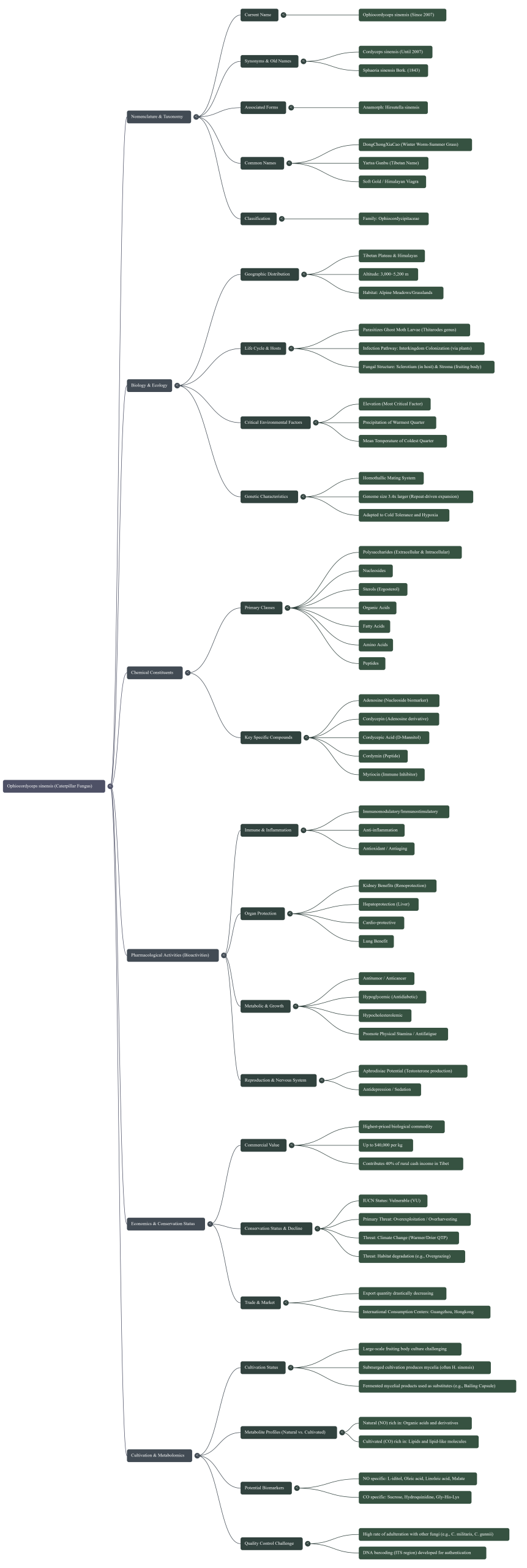
Imagine an organism that is neither animal nor plant, but a bizarre fusion of both kingdoms: the ghost of a caterpillar, perfectly preserved, from whose head erupts the fruiting stalk of the fungus that consumed it from within. This is the paradox of Ophiocordyceps sinensis, known in Chinese as DongChongXiaCao and in Tibetan as yartsa gunbu—both names translating to “winter worm, summer grass”. For centuries, it has been a cornerstone of traditional medicine, a revered tonic believed to restore health and vitality. But in the modern era, this natural wonder has become something else: “soft gold,” one of the world’s most valuable biological commodities, igniting a gold rush across the Himalayas. This article tells the story of that collision—a clash between a unique biological marvel, ancient tradition, and a voracious global market that threatens to destroy the very treasure it so highly values.
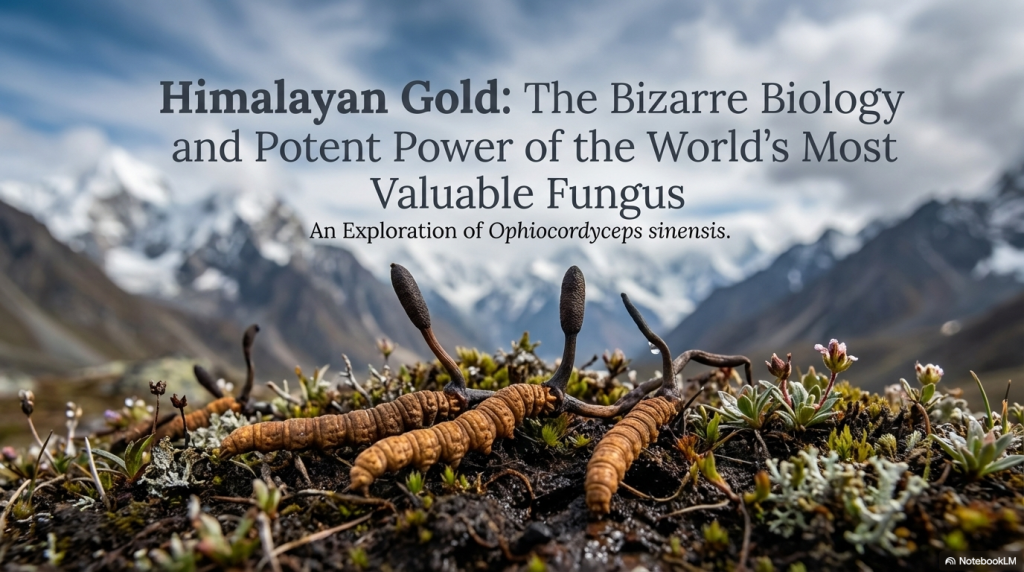
Now that we’ve introduced this strange and valuable organism, let’s explore exactly what it is.
2. A Fungus-Insect Hybrid
At its core, the caterpillar fungus is a fascinating example of a parasitic relationship pushed to its extreme, resulting in a single composite body.
2.1. Defining the Organism
Ophiocordyceps sinensis is an entomopathogenic fungus, which means it is a parasite that specifically infects insects. The final product that is harvested and sold is a combination of two distinct parts:
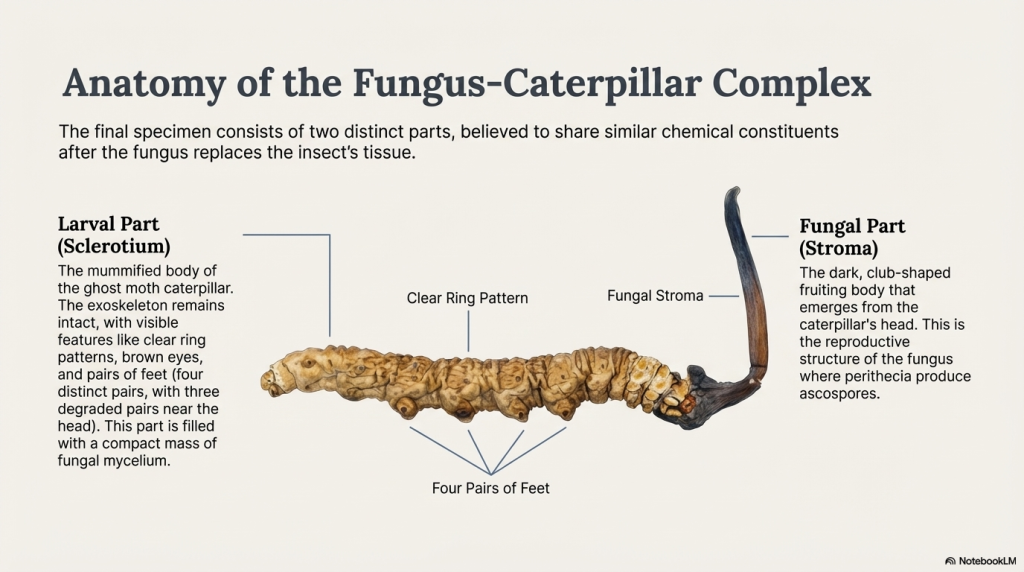
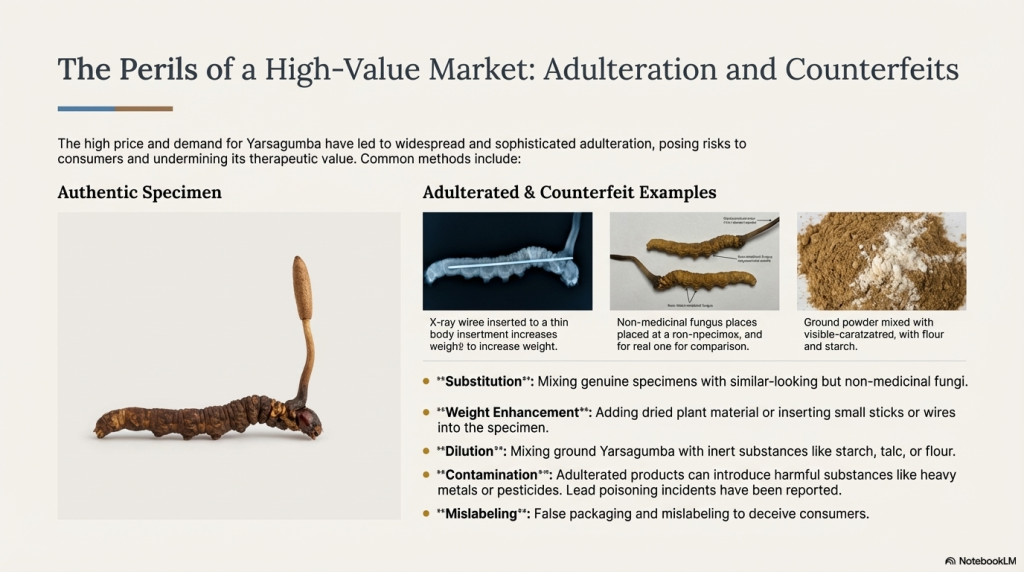
• The Sclerotium: This is the mummified body of a ghost moth larva (Thitarodes spp.). During the winter, the fungus completely consumes the caterpillar’s internal organs, filling the exoskeleton with its own hardened mycelia. This fungus-filled caterpillar body serves as a nutrient store.
• The Stroma: This is the dark, club-shaped fruiting body of the fungus. It is the reproductive part that grows upward from the head of the dead caterpillar, emerging just a few centimeters above the ground.
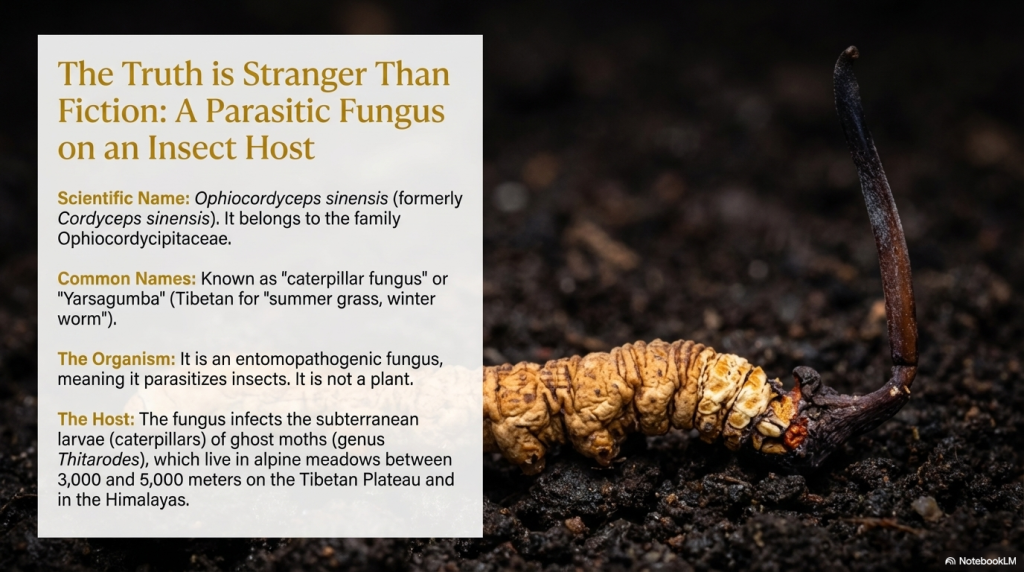
These two components—the consumed insect and the emergent fungus—form a single, inseparable organism.
2.2. A Fungus of Many Names
Reflecting its wide geographic range and cultural significance, the caterpillar fungus is known by many names across different languages and regions.
| Language/Region | Name | Literal Meaning |
| Scientific | Ophiocordyceps sinensis (formerly Cordyceps sinensis) | sinensis means “from China” |
| Tibetan | yartsa gunbu (དབྱར་རྩྭ་དགུན་འབུ་) | Summer grass, winter worm |
| Chinese | DongChongXiaCao (冬蟲夏草) | Winter worm, summer grass |
| Nepali | Yarsagumba (यार्सागुम्बा) | Transliteration of the Tibetan name |
| Indian | Keera jhar | Insect herb |
| English | Caterpillar fungus | A descriptive name |
Understanding its identity leads to the most fascinating question: how does this bizarre organism come to be?
3. The Astonishing Life Cycle
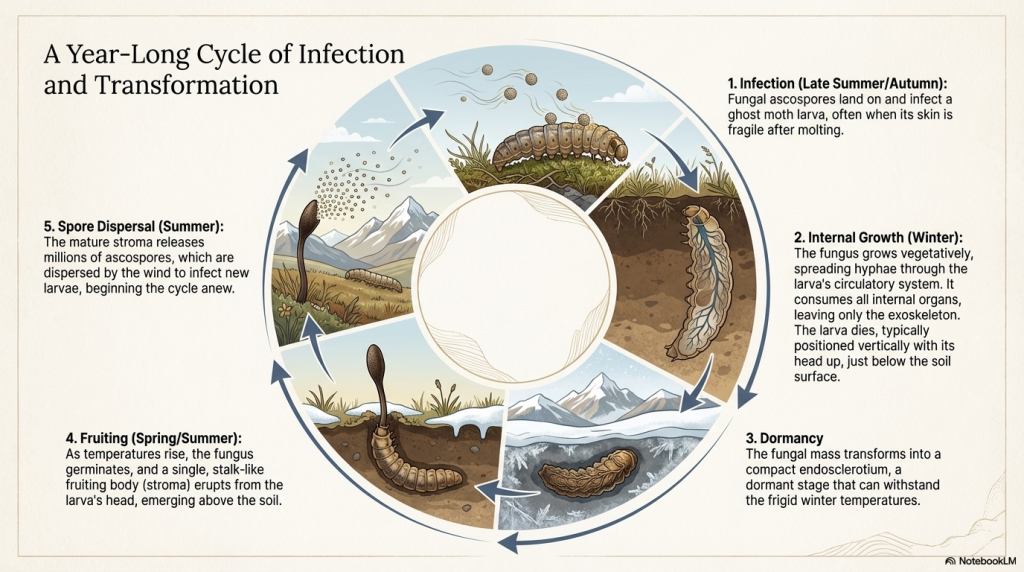
The creation of the caterpillar fungus is a testament to nature’s intricate and sometimes brutal processes. Its life cycle, which typically takes one year to complete, is a precisely timed parasitic takeover.
3.1. The Parasitic Takeover
1. Infection: In late summer and autumn, the mature fungus releases its spores. These spores land on the alpine soil and infect the larvae of ghost moths, which live underground feeding on plant roots. The infection often occurs when the larva is most vulnerable, such as after shedding its skin.
2. Mummification: Over the winter, the fungal mycelia hijack the larva’s body. The fungus methodically devours its host from the inside out, consuming the internal organs and leaving only the exoskeleton intact. Before it dies, the infected larva instinctively burrows further into the soil and positions itself vertically, a behavior that ensures the fungus will later grow straight up toward the surface. The larva’s body becomes a hardened, fungus-filled mass known as an endosclerotium. This is the “winter worm” stage.
3. Fruiting: As temperatures rise in the spring and early summer, the fungus enters its reproductive phase. A dark, stalk-like fruiting body (the stroma) erupts from the head of the dead caterpillar, pushing its way up through the soil to emerge above ground. This visible part is the “summer grass.”
4. Spore Release: By summer, the stroma is fully mature and releases a new generation of ascospores into the environment. These spores are carried by wind and water, ready to infect new ghost moth larvae and begin the cycle anew.
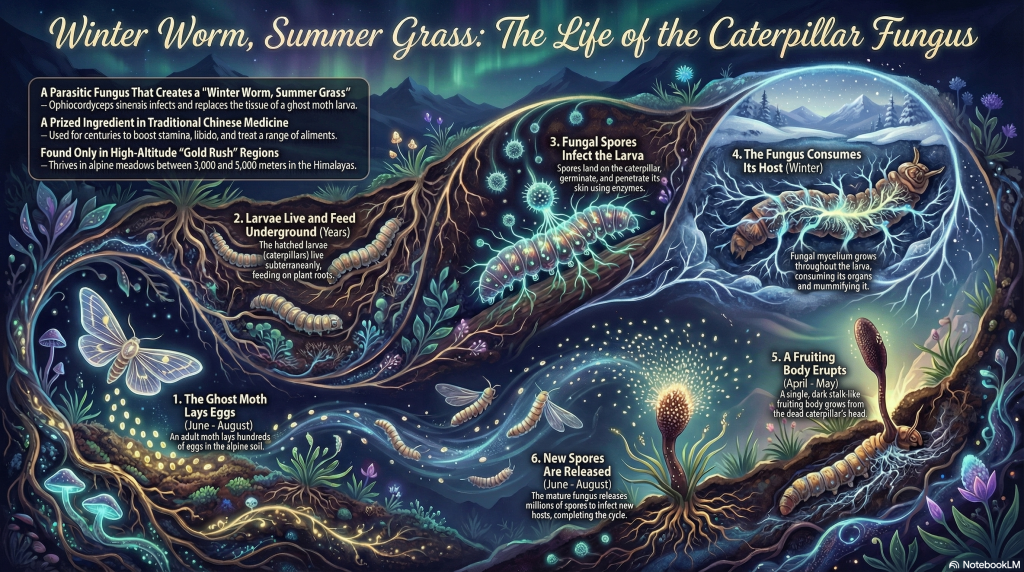
3.2. A New Twist: An Alliance with Plants
Recent scientific research has added a surprising layer to this life cycle. Studies have shown that Ophiocordyceps sinensis can also live inside the tissues of local alpine plants as an endophyte—a fungus that lives within a plant without causing apparent disease. This phenomenon, known as “inter-kingdom colonization,” has led to a new hypothesis: ghost moth larvae may become infected not only by spores in the soil but also by feeding on the roots and leaves of these host plants. This discovery suggests a more complex ecological relationship between the fungus, its insect host, and the surrounding plant life.
This incredible life cycle can only unfold in one of the world’s most extreme environments.
4. Home on the Roof of the World
The caterpillar fungus is not a generalist; it is a highly specialized organism adapted to one of the harshest environments on Earth.
4.1. An Alpine Specialist
Ophiocordyceps sinensis is endemic to the alpine meadows and shrublands of the Tibetan Plateau and surrounding Himalayan regions. Its native habitat spans parts of China (Tibet, Qinghai, Sichuan, Gansu, and Yunnan provinces), Nepal, Bhutan, and India. It thrives at extreme altitudes, typically found between 3,000 and 5,200 meters, with the most productive habitats often concentrated around 4,000 meters.
4.2. The Perfect Conditions
Scientific modeling of its habitat has revealed that the distribution of the caterpillar fungus is determined by a precise combination of environmental factors. The three most critical conditions are:
• Elevation: This is the single most important factor. The fungus is strictly confined to high-altitude regions, which provide the cold, low-oxygen conditions it requires.
• Summer Precipitation: The fungus needs a humid environment to thrive. The amount of rainfall during the warmest quarter of the year is a key determinant of where it can grow.
• Winter Temperature: The organism is adapted to survive frigid winters. The mean temperature of the coldest quarter significantly influences its habitat suitability.
Its growth in such a remote and challenging environment has contributed to its mystique and value in traditional medicine.
5. A Treasure of Traditional Medicine
Long before it became a global commodity, Ophiocordyceps sinensis was a cornerstone of traditional healing systems in Asia.
5.1. Centuries of Use
For over 700 years, the caterpillar fungus has been a well-described remedy in both Traditional Chinese Medicine and Tibetan medicine. It has traditionally been used as a powerful tonic for a wide range of ailments, most notably:
• Boosting the immune system
• Increasing stamina, endurance, and physical performance
• Treating respiratory, kidney, and liver diseases
• Acting as an aphrodisiac, earning it the modern nickname “Himalayan Viagra.”
5.2. The Source of Its Power: Key Bioactive Compounds
Modern research has sought to identify the chemical components responsible for the fungus’s purported medicinal properties. While scientists have identified dozens of bioactive compounds, three classes are thought to be the primary drivers of its medicinal effects.

• Polysaccharides: These complex carbohydrates are believed to be responsible for the fungus’s immunomodulatory (immune system-regulating) and antioxidant effects.
• Nucleosides (including Adenosine and Cordycepin): This class of compounds is widely studied for potential anti-inflammatory, anti-tumor, and energy-transferring properties. However, the presence of its most famous nucleoside, cordycepin, is a subject of scientific debate. Some studies find only low or undetectable amounts in wild O. sinensis, suggesting cordycepin is primarily a component of its more easily cultivated relative, Cordyceps militaris. This scientific puzzle has significant implications for the authenticity and claims of commercial products.
• Cordycepic Acid (D-mannitol): This compound is considered one of the main active medicinal components. The name “Cordycepic Acid” is an older term that scientists soon identified as D-mannitol, a type of sugar alcohol. While the original name persists in some literature, modern researchers consider it improper.
The high demand for these medicinal benefits has created an intense “gold rush,” bringing both wealth and significant problems to the Himalayan region.

6. The “Gold Rush” and Its Consequences
The soaring global demand for caterpillar fungus has transformed it from a local remedy into a multi-million dollar industry, creating profound economic and ecological challenges.
6.1. The Price of a Parasite
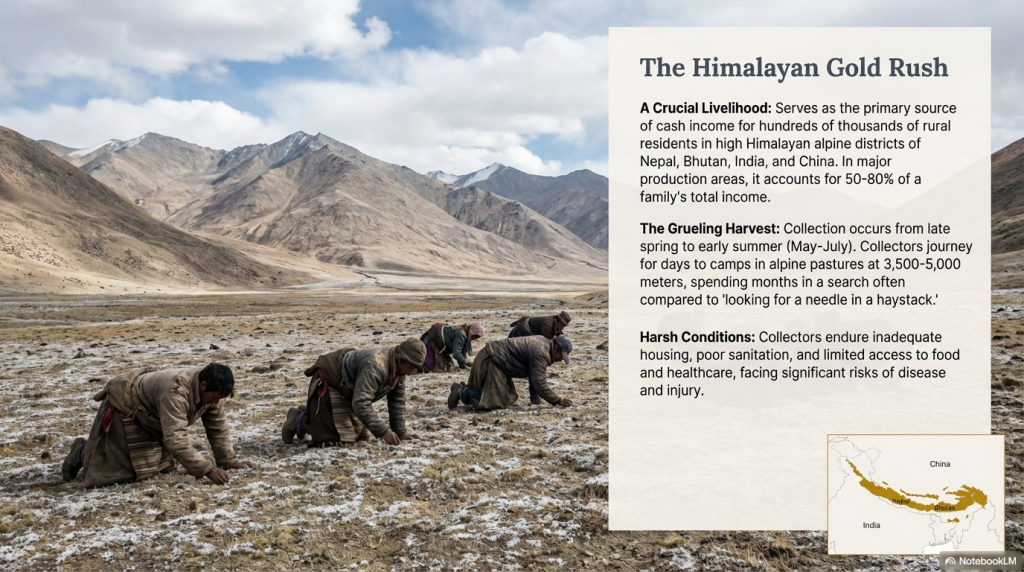
The economic value of Ophiocordyceps sinensis is immense. High-quality specimens can fetch USD $20,000 to $40,000 per kilogram on the international market, a price that can surpass that of gold. For many rural mountain communities in Tibet and the Himalayas, this has become a critical, if not primary, source of income. During the brief harvest season, entire villages empty out as families move to temporary camps high in the alpine meadows, where it is estimated that collecting the fungus can account for 40% of a family’s annual cash income.
6.2. An Endangered Treasure
This intense economic pressure has placed the species in jeopardy. For weeks, harvesters crawl on their hands and knees across the fragile meadows, a scene that has become increasingly desperate. An elderly man may lament that decades ago they could find “hundreds of pieces a day,” while today many people come back empty-handed. This “gold rush” has created a number of severe threats:
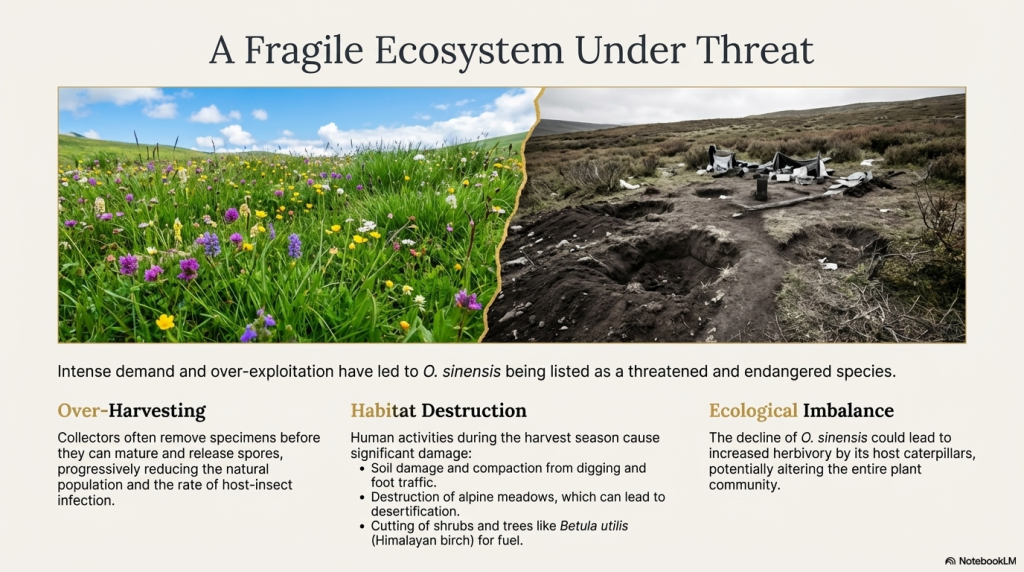
• Overharvesting: The relentless and unsustainable collection to meet global market demand is the primary threat. With more collectors searching for a dwindling resource, production in key regions has declined sharply.
• Climate Change: The Tibetan Plateau is warming faster than the global average, threatening the precise balance of cold winters and wet summers that the fungus needs to complete its life cycle. This warming trend is projected to shrink its already limited habitat, pushing it to ever-higher elevations.
• Habitat Degradation: The annual influx of harvesters damages the fragile alpine ecosystem. Overgrazing from their livestock degrades the vegetation, while piles of waste—including plastic packaging and beer cans—litter the riverbanks of these remote meadows.
• Conservation Status: Due to the combined weight of these threats, Ophiocordyceps sinensis has been officially listed as a Vulnerable species on the IUCN Red List of Threatened Species.
This collision of unique biology, traditional medicine, and modern economics makes the future of the caterpillar fungus uncertain.
7. Conclusion: A Fragile Future
The caterpillar fungus, Ophiocordyceps sinensis, is a true natural wonder—a bizarre parasite with an astonishing life cycle, born from the harsh alpine meadows of the Himalayas. For centuries, it has been a revered medicinal treasure, and in recent decades, an economic lifeline for thousands in one of the world’s most remote regions. However, this “soft gold” faces a precarious future. The pressures of a voracious global market have led to rampant overharvesting, while climate change threatens to erase its high-altitude home. The story of the caterpillar fungus is a powerful reminder of the delicate balance that must be struck between human need and ecological preservation to ensure that such extraordinary natural wonders can endure.
Reference
Baral, B. (2017). Entomopathogenicity and biological attributes of himalayan treasured fungus Ophiocordyceps sinensis (Yarsagumba). In Journal of Fungi (Vol. 3, Issue 1). MDPI AG. https://doi.org/10.3390/jof3010004
Chellapandi, P., & Saranya, S. (2023). Ophiocordyceps sinensis: A Potential Caterpillar Fungus for the Production of Bioactive Compounds . Exploratory Research and Hypothesis in Medicine, 000(000), 000–000. https://doi.org/10.14218/erhm.2023.00040
Devkota, S. (2009). The frequency and relationship of flowering plants on the distribution pattern of Ophiocordyceps sinensis (Yarchagunbu) in the highlands of Dolpa district, Nepal. Banko Janakari, 19(1).
Lei, W., Zhang, G., Peng, Q., & Liu, X. (2015). Development of Ophiocordyceps sinensis through plant-mediated interkingdom host colonization. International Journal of Molecular Sciences, 16(8), 17482–17493. https://doi.org/10.3390/ijms160817482
Liang, S. (n.d.). Missing Pieces in the story of a caterpillar fungus – Ophiocordyceps sinensis. Mycolens, 9.
Liu, Y., Wang, X. Y., Gao, Z. T., Han, J. P., & Xiang, L. (2017). Detection of Ophiocordyceps sinensis and its common adulterates using species-specific primers. Frontiers in Microbiology, 8(JUN). https://doi.org/10.3389/fmicb.2017.01179
Lo, H.-C., Hsieh, C., Lin, F.-Y., & Hsu, T.-H. (2013). A Systematic Review of the Mysterious Caterpillar Fungus Ophiocordyceps sinensis in DongChongXiaCao (冬蟲夏草 Dōng Chóng Xià Cǎo) and Related Bioactive Ingredients. In Journal of Traditional and Complementary Medicine (Vol. 1, Issue 1). https://doi.org/10.1016/S2225-4110(16)30164-X
Pouliot, M., Pyakurel, D., & Smith-Hall, C. (2018). High altitude organic gold: The production network for Ophiocordyceps sinensis from far-western Nepal. Journal of Ethnopharmacology, 218, 59–68. https://doi.org/10.1016/j.jep.2018.02.028
Sen, S., Karati, D., Priyadarshini, R., Dua, T. K., Paul, P., Sahu, R., & Nandi, G. (2023). Cordyceps sinensis (yarsagumba): Pharmacological properties of a mushroom. In Pharmacological Research – Modern Chinese Medicine (Vol. 8). Elsevier B.V. https://doi.org/10.1016/j.prmcm.2023.100294
Shrestha, B., Zhang, W., Zhang, Y., & Liu, X. (2010). What is the Chinese caterpillar fungus Ophiocordyceps sinensis (Ophiocordycipitaceae)? In Mycology (Vol. 1, Issue 4, pp. 228–236). https://doi.org/10.1080/21501203.2010.536791
Shrestha, S., Shrestha, A. K., Park, J. H., Lee, D. Y., Cho, J. G., Shrestha, B., & Baek, N. I. (2013). Review on Pharmacologically Active Metabolites from Yarsagumba (Ophiocordyceps sinensis), an Epitome of Himalayan Elixir. In Nepal Journal of Science and Technology (Vol. 14, Issue 2).
Sigdel, S. R., Rokaya, M. B., Münzbergová, Z., & Liang, E. (2017). Habitat Ecology of Ophiocordyceps sinensis in Western Nepal. Mountain Research and Development, 37(2), 216–223. https://doi.org/10.1659/MRD-JOURNAL-D-16-00075.1
Singh, R., Negi, P. S., & Dwivedi, S. K. (2018). Ophiocordyceps sinensis: The medicinal caterpillar mushroom. In New Age Herbals: Resource, Quality and Pharmacognosy (pp. 115–133). Springer Singapore. https://doi.org/10.1007/978-981-10-8291-7_6
Wang, T., Tang, C., Xiao, M., Cao, Z., He, H., He, M., Li, Y., & Li, X. (2024). Analysis of metabolic spectrum characteristics of naturally and cultivated Ophiocordyceps sinensis based on non-targeted metabolomics. Scientific Reports, 14(1). https://doi.org/10.1038/s41598-024-68306-w
Wang, X. L., & Yao, Y. J. (2011). Host insect species of ophiocordyceps sinensis: A review. ZooKeys, 127, 43–59. https://doi.org/10.3897/zookeys.127.802
Wei, Y., Zhang, L., Wang, J., Wang, W., Niyati, N., Guo, Y., & Wang, X. (2021). Chinese caterpillar fungus (Ophiocordyceps sinensis) in China: Current distribution, trading, and futures under climate change and overexploitation. Science of the Total Environment, 755. https://doi.org/10.1016/j.scitotenv.2020.142548
Xia, E. H., Yang, D. R., Jiang, J. J., Zhang, Q. J., Liu, Y., Liu, Y. L., Zhang, Y., Zhang, H. Bin, Shi, C., Tong, Y., Kim, C., Chen, H., Peng, Y. Q., Yu, Y., Zhang, W., Eichler, E. E., & Gao, L. Z. (2017). The caterpillar fungus, Ophiocordyceps sinensis, genome provides insights into highland adaptation of fungal pathogenicity. Scientific Reports, 7(1). https://doi.org/10.1038/s41598-017-01869-z
Xu, J., Huang, Y., Chen, X. X., Zheng, S. C., Chen, P., & Mo, M. H. (2016). The Mechanisms of Pharmacological Activities of Ophiocordyceps sinensis Fungi. In Phytotherapy Research (pp. 1572–1583). John Wiley and Sons Ltd. https://doi.org/10.1002/ptr.5673
Yang, Z.-L. (2020). Ophiocordyceps sinensis: Yang, Z.-L. In IUCN Red List of Threatened Species. https://doi.org/10.2305/IUCN.UK.2020-3.RLTS.T58514773A179197748.en
Zhang, Y., Li, E., Wang, C., Li, Y., & Liu, X. (2012). Ophiocordyceps sinensis, the flagship fungus of china: Terminology, life strategy and ecology. Mycology, 3(1), 2–10. https://doi.org/10.1080/21501203.2011.654354


Related posts:
 Harnessing Local Entomopathogenic Fungi to Control Capnodis tenebrionis: A Sustainable Pest Solution
 Harnessing Beauveria bassiana’s Beauvericin: A Natural Biocontrol Breakthrough Against Cotton Aphids
 Indian Scientists Identify Potent Metarhizium Fungi to Combat Fall Armyworm in Maize
 Native Fungus Beauveria bassiana Offers Dual Pest Control and Plant Growth Boost Against Cabbage Aphids
 Eco-Friendly Fungal Biopesticide Offers Sustainable Control for Mango Leaf Hoppers