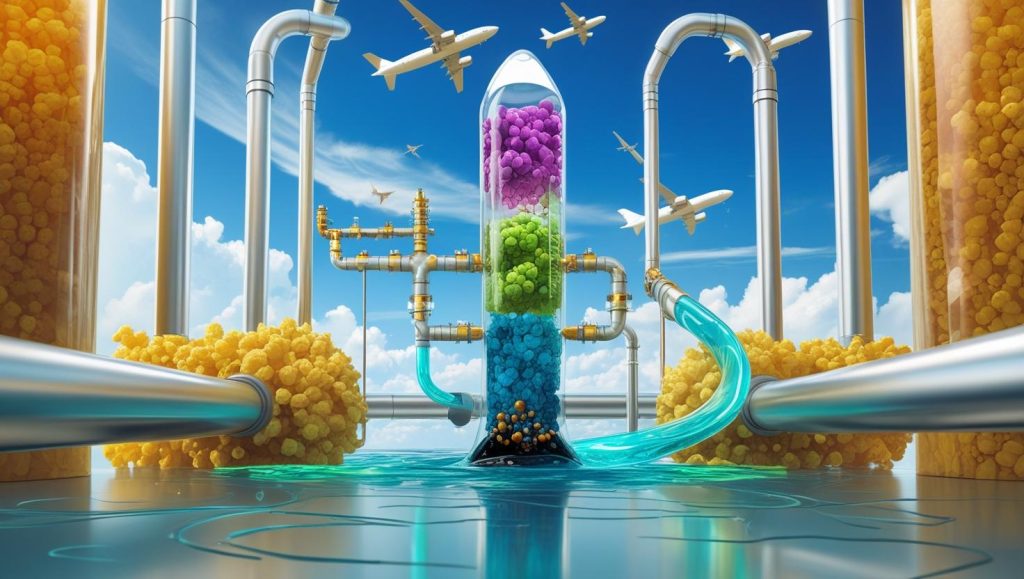

In a major stride toward sustainable air travel, scientists have developed a feedstock-agnostic catalytic method to convert lignin—a tough, aromatic plant polymer—into drop-in sustainable aviation fuels (SAFs).
The new process, which combines platinum-based catalytic hydrodeoxygenation (Pt-HDO) with alkaline pretreatment, efficiently removes oxygen from lignin-derived compounds, creating a hydrocarbon fuel blend that meets the criteria for jet fuel use.

How It Works
- Alkaline depolymerization breaks lignin into monomeric aromatics
- Pt-HDO catalyst selectively removes oxygen atoms at 250–350°C
- Final product: a high-energy, low-oxygen, jet-fuel-compatible hydrocarbon mixture
The resulting SAF has comparable energy density to fossil jet fuel and can be blended directly with existing fuels, requiring no changes to current aviation engines or infrastructure.
Key Benefits
- Feedstock-agnostic: Works with diverse lignin sources (agricultural, forestry, etc.)
- Drop-in ready: Compatible with existing aviation fuel systems
- Low carbon footprint: Reduces lifecycle emissions by up to 70%
- Scalable and cost-effective: Uses available catalysts and moderate temperatures
- No toxic byproducts: Clean conversion to usable hydrocarbons
Real-World Impact
This innovation addresses two global crises at once:
- Carbon emissions from aviation, which account for ~2.5% of global CO₂ output
- Lignin waste management, with over 50 million tons discarded annually from biomass industries

Reference
Webber, M. S., Yang, Z., Bell, D. C., Brandner, D. G., Bussard, J. R., Watson, J., … & Román-Leshkov, Y. (2025). Drop-in sustainable aviation fuels enabled by feedstock-agnostic lignin deoxygenation. Cell Reports Physical Science. DOI: 10.1016/j.xcrp.2025.102687


Related posts:
 Decoding the Genomic Secrets of Aphanothece: How Cyanobacteria Could Revolutionize Sustainable Biotechnology
 Turning Food Waste into Biochemicals: How Electrofermentation is Powering the Future of Sustainable Manufacturing
 Researchers develop sustainable 3D-printed biocomposites for next-generation medical devices
 Turning Olive Waste into Green Gold: How Biostimulants Boost Microalgae Pigment Production
 Turning Beer Waste into Beauty Gold: How Residual Yeast Can Produce Sustainable Hyaluronic Acid


