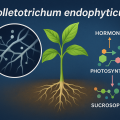
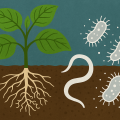
A recent study has explored the rich and understudied endophytic microbiota inhabiting garlic bulbs, revealing a diverse community of microorganisms with significant potential for sustainable agriculture. Focusing on clove meristems from ten Mexican garlic varieties, researchers isolated 119 bacterial strains across 14 genera and 38 fungal strains belonging to Fusarium and Penicillium.
Endophytes Hidden in Garlic Meristems
The garlic bulb creates a unique ecological niche rich in nutrients and organosulfur compounds. This environment supports specialized endophytes with potential plant-beneficial properties. The study’s systematic isolation and 16S/ITS-based identification revealed strains belonging to Bacillus, Paenibacillus, Pseudomonas, Enterobacter, and other key genera known for plant-associated functions.
Plant Growth Promotion Potential
Several bacterial isolates demonstrated functional traits such as:
- Phosphate and potassium solubilization
- Nitrogen fixation capabilities
- Hydrolytic enzyme production (cellulase, amylase, lipase, esterase, protease)
In garlic explant tests, many strains produced significant growth improvements.
Biocontrol Against Pathogenic Fungi
The study identified remarkable antagonistic activity against phytopathogens:
- Paenibacillus sp. MP10 reached 65–94% inhibition across assays.
- Rhodococcus sp. MP3 also showed strong suppression of Fusarium and Penicillium.
These results emphasize the biocontrol potential of garlic endophytes for managing fungal diseases.
Enhanced Garlic and Maize Germination
During germination bioassays:
- Pseudomonas sp. 1JPC and several Enterobacter spp. boosted root length up to fourfold and increased root number and fresh weight.
- In maize, strains like Phytobacter sp. 5AMCH94, Pseudomonas sp. 1APCY, and Paenibacillus sp. H1 increased seedling area by 20–60%, root number by 30–140%, and dry weight by 40–50%.
Shifts in Endophytic Community Structure
High-throughput 16S sequencing confirmed that inoculation with Paenibacillus sp. H1 increased overall bacterial diversity and altered the abundance of key families such as Comamonadaceae and Lactobacillaceae.
Conclusion
This study highlights garlic clove meristems as a rich reservoir for beneficial microbes with significant potential in:
- plant growth promotion
- sustainable biofertilizer development
- fungal biocontrol
- preservation and recovery of garlic varieties
The findings open new opportunities for developing endophyte-based agricultural technologies directly from garlic’s internal microbiome.
Reference
Quezada-García, G., Zelaya-Molina, L.X., Chávez-Díaz, I.F. et al. Plant growth-promoting endophytic microbiota from garlic bulbs. Int Microbiol (2025). https://doi.org/10.1007/s10123-025-00724-w


Related posts:
 Microbes That Clean Greywater Also Boost Crop Growth
 Native Fungus Beauveria bassiana Offers Dual Pest Control and Plant Growth Boost Against Cabbage Aphids
 Colletotrichum endophyticum Dramatically Boosts Plant Growth Through Metabolic Reprogramming
 Bacillus velezensis: Plant growth Promoter and Biological Pest Controller
 Arugula Vermicompost Fungi Offer Eco-Friendly Defense Against Tomato Root Rot