1. Introduction: The Third-Generation Sequencing Paradigm Shift
The genomic landscape is currently undergoing a significant strategic transition as research and clinical laboratories move beyond the “Second-Generation” or Next-Generation Sequencing (NGS) platforms that have dominated the market since 2005. While platforms utilizing Sequencing by Synthesis (SBS)—most notably Illumina—have set the industry standard for high-throughput data, they are increasingly constrained by inherent biological and technical ceilings. Specifically, the requirement for bridge amplification and the eventual loss of synchronicity in polymerase colonies (phasing issues) limit these platforms to short read lengths, typically 100–400 base pairs (bp). This “short-read” paradigm creates substantial computational hurdles for de novo assembly and leaves complex genomic structures, such as repetitive regions and structural variants, largely unresolvable.
In contrast, Third-Generation Sequencing represents a fundamental shift toward single-molecule analysis. By eliminating artificial amplification, platforms from Pacific Biosciences (PacBio) and Oxford Nanopore Technologies (ONT) bypass phasing limitations entirely. While Illumina relies on imaging fluorescently labeled nucleotides during synthesis, ONT captures the physical translocation of a single DNA or RNA molecule through a synthetic membrane. This enables the generation of multi-kilobase and “ultra-long” reads (exceeding 100 kb and reaching up to 4 Mb), providing the resolution necessary to bridge gaps in reference genomes. This transition is not merely a change in hardware but a move toward “real-time” genomics, beginning at the biophysical architecture of the nanopore sensor itself.
A primary advantage of this approach is the elimination of phasing issues. In second-generation platforms, templates in a “polymerase colony” must maintain synchronicity; when they lose this timing, signal quality degrades, limiting read lengths to 100–400 bp. Nanopore sequencing requires no such synchronicity, allowing for:
- Extreme Portability: USB-powered devices like the MinION (~4 inches long) take the lab to the sample, enabling field research in the Arctic or aboard the International Space Station.
- Real-Time Data Streaming: Analysis begins immediately as the first “squiggles” reach the computer, rather than waiting for a “batch” run to complete.
- Ultra-Long Reads: Fragments exceeding 100 kb are common. Researchers use the N50 metric (the length of the shortest fragment among the group of longest reads that make up 50% of the total mass) to characterize this distribution, often achieving N50s of nearly 100 kb to resolve complex genomic structures.
2. Core Mechanics: How Nanopore Sensors Decode Life
The transition from optical detection to electrical sensing is the “So What?” moment for modern genomics, eliminating the need for expensive imaging hardware and complex chemical labeling. This shift dramatically increases speed and cost-efficiency while providing direct access to the raw molecular signal.
The translocation process is governed by fundamental electro-physics. A biological or synthetic nanopore is embedded in an electrically resistant membrane separating two chambers—the cis (input) and trans (output)—filled with an electrolytic fluid. A voltage bias across this membrane drives the translocation, governed primarily by two forces: the Electrophoretic Force (EP), which acts on the negatively charged nucleic acid backbone, and the Electro-osmotic Flow (EOF), which arises from the movement of hydrated counterions along the pore walls. These forces are the primary “tunable” parameters for pore engineering, dictating both the capture rate and the velocity of the analyte.
Key components of the sensing mechanism include:
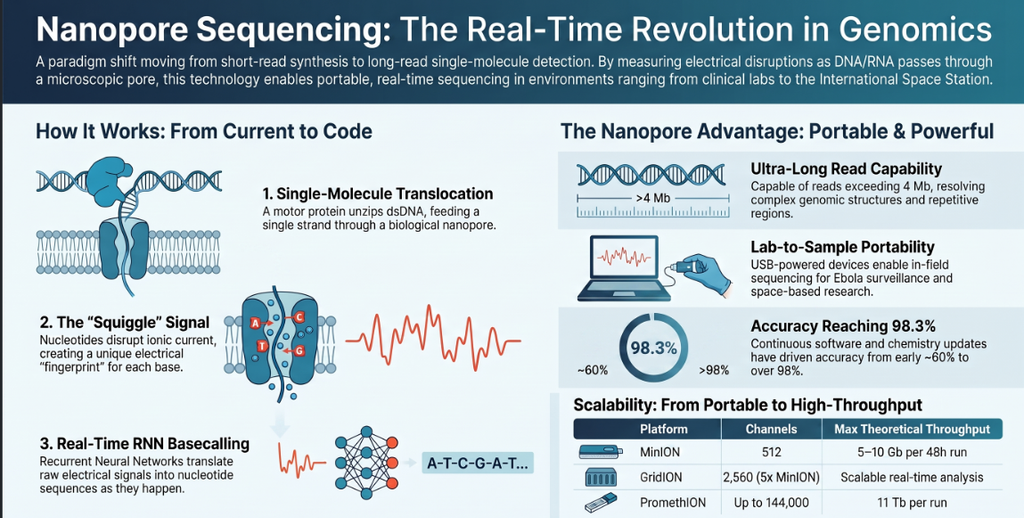
- The Motor Protein: To prevent DNA from translocating at natural rates (which can reach 1 million bases per second), a motor protein, such as a helicase, is docked at the pore. This protein “unzips” double-stranded DNA (dsDNA) and regulates the speed to a manageable rate, typically 450 bp/sec.
- The Sensor Array: Standard devices like the MinION utilize an array of 512 sensors, each capable of measuring current disruptions thousands of times per second.
- Nucleotide Fingerprints: As the strand moves through the pore’s constriction, it disrupts the ionic current. Bioinformatics architects analyze the blockade amplitude, dwell time, and the Root Mean Square Deviation (RMSD)—a critical descriptor of the analyte’s conformational state—to map the raw “squiggle” signal back to base identities.
2.1 Core Principles of Nanopore Sequencing
The fundamental principle of nanopore sequencing involves measuring the disruption of an ionic current as a single molecule passes through a nanoscopic pore.
The Sensing Mechanism
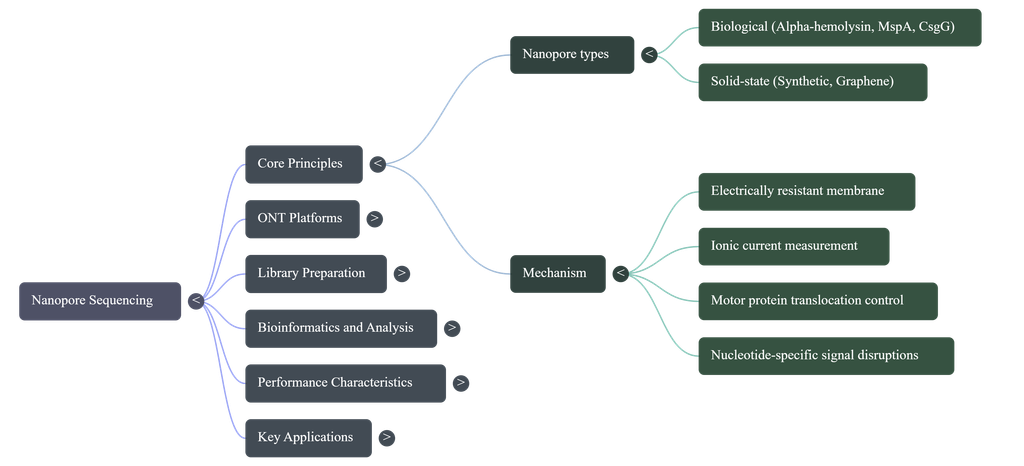
A nanopore is embedded in an electrically resistant membrane separating two chambers filled with electrolytic fluid. A voltage potential is applied, driving an ionic current through the pore. When an analyte (DNA or RNA) translocates through the pore:
- It transiently occludes the channel.
- This creates a characteristic deflection in the current (a “squiggle”).
- The magnitude and duration of the current change are related to the physicochemical properties of the bases currently occupying the pore’s constriction site.
Translocation Control
Unregulated DNA translocation is too rapid (~1 million bases/second) for accurate sensing. To resolve this, molecular “motors”—typically helicases or polymerases (e.g., phi29)—are used to ratchet the nucleic acid through the pore at a controlled speed (e.g., 450 bp/s for DNA, 70 bp/s for RNA). These motors are ATP-dependent, meaning sequencing continues until the fuel source is depleted.
3. Architectural Diversity: Biological vs. Solid-State Nanopores
Pore geometry directly dictates sensing resolution and device longevity. The “sensing zone” must be narrow enough to limit the number of nucleotides contributing to the current disruption at any single moment.
| Feature | Biological Nanopores | Solid-State Nanopores (SSNPs) |
|---|---|---|
| Materials | Proteins (αHL, MspA, CsgG) | Silicon-based, Graphene, MoS2 |
| Fabrication | Genetic engineering | Ion-beam sculpting, TEM, Dielectric breakdown |
| Reproducibility | High: Genetically identical pores. | Variable: Difficult to scale identical pores. |
| Robustness | Low: Fragile lipid membranes. | High: Withstands high-voltage stressors. |
| Strategic Constraint | Sensitive to pH/Temperature. | Stability bottleneck at 0.7 nm for Si pores. |
Biological Pore Differentiators
Biological pores are typically derived from bacterial pore-forming toxins. They offer high reproducibility but have limited shelf lives compared to synthetic alternatives.
- αHL (Alpha-hemolysin): The heptameric pioneer with a 2.6 nm channel, primarily used in early proof-of-concept.
- MspA: A mutant from Mycobacterium smegmatis featuring a 1.2 nm constriction, providing superior single-nucleotide resolution by narrowing the sensing zone.
- CsgG-CsgF: The current state-of-the-art for Oxford Nanopore Technologies (ONT). The original CsgG pore has a 1.0 nm constriction; however, the insertion of the CsgF accessory protein creates a double-constriction (approximately 1.5 nm for the secondary site). This architecture significantly improves the resolution of homopolymers by refining the signal as the strand passes through two distinct sensing points.
| Pore Type | Source | Constriction Diameter | Characteristics |
|---|---|---|---|
| α-Hemolysin (αHL) | S. aureus | ~2.6 nm | The first pore used for nucleic acid translocation; has a large vestibule. |
| MspA | M. smegmatis | ~1.2 nm | Narrower constriction improves single-nucleotide resolution; negative charges in the rim were neutralized via engineering. |
| Aerolysin | A. hydrophila | 1.0–1.7 nm | Stronger electrostatic interactions enable sensitive base discrimination. |
| CsgG | E. coli | ~1.5 nm | A curli transport lipoprotein; currently the standard for ONT platforms. |
| CsgG-CsgF | Mutant | Dual-constriction | An accessory protein (CsgF) creates a second constriction, significantly improving fidelity. |
Solid-State Nanopores (SSNP)
SSNPs are fabricated in synthetic membranes (e.g., silicon nitride, graphene, MoS2). While not yet as commercially prevalent as biological pores, they offer:
- Robustness: Stability under high voltages and varying pH/temperature.
- Precision Fabrication: Created using focused ion beams (FIB), transmission electron microscopy (TEM) sculpting, or controlled dielectric breakdown.
- Potential for 2D Materials: Graphene monolayers (~0.3 nm thick) could theoretically resolve single bases with higher accuracy because only one or two bases contribute to the signal at any time.
The “So What?” Layer: While SSNPs offer robustness and the potential for monolayer sensing (0.3 nm with graphene), the biological pore’s unmatched reproducibility ensures that every sensor in a 512-channel array performs identically, justifying its continued dominance in the commercial market.
4. Library Preparation: Optimizing Inputs for High-Value Data
Library preparation is the gatekeeper of sequencing success. High-quality data depends on the strategic preservation of long strands and the enrichment of target molecules.
Format Comparisons and Evolution
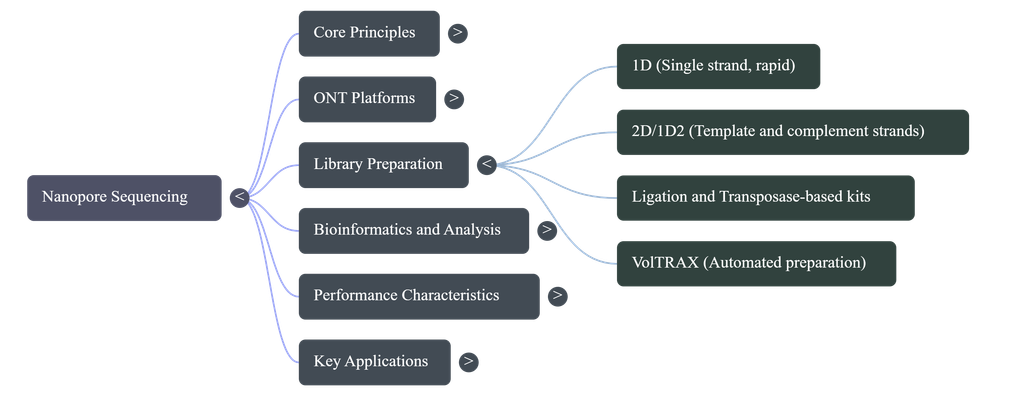
- 1D Sequencing: Fastest method, sequencing a single strand; preferred for maximum read length.
- 1D2 and Duplex: 1D2 delivers both strands to the pore sequentially without a covalent link. In 2022, ONT reintroduced Duplex sequencing, which sequences both the template and complement strands of the same molecule, achieving consensus accuracy exceeding 99.5%.
- Direct RNA Sequencing: The only technology capable of sequencing native RNA molecules without cDNA conversion, preserving RNA modifications like m6A.
- Input Requirements: Standard ligation kits require 1 µg of DNA, while rapid transposase-based kits utilize as little as 200 ng. PCR-based protocols can function with 10 ng or less for low-input samples.
Strategic Enrichment and Direct RNA
Specialized protocols like Cas9-mediated enrichment allow for targeting specific genomic regions without PCR, preserving epigenetic signatures. Furthermore, Direct RNA sequencing offers a unique advantage: the ability to detect m6A modifications, 7mG, and A-to-I editing directly on the native strand without cDNA conversion.
As the field moves toward ultra-long reads, the “green-fingered old school molecular biologist” approach is favored—utilizing gentle phenol-chloroform extractions and minimal pipetting to avoid shearing, as “reads cannot be longer than the input DNA.”
5. Bioinformatics: From Raw Signal to Basecalled Sequence
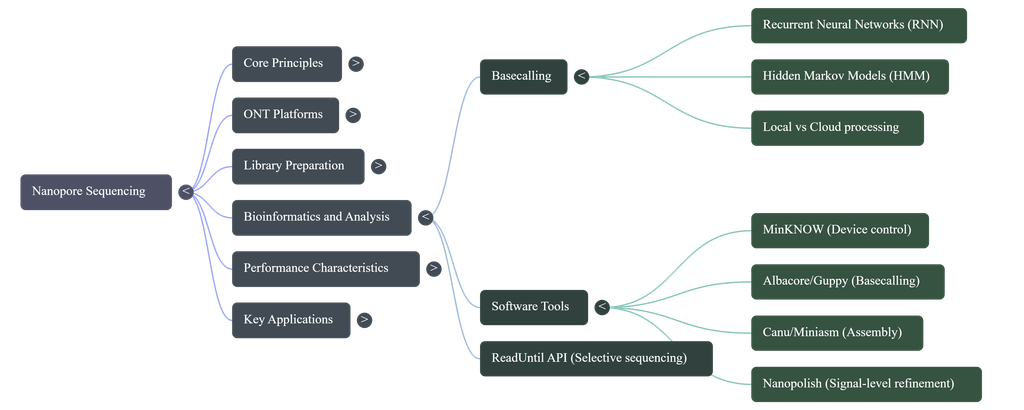
The computational workflow has transitioned from the cloud-based Metrichor model to local, real-time architectures like Albacore, Guppy, and the newer Bonito caller.
- Algorithm Evolution: The field has moved from Hidden Markov Models (HMM) to Recurrent Neural Networks (RNN) and Convolutional Neural Networks (CNN). These are essential for “feature detection” in the complex, noisy signal of a translocation event.
- Error Profiles: The primary bottleneck remains indels (insertions/deletions) in homopolymers. Because the current signal remains static when identical bases pass through the pore, discerning the exact base count from temporal data is challenging. Specialized callers like Scrappie and Bonito were specifically developed to address this through advanced signal modeling.
- The “So What?” Layer: The ReadUntil API enables “selective sequencing.” By analyzing the first few hundred bases of a molecule in real-time, the system can software-eject non-target molecules, performing enrichment in-silico.
Software Ecosystem
The analysis of nanopore data has moved from cloud-based services to local, high-performance computing.
| Tool Category | Key Software | Function |
|---|---|---|
| Control/Basecalling | MinKNOW, Albacore, Guppy, Bonito | Records raw signal and uses RNNs to translate signals into FASTQ data. |
| Analysis/Stats | Poretools, NanoOK, poRe | Extracts data and generates quality metrics/error profiles. |
| Assembly | Canu, Miniasm, SPAdes | Performs de novo assembly; SPAdes supports hybrid assembly with Illumina data. |
| Polishing | Nanopolish, Racon | Uses raw signal data to improve the consensus accuracy of assemblies. |
| Targeting | ReadUntil API | Enables selective sequencing by ejecting unwanted molecules from pores. |
6. Competitive Landscape: ONT vs. Illumina and PacBio
Strategic positioning requires balancing read length, throughput, and the need for epigenetic data.
| Feature | ONT (MinION/PromethION) | Illumina (SBS) | PacBio (SMRT) |
|---|---|---|---|
| Read Length | Ultra-long (Up to 4 Mb) | Short (150–400 bp) | Long (10–60 kb) |
| Accuracy | 99% – 99.5% (Duplex) | >99.9% | >99.8% (HiFi/CCS) |
| Detection | Electrical (Squiggle) | Optical (Fluorescence) | Optical (Photometric) |
| Epigenetics | Direct Detection | Bisulfite (Chemical) | Kinetic (Indirect) |
| Portability | Very High (USB) | Very Low (Lab-bound) | Low (Stationary) |
Analytical Deep Dive: Illumina is limited by “phasing issues” in polymerase colonies. PacBio’s HiFi (Circular Consensus Sequencing) mode provides high accuracy but is fundamentally limited by the half-life of the DNA polymerase, capping reads at approximately 20 kb. ONT avoids these constraints, allowing it to bridge the most complex structural variants and repetitive telomeric regions.
7. High-Value Applications: From the ISS to Global Health
7.1 Genomics and Epigenetics
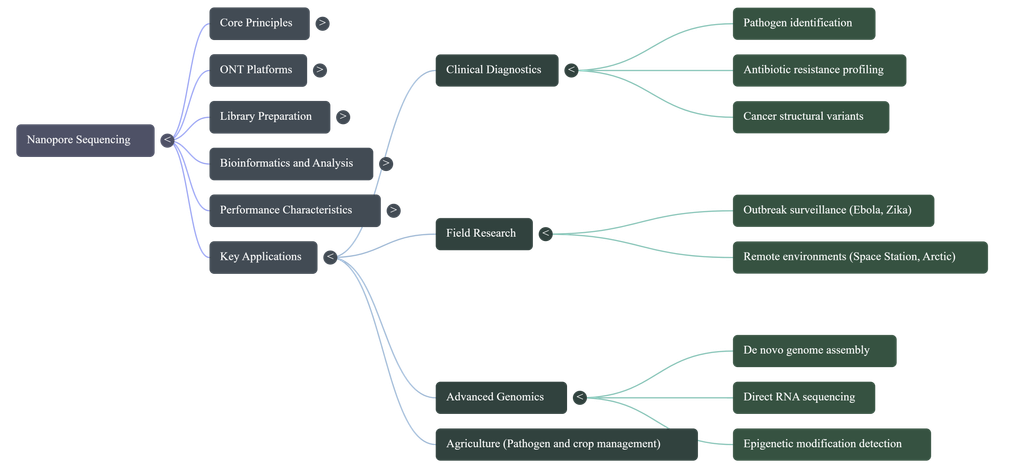
- Human Genome Assembly: Recent efforts achieved 30x coverage of the human genome with ultra-long reads, resolving the MHC locus and estimating telomere lengths.
- Methylation Mapping: Tools like SignalAlign and nanopolish detect 5-methylcytosine with ~95% accuracy without bisulfite treatment, which often degrades DNA.
- Structural Variants: The platform excels at identifying large insertions, deletions, and fusions (e.g., BCR-ABL1 in leukemia) that are invisible to short-read sequencers.
- Extreme Environments: Success on the International Space Station and Arctic glaciers proves that gravity and temperature are not barriers to translocation.
7.2 Infectious Disease and Outbreak Surveillance
Nanopore’s portability has revolutionized field epidemiology:
- Viral Outbreaks: Used for real-time tracking of Ebola in Guinea, Zika in Brazil, and SARS-CoV-2 variants in Ukraine.
- Rapid Diagnostics: Capable of identifying bacterial pathogens (e.g., Salmonella, Listeria) and antimicrobial resistance (AMR) genes directly from clinical urine or blood samples within hours.
7.3 Agriculture and Environmental Science
- Food Safety: Enables on-site characterization of foodborne pathogens directly from complex food matrices.
- Metagenomics: Used to sequence microbial communities in extreme environments, such as Arctic glaciers and the McMurdo Dry Valleys.
- Plant Genomics: Successful assembly of complex, gigabase-sized plant genomes, such as the tomato species Solanum pennellii.
8. Conclusion: The Future of Real-Time, Portable Genomics
The trajectory of nanopore technology is toward total automation and ubiquity. The PromethION is now positioned to challenge the throughput of the NovaSeq, while the SmidgION promises smartphone-integrated sequencing.
8.1 Hardware Innovations
The ONT product roadmap focuses on scaling at both ends of the throughput spectrum:
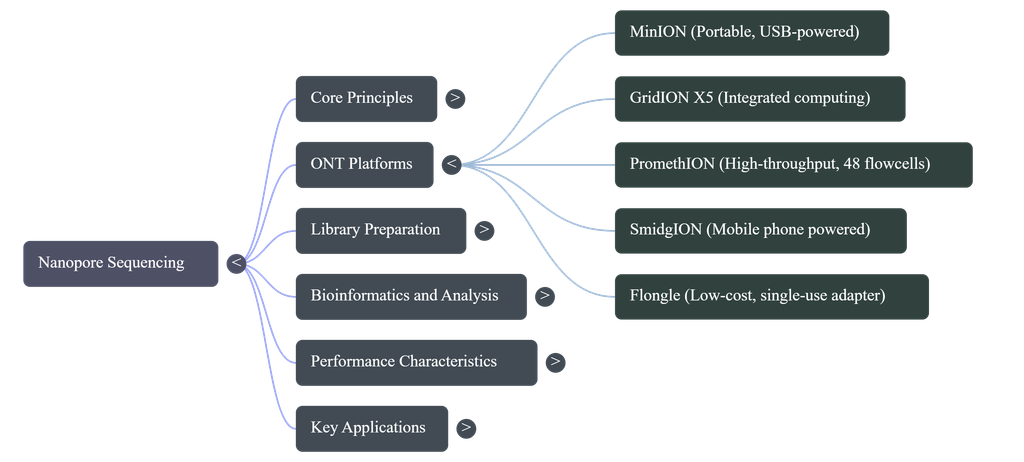
- High Throughput: The PromethION (up to 48 flowcells) aims to compete with Illumina’s NovaSeq, offering up to 11 Tb per run.
- Low Cost/Mobile: The SmidgION is a mobile-phone-powered sequencer, while the Flongle offers a low-cost, disposable option for smaller tests or rapid clinical diagnostics.
- Automation: The VolTRAX device is designed to automate library preparation, moving toward a “sample-in, data-out” model.
8.2 Technical Challenges
Despite rapid progress, several bottlenecks remain:
- Homopolymer Resolution: Identical base runs (e.g., AAAAA) produce a static signal, making it difficult to determine the exact number of bases. New basecallers like scrappie are addressing this.
- Signal-to-Noise Ratio (SNR): SSNPs in particular struggle with background noise from “nanobubbles” and electrode fluctuations.
- Translocation Speed: Continued refinement of motor proteins is necessary to balance the need for high throughput with the time required for accurate base sensing.
The ultimate vision of “cell-to-sequence” automation is being realized through the VolTRAX microfluidic preparer and the Zumbador “straw-like” device, which seeks to automate the entire workflow from tissue input to library output. While homopolymer error rates remain a focus, the iterative development of RNN/CNN algorithms continues to close the gap. Nanopore technology is no longer a niche tool; it is the standard for the next era of universal molecular sensing.
Critical Takeaways:
- Portability and Democratization: The compact, USB-powered nature of nanopore devices enables sequencing in “extreme” environments, including the International Space Station, the High Arctic, and field clinics during viral outbreaks.
- Long-Read Capabilities: Unlike short-read platforms (100–400 bp), nanopore sequencers regularly produce reads in the tens of kilobases, with “ultra-long” reads exceeding 1 Mb. This facilitates the resolution of complex genomic structures, repetitive regions, and structural variants.
- Real-Time Data Processing: The streamed mode of operation allows for immediate basecalling and analysis. Features like the “ReadUntil” API enable selective sequencing, where molecules can be rejected from a pore in real-time based on their signal.
- Direct Detection of Modifications: Nanopore technology identifies DNA and RNA base modifications (e.g., methylation) directly from the raw ionic current signal without the need for bisulfite conversion or PCR amplification.
- Technological Maturation: While early iterations suffered from high error rates, recent advances in pore engineering (e.g., CsgG-CsgF mutants), motor protein optimization, and Recurrent Neural Network (RNN) basecalling have brought accuracy levels to >99% in specific configurations.
For up-to-date information on nanopore sequencing, please click here
Image Summary
References
Brown, B. L., Watson, M., Minot, S. S., Rivera, M. C., & Franklin, R. B. (2017). MinIONTM nanopore sequencing of environmental metagenomes: A synthetic approach. GigaScience, 6(3). https://doi.org/10.1093/gigascience/gix007
Cunanan, D. J., Carandang, T. H. D. C., Pilapil, J. D., Cunanan, D. J., Mollasgo, A. G., Manalo, G. N. S., Co, G. S., Rosch, J., Carroll, K., & Notarte, K. I. (2026). Nanopore sequencing for microbiological diagnosis of bacterial pneumonia: A systematic review and meta-analysis. European Journal of Clinical Microbiology and Infectious Diseases, 45(4), 1077–1091. https://doi.org/10.1007/s10096-025-05387-z
Ju, Y., Pu, M., Sun, K., Song, G., & Geng, J. (2022). Nanopore Electrochemistry for Pathogen Detection. In Chemistry – An Asian Journal (Vol. 17, Number 22). John Wiley and Sons Ltd. https://doi.org/10.1002/asia.202200774
Kim, M., Pham, B., Foster, J. C., & Moore, M. D. (2026). Biological nanopore technology: developments and implications for the agricultural sciences. In Trends in Food Science and Technology (Vol. 173). Elsevier Ltd. https://doi.org/10.1016/j.tifs.2026.105758
Leggett, R. M., & Clark, M. D. (2017). A world of opportunities with nanopore sequencing. Journal of Experimental Botany, 68(20), 5419–5429. https://doi.org/10.1093/jxb/erx289
Lin, B., Hui, J., & Mao, H. (2021). Nanopore technology and its applications in gene sequencing. In Biosensors (Vol. 11, Number 7). MDPI. https://doi.org/10.3390/bios11070214
Lu, H., Giordano, F., & Ning, Z. (2016). Oxford Nanopore MinION Sequencing and Genome Assembly. In Genomics, Proteomics and Bioinformatics (Vol. 14, Number 5, pp. 265–279). Beijing Genomics Institute. https://doi.org/10.1016/j.gpb.2016.05.004
MacKenzie, M., & Argyropoulos, C. (2023). An Introduction to Nanopore Sequencing: Past, Present, and Future Considerations. In Micromachines (Vol. 14, Number 2). MDPI. https://doi.org/10.3390/mi14020459
Magi, A., Semeraro, R., Mingrino, A., Giusti, B., & D’Aurizio, R. (2017). Nanopore sequencing data analysis: State of the art, applications and challenges. Briefings in Bioinformatics, 19(6), 1256–1272. https://doi.org/10.1093/bib/bbx062
Wasswa, F. B., Kassaza, K., Nielsen, K., & Bazira, J. (2022). MinION Whole-Genome Sequencing in Resource-Limited Settings: Challenges and Opportunities. In Current Clinical Microbiology Reports (Vol. 9, Number 4, pp. 52–59). Springer Science and Business Media Deutschland GmbH. https://doi.org/10.1007/s40588-022-00183-1
Werner, D., Acharya, K., Blackburn, A., Zan, R., Plaimart, J., Allen, B., Mgana, S. M., Sabai, S. M., Halla, F. F., Massawa, S. M., Haile, A. T., Hiruy, A. M., Mohammed, J., Vinitnantharat, S., Thongsamer, T., Pantha, K., Mota Filho, C. R., & Lopes, B. C. (2022). MinION Nanopore Sequencing Accelerates Progress towards Ubiquitous Genetics in Water Research. In Water (Switzerland) (Vol. 14, Number 16). MDPI. https://doi.org/10.3390/w14162491
Zheng, P., Zhou, C., Ding, Y., Liu, B., Lu, L., Zhu, F., & Duan, S. (2023). Nanopore sequencing technology and its applications. In MedComm (Vol. 4, Number 4). John Wiley and Sons, Inc. https://doi.org/10.1002/mco2.316


Related posts:
 New Class of Antibiotics with a Novel Mode of Inhibition against World Health Organization’s Critical Listed Bacteria, Carbapenem-Resistant Acinetobacter baumannii
 Whats in your Gut? One ingestible pill coming up for understanding the microbiota inside small intestine
 Cracking the Code of Human Identity: The Hidden Role of Transposable Elements
 Quantitative Essentiality Mapping in Reduced Genomes: New Insights into Gene Function and Fitness
 A Visual Breakthrough: New Marker System Speeds Up Soybean Genome Editing