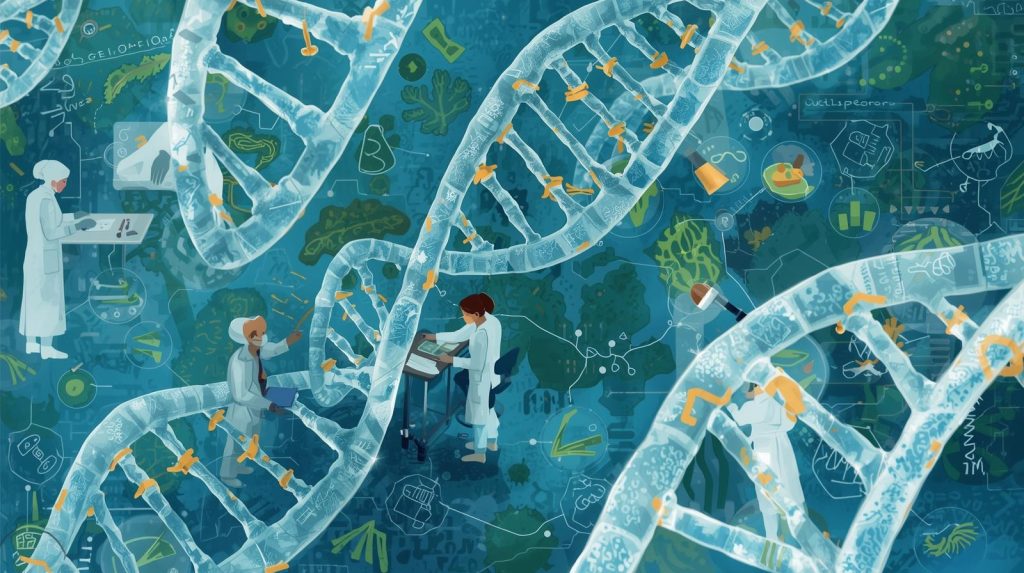

Quantitative Essentiality in Reduced Genomes: Redefining What’s “Essential” for Life
What makes a gene truly essential for life? Traditionally, essentiality has been treated as a binary question: genes are either required for survival or not. But new research, published in Molecular Systems Biology, pushes beyond this simplistic view. By building a high-resolution essentiality map of the reduced-genome bacterium Mycoplasma pneumoniae, scientists have revealed that essentiality is dynamic, quantitative, and influenced by far more than just coding genes
Moving Beyond Genes: A Broader View of Essentiality
While earlier studies focused almost exclusively on protein-coding regions, this new approach recognizes that regulatory sequences, structural DNA regions, and even untranslated domains contribute to cell fitness. Promoters, terminators, ribosome-binding sites, and untranslated regions play subtle but crucial roles in regulating growth and survival.
The Method: Transposon Sequencing at Single-Base Resolution
To achieve this, researchers developed two complementary transposon-insertion libraries:
- One with outward-facing promoters to study transcriptional activation,
- Another with terminators to assess transcriptional silencing.
Combined, these libraries created nearly half a million unique insertions, covering ~55% of the genome—approaching single-base resolution. Using k-means clustering and dynamic modeling, the team tracked which insertions persisted over time, quantifying their fitness contributions.
Key Findings
- Essentiality is not binary. Instead, genes fall into multiple categories—from essential (E) to quasi-essential (F1), conditionally essential (F2), and non-essential (NE).
- Regulatory regions matter. 5′UTRs, intergenic regions, and certain terminators were found to significantly impact survival, challenging gene-centric definitions of essentiality.
- Protein domains differ in essentiality. Even within essential genes, certain structural regions tolerated disruptions, leading to functional “split proteins.”
- Fitness is dynamic. Some genes initially appeared non-essential but showed fitness costs over multiple generations, emphasizing the need for time-resolved analysis.
Implications for Synthetic Biology and Genome Engineering
This fitness map of a reduced genome is more than an academic achievement—it has real-world applications:
- Synthetic minimal cells: Identifying truly indispensable elements helps in designing streamlined, yet viable synthetic organisms.
- Drug targets: Mapping essential regions at single-base resolution can spotlight vulnerable sites for antimicrobial development.
- Biotechnology: Dynamic essentiality insights aid in building robust engineered microbes for industrial applications.
Conclusion
The study demonstrates that essentiality is a spectrum, shaped not just by genes but by regulatory elements, protein domains, and cellular context. By shifting from a static, binary framework to a quantitative and dynamic perspective, scientists are redefining what it means for DNA to be essential for life.
This breakthrough paves the way for next-generation synthetic biology, where genome design can be guided by detailed fitness landscapes rather than rigid assumptions.
Reference
Miravet-Verde, S., Burgos, R., Garcia-Ramallo, E., Weber, M., & Serrano, L. (2025). Quantitative essentiality in a reduced genome: a functional, regulatory and structural fitness map. Molecular Systems Biology, 1-29. https://doi.org/10.1038/s44320-025-00133-1


Related posts:
 New Class of Antibiotics with a Novel Mode of Inhibition against World Health Organization’s Critical Listed Bacteria, Carbapenem-Resistant Acinetobacter baumannii
 A Visual Breakthrough: New Marker System Speeds Up Soybean Genome Editing
 Whats in your Gut? One ingestible pill coming up for understanding the microbiota inside small intestine
 Plant Virus Turned Cancer Vaccine Could Revolutionize Ovarian Cancer Treatment
 Cracking the Code of Human Identity: The Hidden Role of Transposable Elements