
Imagine a world where carbon dioxide—one of the biggest culprits of climate change—is turned into eco-friendly, biodegradable plastics. Scientists have just made that reality a little closer with the development of a novel engineered living biofilm system that sustainably transforms CO₂ into polyhydroxyalkanoates (PHAs).
Led by a team at Tianjin University and collaborators across China and the UK, the study presents a first-of-its-kind two-layer biofilm architecture that uses photosynthetic cyanobacteria to fix CO₂ and E. coli to convert it into PHAs—a sustainable plastic alternative.
How the System Works
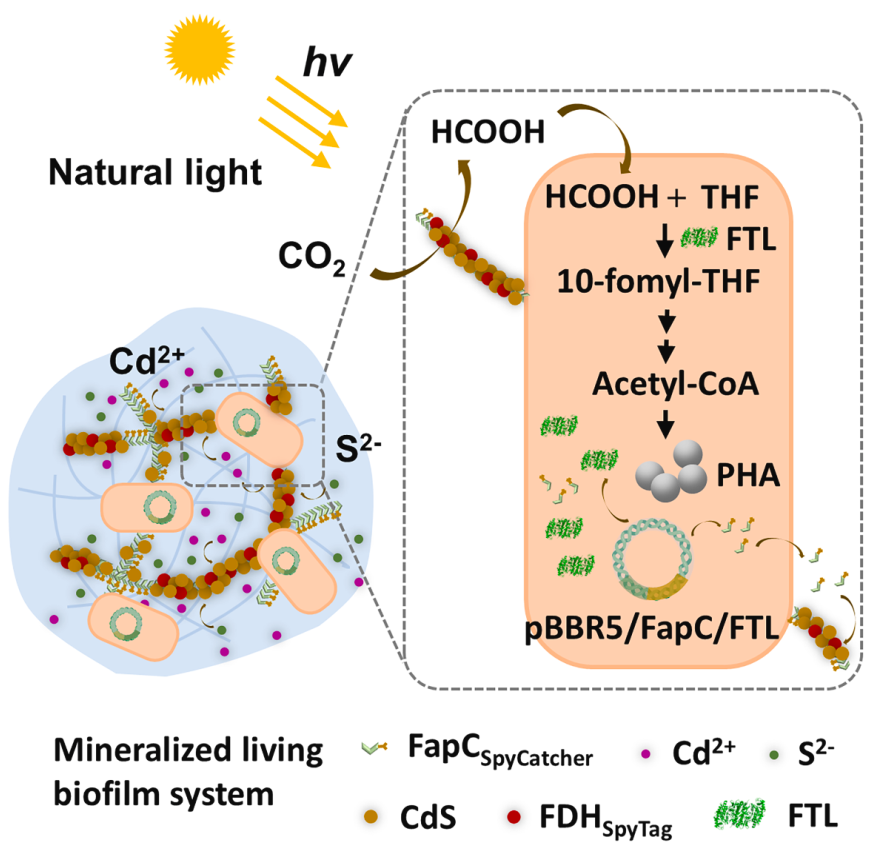
The platform consists of two key layers:
- Top layer: Photosynthetic Synechococcus elongatus fixes CO₂ via photosynthesis and secretes sucrose.
- Bottom layer: E. coli consumes the sucrose and converts it into PHAs—a type of biodegradable plastic used in packaging, agriculture, and medicine.
This layered biofilm system is supported by a porous, reusable membrane scaffold, allowing for sustained biofilm growth, easy recovery, and long-term reuse (over 20 days without significant efficiency loss).
Key Innovations & Highlights
- Direct CO₂ to plastic conversion via living biofilms
- Engineered E. coli and S. elongatus co-culture for carbon-to-polymer conversion
- Robust biofilm maintained on polyvinylidene fluoride (PVDF) membranes
- Continuous PHB (a type of PHA) yield: up to 13.9 mg per cm² per day
- Reusable system with minimal decline in productivity over multiple cycles
Why It Matters
Plastic pollution and climate change are two of humanity’s biggest environmental challenges. This research bridges both by:
- Reducing atmospheric CO₂
- Producing biodegradable, compostable plastics
- Offering a low-energy, circular alternative to fossil-based polymers
- Paving the way for carbon-neutral manufacturing platforms
Future Potential
- Modular biofilm reactors for on-site CO₂ utilization
- Integration into waste gas recycling in factories
- Sustainable manufacturing for packaging and medical materials
- Solar-driven CO₂ capture using light-powered cyanobacteria

Reference
Wang, W., Zhang, W., Chu, F., Xiao, T., Hu, D., Tang, P., … & Ge, H. (2025). An engineered living biofilm system for sustainable conversion of CO2 into polyhydroxyalkanoates. Cell Reports Physical Science. DOI: 10.1016/j.xcrp.2025.10267


Related posts:
 New Class of Antibiotics with a Novel Mode of Inhibition against World Health Organization’s Critical Listed Bacteria, Carbapenem-Resistant Acinetobacter baumannii
 Not Just Snakes and Spiders: The Hidden World of Venom in Everyday Life
 Scientists Recreate Fine Flavour Chocolate Using Defined Microbial Communities
 The “Neurobiotic Sense”: How Gut Microbes Directly Influence Feeding
 Gut Microbe Molecule Emerges as a Hidden Driver of Atherosclerosis


