1. Introduction: Beyond the Sweetness—A New Frontier in Nutrition
For decades, non-nutritive sweeteners (NNS) have been marketed as the primary weapon against the global obesity and diabetes epidemics. By decoupling the sensation of sweetness from caloric intake, these additives—ranging from laboratory-synthesized sucralose to plant-derived stevia—were framed as a “free pass” for the modern palate. However, the World Health Organization (WHO) signaled a paradigm shift in 2023, issuing guidelines that questioned the long-term benefits of NNS and suggesting they may actually increase the risk of type 2 diabetes and cardiovascular disease. As a nutritional epigenetics specialist, I view this not just as a matter of individual weight management, but as a strategic challenge to our understanding of global health trends.
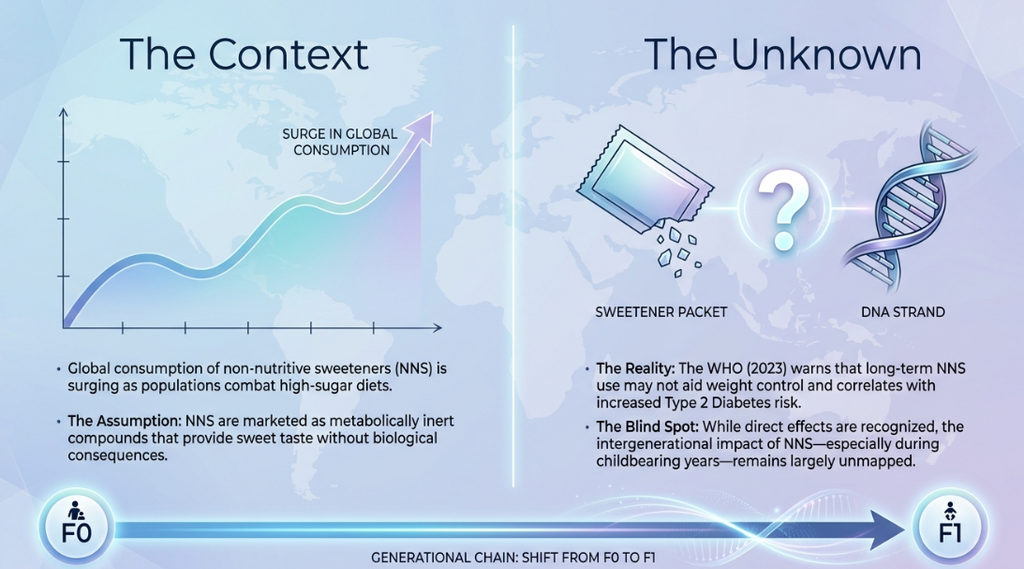
The controversy has moved past simple calorie counting into the complex terrain of metabolic programming. We are now confronting the “Developmental Origins of Health and Disease” (DOHaD) hypothesis: the reality that our dietary choices can act as environmental stressors that “flip” biological switches. The most provocative question is whether these switches stay flipped across generations. A groundbreaking 2026 study using a three-generation mouse model has provided a definitive look at this “biological memory,” proving that the ripples of NNS consumption extend far beyond the original consumer.
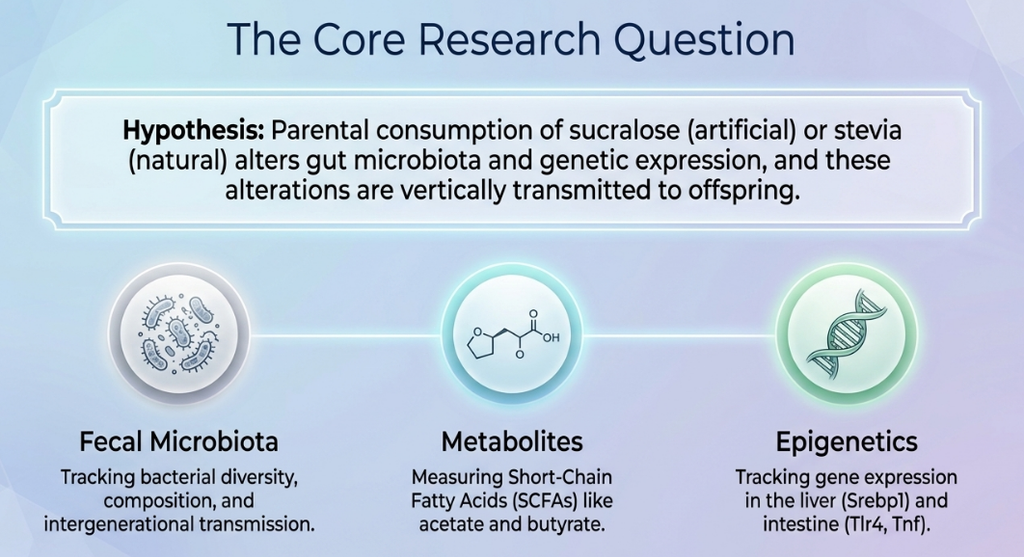
2. The Generational Study: Mapping the Three-Generation Mouse Model
In human nutritional science, isolating the effects of a single additive across eighty years is an impossible task. To bypass this, researchers utilized C57BL/6J mice, which serve as essential biological proxies. By observing generations F0 through F2, scientists can track how a specific substance influences the “instruction manual” of life in a controlled environment where variables like temperature and activity are constant.
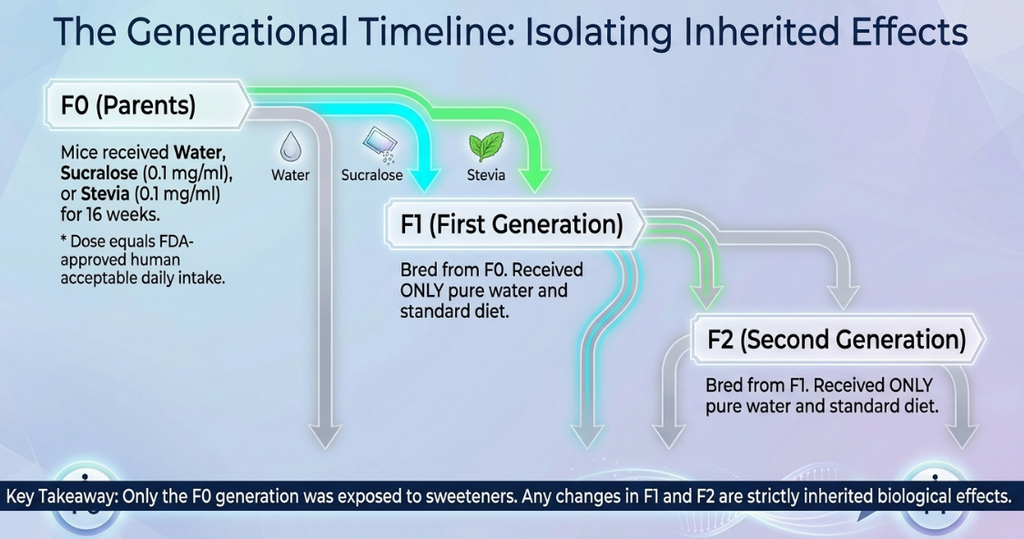
The study’s rigorous experimental design provides a clear window into biological inheritance:
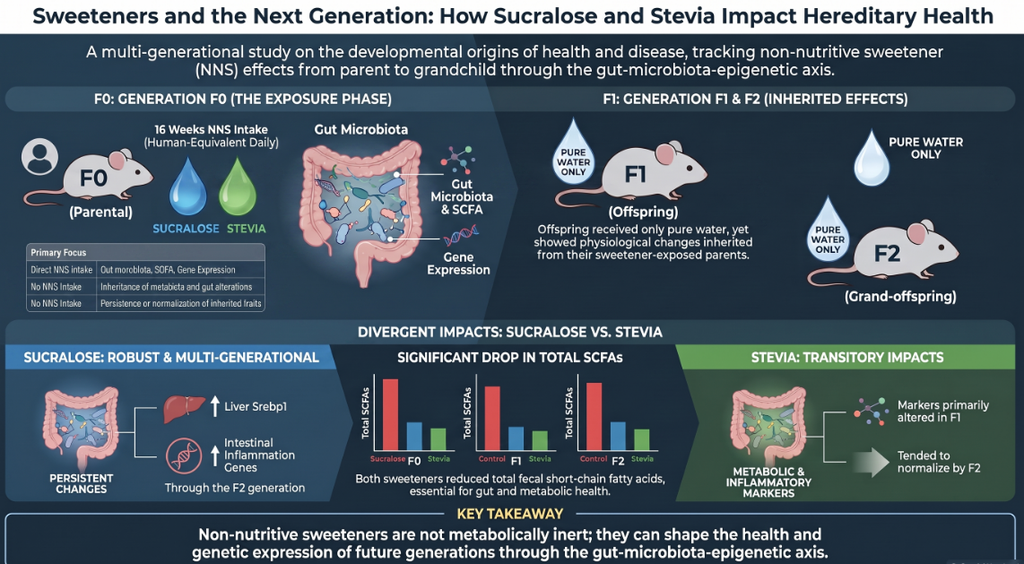
- F0 (Parental) Exposure: Mice received water supplemented with either sucralose or stevia at human-equivalent “Acceptable Daily Intake” (ADI) levels (0.1 mg/ml) for 16 weeks.
- The Transition: The F0 mice were bred to produce the F1 generation, who were then bred to produce the F2 generation.
- Pure Water Protocol: Crucially, the F1 (offspring) and F2 (grandchildren) received only pure water. They were never directly exposed to the sweeteners.
- 20-Week Monitoring: All generations were followed for 20 weeks, with metabolic markers and fecal samples collected to identify persistent changes.
The fact that the F1 and F2 generations never touched a drop of NNS is the study’s most critical variable. Any metabolic or microbial deviation in these offspring is not a result of their own “diet,” but an inherited legacy of their ancestors’ consumption.
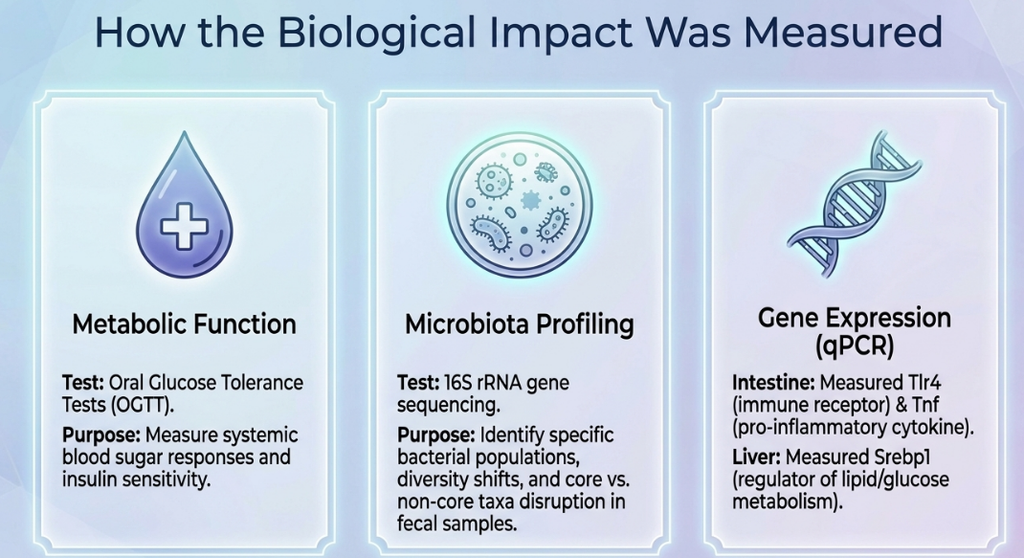
3. Metabolic Ripples: Sucralose vs. Stevia Outcomes
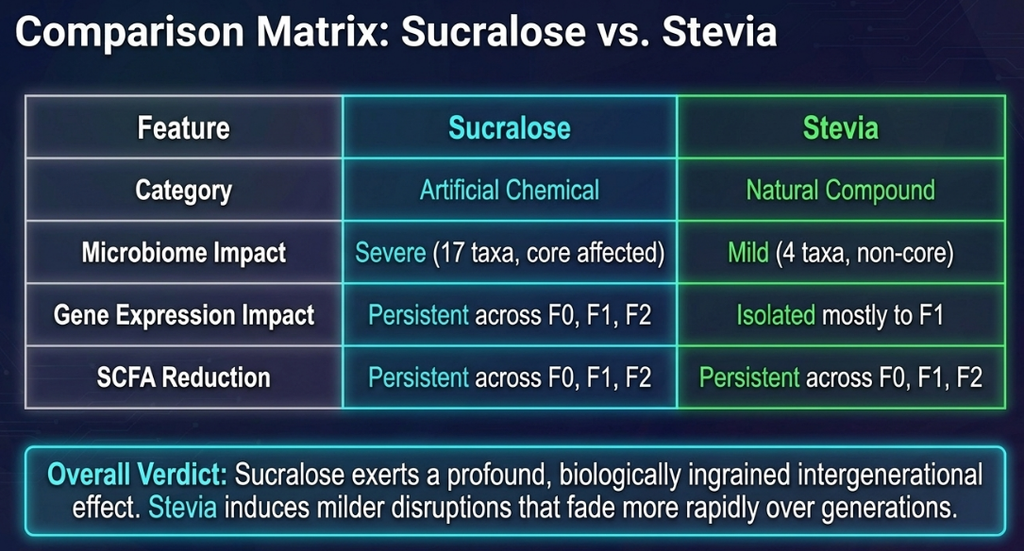
Consumers often perceive “natural” sweeteners like stevia as inherently safer than “artificial” counterparts like sucralose. However, from a strategic standpoint, we must evaluate the underlying chemical behavior of these compounds. The study highlights a fundamental divergence: Sucralose acts as a pro-oxidant, driving aggressive metabolic shifts, whereas Stevia’s antioxidant properties appear to mitigate some of its long-term damage.
This divergence is reflected in the divergent glycemic responses observed across generations:
| Generation | Sucralose Impact | Stevia Impact |
|---|---|---|
| F0 (Parents) | No immediate significant glucose alterations. | Lower glucose at 120 min in males (antioxidant effect). |
| F1 (Offspring) | Altered: Higher AUCGlc (glycemic response) in males. | Mild changes; some increased basal glycemia. |
| F2 (Grandchildren) | Persistent: Higher fasting glucose in males. | Normalized: Responses returned to control levels. |
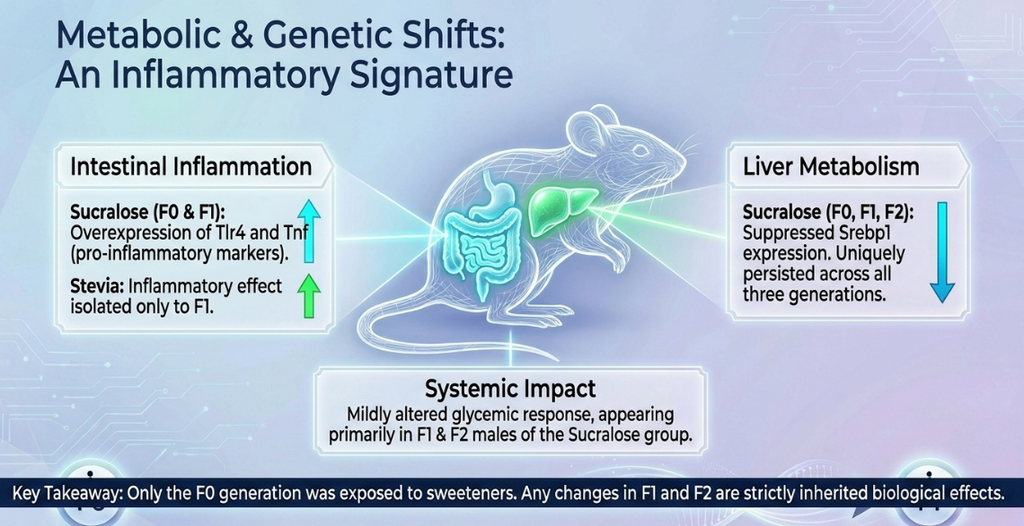
The most striking discovery is the sex-disaggregated data. Metabolic disturbances were overwhelmingly concentrated in males. This suggests that the biological inheritance of NNS exposure may be tied to sex-specific developmental pathways, making the male lineage particularly vulnerable to the “metabolic programming” triggered by their grandparents’ diet.
4. The Microbial Engine: Diversity and Composition Shifts
The gut microbiome is the “mediator” of health, an internal engine that translates dietary signals into physiological outcomes. In science journalism, we often hear that “diversity is king,” but this study provides a vital nuance: not all diversity is beneficial.
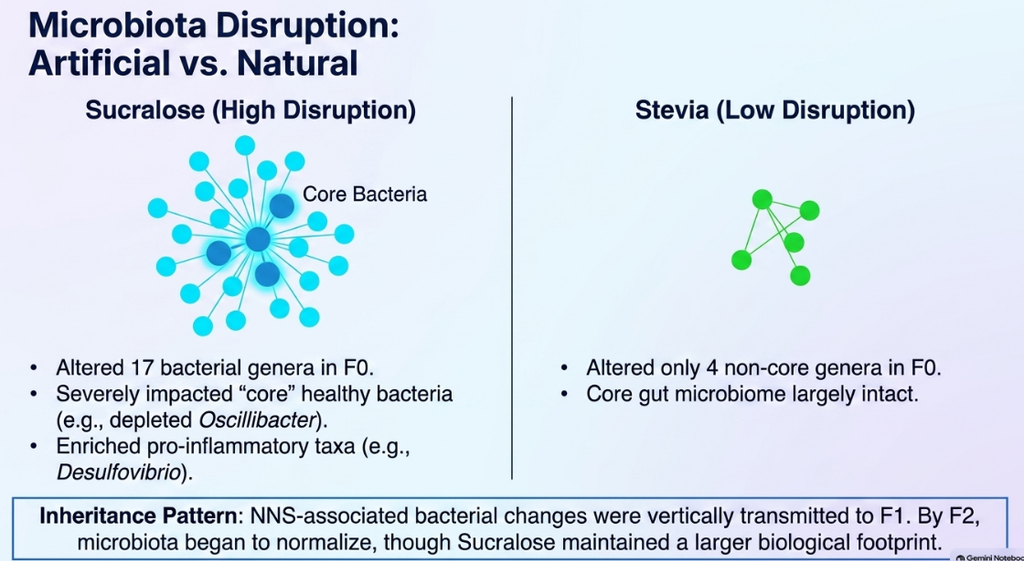
While Stevia decreased microbial diversity, Sucralose increased it in the F1 and F2 offspring. However, this was a signal of dysbiosis, not health. Sucralose aggressively targets “core microbiota”—the permanent, resident genera essential for homeostasis. By displacing these foundational residents, Sucralose allows non-core, potentially inflammatory bacteria to fill the vacuum.
- The Loss of the “Good”: There was a significant reduction in Oscillibacter, a vital core genus. These bacteria are primary butyrate-producers; their loss leaves the gut without one of its most potent anti-inflammatory defenses.
- The Gain of the “Inflammatory”: The study noted an increase in Candidatus_Saccharimonas and Desulfovibrio. These are often associated with inflammatory states and immune dysregulation, and their presence in offspring who never consumed NNS proves that a “corrupted” microbial profile can be inherited.
5. Chemical Messengers: The Drop in Short-Chain Fatty Acids (SCFAs)
If the microbiome is the engine, Short-Chain Fatty Acids (SCFAs) like acetate, propionate, and butyrate are the “currency” of a healthy gut. They regulate everything from the strength of the intestinal wall to the inflammation levels in the brain.
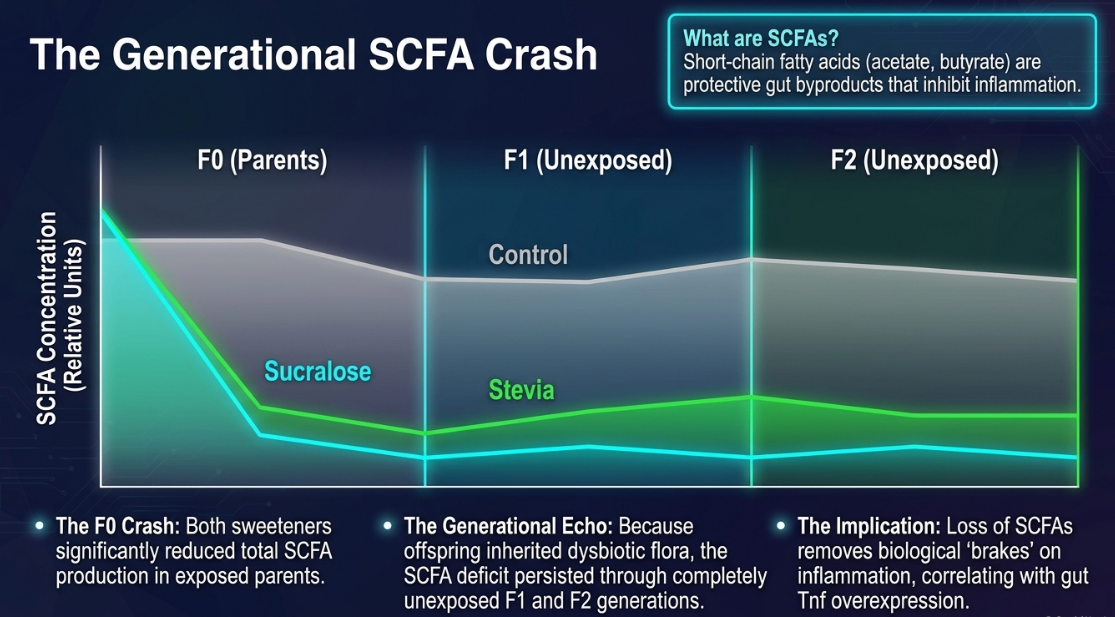
The study revealed a consistent, multi-generational bankruptcy of these chemicals.
- The Initial Deficit: Both sweetener groups in the F0 generation saw significant drops in acetate and valerate.
- The Persistent Legacy: These low levels did not recover in the F2 grandchildren. Despite their “clean” diet, their internal production of these protective chemicals remained significantly lower than the control group.
This drop is the direct consequence of the microbial shifts mentioned earlier. When core “fermenter” bacteria are displaced by NNS, the production of the body’s anti-inflammatory currency stops, leaving the offspring’s metabolism fundamentally less resilient.
6. The Genetic Legacy: Inflammation and Liver Health
To understand the “how” of intergenerational inheritance, we must look at epigenetics—the “switches” on our genes. The study’s most sophisticated insight involves the link between the SCFA drop and gene expression.
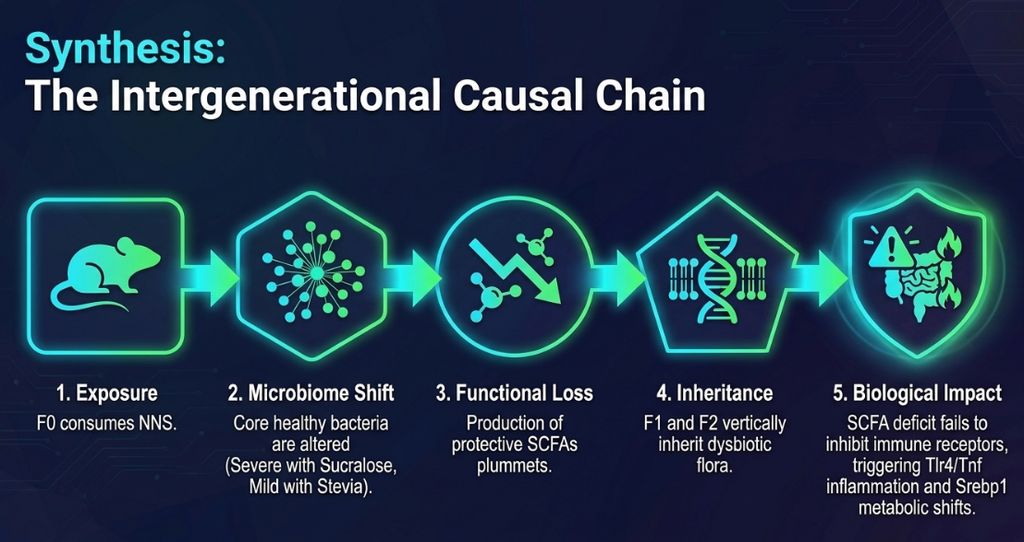
The “Why” Behind the Inflammation: Normally, SCFAs like butyrate inhibit an enzyme called HDAC3. When NNS consumption causes butyrate levels to plummet, the “brakes” on HDAC3 are removed. This lack of inhibition allows for the over-expression of inflammatory genes—specifically TLR4 and TNF. Essentially, a lack of gut “currency” leads to a state of chronic, inherited inflammation.
- Intestinal Inflammation (Tlr4 & Tnf): Sucralose triggered these “alarm signals” in the gut. While Stevia also saw an increase in the F1 generation, those markers normalized by F2. In the Sucralose group, the inflammation was more persistent.
- Metabolic Regulation (Srebp1): This gene regulates how the liver processes energy and fats. Sucralose caused a significant reduction in Srebp1 expression that persisted across all three generations. This permanent “down-regulation” explains the persistent hyperglycemia in the grandchildren.
- Barrier Function (Tjp1): Interestingly, the “leakiness” of the gut remained largely intact. This proves that the damage of NNS is not about “breaking” the gut wall, but about corrupting the chemical and genetic signaling pathways within it.
7. Real-World Relevance: Reconsidering the “Safe” Alternative
These findings validate the DOHaD hypothesis: the environment of the parent dictates the resilience of the child. We can no longer view NNS as “metabolically inert.” Instead, we must view a parent’s diet as a biological master file.
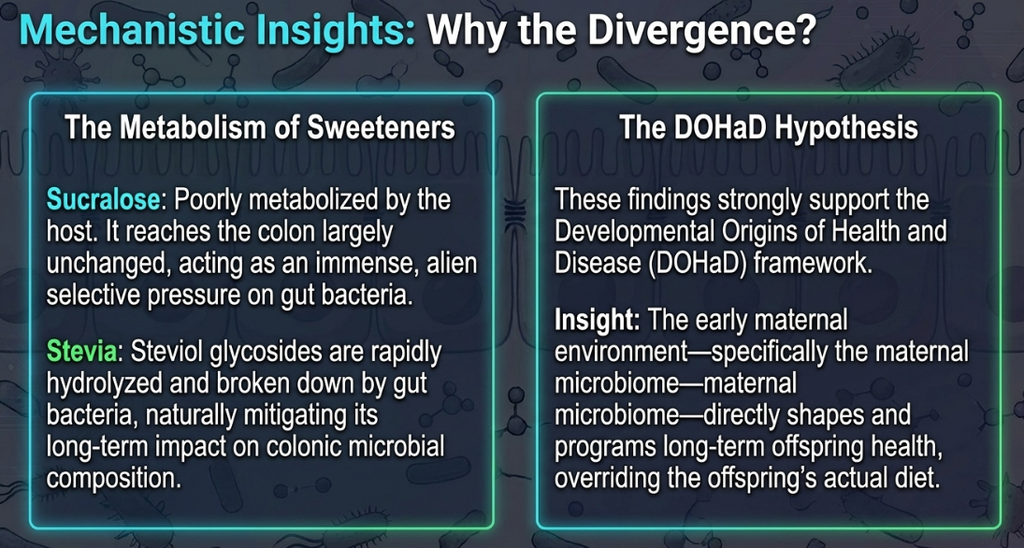
Using a computer analogy: if the parental (F0) generation “corrupts” the master file through NNS consumption, the offspring (F1 and F2) are working from “local drives” that have inherited those same errors. They are born with a metabolic blueprint that is already predisposed to inflammation and energy mismanagement.
Visualizing the Generational Ripple Effect:
- The SCFA Bankrupt Timeline: An infographic showing how NNS intake in F0 leads to a permanent “low-balance” of acetate and butyrate in F2.
- Artificial vs. Natural Pathways: A side-by-side comparison showing Sucralose’s pro-oxidant, core-microbiota-displacing impact versus Stevia’s more localized, antioxidant impact.
- The HDAC3 Switch: A diagram showing how “Low Butyrate” removes the “HDAC3 Brake,” leading to the “Inflammation Engine” (Tlr4/Tnf) turning on.
8. Conclusion: The Sweet Truth About Tomorrow
The strategic necessity of multi-generational research has never been clearer. This study confirms that Sucralose and Stevia are not passive additives; they are active biological drivers that alter the gut microbiome, deplete essential chemical messengers, and shift genetic expression.
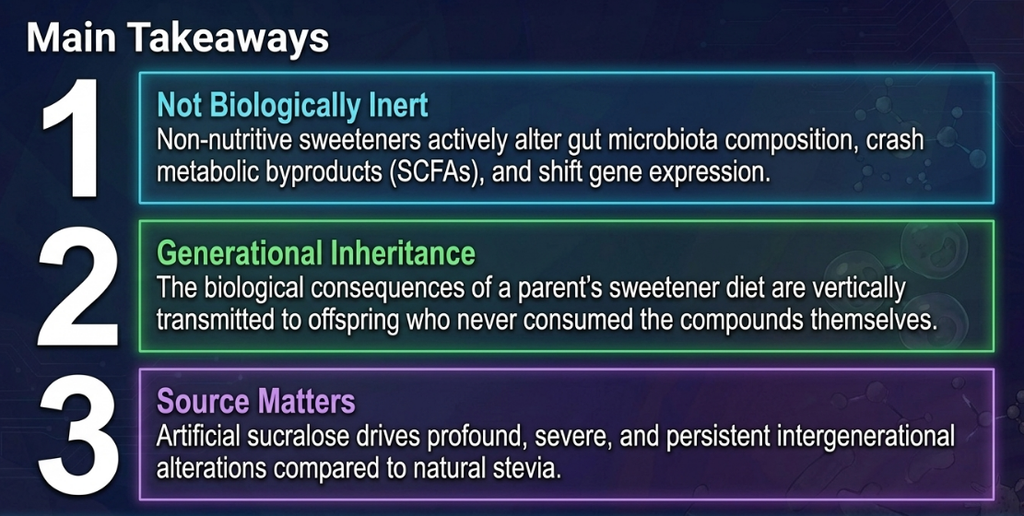
The most striking reality is that Sucralose, in particular, leaves a mark on the liver’s metabolic regulation that persists even in grandchildren who never consumed it. This challenges the very foundation of food safety labeling. As we move forward, our evidence-based dietary choices must account for more than just our own health—they must account for the biological legacy we are leaving for the generations to come.
Image Summary
Reference
Concha Celume, F., Pérez-Bravo, F., Magne, F., Olivares, R., & Gotteland, M. (2026). Artificial and natural non-nutritive sweeteners drive divergent gut and genetic responses across generations. Frontiers in Nutrition, 13, 1694149. doi: 10.3389/fnut.2026.1694149


Related posts:
 Epstein-Barr Virus Protein EBNA1 Found to Boost Cancer-Linked Genes in HeLa Cells
 Smart Biosensors: Dual ACE2 Epitope Receptors Offer Rapid Detection of SARS-CoV Variants
 Traditional Sardinian Fermented Milk Boosts Gut Health by Reshaping Microbiota
 Yeast Cell Wall Components Boost Immunity and Gut Health in Broiler Chickens Facing Salmonella Challenge
 Bottled Water May Harbor Antibiotic Resistance Genes