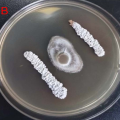
A newly identified soil bacterium, Streptomyces sp. JCK-6116, has demonstrated exceptional potential as a natural fungicide capable of suppressing major soil-borne cucumber diseases, according to a recent study published in the Journal of Microbiology and Biotechnology. The strain, isolated from South Korean soil, produces a unique combination of three polyene macrolide compounds—rimocidin A, B, and C—making it an unusually potent microbial resource for sustainable plant disease management.
A Threatened Crop and a Search for Alternatives
Cucumber production worldwide suffers severe losses due to soil-borne pathogens such as Fusarium oxysporum, Rhizoctonia solani, and Pythium ultimum. Conventional fungicides remain widely used, but long-term overapplication has led to harmful residues and rising fungicide resistance. These growing challenges highlight the urgent need for environmentally safe biocontrol solutions.
Discovery and Characterization of JCK-6116
The researchers identified JCK-6116 as a Streptomyces species closely related to S. mauvecolor. The strain displayed broad-spectrum in vitro inhibitory activity against 20 plant-pathogenic fungi, exhibiting inhibition rates exceeding 70% for multiple destructive species including Botrytis cinerea and Fusarium oxysporum.
Rimocidins: A Triple Arsenal of Antifungal Metabolites
From the fermentation extract, the team purified three bioactive polyenes—rimocidin A, B, and C. These compounds disrupt fungal membranes by binding to ergosterol. Among the three, rimocidin A showed the strongest antifungal response, with minimum inhibitory concentrations as low as 1.25 μg/ml.
Interestingly, while the rimocidins were ineffective against Oomycetes, the culture broth still suppressed Pythium ultimum, suggesting the strain produces additional anti-oomycete metabolites.
Real-World Plant Protection
In greenhouse trials, a 10-fold diluted fermentation broth of JCK-6116 significantly reduced disease severity:
- 77.78% control of Fusarium oxysporum wilt
- 83.33% control of Rhizoctonia solani damping-off
- 71.67% control of Pythium ultimum damping-off
These control levels were comparable to or better than commercial fungicides.
A Promising Microbial Fungicide
With its natural production of three rimocidins—especially the highly potent rimocidin A—combined with strong in vitro and in vivo suppression of fungal pathogens, Streptomyces JCK-6116 emerges as an up-and-coming biocontrol agent. Its ability to inhibit both fungi and Oomycetes (via additional metabolites) positions it as a strong candidate for future biofungicide development.
Reference
Nguyen HTT, Nguyen LTT, Park AR, Nguyen VT, Dang QL, Kim JC. Harnessing Rimocidins-Producing Streptomyces sp. JCK-6116 as a Sustainable Fungicide for Biocontrol of Cucumber Soil-Borne Diseases. J Microbiol Biotechnol. 2025 Oct 28;35:e2508023. doi: 10.4014/jmb.2508.08023. PMID: 41162164; PMCID: PMC12603372.


Related posts:
 Iranian Streptomyces Strains Show Strong Biocontrol and Growth-Promoting Power in Citrus Orchards
 Marine-Derived Streptomyces albidoflavus S20 Shows Breakthrough Biocontrol Against Tobacco Black Shank
 New Study Achieves 100% Elimination of Fusarium Wilt in Alfalfa Using Simple Sodium Hypochlorite Protocol
 Bacillus velezensis ATC-AL Emerges as a Natural Shield Against Black Rot in Sweetpotatoes
 Citrus Endophytic Fungus Nemania sp. LJZ-Y-11 Shows Strong Natural Defense Against Citrus Canker