
Introduction
Eye diseases such as corneal damage, retinal degeneration, and glaucoma affect millions worldwide. Traditional treatments often fall short due to challenges like immune rejection, limited cell viability, and poor long-term outcomes. Enter 3D bioprinting—a cutting-edge technology that merges cell therapy, regenerative medicine, and precision engineering to create personalized solutions for ophthalmic care.
What is 3D Bioprinting in Ophthalmology?
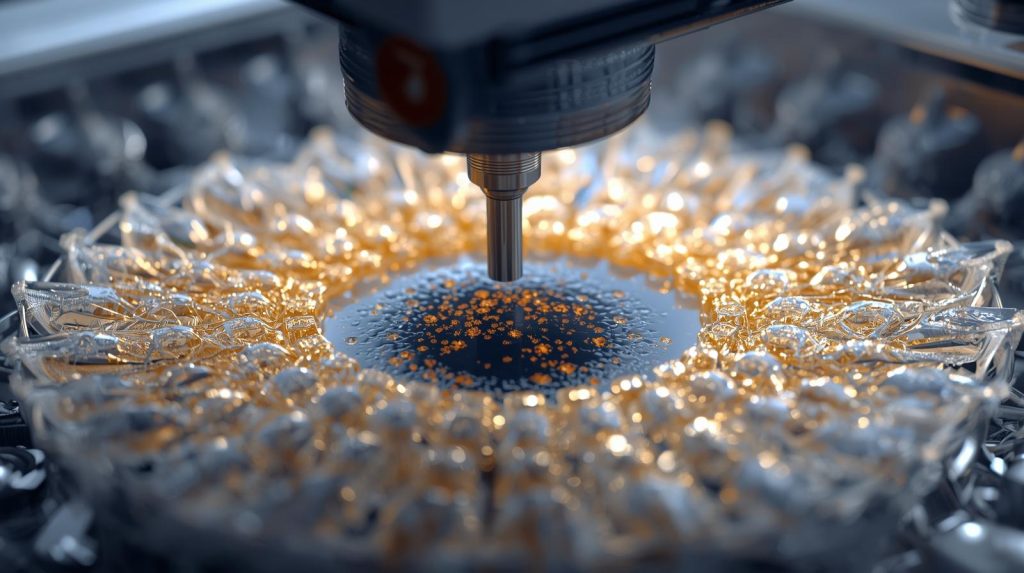
3D bioprinting is a revolutionary technique that fabricates complex biological structures layer by layer using bioinks made of living cells and biomaterials. In ophthalmology, it enables:
- Bioengineered corneal tissues for vision restoration
- Retinal tissue models for disease research
- Personalized drug delivery devices like 3D-printed punctal plugs and contact lenses
This technology enhances cell survival, tissue integration, and long-term therapeutic effects while minimizing immune reactions.
Types of 3D Bioprinting Technologies
- Extrusion-based Bioprinting – Ideal for high-cell-density structures like corneal stroma.
- Inkjet Bioprinting – Provides precise cell placement for delicate tissues.
- Laser-assisted Bioprinting – Offers high resolution for complex ocular microstructures.
Each method is tailored for specific therapeutic needs, from tissue regeneration to controlled drug release.
Applications in Eye Care
- Corneal Regeneration: 3D-printed hydrogels replicate the corneal stroma’s structure and transparency, aiding tissue healing and vision restoration.
- Retinal Repair: Bioprinted retinal tissues mimic the native retina, enabling transplantation and in-vitro disease modeling.
- Encapsulated Cell Therapy (ECT): Micro and macro-encapsulation of therapeutic cells allows sustained release of growth factors for conditions like macular degeneration.
- Personalized Drug Delivery Devices: 3D-printed contact lenses and implants enable targeted, long-term ocular drug administration.
Future Directions
The future of 3D bioprinting in ophthalmology lies in:
- Smart biomaterials that respond to disease signals
- Gene-modified therapeutic cells for precision medicine
- Regulatory frameworks ensuring clinical safety and efficacy
- Integration with AI and imaging for real-time customization
With continued innovation, 3D bioprinting promises a new era of personalized, regenerative, and minimally invasive eye care solutions.
Conclusion
3D bioprinting bridges the gap between advanced biomaterials, cell therapy, and regenerative medicine. As technology matures, it holds the potential to restore vision, deliver personalized treatments, and revolutionize ophthalmic surgery.
Reference
Kim, H., Ngo, G.-H., Hong, W., Lee, S. H., Mahajan, V. B., & DeBoer, C. (2025). 3D Bioprinting of Cellular Therapeutic Systems in Ophthalmology: from Bioengineered Tissue to Personalized Drug Delivery. Current Ophthalmology Reports, 13(1), 10. https://doi.org/10.1007/s40135-025-00337-6


Related posts:
 New 3D Bioprinting Platform Combines Coaxial Nozzle and Rotating Bioreactor for Vascular Tissue Engineering
 Programmable Hydrogels Offer New Horizons for Smart Biomaterials and Tissue Engineering
 Aspiration-Assisted Bioprinting: A New Era in Tissue Engineering with Precision Spheroid Printing
 Smart Polymer-Enhanced Biotemplates from Fish Scales Pave the Way for Bone Tissue Regeneration
 Breakthrough Vascular Organoids Model Sheds Light on Capillary Malformation Mechanisms


