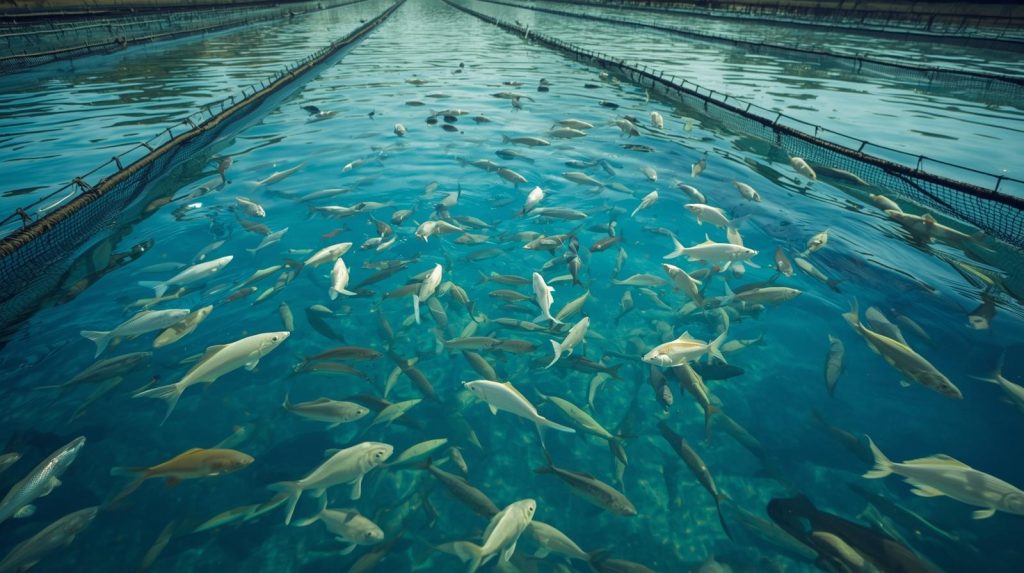

Aquaculture is one of the fastest-growing food sectors worldwide, but infectious diseases like Lactococcus garvieae continue to challenge fish health and productivity. Recent research highlights a natural, eco-friendly solution: humic acid supplementation in fish diets.
A new study investigated the effects of dietary humic acid (HA) on the immune response, gut microbiota, and survival of Nile tilapia (Oreochromis niloticus) when challenged with L. garvieae. Over 83 days, different concentrations of HA were incorporated into commercial fish feed, and the results revealed groundbreaking findings for sustainable aquaculture practices.
1. Enhanced Immune Response
Tilapia fed with 1.0 g/kg of humic acid exhibited significantly higher expression of key immune-related genes, including:
- COX-2: linked to inflammation regulation
- TNF-α and IL-1β: critical for immune defense
- TGF-β: essential for tissue repair and immunity
This immune boost translated into higher survival rates after bacterial infection, comparable to traditional antibiotic treatments.
2. Improved Gut Microbiota Balance
Gut health is vital for fish immunity and growth. The study found that humic acid:
- Increased beneficial bacteria like Rhodobacter and Ideonella
- Reduced harmful genera such as Pelomonas and Clostridioides
- Enhanced overall microbial diversity and stability, creating a healthier intestinal environment.
3. Sustainable Aquaculture Solution
Unlike antibiotics, which raise concerns about resistance and environmental impact, humic acid is natural, safe, and eco-friendly. Its use supports:
- Disease prevention without contributing to antimicrobial resistance
- Better nutrient absorption and fish health
- Environmentally sustainable aquaculture practices
4. Future Implications
Humic acid supplementation could reduce antibiotic dependence, improve fish welfare, and boost profitability for fish farmers, marking a major step toward climate-smart and sustainable aquaculture.
Conclusion
This study proves that dietary humic acid significantly enhances survival, immunity, and gut health in Nile tilapia, offering a promising prophylactic alternative for modern aquaculture. As the demand for sustainable fish farming grows, humic acid supplementation could become a game-changer for global aquaculture industries.
Reference
Gaitán-Morado, E. V., Escamilla-Montes, R., Luna-González, A., Fierro-Coronado, J. A., Diarte-Plata, G., & Pérez-Rodríguez, R. (2025). Effects of dietary humic acid supplementation on survival, immune response, and gut microbiota in Nile tilapia (Oreochromis niloticus) challenged with Lactococcus garvieae. Aquaculture International, 33(6), 565. https://doi.org/10.1007/s10499-025-02238-8


Related posts:
 Boosting Rice Yield and Stress Tolerance with PGR-Based Seed Priming
 Planting Nitrogen-Fixing Species Can Boost Soil Carbon and Fight Climate Change
 Traditional Sardinian Fermented Milk Boosts Gut Health by Reshaping Microbiota
 Boosting Sunflower Growth in Saline Soils: The Role of Phosphate-Solubilizing Bacteria and Phosphorus-Enriched Biochar
 Botanical Solutions for Honeybee Pest Management: A Sustainable Alternative to Conventional Pesticides