
Everyday Accessories, Extraordinary Science
What if a simple silicone wristband could tell the story of your daily chemical exposures? A new study in Environmental Science & Technology reveals that these everyday accessories can act as powerful passive samplers, capturing a wide range of environmental and personal chemical exposures over time.
How Silicone Wristbands Work
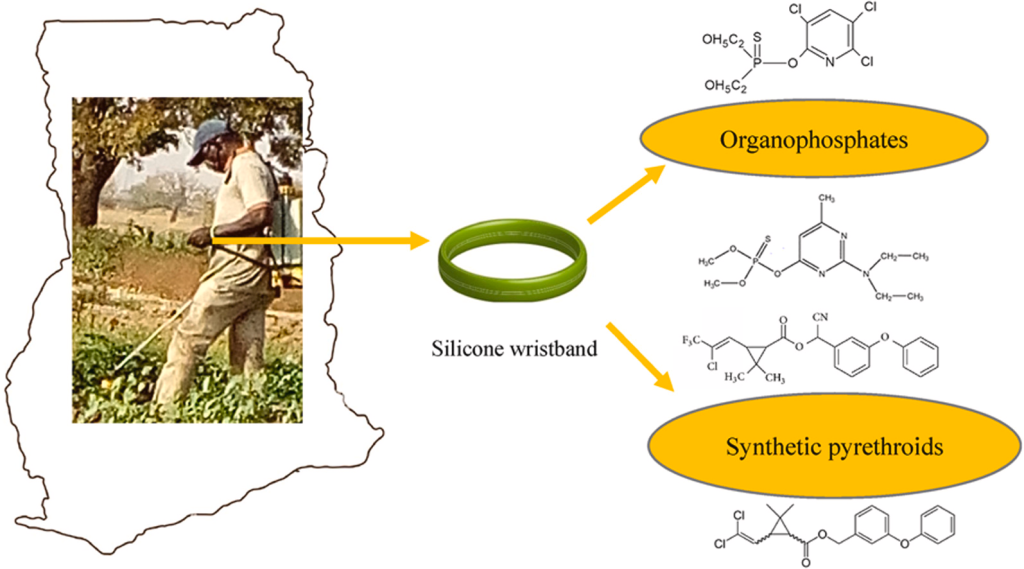
Silicone is a porous material that absorbs volatile and semi-volatile organic compounds from the air, skin contact, and even food handling. By wearing a wristband for days or weeks, researchers can later analyze it to detect:
- Pesticides from agricultural areas
- Flame retardants from household items
- Phthalates and phenols from plastics and personal care products
- Industrial pollutants and urban air contaminants
This makes silicone wristbands a non-invasive, cost-effective alternative to blood or urine sampling.
Key Findings from the Study
- Wristbands reliably tracked time-resolved exposure to multiple chemical classes.
- They captured both indoor and outdoor pollutants, reflecting real-world conditions.
- The method worked across diverse environments, from rural farming areas to urban centers.
- Data showed strong potential for long-term human health studies and personalized exposure profiles.
Why It Matters
Understanding chemical exposure is essential for addressing public health risks — from hormone-disrupting plastics to air pollution-linked diseases. Traditional sampling methods are often costly, invasive, or limited in scope.
Silicone wristbands, however, are:
- Easy to use — simply wear them like a bracelet.
- Scalable — suitable for large population studies.
- Accessible — low-cost enough for use in resource-limited settings.
This innovation could transform how we monitor environmental health risks and guide policy and prevention strategies.
Conclusion
Silicone wristbands prove that sometimes the simplest tools can deliver the most profound insights. By passively recording the “chemical fingerprint” of our daily lives, they open the door to a new era of personalized exposure science — helping us better understand and protect human health.
Reference:
Mohammed, S., Koekkoek, J., Hodgson, I. O. A., de Boer, J., & Lamoree, M. (2023). Silicone wristband as a sampling tool for insecticide exposure assessment of vegetable farmers. Environmental Research, 237, 117094. https://doi.org/10.1016/j.envres.2023.117094


Related posts:
 New Class of Antibiotics with a Novel Mode of Inhibition against World Health Organization’s Critical Listed Bacteria, Carbapenem-Resistant Acinetobacter baumannii
 Development of a Highly Efficient Cancer Treatment Strategy using the Vibrionic-Driven Action of Synthetic Aminocyanines
 Natural Healers: Animals That Cure Themselves with Natural Solutions
 Not Just Snakes and Spiders: The Hidden World of Venom in Everyday Life
 Insects as Nanofactories: Scientists Harness Bugs to Build Designer Nanocarbons


